The shape of temptation
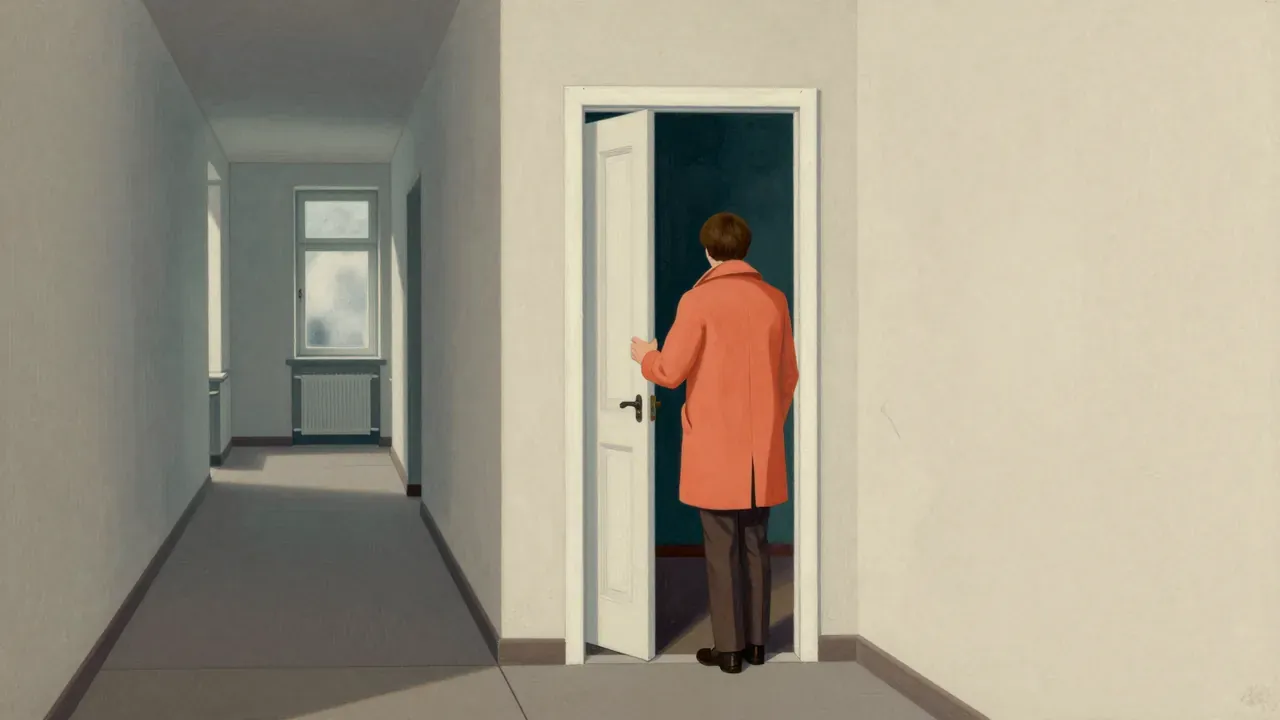
Love in the Afternoon is the sixth and final film in Éric Rohmer’s Six Moral Tales series, a cycle of French-language dramas built around moral self-scrutiny rather than moral instruction. It does not dramatise transgression so much as the quiet, persistent rehearsal of it — the mental rehearsals, the near-misses, the fantasies that test fidelity without breaking it. Rohmer’s aim is not to resolve Frédéric’s ambivalence but to hold it in steady focus: to show how desire, memory, and responsibility coexist without collapsing into contradiction. The film avoids symbolic shorthand or psychological exposition; instead, it trusts duration, repetition, and minor shifts in tone or posture to reveal what characters withhold even from themselves. Its structure follows no crisis arc but a slow, almost imperceptible tightening of pressure — less a plot than a diagnostic procedure applied to married life, middle-class stability, and the habit of imagining alternatives. It presumes attention, rewards patience, and refuses to flatter its audience with narrative payoff or emotional catharsis. (158 words)
The weight of conversation
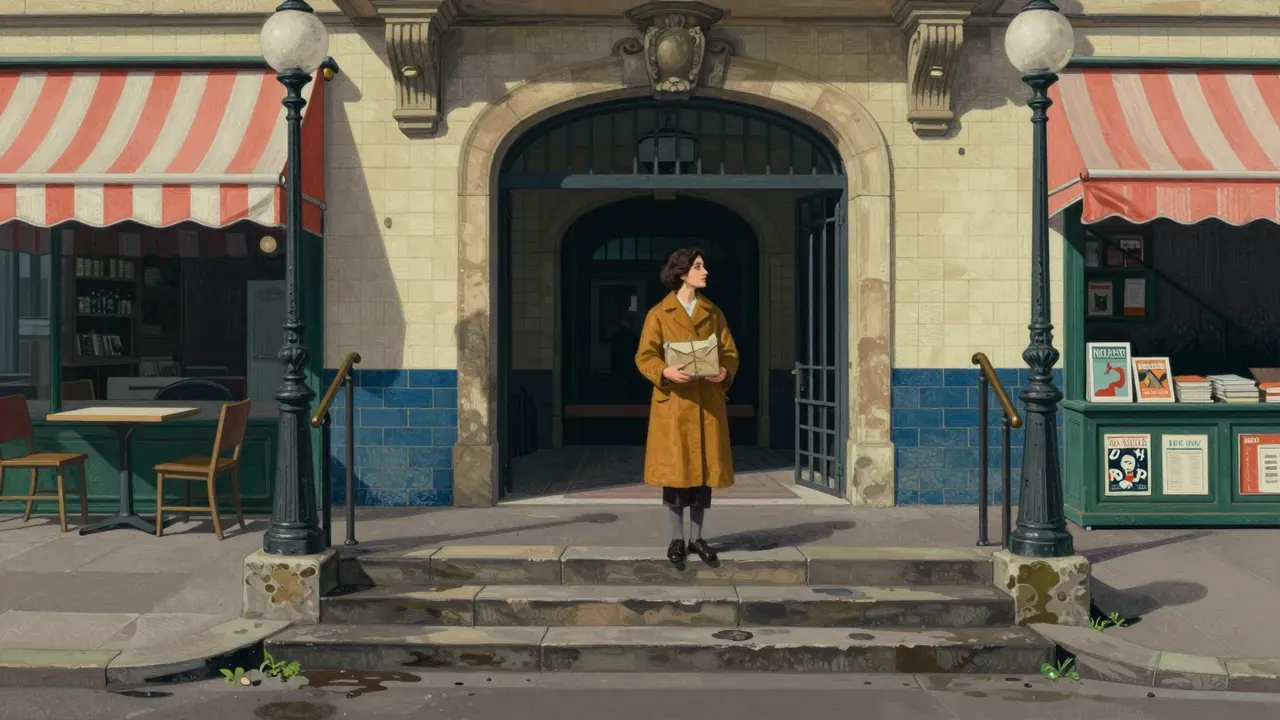
The story unfolds through conversations — in offices, apartments, cafés — where dialogue carries weight not because it reveals secrets but because it exposes hesitation. Bernard Verley plays Frédéric with restrained physicality: a man whose gestures are economical, whose silences are thick with unspoken calculation. Zouzou’s Chloé is all surface volatility, yet her performance never tips into caricature; she remains legible as both catalyst and mirror. Néstor Almendros’ cinematography keeps interiors softly lit and shallow in focus, letting background details blur while foreground glances hold. Cécile Decugis’ editing sustains rhythm without emphasis — cuts land where speech pauses, not where drama peaks. Arié Dzierlatka’s score is sparse, mostly piano phrases that recur like half-remembered thoughts. There are no flashbacks, no voiceover, no music swells to cue feeling. Every craft choice serves the principle that moral life happens in the intervals between decisions, not in the decisions themselves. (159 words)
The force of the uneventful
What lands is the cumulative effect of small, unremarkable moments: Frédéric adjusting his turtleneck before leaving Chloé’s apartment; Hélène’s tearful silence after he returns home; the way office secretaries exchange glances when Chloé reappears in yet another ill-fitting job. These are not ‘revealing’ scenes in the conventional sense, but they accumulate moral texture — the weight of routine, the friction between intention and action, the quiet exhaustion of maintaining composure. The film’s refusal to judge Frédéric makes his restraint more palpable, not less. His final return to Hélène feels earned not because he chooses virtue, but because he recognises the shape of his own life — not as ideal, but as real, contingent, and irreplaceable. The ending does not offer resolution but alignment: two people awkwardly trying to speak across the gap their habits have widened. That modest, unadorned effort lands with quiet force, precisely because it asks nothing of the viewer except to witness it. (157 words)
Where the frame slips
What does not land is the fantasy sequence with the magical amulet — a stylistic rupture that sits uneasily within the film’s otherwise grounded register. It feels like an idea borrowed from earlier Moral Tales, inserted here without sufficient integration into Frédéric’s psychology or the film’s tonal logic. Similarly, Chloé’s pivot toward wanting a child feels narratively abrupt; her motivation arrives as assertion rather than development, and the script gives her no interiority beyond that wish. Some supporting performances — particularly those of the office secretaries — verge on typecasting, their amusement too consistent, too knowing, to feel like lived observation. The film’s commitment to understatement occasionally slips into under-dramatisation: key emotional thresholds pass without visible shift in either character or framing, leaving gaps that some viewers may find frustrating rather than suggestive. These are not flaws in ambition, but in calibration — moments where restraint hardens into opacity. (156 words)
The grammar of staying
The themes that matter are fidelity as practice rather than pledge, desire as memory’s echo, and marriage as a shared infrastructure of habit rather than a state of feeling. The film treats infidelity not as a binary act but as a spectrum of attention — what one notices, what one imagines, what one permits oneself to want. It questions whether monogamy is sustained by love alone, or by the daily labour of choosing continuity over novelty. Frédéric’s attraction to Chloé is never framed as betrayal but as symptom: a sign that his marriage has become so stable it risks becoming invisible to him. The film also probes class and gender: Chloé’s instability is economic as much as emotional, and her attempts at employment expose structural limits on women’s autonomy in early-1970s Paris. Yet these social dimensions remain implicit, woven into behaviour and setting rather than stated. What endures is the film’s insistence that moral life is not lived in grand declarations but in the thousand tiny withdrawals and returns that make up ordinary time. (159 words)
Who it is for, and why
This film is for viewers who trust slowness as a mode of perception, who find tension in hesitation rather than conflict, and who accept that some questions — about loyalty, longing, or what constitutes a life well-lived — resist answers. It rewards attention to vocal timbre, posture, and the space between sentences. It is not for those who require narrative propulsion, clear stakes, or emotional release; nor for viewers who expect characters to articulate their inner lives directly. A viewer who finds the pacing inert or the dialogue overly discursive will likely disengage early. Those who value psychological realism over plot mechanics, or who respond to films that treat thought as physical action, will find it rich. The verdict would change if the film offered clearer access to Chloé’s subjectivity or tightened its internal logic around the fantasy sequence — but as it stands, its rigour is part of its point. (159 words)
Why it holds time
Yes, it is worth your evening — provided you watch it without expectation of entertainment or closure. Its value lies in the precision of its observation, the honesty of its ambiguity, and the way it recalibrates attention toward the uneventful moments where moral life actually takes place. It is not a film to consume but to inhabit for its duration: to notice how light falls on a wall, how a pause stretches, how a gesture contradicts a statement. Some will find it thin, others profound; the difference lies not in the film but in the viewer’s willingness to sit with uncertainty. Those who dismiss it as ‘talky’ or ‘static’ are not wrong about its methods — only about what those methods are designed to do. It earns its ninety-seven minutes not by filling them, but by making each one count as part of a sustained, unsentimental inquiry. To skip it is to miss a rare demonstration of how cinema can think aloud. (159 words)