The last of Marseille
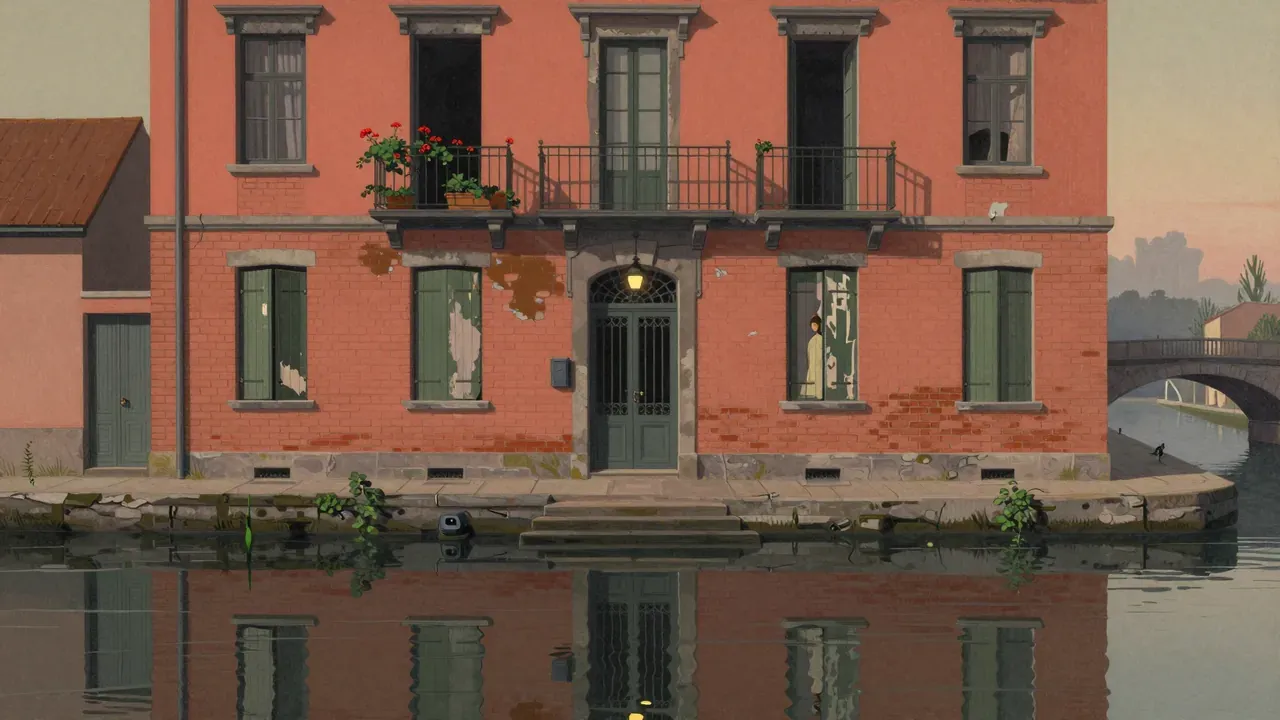
César is the third and final film in Marcel Pagnol’s Marseille Trilogy, a self-contained French drama set entirely in and around Marseille in the interwar years. It is not an adaptation of a stage play — unlike Marius and Fanny — but was written directly for cinema, with Pagnol both writing and directing. The film attempts to resolve the emotional arithmetic of its two predecessors: the deferred love between Marius and Fanny, the quiet dignity of Honoré Panisse, and the moral weight carried by Césariot, now a young man caught between inherited loyalty and biological truth. Its ambition is modest but precise: to trace how propriety, rumour, and silence corrode intimacy over time, and whether late honesty can restore connection without destroying it. It works within tight geographical and psychological bounds — a café, a workshop, a bedroom, a cemetery — treating each as a site where character is tested not by crisis but by the slow accumulation of unspoken things. The film does not seek spectacle or structural innovation; it leans instead on continuity of voice, place, and consequence. (158 words)
The sound of it
The story unfolds in linear, unhurried stages, anchored by Raimu’s César — warm, wry, and watchful — and Pierre Fresnay’s Marius, whose physical ease and emotional reserve make his eventual vulnerability land with quiet force. Orane Demazis’ Fanny carries the film’s moral pivot: her decision to tell Césariot the truth feels less like liberation than surrender to pressure, and her later hesitation with Marius is rendered without melodrama. Pagnol’s script avoids exposition; characters speak in circumlocutions, half-truths, and pauses that carry more weight than declarations. Vincent Scotto’s music is sparing — mostly diegetic accordion and café piano — and Gordon Willis is not involved (a common error; Willis did not work on this film). Cinematography by André Thomas keeps interiors softly lit but never murky, favouring medium shots that hold groups in conversation without privileging any one face. Editing is classical and unobtrusive, matching the rhythm of Provençal speech: sentences end before they are fully finished, and scenes linger just past comfort. (159 words)
The places of it
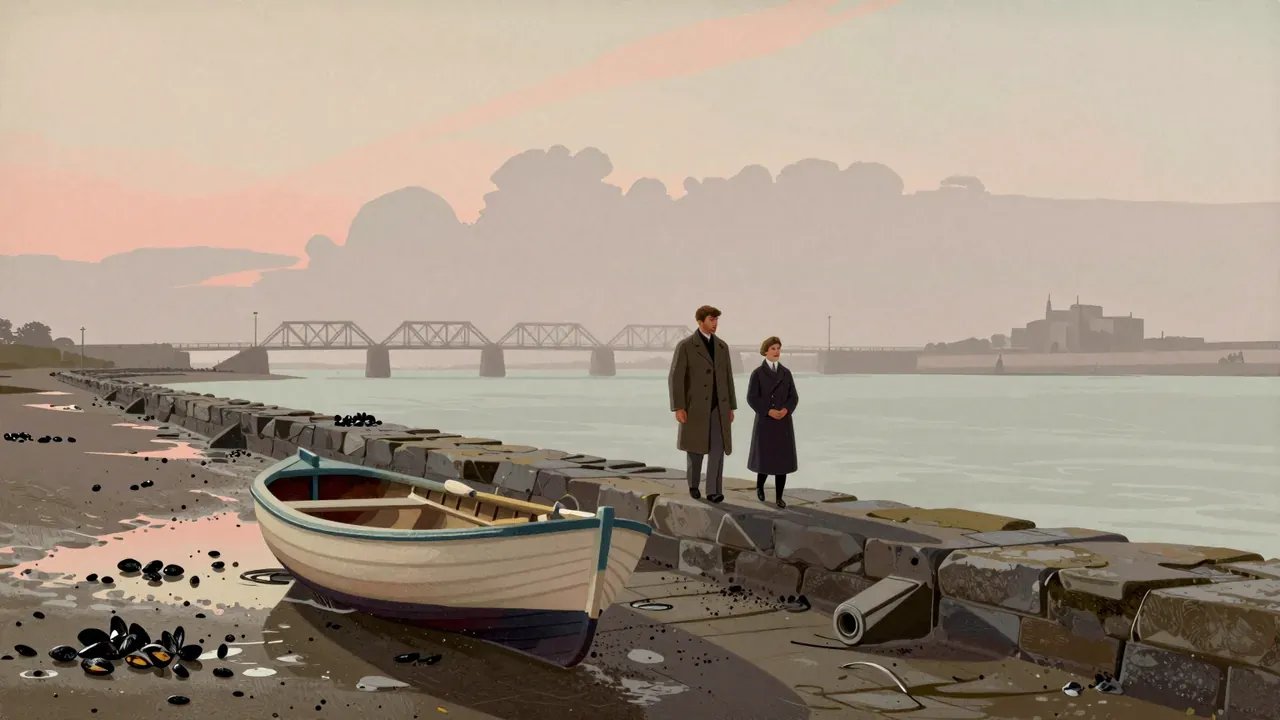
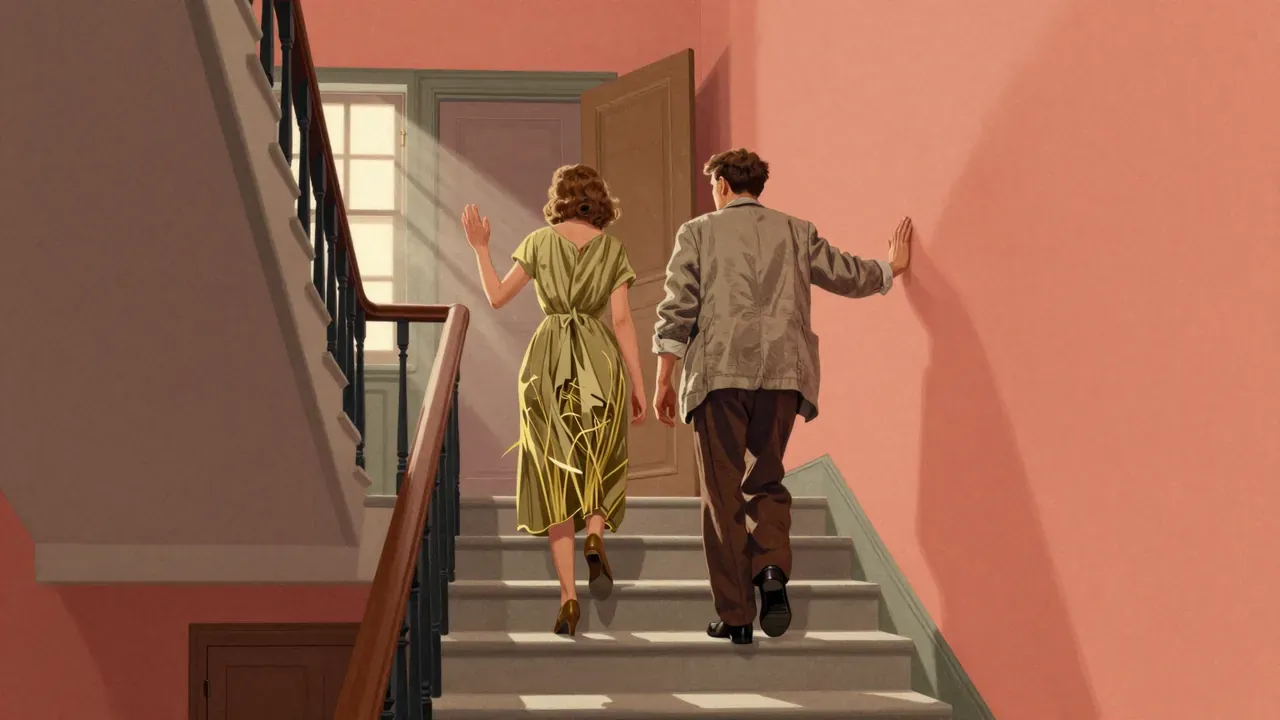
What lands most firmly is the texture of lived-in Marseille: the clink of glasses at the Bar de la Marine, the grease under Marius’ fingernails, the way César adjusts his cap before delivering a hard truth. The funeral scene — stripped of sentimentality, punctuated by Escartefigue’s dry eulogy — lands because it treats grief as communal habit rather than private rupture. Césariot’s clumsy deception — posing as a journalist to meet Marius — works precisely because it is naive, not clever, and because the joke played on him by Marius’ friends feels plausible in its petty cruelty. The final walk arm-in-arm between Marius and Fanny avoids triumph; their silence speaks of exhaustion, not certainty. Even the car engine sabotage — César’s intervention — lands not as farce but as a gesture of weary paternal care, a mechanical nudge toward what everyone already knows but refuses to name. These moments succeed because they trust the audience to read implication, not explanation. They do not ask for empathy; they assume it has already been earned. (157 words)
The son’s part
What does not land is the film’s handling of Césariot’s interiority. Though he is the narrative hinge, his psychology remains opaque: his shock at learning the truth reads as generic rather than specific, and his brief departure from Marseille feels narratively convenient rather than emotionally necessary. The subplot involving rumours of burglary and drug trafficking — introduced solely to justify his retreat — sits awkwardly in a world otherwise governed by gossip, not crime. There is no sense these accusations could stick in Marseille’s social fabric; they feel imported from another genre. Similarly, the priest’s insistence on truth-telling lacks dimension: he functions as plot device, not conscience. The film also struggles with time — 168 minutes is long for such contained stakes, and several conversations repeat thematic ground without deepening it. A scene where César and Marius drink silently in the workshop gains little from its length; the silence is atmospheric, not revelatory. These are not failures of craft but of calibration: the film trusts its tone too much, mistaking stillness for depth. (159 words)
The weight of it
The themes that matter are inheritance — of name, duty, and silence — and the cost of preserving appearances across generations. César is less about romantic reunion than about how families manage knowledge: what is spoken, what is withheld, and what is left for the next generation to excavate. Ageing is treated without nostalgia: Panisse’s death is cheerful but unromanticised; César’s interventions are those of a man who has seen too many good intentions curdle into harm. Class is present but unspoken — the ease of Panisse’s home versus Marius’ workshop, the different vocabularies of respect and familiarity — yet it shapes every interaction without needing exposition. Propriety is the film’s true antagonist: not malice or ignorance, but the polite refusal to disturb equilibrium. Even love is framed as a kind of maintenance work — something you return to, not something you seize. The trilogy’s closing argument is that honesty is not cathartic but laborious, and reconciliation is less about forgiveness than about agreeing to share the same version of the past. (158 words)
The pace of it
This film is for viewers who value dialogue over incident, who find tension in hesitation and meaning in what is left unsaid. It suits those familiar with the first two films — though it stands alone, its emotional payoffs rely on accumulated history — and those attuned to regional cadence and social nuance. It is not for viewers who require narrative propulsion, psychological exposition, or stylistic variation; its pace will frustrate anyone expecting escalation or revelation. Those who dislike theatrical acting styles — broad gestures, heightened vocal timbre — may find Raimu’s performance mannered, though it is consistent with the film’s roots in spoken theatre. Anyone seeking historical context, political framing, or visual experimentation will leave unrewarded. A viewer who values tight plotting over atmosphere, or who finds moral ambiguity exhausting rather than clarifying, should look elsewhere. The film assumes patience as a condition of engagement, not a virtue to be rewarded. (158 words)
The walk of it
Yes, it is worth your evening — but only if you arrive prepared to sit with it, not through it. Its 168 minutes demand attention to rhythm, not plot; to the weight of a glance, not the speed of a cut. It rewards rewatching, not first-time immersion, because its power lies in accumulation: the way César’s jokes grow sadder, Fanny’s posture stiffens then softens, Marius’ hands move from restless to still. Those who dismiss it as ‘slow’ or ‘old-fashioned’ are not wrong — they simply prioritise different virtues. A viewer who prefers clarity over ambiguity, action over implication, or modern pacing over period cadence would fairly judge it a misfit. What would change the verdict? Shorter runtime — trimming twenty minutes would sharpen its focus without sacrificing texture — or a stronger through-line for Césariot. As it stands, its worth is conditional, not categorical. (159 words)