The voice of it
I Killed My Mother is a French-language Canadian drama, written, directed, produced by and starring Xavier Dolan, then nineteen. It is a first feature, conceived when he was sixteen, and it centres on the volatile, co-dependent relationship between Hubert Minel — a precocious, alienated sixteen-year-old in suburban Montreal — and his mother Chantale. The film does not aim for psychological realism or social documentation. Instead, it uses heightened dialogue, stylised framing, and abrupt tonal shifts to render adolescent interiority as both claustrophobic and theatrical. Its ambition is formal and emotional: to compress years of unspoken resentment, love, shame and dependency into a tightly wound, self-aware narrative that refuses reconciliation but insists on mutual visibility. It treats the mother-son bond not as a problem to be solved but as a terrain of repeated collision — where every argument is also a plea, every exit a return in disguise. The film’s structure follows Hubert’s attempts to assert autonomy — through lies, flight, sex, performance — only to find each gesture rebounding on the very person he claims to escape.
The look of it
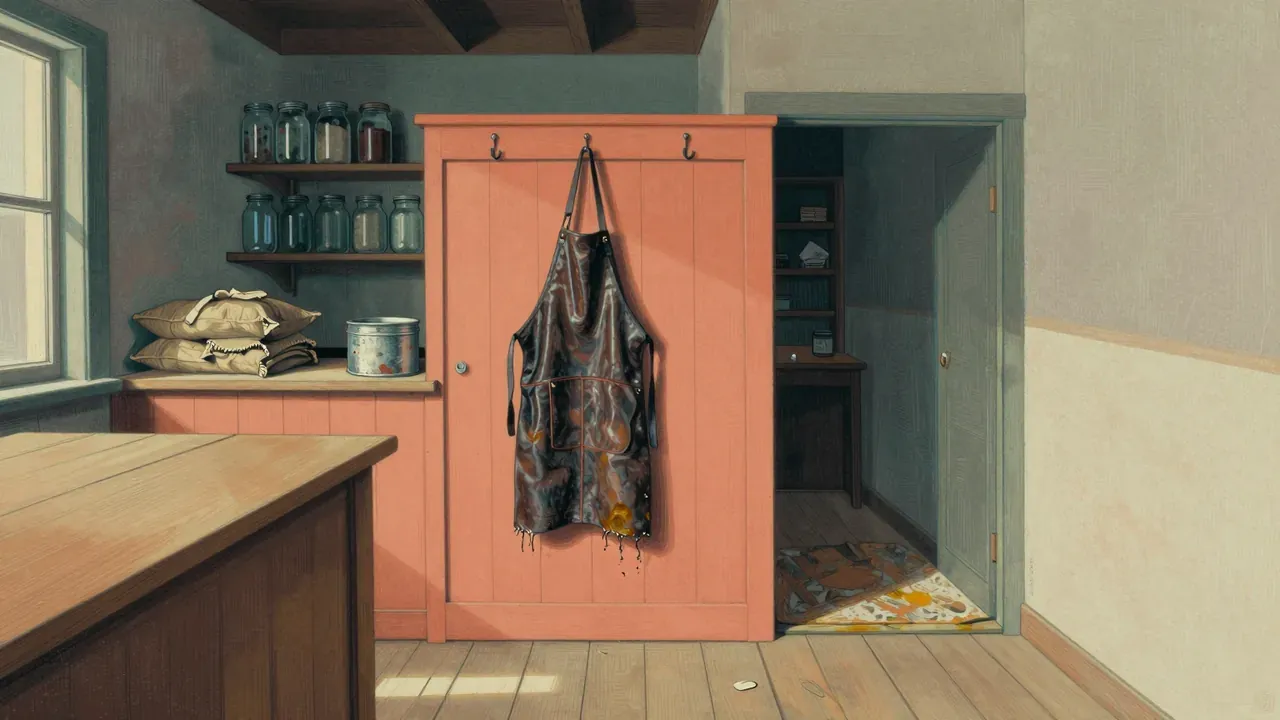
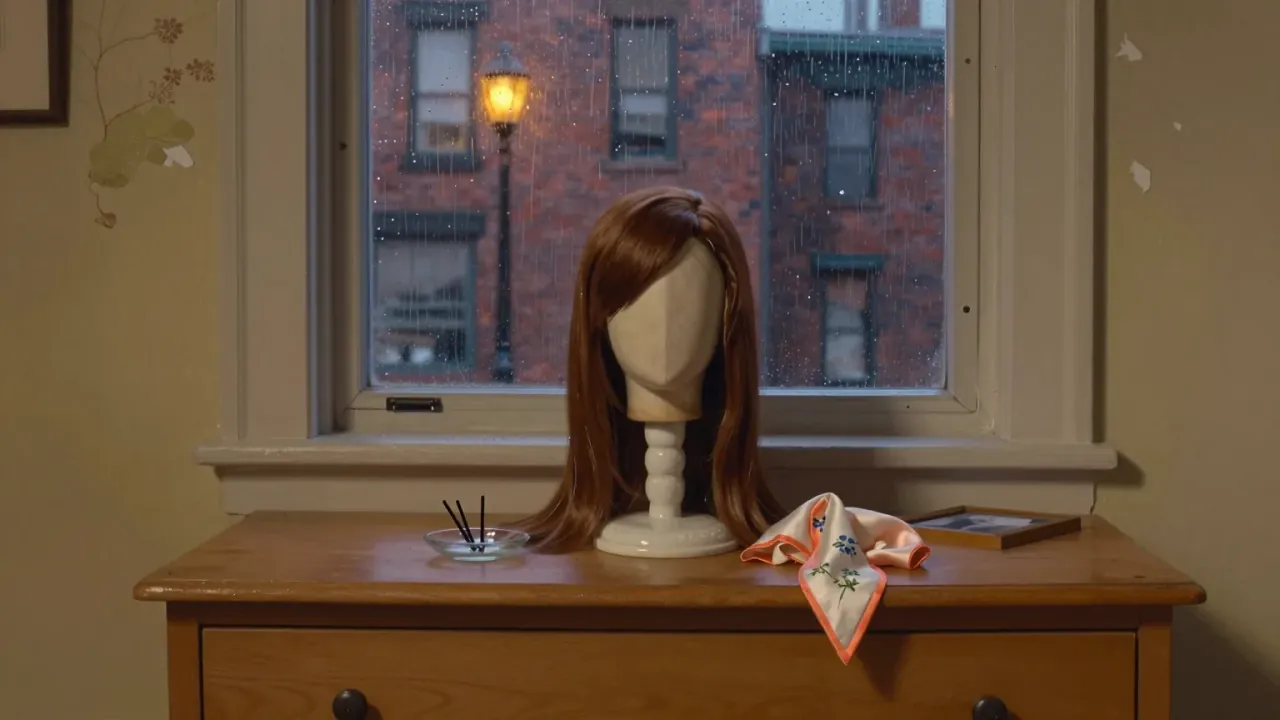
The story moves in episodic surges, anchored by monologues, school assignments, and domestic eruptions. Dolan’s performance as Hubert is physically restless and verbally precise, leaning into rhetorical flourishes without softening their vulnerability. Anne Dorval’s Chantale avoids caricature: her gestures are small, her silences weighted, her outbursts never unmoored from exhaustion or fear. Stéphanie Weber Biron and Nicolas Canniccioni’s cinematography favours tight two-shots and shallow focus, keeping bodies close even when words push them apart. Hélène Girard’s editing sustains rhythm without smoothing over disjunctions — cuts land like slammed doors. Nicholas Savard L’Herbier’s score is sparse, often absent, letting silence or diegetic sound (a car radio, muffled arguments) carry weight. The production design avoids naturalism: interiors feel lived-in but deliberately composed, with wallpaper, lighting and furniture contributing to a sense of emotional architecture rather than backdrop. There is no attempt to ‘explain’ the characters; their contradictions are presented as given, not resolved.
The weight of it
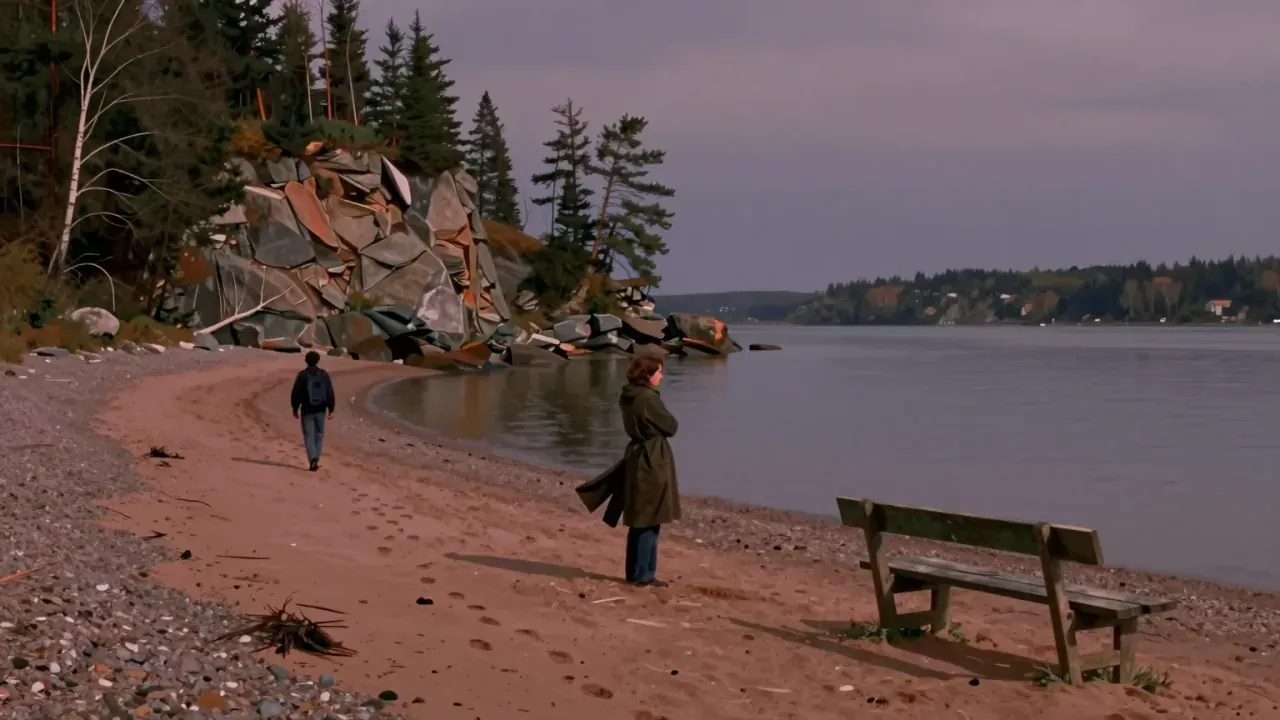
What lands most firmly is the film’s fidelity to adolescent contradiction — the way love and contempt occupy the same breath, how defiance can be a form of dependence, and why honesty often arrives disguised as provocation. The opening monologue establishes this register immediately: Hubert declares he loves his mother while insisting he killed her, and the film never asks us to choose between those statements. The scenes between Dolan and Dorval crackle because they refuse easy sympathy: neither character is granted moral high ground, and neither is reduced to symptom. The boarding school sequence works not as satire but as escalation — a literal removal from context that makes Hubert’s volatility more legible, not less. Even minor performances register: François Arnaud as Antonin conveys devotion without sentimentality, and Suzanne Clément as Ms Cloutier delivers quiet authority without exposition. The final beach scene lands not because it offers resolution, but because it holds stillness after motion — a pause that feels earned, not imposed.
The rhythm of it
What does not land is the film’s occasional drift into mannerism — moments where stylistic bravado overshadows dramatic necessity. A few monologues, particularly those delivered directly to camera, risk theatrical self-indulgence without sufficient grounding in character logic. The nightclub sequence, with its speed use and Metro ride, feels abruptly inserted, its symbolism (freedom? self-destruction?) underdeveloped relative to the rest of the film’s calibrated intensity. Some supporting characters remain functional rather than dimensional: Hubert’s father Richard appears only to deliver plot turns, and Eric serves primarily as a catalyst for betrayal rather than a presence with his own gravity. The boarding school setting, though visually distinct, lacks institutional texture — rules, routines, hierarchies — making its impact more symbolic than social. These are not failures of craft, but of proportion: choices that serve Dolan’s voice more than the story’s internal coherence.
The grammar of it
The themes that matter are not abstract but embodied: the violence of proximity, the grammar of blame, and the impossibility of severing love from history. The film treats adolescence not as a phase but as a condition of perpetual renegotiation — with parents, with identity, with language itself. Homosexuality is present not as revelation or crisis but as one fact among many in Hubert’s self-conception; its disclosure to Chantale matters less than the timing and tone of the withholding. Parenting is shown as labour without instruction manual, shaped by grief, class, and the residue of failed marriages. The essay ‘I killed my mother’ functions not as confession but as linguistic experiment — an attempt to name what cannot be spoken plainly. Memory appears not in flashbacks but in objects: a childhood home, a home video, wallpaper patterns that recur like motifs. There is no nostalgia here, only persistence — the way certain rooms, voices, and silences continue to shape perception long after physical distance has been established.
The audience for it
This film is for viewers who value emotional precision over narrative convenience, and who accept that some relationships resist closure. It suits those familiar with Québécois cultural inflections — the cadence of French-Canadian speech, the particular weight of Catholic schooling, the urban-suburban friction of Montreal — but does not require fluency in them. It is not for viewers who need clear moral alignment, linear cause-and-effect, or character arcs that resolve into growth or redemption. Those who rely on exposition to orient themselves may find the film withholding; those who expect psychological realism may read its stylisation as artifice. A viewer who values restraint over intensity, or who finds adolescent subjectivity inherently limiting, will likely disengage. What would change the verdict is not better execution but a different intention — if the film aimed for universality rather than specificity, or for catharsis rather than accumulation, it would be another film entirely.
The time for it
Yes, it is worth your evening — provided you arrive prepared for its tempo and tone. At 100 minutes, it sustains tension without padding, and its brevity prevents self-parody. The film rewards attention to gesture, rhythm, and subtext, not just plot. It is not relaxing, nor is it designed to be: it demands engagement with discomfort, with unresolved tension, with voices raised not in anger alone but in exhaustion and love. Those who watch it expecting conventional coming-of-age uplift or polished technical polish will leave dissatisfied. But for viewers open to a debut that treats feeling as form — where every frame, line, and silence serves the central question of how two people remain bound across chasms they keep digging — it repays time with clarity. Its value lies not in answers but in the rigour of its questions, and in the fact that it asks them at all, so young, so precisely.