Disney’s Folly
Snow White and the Seven Dwarfs adapts the Brothers Grimm fairy tale in outline only: a princess is driven from her home by a jealous stepmother, taken in by seven miners in the forest, and eventually revived from a poisoned sleep by a prince’s kiss. What the plot doesn’t convey is the scale of the bet behind it — Walt Disney spent roughly $1.5 million, ten times the cost of an average Silly Symphony short, on a feature nobody in the industry believed audiences would sit through. He first pitched the idea informally in 1933, then in 1934 acted out the entire story for his staff over three hours on a sound stage before formally starting production.
Two years to find seven personalities
Getting the dwarfs right took years longer than expected. An early outline compiled by story artist Richard Creedon in August 1934 pooled over fifty possible names and personalities — Awful and Biggo-Ego among the discarded contenders — before the writers settled on Doc, Grumpy, Happy, Sleepy, Bashful, Sneezy and Dopey. Merrill De Maris, Ted Sears, Richard Creedon and Otto Englander are credited on the eventual script, but the character work went through repeated rewrites as Disney insisted each dwarf needed a distinct comic identity rather than functioning as an interchangeable group, unlike most of the crowd characters in his earlier shorts.
A queen more frightening than a villain needs to be
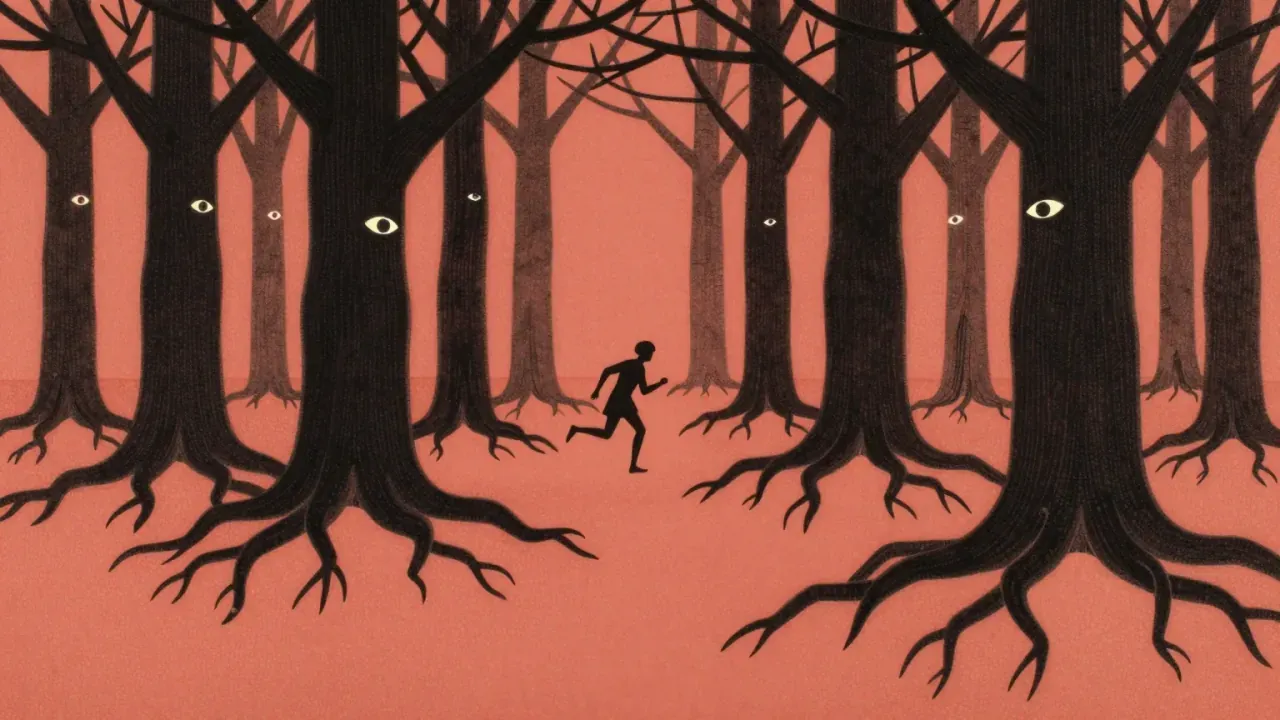
The Evil Queen’s transformation into the old peddler woman is animated and staged with a gravity the rest of the film doesn’t otherwise attempt — a shift in lighting and pacing that plays as genuinely frightening rather than as a fairy-tale formality. Voice actress Lucille La Verne is doing real work here, dropping her register for the disguised witch in a way that sells the physical change before the animation even completes it. That sequence, along with the forest chase that follows Snow White’s flight from the huntsman, are the moments where the film commits to tension rather than warmth, and they’re more effective for being rationed rather than sustained throughout.
Comedy carrying more weight than romance
The prince appears only at the beginning and the very end, has almost no dialogue, and the romance the whole plot resolves on amounts to a few seconds of screen time before the wedding. What actually sustains ninety minutes of attention is the dwarfs’ physical comedy — the washing-up argument, the mine, the aftermath of Grumpy softening toward Snow White despite himself — material that has little to do with the fairy tale’s stated stakes and everything to do with character. The film essentially runs two different registers, a slight romantic plot and a much fuller comic one, and the comic one is doing almost all of the work.
What the film is actually testing
The film’s more interesting subject than the fairy tale itself is the question its production was actually testing: whether hand-drawn characters could sustain an audience’s attention and emotional investment across a full feature rather than a seven-minute short. Disney’s insistence on individualised dwarf personalities, and the disproportionate craft spent on the Queen’s transformation, both point at a studio trying to prove that animation could carry drama and not just gags. Even Snow White’s own kindness toward woodland animals functions less as characterisation than as a device for showing what animated performance could convincingly express.
Who this is for
This is close to required viewing for anyone interested in how feature animation became possible at all, and the dwarfs’ comic timing still plays well for family audiences today, including for young children who have never seen the character types it originated. It rewards viewers willing to treat the film as a historical object as much as a story — the pacing, especially through the middle stretch of domestic comedy, moves slowly by contemporary standards and asks for patience a faster modern feature wouldn’t. Anyone expecting the central romance to carry real dramatic weight will be disappointed; that plotline exists mostly as scaffolding for everything built around it.
Is it worth the evening
The film holds a 97% score on Rotten Tomatoes and 96 on Metacritic, and was one of the twenty-five inaugural films selected for the National Film Registry in 1989 — a reasonable critical consensus for a film whose historical importance is not in dispute. Walt Disney received an honorary Academy Award for it, presented, unusually, as one full-sized statuette alongside seven miniatures. Watched now, its pleasures are narrower than its reputation suggests — the comedy holds up, the romance doesn’t — but as the first sustained argument that animation could be more than a novelty, it’s still worth the evening.