A day in January 1946
Morning for the Osone Family is a Japanese domestic drama made in the immediate aftermath of the Second World War, released in January 1946. It is one of Keisuke Kinoshita’s earliest directorial works, produced at Shochiku’s Kamata studio during a period when film production was tightly constrained by material shortages and censorship under the Allied Occupation. The film attempts to portray the quiet resilience of an ordinary Tokyo family amid scarcity, dislocation, and shifting social expectations — not as allegory or polemic, but through sustained attention to routine, gesture, and unspoken tension. Its ambition is modest in scale but precise in focus: to register how dignity persists in small acts of care, negotiation, and endurance when national structures have collapsed. It does not seek to diagnose Japan’s postwar condition, nor to assign blame; rather, it observes how familial roles — motherhood, filial duty, marital compromise — are renegotiated without fanfare, in rooms lit by weak bulbs and conversations held over thin miso soup. The film assumes no prior knowledge of its historical moment, yet presumes familiarity with the rhythms of Japanese middle-class domestic life before 1945.
The look of it
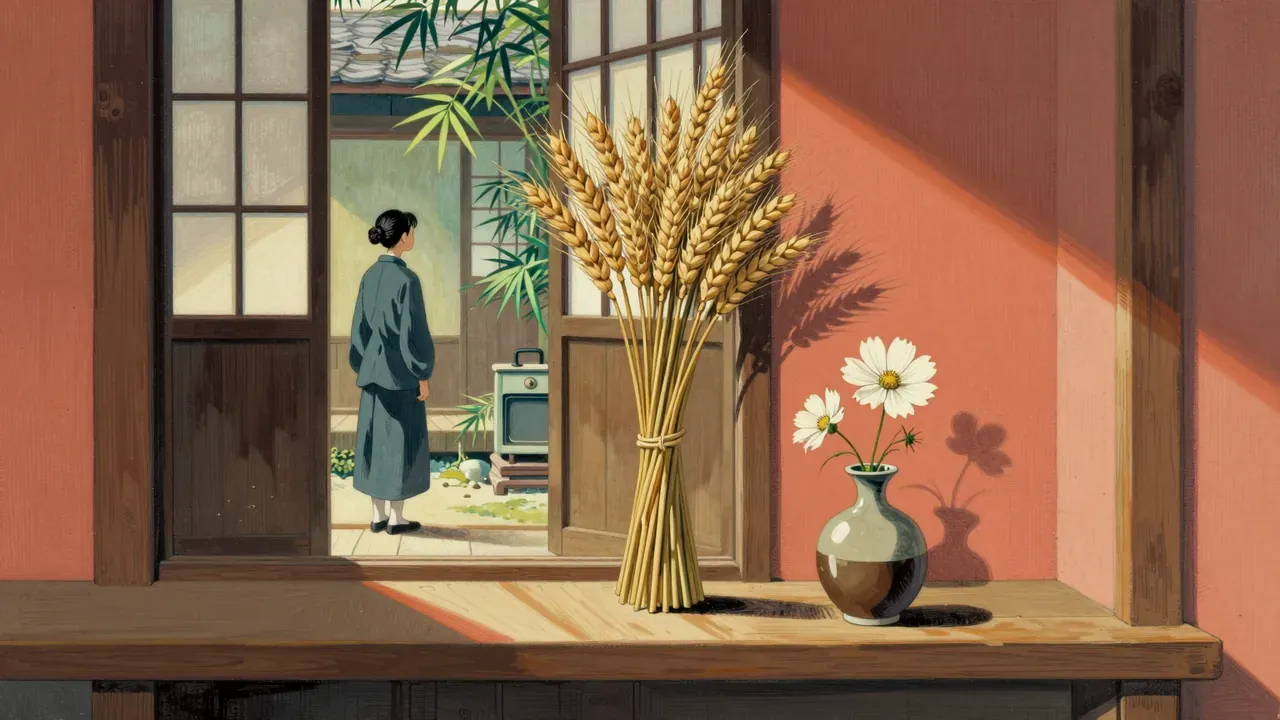
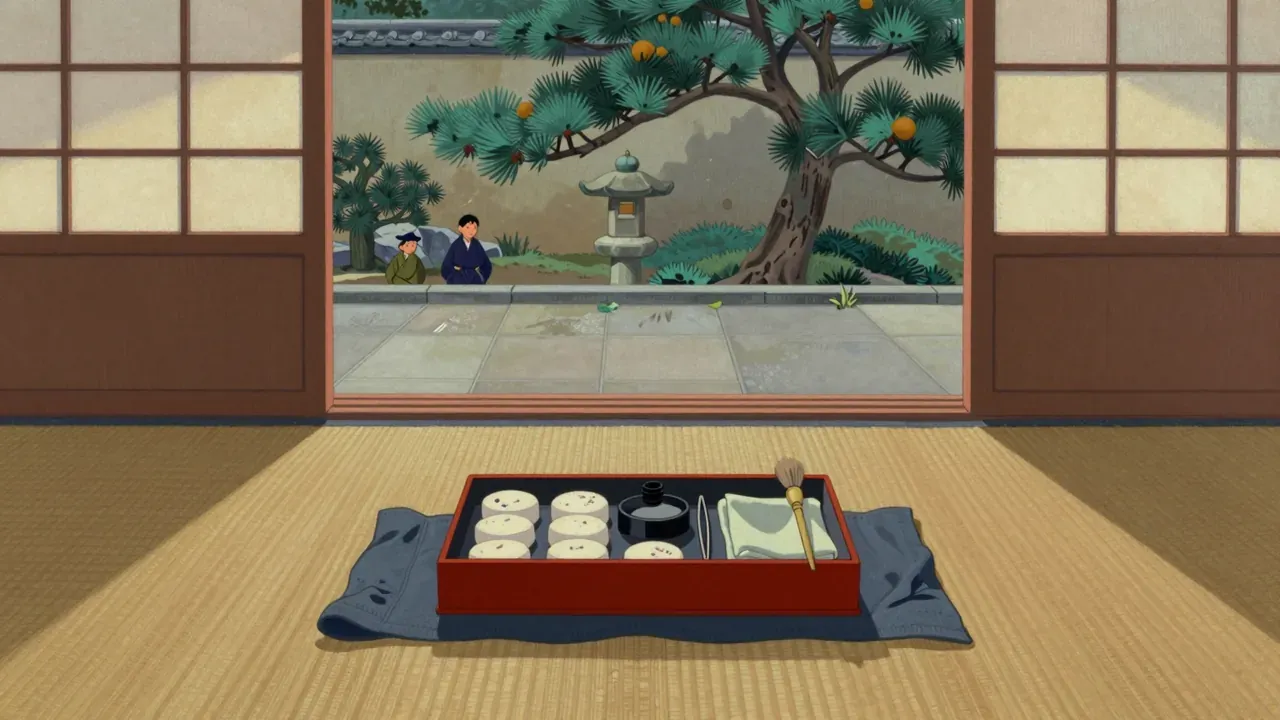
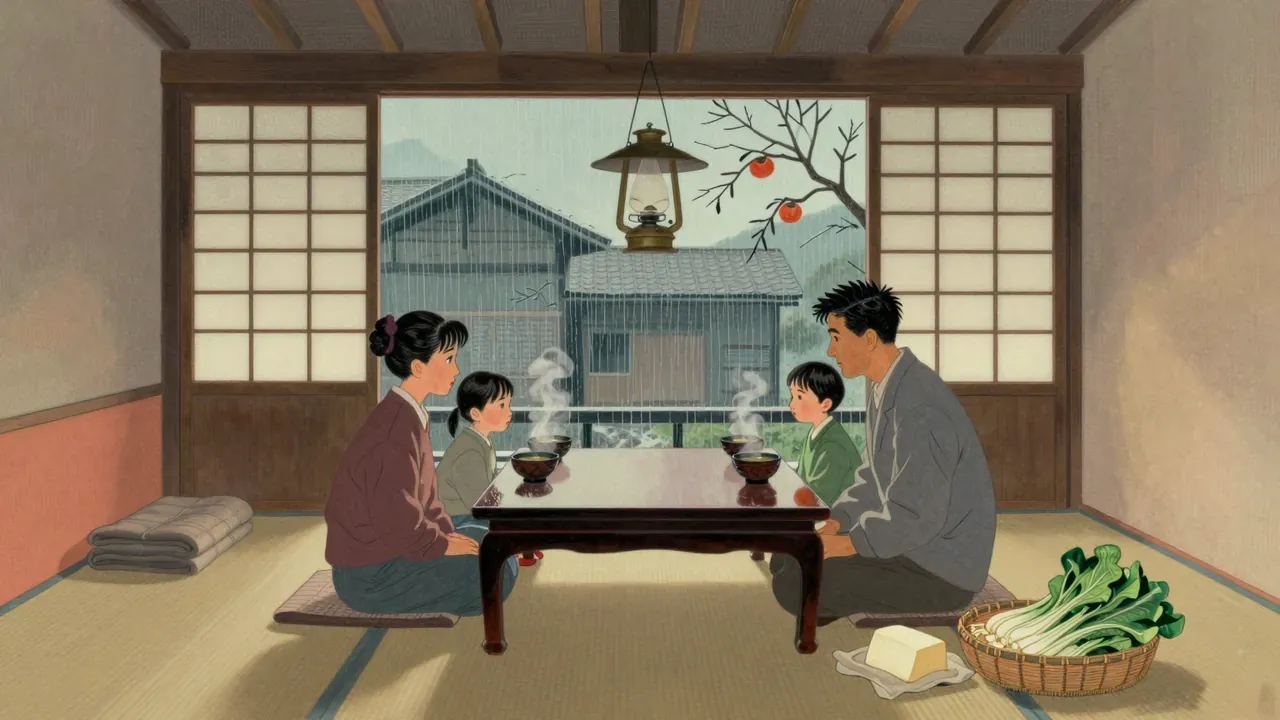
The story follows a single day in the Osone household: Haruko Sugimura as the matriarch manages dwindling rations, mediates between her husband and adult son, and receives a visit from a former neighbour now displaced by firebombing. Eitarō Ozawa plays the son, returning home on leave from demobilisation — his uniform ill-fitting, his silence heavy with unprocessed experience. Kinoshita’s direction avoids theatrical emphasis; scenes unfold in medium shot, often framed within doorways or across tatami mats, with minimal camera movement. Editing is functional, not expressive: cuts follow breath or task, not psychology. Lighting is naturalistic, favouring overcast daylight and the dim amber of oil lamps. There are no musical cues beyond diegetic sounds — a radio playing faintly, distant street vendors, the clink of bowls. Performances are restrained to the point of austerity: Sugimura conveys exhaustion through posture and blink rate; Ozawa’s stillness reads as both deference and withdrawal. The craft serves continuity, not commentary — every choice directs attention inward, toward what remains unsaid between people who know each other too well to explain.
What stays unspoken
What lands is the cumulative weight of domestic realism — not as documentary, but as moral texture. The film’s refusal to dramatise crisis makes its moments of quiet solidarity land with unusual force: a shared glance across a low table, the careful folding of a ration book, the way Sugimura’s character places her son’s worn boots just so beside the genkan. These gestures carry narrative freight because they are never underscored. The film trusts the viewer to read meaning in duration — in how long a character holds a teacup, or how long another waits before speaking. Kinoshita’s restraint allows the audience to inhabit the space between lines rather than be told what lies there. This is especially true in scenes involving food: preparation, portioning, the ritual of serving. Each action becomes a proxy for care, hierarchy, and memory. The film’s temporal structure — one day, linear, unbroken by flashbacks or voiceover — reinforces its ethical stance: history is lived forward, not explained backward. Its power resides not in revelation but in recognition: this is how people keep going when nothing is certain except the next meal, the next errand, the next breath.
What the film leaves out
What does not land is any sense of structural critique. The film treats poverty and scarcity as environmental givens, not as consequences of policy, war economy, or class. There is no reference to Occupation authorities, no mention of black markets, no visible presence of American soldiers — the world outside the Osone home exists only as rumour or absence. This is not necessarily a failure, but it limits the film’s scope: it offers no account of why things are as they are, only how they are endured. Some viewers may find the emotional palette too narrow — grief is muted, anger suppressed, hope unspoken. The performances, while truthful, offer little variation in register; Sugimura and Ozawa do not broaden their characters’ inner lives beyond what the script requires. Kinoshita’s formal discipline risks monotony: the same framing strategies recur across twenty minutes without modulation, and the lack of non-diegetic sound means the film has no sonic punctuation. Those expecting psychological excavation or social diagnosis will find the film withholding — not evasive, but constitutionally reserved. It asks for patience, not engagement.
The work of keeping on
The themes that matter are interdependence, quiet agency, and the ethics of maintenance. The Osone family does not triumph, resist, or transform; it persists. Their labour is reproductive, not productive: cooking, cleaning, listening, remembering, holding space. The film treats these acts as politically significant not because they challenge power, but because they refuse despair. Ageing is present not as decline but as accumulated knowledge — Sugimura’s character knows exactly how much rice to cook for three, how to stretch soy sauce, when to let silence speak. Generational friction appears not as rebellion but as misalignment: the son’s military experience has rewired his sense of time and obligation, but he does not articulate it, and his mother does not demand he do so. The film also explores gendered labour not as burden but as grammar — the way women move through space, allocate attention, absorb impact. There is no thesis about womanhood, only the fact of it: embodied, practical, unremarked upon until it stops. These themes gain resonance precisely because they are not named. They are embedded in composition, rhythm, and omission — not declared, but lived.
Who it meets halfway
This film is for viewers who value observational precision over exposition, and who find emotional resonance in restraint. It suits those accustomed to postwar Japanese cinema — Ozu, early Naruse — or to European realist traditions where mood precedes plot. It is not for those who require narrative propulsion, psychological exposition, or clear moral resolution. A viewer expecting historical context, political argument, or stylistic flourish will likely feel adrift. Someone watching for Ozawa’s later intensity or Sugimura’s commanding stage presence may be disappointed by their deliberate tonal flattening here. The film demands tolerance for ambiguity and comfort with stillness — qualities not everyone brings to a viewing. Its worth depends on whether you believe cinema’s purpose includes bearing witness to uneventful endurance. If you do, it repays attention. If you expect cinema to interpret, instruct, or excite, it will seem inert. Nothing changes that verdict except a shift in your own definition of what a film owes its audience.
What remains after the credits
Yes, it is worth your evening — provided you watch it on terms it sets, not ones you import. Its eighty-one minutes pass without hurry, but they accumulate a quiet density few films achieve at this length. It does not ask for your investment in plot or character arcs, but in attention itself: to how light falls on tatami, how voices lower in shared rooms, how silence thickens after a question goes unanswered. You will not leave with answers, but with a recalibrated sense of what domestic life looks, sounds, and feels like under pressure. Those who find value in films that trust the audience to sit with uncertainty — who appreciate craft that serves observation rather than effect — will find it deeply rewarding. Others may call it slow, slight, or emotionally remote. That disagreement is valid, but it reflects differing expectations, not flaws in the film. Its worth is not absolute, but conditional: it rewards patience, and it assumes you already understand that survival is rarely heroic — it is usually just getting up, again, and making tea.