The weight of arrival
Farewell Amor is a domestic drama about the quiet recalibration of a family after seventeen years apart. It follows Walter, Esther, and Sylvia — Angolan immigrants reunited in Brooklyn — as they inhabit the same cramped apartment without sharing the same emotional language. Ekwa Msangi’s debut does not aim to dramatise immigration as crisis or triumph but as a slow, unglamorous settling-in: the friction of mismatched routines, the weight of unspoken compromises, the exhaustion of translation across time as much as tongue. It treats separation not as plot device but as structural condition — one that reshapes memory, desire, and duty before any dialogue begins. The film avoids exposition about asylum status or bureaucratic delay; its politics are embedded in posture, silence, and the way Esther folds laundry while avoiding Walter’s gaze. It seeks neither catharsis nor resolution but fidelity to the ambivalence of belonging — how home can be both destination and obstacle.
The look of it
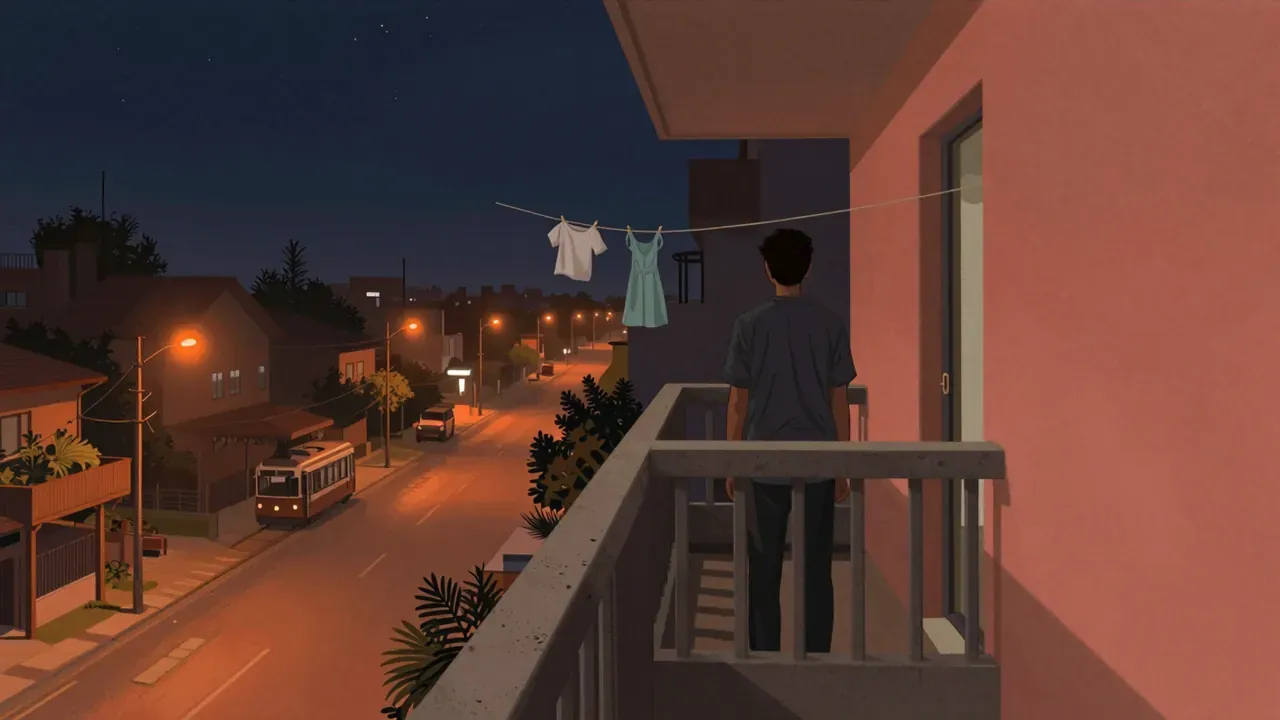
The film unfolds in three distinct chapters — Walter’s, Esther’s, then Sylvia’s — each anchored by a different visual rhythm and tonal register. Ntare Mwine holds Walter’s guardedness with physical stillness and careful diction; Zainab Jah gives Esther a contained intensity, her churchgoing less an act of faith than of discipline; Jayme Lawson makes Sylvia’s dance rehearsals feel like acts of quiet rebellion, limbs straining against inherited expectation. Gordon Willis is not involved; cinematographer Sam Levy uses natural light and shallow depth of field to keep faces half-obscured in doorways or behind steam-fogged glass, reinforcing emotional distance. Editing by Joi McMillon avoids cross-cutting between perspectives, letting each chapter breathe without commentary. The score, by Aska Matsumiya, is sparse — piano motifs recur but never resolve, mirroring the characters’ suspended states. There are no montages, no voiceover, no symbolic weather: just bodies in rooms, learning how to occupy space together again.
What stays with you
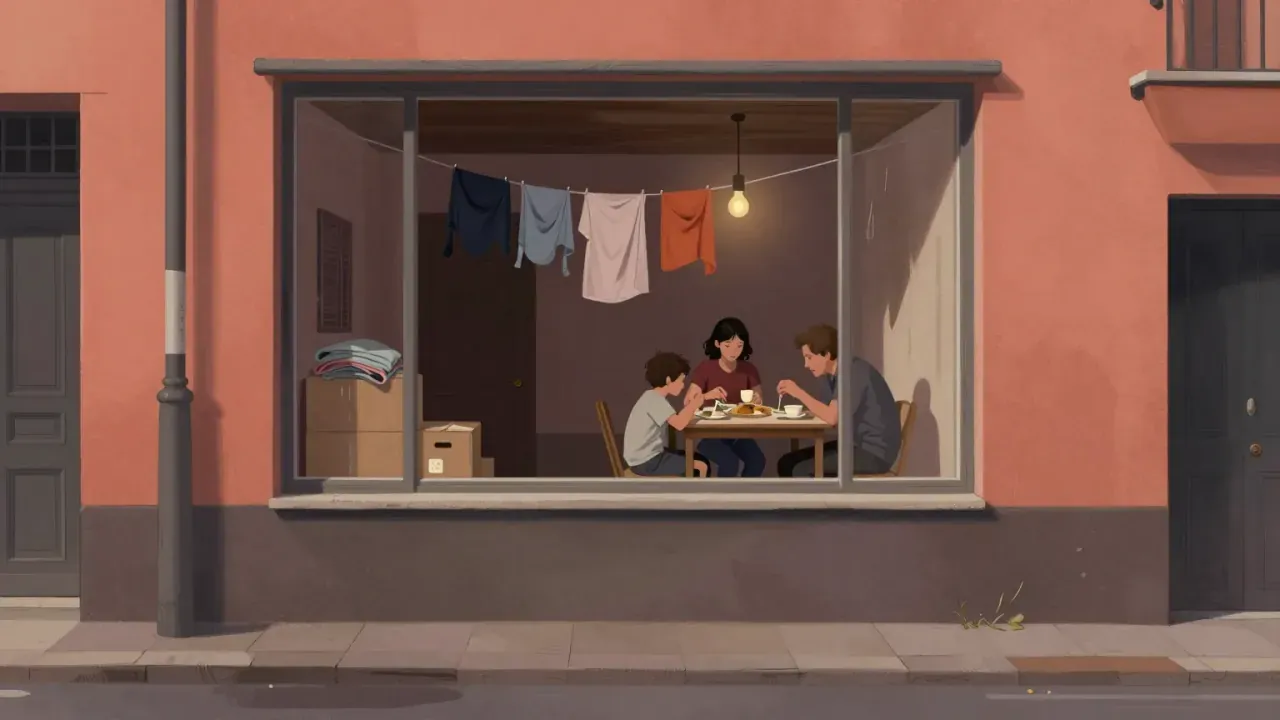
What lands most firmly is the accumulation of small, unremarkable gestures: Walter adjusting the thermostat twice in one scene because he misreads Esther’s discomfort as cold; Sylvia practising dance steps in the hallway at night, her bare feet silent on linoleum; Esther’s pause before opening a can of beans, her knuckles white on the lid. These moments carry narrative weight without explanation, trusting the viewer to infer history from habit. The film’s restraint pays off in scenes where nothing overtly happens — a shared meal eaten in near-silence, a walk to the bodega where no one speaks, a glance held too long then broken. The performances avoid theatricality, favouring micro-shifts: a swallowed breath, a hand retracting mid-reach, a smile that doesn’t reach the eyes. This precision makes the rare eruptions — Sylvia’s outburst over her mother’s disapproval of dance, Walter’s awkward attempt to kiss Esther — land with disproportionate force. The film earns its emotional gravity not through incident but through the sheer, sustained attention it pays to what people do when they are trying, and failing, to connect.
Where the frame narrows
What does not land is the structural conceit of the triptych itself — not as idea, but as execution. Though each chapter offers a distinct perspective, the transitions between them feel more schematic than necessary: Walter’s section ends with him stepping into a taxi; Esther’s opens with her stepping onto a bus; Sylvia’s begins with her stepping onto a subway platform. These repetitions gesture toward thematic unity but risk reducing character to motif. More substantively, the film’s commitment to understatement occasionally flattens stakes — Walter’s relationship with Linda is mentioned but never shown, leaving his moral ambiguity underdeveloped; Esther’s church community remains a backdrop rather than a counterpoint. Sylvia’s dance ambitions lack context beyond opposition to her mother’s wishes, making her arc feel narrower than the others’. The film trusts its audience not to need exposition, but in places it mistakes absence for implication: some silences read as omission, not economy.
What it’s really about
The themes that matter are those embedded in daily practice: the labour of maintenance — of relationships, of identity, of faith — when the original contract has frayed beyond recognition. It treats migration not as rupture but as elongation: time stretches, memory distorts, loyalty mutates. Religion appears not as doctrine but as ritual — Esther’s church attendance is less about belief than about finding structure in displacement. Dance functions similarly for Sylvia: not self-expression as liberation, but bodily reclamation after years of enforced stillness. Walter’s cab-driving is another kind of ritual — a moving, solitary vantage point from which to observe a city he helped build but does not fully inhabit. The film resists binaries: Esther is neither pious nor hypocritical, Walter neither selfish nor noble, Sylvia neither rebellious nor naive. Instead, it traces how values calcify in isolation, then soften — or shatter — on contact. Its central tension is not between old world and new, but between the stories people tell themselves to survive separation, and the ones they must discard to live together again.
Who it’s for
This film is for viewers who value patience, who find emotional resonance in withheld glances and uncompleted sentences, and who trust that a story can hold weight without raising its voice. It suits those familiar with diasporic experience — particularly African and post-colonial migrations — but its specificity serves universality, not exclusion. It is not for those who require clear cause-and-effect plotting, decisive character arcs, or narrative closure. Viewers expecting social realism with polemical edge may find its restraint frustrating; those seeking uplift or cultural affirmation will not find either here. Its quietness is deliberate, not evasive — but it asks the audience to meet it halfway, and some will find the distance too great. A viewer who needs explicit moral framing or dramatic escalation will leave dissatisfied, not because the film fails, but because its terms are incompatible with their expectations.
Is it worth your evening
Yes, it is worth your evening — provided you approach it as you would a conversation with someone you care about but have not seen in years: attentive, unhurried, willing to sit with discomfort and uncertainty. It rewards close attention not with revelation but with recognition — the kind that arrives quietly, like remembering a detail you’d forgotten was important. Its ninety-minute runtime feels neither rushed nor padded; every scene occupies its duration honestly. Those who dislike films where little ‘happens’ may find it inert, but its stillness is active, not passive. It does not ask for your empathy as a gift but earns it incrementally, through accumulated detail. To call it ‘slow’ is to mistake its pace for its purpose: it moves at the speed of real recalibration. If you value craft that serves character over spectacle, and storytelling that honours complexity over clarity, this film repays the time given to it — fully, and without fanfare.