The sickness beneath the skin
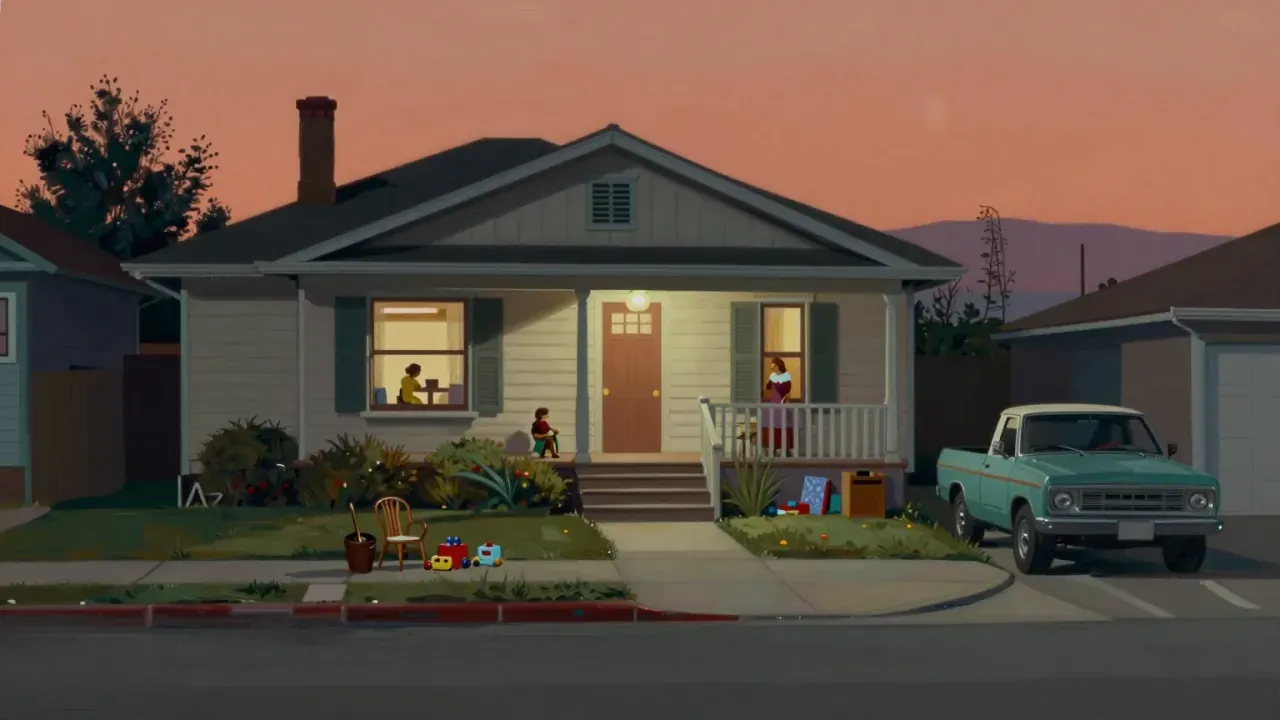
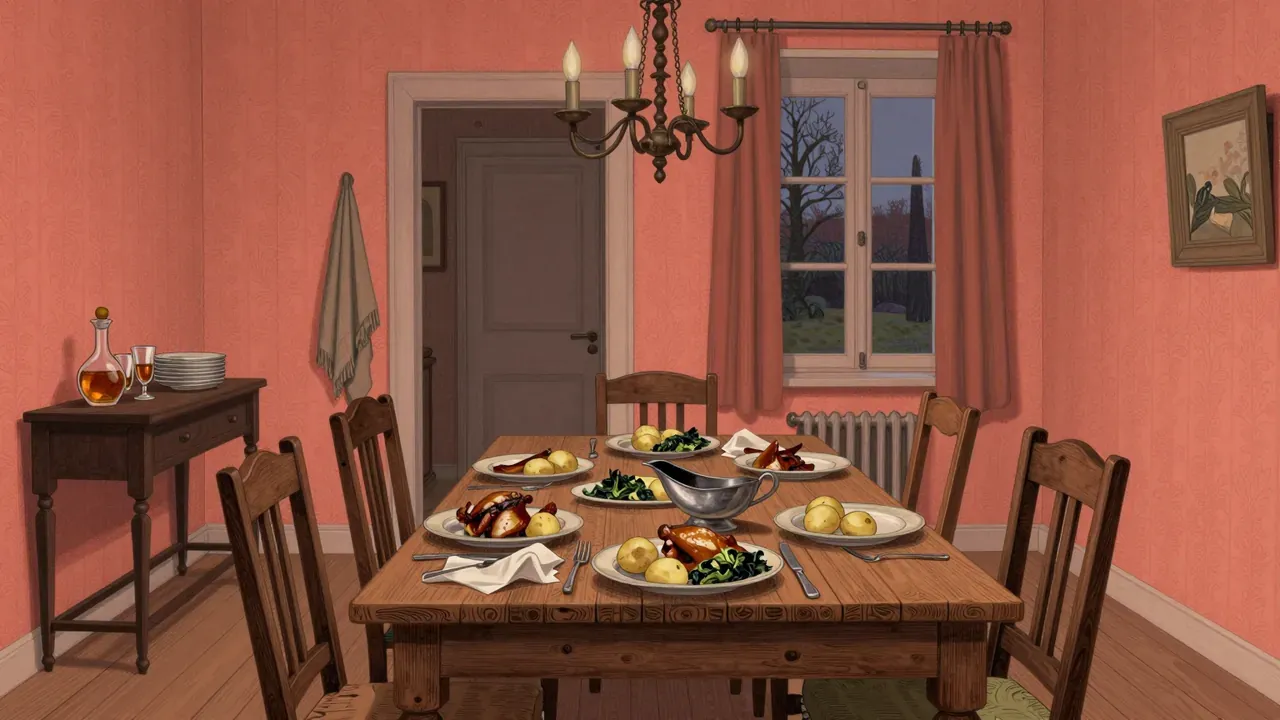
Bigger Than Life is a 1956 American drama that uses the medical crisis of a schoolteacher to dissect the fragility of postwar domestic stability. It does not aim for realism in the clinical sense, but for psychological and social exposure: how a prescribed drug — cortisone — becomes the vector through which repressed ambition, class resentment, patriarchal authority and ideological rigidity erupt into a family’s daily life. The film treats the suburban home not as sanctuary but as pressure chamber; the PTA meeting, the dinner table, the child’s bedroom are all sites where ideology wears the mask of normality. Its project is neither anti-medicine nor anti-suburbia per se, but an unflinching inquiry into what happens when the tools meant to sustain life — employment, marriage, pharmacology, faith — are pressed beyond their design limits. Nicholas Ray frames this not as tragedy of individual weakness but as systemic vulnerability: the same social structures that demand stoicism from Ed Avery also deny him adequate pay, medical transparency or emotional support. The film’s ambition is structural, not sensational.
The look of it
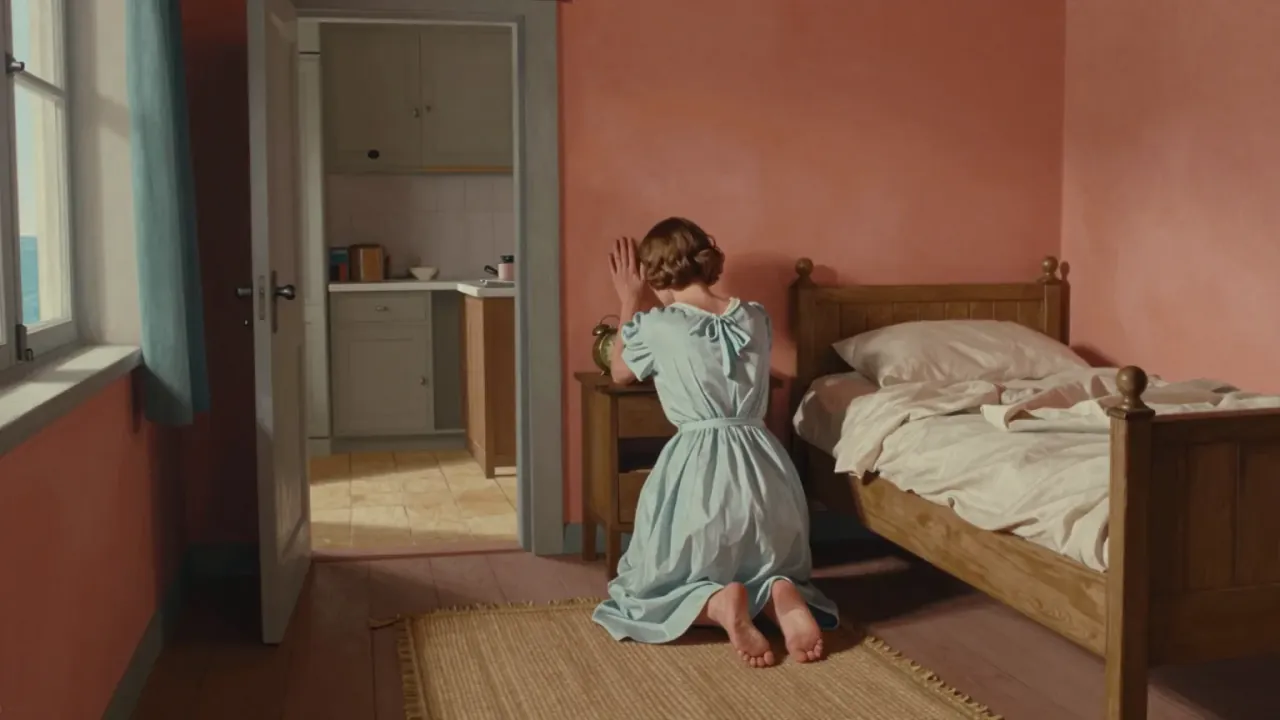
The story follows Ed Avery’s physical recovery and psychological disintegration with surgical pacing: each escalation — the PTA outburst, the football aggression, the Isaac monologue — lands with cumulative weight because the script refuses exposition or moral framing. James Mason’s performance anchors the film in granular physicality: his posture shifts from stooped fatigue to rigid command, his voice tightens then swells, his gaze narrows before it vacates entirely. Joseph MacDonald’s CinemaScope photography works against the format’s usual grandeur: interiors are cramped and off-centre, doorways frame characters like cages, mirrors fracture reflections at key moments. David Raksin’s score avoids melodrama, using sparse piano motifs and low string clusters to underscore unease rather than announce it. Editing by Louis R. Loeffler sustains tension through duration — a held glance, a delayed cut — not montage. Clifford Odets’ rewrites sharpened the dialogue’s ideological edge, particularly in Ed’s speeches, while Mason’s co-production role ensured narrative control remained with the character’s internal logic, not external judgment.
The shape of the frame
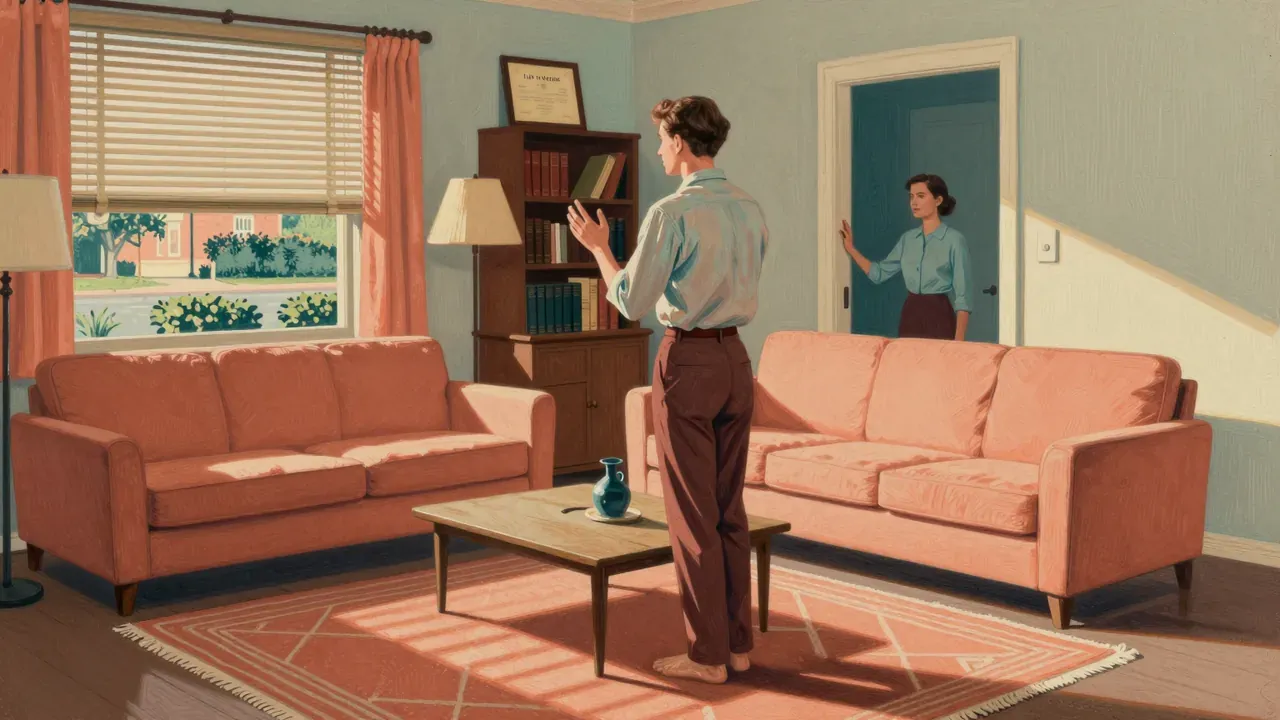
What lands most decisively is the film’s spatial and behavioural precision. The way Ed’s growing megalomania manifests in domestic space — commandeering the living room like a podium, reducing Richie’s bedroom to a tribunal — feels psychologically inevitable, not symbolic. Mason’s delivery of Ed’s escalating pronouncements carries no irony; he believes every word, and that conviction makes the horror intimate, not theatrical. The use of CinemaScope to isolate characters within wide frames — Lou watching Ed and Richie from the kitchen doorway, Ed alone in the vastness of his own hallway — conveys alienation without commentary. Walter Matthau’s Wally Gibbs functions not as foil but as calibrated counterweight: his quiet concern, his research, his physical intervention, all land with understated credibility. The final hospital scene works because it avoids catharsis: Ed’s recognition is tentative, his embrace wordless, his future medically precarious. There is no restoration, only return — and that restraint gives the ending its quiet, unsettling force.
The weight of the words
What does not land consistently is the film’s occasional reliance on exposition that sits outside character motivation. A few lines of medical explanation — delivered by Dr. Norton or Wally — feel inserted for audience orientation rather than emerging from dramatic need. The subplot involving Lou’s earlier suspicion of infidelity resolves too tidily in the hospital kiss, introducing emotional shorthand that contrasts with the film’s otherwise rigorous cause-and-effect logic. Some of Ed’s rhetorical flourishes, particularly during the PTA sequence, risk abstraction if taken outside the context of his deteriorating cognition; they read more clearly as fascist-adjacent rhetoric in retrospect than in the moment. The film’s mid-section also leans heavily on repetition — successive outbursts, identical arguments — which, while true to the cyclical nature of psychosis, can blunt dramatic momentum for viewers unfamiliar with its structural intent. These are not failures of craft, but points where thematic emphasis slightly overrides narrative propulsion.
The politics of the household
The themes that matter are those embedded in material conditions: the low wages of public educators, the opacity of mid-century medical practice, the gendered labour of emotional containment in marriage, and the ideological function of the nuclear family as both refuge and prison. Cortisone is never just a drug here; it is a metaphor for any system — economic, political, pharmaceutical — that promises relief while amplifying existing pathologies. The film interrogates masculinity not as identity but as performance under duress: Ed’s authority crumbles not because he loses control, but because the control he was granted — over classroom, household, wife, son — was always conditional on his compliance with invisible hierarchies. Suburban conformity is shown not as passive dullness but as active suppression: the ‘normal’ life Ed returns to after hospitalisation is the same one that helped break him. The binding-of-Isaac sequence is not about religion alone, but about the terrifying ease with which paternal love can invert into sanctioned violence when insulated by dogma and dosage.
Who it is for
This film is for viewers who attend to composition, who value performance as embodied process rather than charisma, and who accept that moral clarity is often the first casualty of serious psychological portraiture. It rewards patience with slow-burn causality and discomfort with unresolved tension. It is not for those who require narrative closure, empathetic protagonists, or tonal consistency — Ed’s descent offers no ironic distance, no comic relief, no reassuring voiceover. Viewers expecting a cautionary tale about drug abuse may find its critique too diffuse; those seeking historical period-piece charm will be unsettled by its unvarnished view of 1950s domestic strain. Its power depends on sustained attention to micro-shifts in behaviour and framing — a demand that excludes casual viewing. Those who reject CinemaScope as inherently ‘epic’ may resist its use here, though that resistance itself proves part of the film’s point.
What it costs you
Yes, it is worth your evening — provided you watch it whole, undistracted, and with willingness to sit inside its claustrophobic logic. Its 95 minutes accumulate like pressure: the pacing is deliberate, the stakes internal, the resolution ambiguous but earned. It repays rewatching not for plot revelation but for visual and performative detail — how MacDonald places Ed just left of frame in the pharmacy scene, how Mason’s hands tighten on the Bible before he opens it, how Raksin’s motif returns, slower and lower, as Ed approaches Richie’s bedroom. Those who dismiss it as dated or didactic have likely missed its method: it does not argue, it demonstrates. Critics who called it ‘tedious’ in 1956 were reacting to its refusal of entertainment conventions — a refusal that now reads as its central strength. Its endurance lies not in nostalgia but in diagnostic precision: it remains useful because the systems it examines — medical, domestic, ideological — have mutated, not vanished.