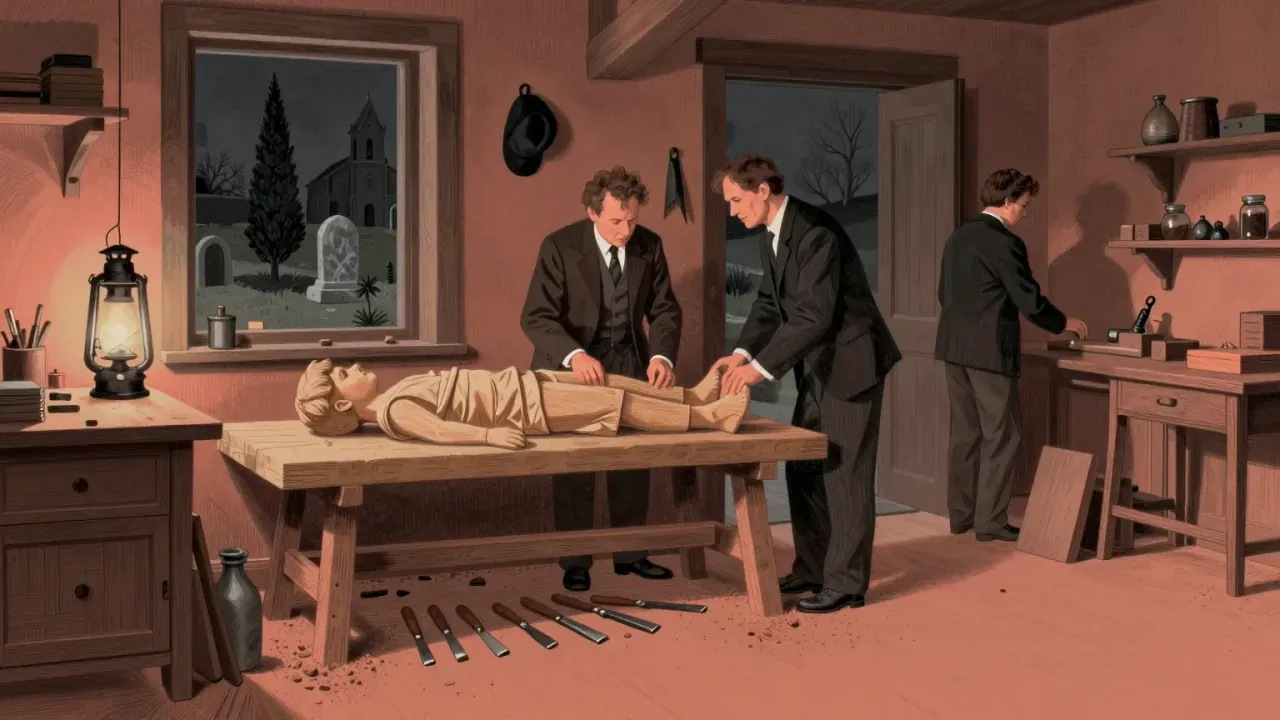
A puppet carved from a grave
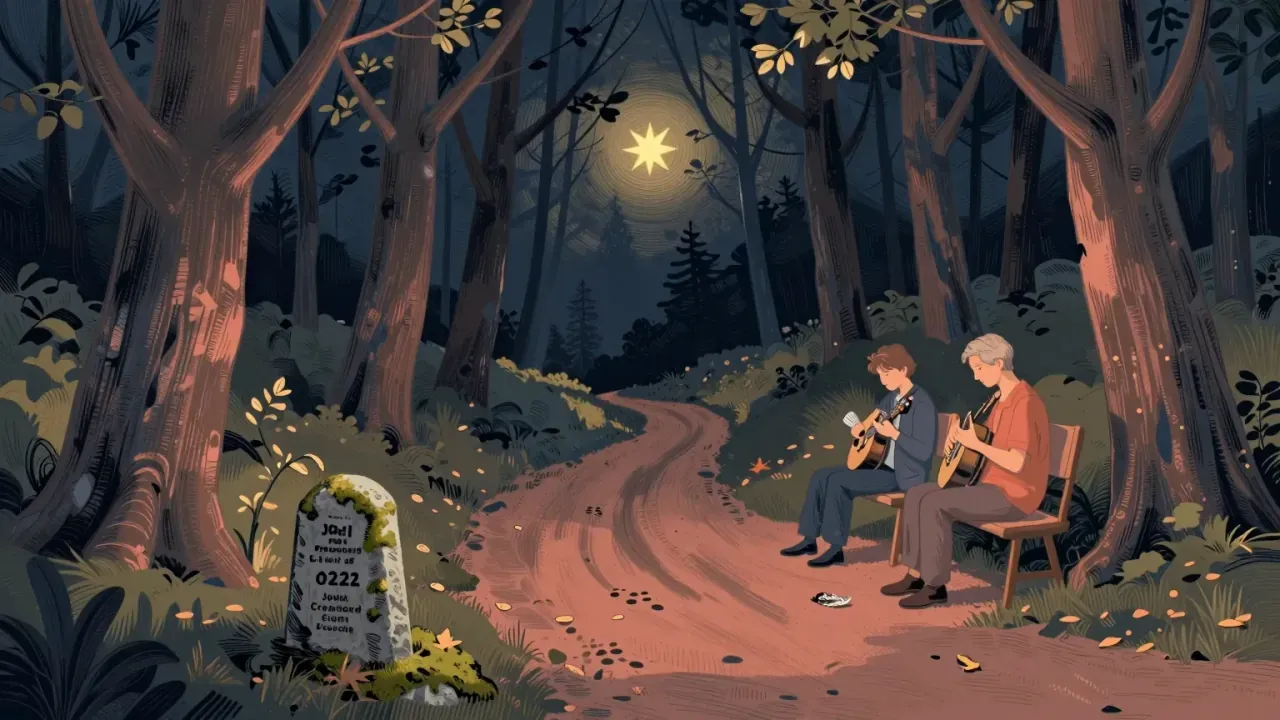
Guillermo del Toro’s Pinocchio takes Carlo Collodi’s puppet story and grafts it onto Fascist Italy between the wars, where Geppetto, still grieving his son Carlo’s death, carves a new boy out of the pine tree growing over the grave and gets more than he expected when the puppet wakes up rowdy, wild and uninterested in behaving like the son he lost. Del Toro co-directed with stop-motion veteran Mark Gustafson and based the puppet’s design on illustrator Gris Grimly’s spindly, unfinished-wood conception of the character, a look del Toro had wanted to build a film around since he first saw it in 2003. The film sets out to keep the darker material Disney’s 1940 version dropped, treating Pinocchio’s disobedience and mortality as the actual subject rather than obstacles for him to overcome.
Fourteen years to get made
The project took roughly fourteen years to reach the screen, first announced in 2008 and stalled for years afterward because no studio would finance a stop-motion film this dark; it was only revived in 2018 once Netflix acquired it. Alexandre Desplat’s score and Ken Schretzmann’s editing hold together a large ensemble of voice performances, including Ewan McGregor as Sebastian J. Cricket, David Bradley as Geppetto, Christoph Waltz as the circus master Count Volpe, and Tilda Swinton voicing the wood sprite reimagined here as paired figures of life and death. Mackinnon & Saunders built the physical puppets, giving Pinocchio a metal, 3D-printed frame and roughly three thousand interchangeable faces so his expressions could shift without ever looking smooth or mass-produced.
Where the darkness pays off
The film earns its harder edges by giving them consequence rather than shock value. Sebastian the cricket, appointed Pinocchio’s reluctant conscience, is killed repeatedly across the story and keeps coming back, which plays as dark comedy at first and gradually becomes a running joke about how little Pinocchio listens to good advice until it is nearly too late. Count Volpe’s travelling circus, which recruits and discards children with the same casualness the Fascist state around them treats its own young recruits, gives del Toro’s Italy-under-Mussolini setting a direct target rather than leaving it as background colour. The choice to make Pinocchio’s wood literally grown from a dead child’s grave gives Geppetto’s later refusal to accept his new son’s difference real weight.
What the runtime can’t quite hold
Compressing Collodi’s episodic novel into under two hours means some traditional set pieces get folded into new ones — the Land of Toys becomes an Italian children’s military training camp, and the Fox and Mangiafuoco are merged into the single figure of Count Volpe, which streamlines the plot but loses some of the built-in escalation the source material relies on. The tonal range is wide, moving from Sebastian’s slapstick deaths to genuinely bleak scenes of wartime loss within the same act, and the film asks a fair amount of trust that these registers will sit together rather than easing the transitions. A few supporting figures, including Podestà’s son, exist mainly to serve the fascism theme rather than as characters in their own right.
A story about refusing to obey
Del Toro has drawn an explicit line between Pinocchio and Frankenstein’s monster, both of them figures brought into a world that expects them to discover morality unassisted, and his version leans into that by setting the story inside a regime that demands obedient, uniform sons above all else. Pinocchio’s refusal to fall in line — his wildness, his questions, his unwillingness to die quietly when death is exactly what a good Fascist child is meant to accept without complaint — becomes the story’s actual ethical stance rather than a character flaw awaiting correction. Geppetto’s arc runs alongside this as a father learning that loving a child who won’t replace the one he lost is a different, harder task than mourning.
Who this suits
This suits viewers who want a fantasy willing to treat mortality and political cruelty as real stakes rather than backdrop, and anyone who values stop-motion for its tactile imperfection over computer-smooth animation. It rewards patience with tonal shifts that swing from comic to grim inside single scenes. It is a poor fit for families expecting anything close to Disney’s version, given the film’s direct handling of death, fascism and a father’s grief, and for viewers who want a fairy tale that resolves its darker elements rather than sitting inside them.
Worth the evening
Yes. A film that took a decade and a half of rejection to get made rarely arrives with this much of its original ambition intact, and del Toro’s insistence on stop-motion over a cheaper animation method pays off in a puppet whose imperfections read as character rather than limitation. The sweep of awards that followed, including the Academy Award for Best Animated Feature, reflected a rare case of a passion project’s obstinacy being vindicated rather than sanded down along the way. It also stands as Mark Gustafson’s final credited film before his death in 2024, which gives the finished object its own quiet weight beyond the story it tells.