What remains
Tender Mercies is a quiet American drama about recovery, not as spectacle but as daily habit: a man rebuilding speech, sobriety, and trust in increments too small for fanfare. It sets out to portray redemption without piety, spiritual renewal without sermonising, and rural Texas life without caricature — an aim rooted in Horton Foote’s belief that film should retain theatre’s respect for the writer’s voice and the character’s interior silence. The script was written specifically for the screen, not adapted, and insists on psychological fidelity over plot mechanics: Mac Sledge does not ‘overcome’ alcoholism in a climax; he endures it, relapses off-screen, and chooses again at dawn. Bruce Beresford’s direction honours that restraint, treating the motel, the gas pumps, the porch swing, and the radio static as narrative agents equal to dialogue. There is no score swell when Mac sings; the music sits in the room with him, unembellished, uncurated. The film refuses to locate its meaning in crisis or catharsis. Instead, it anchors itself in the weight of a held glance, the pause before a yes, the way light falls across a linoleum floor at 4 p.m. on a Tuesday.
The look of it
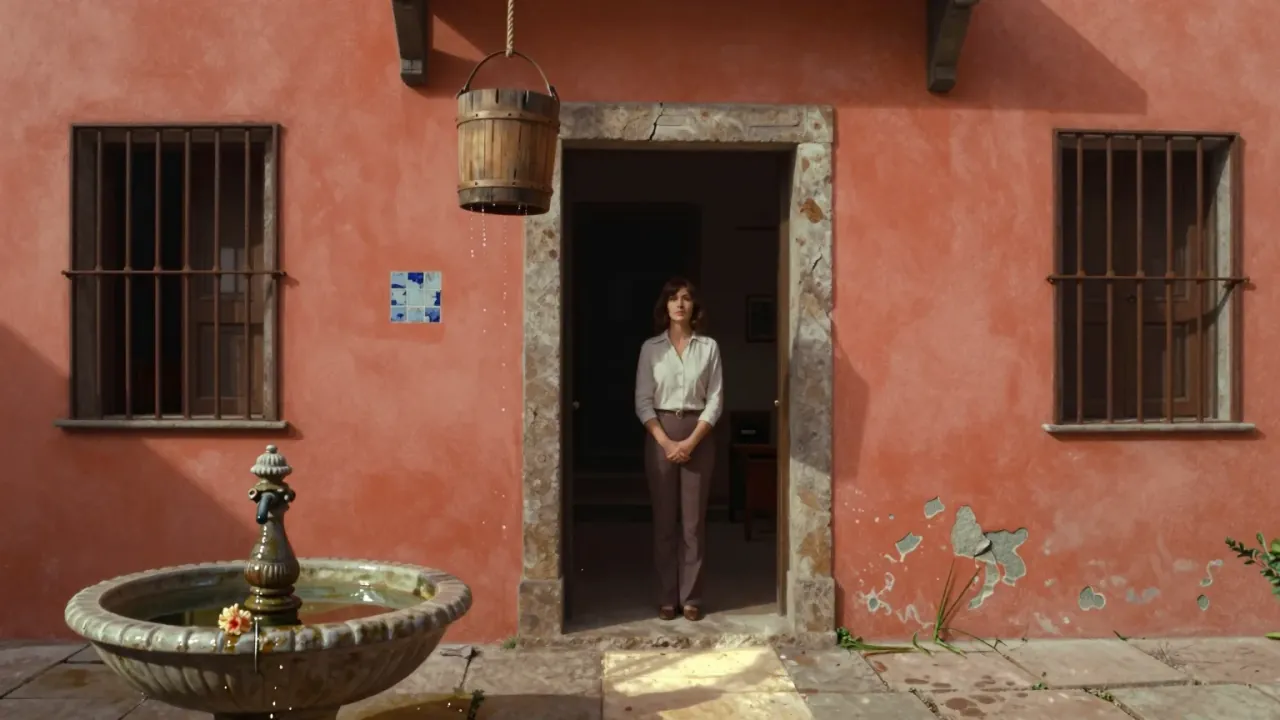
The story follows Mac Sledge, a former country singer, as he stays at Rosa Lee’s roadside motel in rural Texas, slowly reassembling a life after years of addiction and estrangement. Robert Duvall’s performance is calibrated in breaths and silences: he does not emote, he absorbs; his face registers memory before feeling, fatigue before resolve. Betty Buckley as Rosa Lee matches him beat for beat — her kindness is practical, never sentimental, grounded in the rhythm of making coffee and checking oil levels. Russell Boyd’s cinematography avoids both gloss and grit: exteriors are flat and sun-bleached, interiors lit with the dim, even wash of fluorescent tubes and late-afternoon windows. George Dreyfus’s score is sparse, mostly diegetic — guitar strings heard through thin walls, radio snippets, hymns sung off-key in a living room. William M. Anderson’s editing sustains a pace that feels lived-in, not paced: scenes hold past comfort, cuts arrive only when the emotional charge shifts, not when the script demands it. No scene explains Mac’s past; it is implied in the way he flinches at a raised voice, or how he watches his stepson sleep.
How it holds space
What lands is the cumulative weight of small, unremarkable acts — Mac mowing the lawn, Rosa Lee folding laundry, the two of them sitting side by side on the porch without speaking. These moments carry moral gravity because they are neither staged nor symbolic: they are simply what people do when trying to stay present. Duvall’s singing — raw, unpolished, slightly off-mic — lands as authentic, not performative; the songs feel like things he has lived, not lines he has learned. The film’s refusal to dramatise Mac’s relapse (it happens between scenes, reported in passing) lands as truthful to long-term recovery. So does the portrayal of faith: not as doctrine but as habit — lighting a candle, saying grace before meatloaf, listening to a gospel station while pumping petrol. Even the supporting performances land with quiet precision: Wilford Brimley’s mechanic speaks in monosyllables but conveys decades of weathered loyalty; Tess Harper’s ex-wife arrives not as a villain but as someone who has also aged into her own quiet exhaustion. Nothing here shouts for attention, yet nothing feels arbitrary.
What it leaves out
What does not land is the film’s structural looseness when viewed through conventional narrative expectations. There is no third-act confrontation, no decisive turning point, no clear resolution to Mac’s relationship with his daughter beyond a tentative phone call. Some viewers may find the pacing inert, mistaking stillness for emptiness. The script’s deliberate avoidance of exposition means key biographical details — why Mac’s career collapsed, how long he was absent from his daughter’s life — remain vague, not mysterious. This is intentional, but it can read as evasion if one expects psychological completeness. The film also assumes familiarity with the textures of rural Southern life — the cadence of local speech, the social weight of church attendance, the unspoken rules of hospitality — which may distance viewers unfamiliar with those codes. Beresford’s documentary-style approach, while authentic, offers little visual variation: the same wide shots recur, the same muted palette holds across seasons, and the lack of musical punctuation can flatten emotional peaks that other films would underline.
The quiet work
The themes that matter are endurance, not transformation; presence, not progress; mercy as practice, not reward. The title comes from Psalms, but the film treats ‘tender mercies’ not as divine intervention but as human gestures — a shared meal, a repaired fence, a child’s hand placed in an adult’s without prompting. It treats addiction as a condition of fractured attention, not moral failure, and recovery as the slow relearning of how to inhabit time without numbing it. Family is shown not as blood alone but as chosen continuity: Rosa Lee’s son becomes Mac’s son not through adoption but through consistency — showing up, remembering birthdays, teaching how to change a tyre. Christianity appears not as dogma but as rhythm: Sunday service, Bible reading aloud, the quiet certainty of a hymn sung in a kitchen. The film’s deepest concern is with how dignity accrues in increments — not through grand gestures, but through showing up, day after day, for people who have stopped expecting you to.
Who it meets
This film is for viewers who value emotional realism over narrative propulsion, who find resonance in understatement, and who trust silence as a carrier of meaning. It suits those familiar with rural American life or with recovery narratives, but it does not require either — only patience with characters who speak sparingly and act deliberately. It is not for viewers who need clear cause-and-effect storytelling, visible stakes, or cathartic release; those seeking dramatic escalation or thematic exposition will find it withholding. Anyone expecting a ‘country music movie’ — with backstage glamour, industry intrigue, or musical rivalry — will be disappointed: the music here is background, not engine. Those who associate ‘redemption arcs’ with triumphant returns or public vindication may misread Mac’s arc as incomplete. A viewer who values psychological precision over plot momentum, however, will find it deeply rewarding — and the film makes no apology for that priority.
Is it worth your evening?
Yes, it is worth your evening — provided you watch it on its own terms, not as a substitute for something faster or louder. Its 89 minutes pass without strain because its rhythm mirrors ordinary time: unhurried, attentive, lightly weighted. You will not leave exhilarated, but you may leave quieter, more aware of the gravity in small choices. It repays attention not with twists or revelations but with accumulation — the way a repeated gesture (Mac wiping the counter, Rosa Lee adjusting her glasses) gains significance across viewings. Those who dismiss it as ‘slow’ are not wrong about the tempo, but they mistake slowness for emptiness. A viewer who prefers tightly plotted dramas or heightened performances will find it inert; but for anyone open to a film that trusts its audience to sit with ambiguity, its rewards are durable. It does not ask for your energy — it asks for your presence. And in that, it earns its time.