The weight of unsaid things
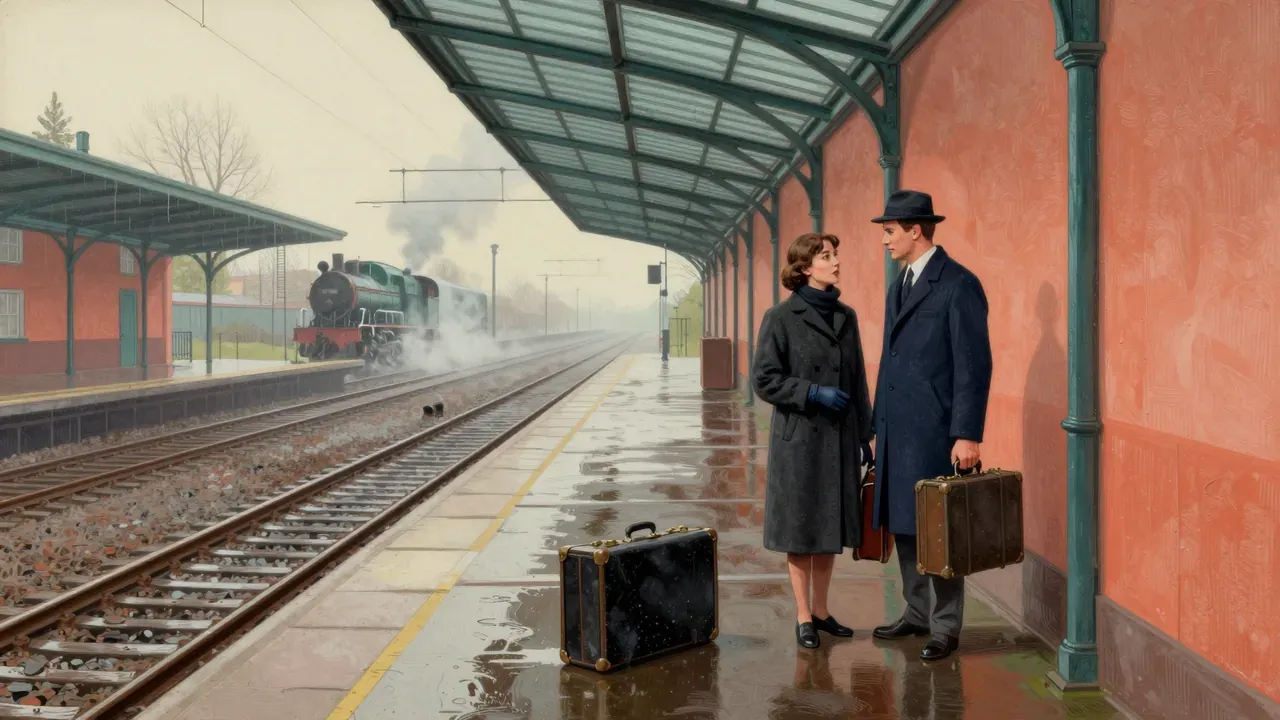
A Long Goodbye is a Soviet drama from 1971 that observes the slow, quiet dissolution of a mother-son relationship as the son prepares to leave for Siberia. It does not aim for revelation or catharsis but for fidelity to emotional hesitation — to the way people withhold, misread, and mistake care for control. Muratova avoids symbolic framing or narrative escalation; instead, she holds space for unspoken tension in domestic routines, train compartments, and garden paths. The film’s project is structural as much as psychological: it arranges scenes so that every gesture — a mother adjusting her coat before stepping into a taxi, a son turning away during a slide show — carries weight not because it advances plot but because it accumulates meaning across repetitions. It treats silence not as absence but as material, and distance not as failure but as condition. Its ambition lies in refusing to resolve what cannot be resolved: the asymmetry of love between parent and adult child, and the exhaustion of sustaining it without shared language. It is not about departure but about the long, unmarked interval before it — the time when both parties are already gone, but neither has left yet. (158 words)
The grammar of restraint
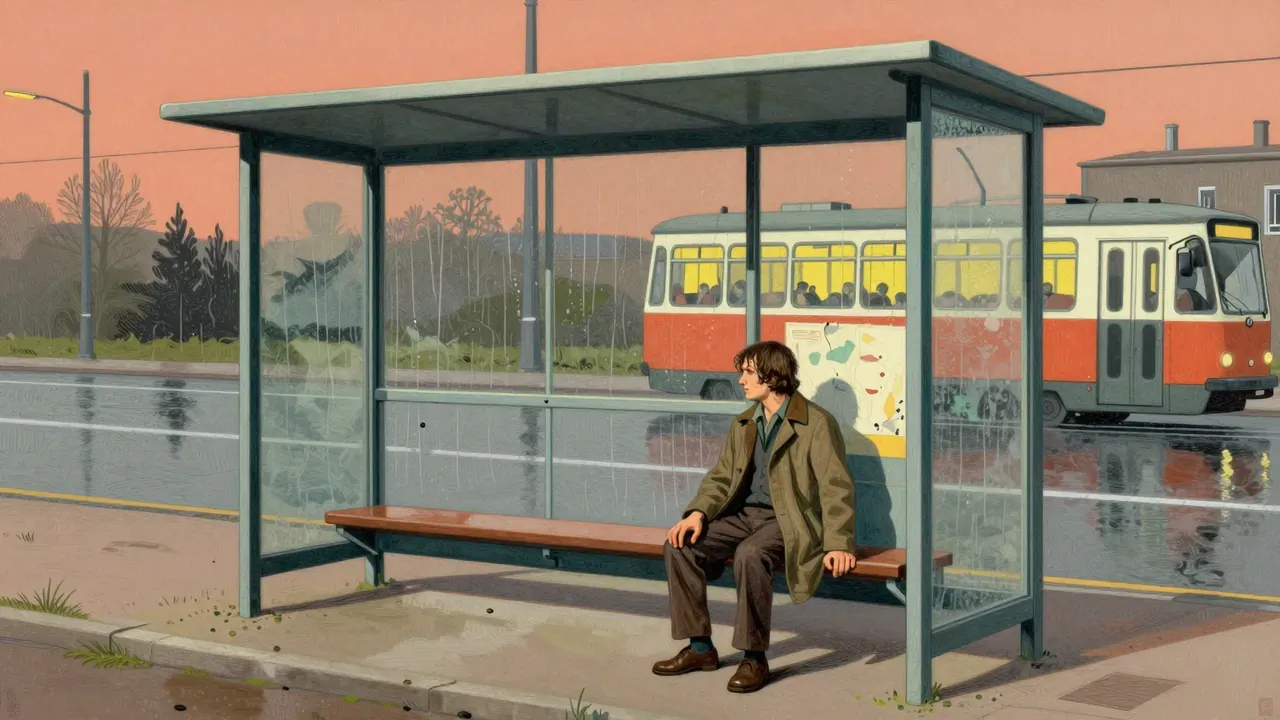
The story unfolds through small, unemphatic actions: sorting mail, setting up a projector, waiting for a tram. Zinaida Sharko’s Yevgenia moves with restrained physicality — shoulders slightly hunched, voice low and steady even when rising — while Oleg Vladimirsky’s Sasha keeps his face half-turned, his answers clipped, his posture closed. Gennadi Karyuk’s cinematography favours medium shots and shallow focus, keeping backgrounds soft but never blurred enough to erase context; interiors are lit with naturalistic flatness, no chiaroscuro, no emphasis on texture over presence. Oleg Karavaychuk’s score is sparse — piano motifs recur but rarely resolve, often cut short by diegetic sound: a train announcement, a phone ring, a child’s off-screen laugh. Editing by Valentyna Oliinyk avoids rhythm for its own sake; cuts land where attention shifts, not where emotion peaks. There are no close-ups on tears, no slow motion on partings. Performances avoid psychology-as-explanation; Sharko does not signal ‘hurt’ or ‘pride’ — she signals fatigue, habit, the weight of fifteen years of translating other people’s words while her own remain unheard. (156 words)
The small failures of connection
What lands is the cumulative pressure of minor betrayals: the post office clerk’s refusal to intercept mail, the mother’s silent signal to Nikolai to drive further down the street, Sasha overhearing his own long-distance call from the hallway. These are not dramatic turns but quiet confirmations — of institutional indifference, of mutual surveillance, of how intimacy erodes not in arguments but in withheld information. The dacha sequence works precisely because nothing decisive happens there: Masha’s polite disinterest, Yevgenia’s eager conversation with Nikolai, Sasha’s retreat to the edge of the garden — all feel inevitable, unforced, emotionally legible without exposition. The theatre scene lands hardest: Yevgenia’s insistence on her reserved seats mid-pantomime is neither comic nor pathetic in isolation, but in context it reads as the last public performance of a role she no longer believes in. Muratova trusts the audience to register the shift — not from dignity to humiliation, but from performance to exposure. The film’s restraint makes its moments of rupture feel earned, not imposed. Its realism is behavioural, not documentary: it shows how people behave when they have stopped expecting to be understood. (159 words)
Threads that do not bind
What does not land is the framing device of Yevgenia’s father’s stories in the cemetery. They arrive without tonal preparation and recede without resonance; their historical weight feels grafted rather than grown, and the film does not return to them in any meaningful way. The subplot involving Tatiana’s job search also drifts — her hiding from the employment commission man introduces a note of bureaucratic absurdity that the rest of the film pointedly avoids, and his palm-reading moment sits uneasily alongside the film’s otherwise grounded register. There is also a slight imbalance in narrative weight: Sasha’s interiority remains deliberately opaque, but the cost is that his decision to leave feels less like choice than atmospheric inevitability — we see its effects on Yevgenia more clearly than its causes in him. Some viewers may find the pacing too undifferentiated, mistaking stillness for stasis; the film offers no punctuation — no music swell, no cut to black — to mark transitions between emotional registers, and those who rely on such cues may miss the subtle shifts in Sharko’s posture or Vladimirsky’s breathing. (154 words)
Themes in posture and timing
The themes that matter are asymmetry, endurance, and the quiet violence of caretaking. Not the violence of shouting or slamming doors, but of sustained attention given without reciprocity — of Yevgenia translating documents for fifteen years while failing to translate her own need for acknowledgment. The film treats time not as linear but as layered: the past lives in Sasha’s unanswered questions about Novosibirsk, in Yevgenia’s stories about her father, in the slides from her ex-husband — all coexisting with the present without hierarchy. Ageing appears not as decline but as accumulation: of habits, of silences, of unasked questions. Class is present but unspoken — in the modest apartment, the dacha’s faded grandeur, the employment commission’s casual authority — never named, always embedded in gesture and setting. Most centrally, the film explores how love persists not through alignment but through misalignment: two people remaining in proximity despite diverging needs, sustained not by agreement but by inertia, duty, and the sheer difficulty of exit. It refuses to moralise either character, treating both as products of systems — familial, bureaucratic, linguistic — that shape feeling without explaining it. (157 words)
Patience as prerequisite
This film is for viewers who attend to duration, who find emotional weight in pauses and peripheral details, who do not require narrative closure to feel satisfied. It suits those familiar with Soviet-era domestic realism — or with Muratova’s later work — and those willing to sit with ambiguity as substance rather than deficit. It is not for viewers who rely on plot propulsion or psychological exposition; those expecting clear motivation for Sasha’s departure or cathartic confrontation will find the film withholding. Nor is it for those who read restraint as emptiness: Muratova’s minimalism is precise, not sparse, and misreading it as austerity would miss the film’s deep attention to micro-gestures — a hand hovering over a letter, a glance held half a second too long. Someone who values thematic clarity over experiential texture may leave frustrated. A change in verdict would follow if the film offered even one sustained scene where mother and son speak directly about their rift — but it does not, and that absence is its point. (159 words)
Holding space for exhaustion
Yes, it is worth your evening — not as diversion but as calibration. It recalibrates attention: after ninety-five minutes of watching people fail to say what they mean, ordinary conversation feels newly charged. Its value lies in its refusal to flatter the viewer with insight or resolution; it asks only that you witness, and in doing so, it reshapes how you register hesitation, fatigue, and unreciprocated care in daily life. Those who find this kind of attention exhausting will not be persuaded by argument — they will simply feel the film’s pace as drag, its silences as gaps. But for those who recognise the emotional labour of maintaining relationships without shared terms, it offers rare precision. It is not ‘enjoyable’ in the conventional sense, but it is rigorously honest, formally coherent, and emotionally exact. Its worth is not in what it gives, but in what it allows you to notice — in the film, and after. To dismiss it as ‘slow’ mistakes duration for dilution; its slowness is structural, not incidental. (158 words)