The shape of a life
Apur Sansar is the third and final film of Satyajit Ray’s Apu Trilogy, adapted from the latter half of Bibhutibhushan Bandopadhyay’s novel Aparajito. It follows Apurba ‘Apu’ Kumar Roy from early adulthood through grief, withdrawal, and tentative re-engagement with life in early-twentieth-century Bengal. The film does not seek spectacle or narrative closure in the conventional sense; instead, it traces quiet psychological shifts across time, anchoring itself in the textures of domestic life, urban poverty, rural custom, and personal responsibility. Its ambition is structural as much as emotional: to complete a portrait of a man not by resolving his conflicts but by showing how he carries them forward — how loss reshapes habit, how memory lives in gesture and silence, how fatherhood returns not as restoration but as negotiation. Ray treats biography as terrain rather than plot, measuring progress not in achievements but in small acts of attention: a hand resting on a child’s shoulder, a manuscript dropped into dust, a glance held a beat too long. The film’s aim is neither catharsis nor condemnation, but fidelity to duration — to what remains when the drama recedes. (158 words)
The look of it
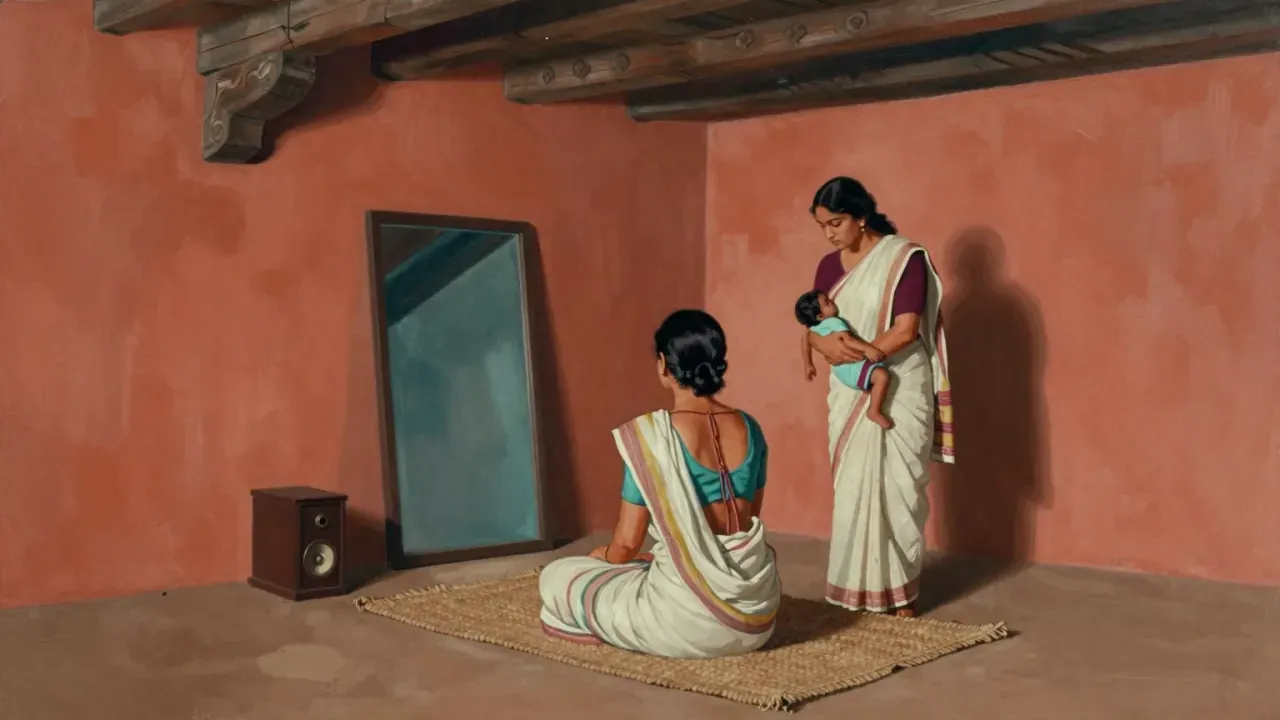
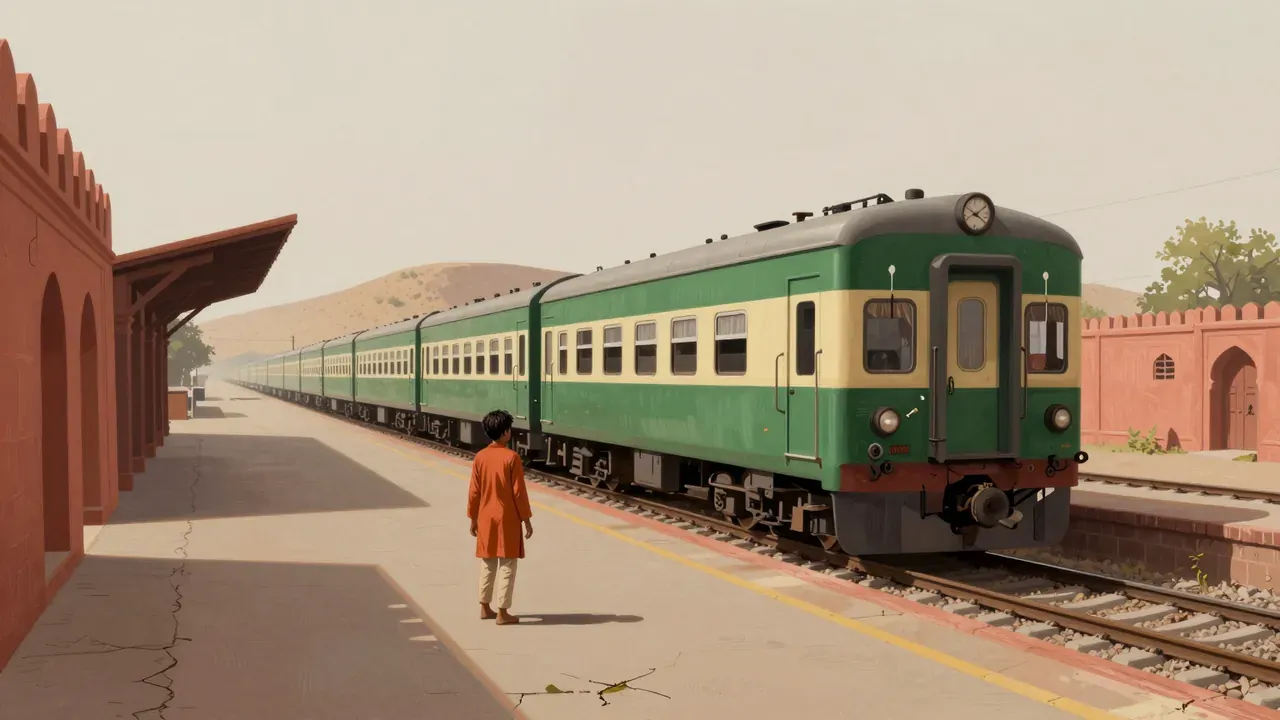
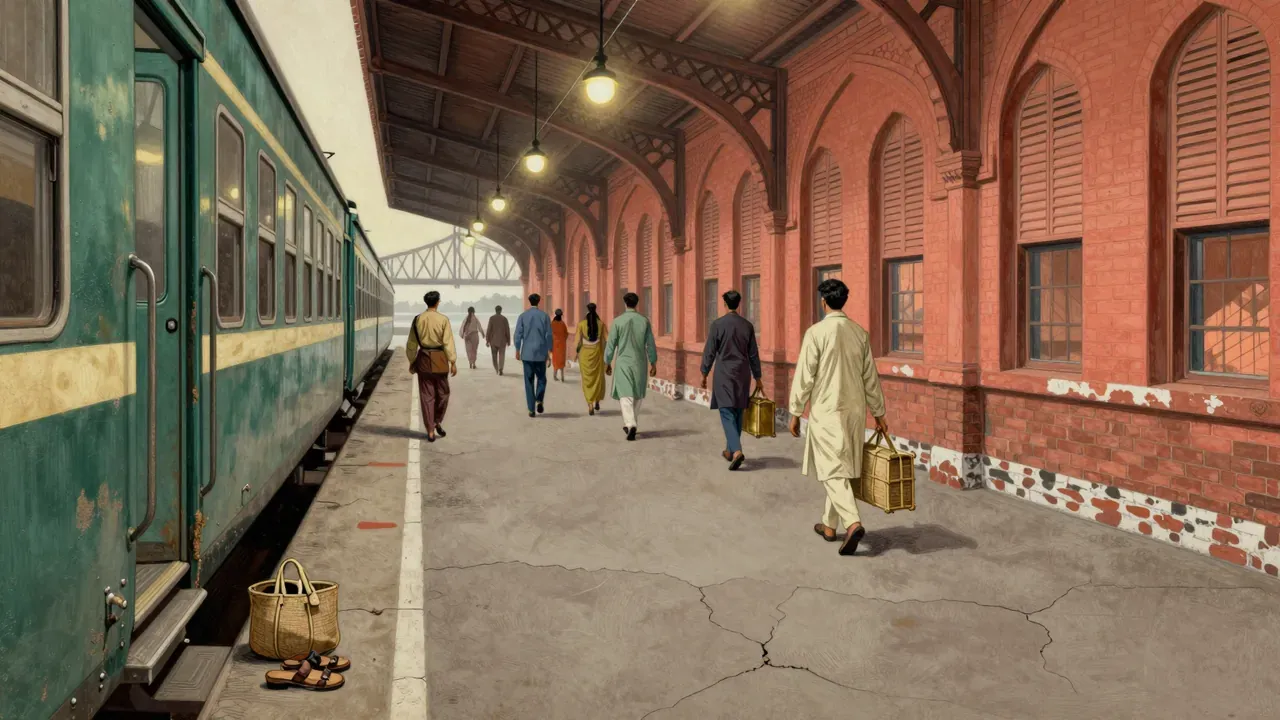
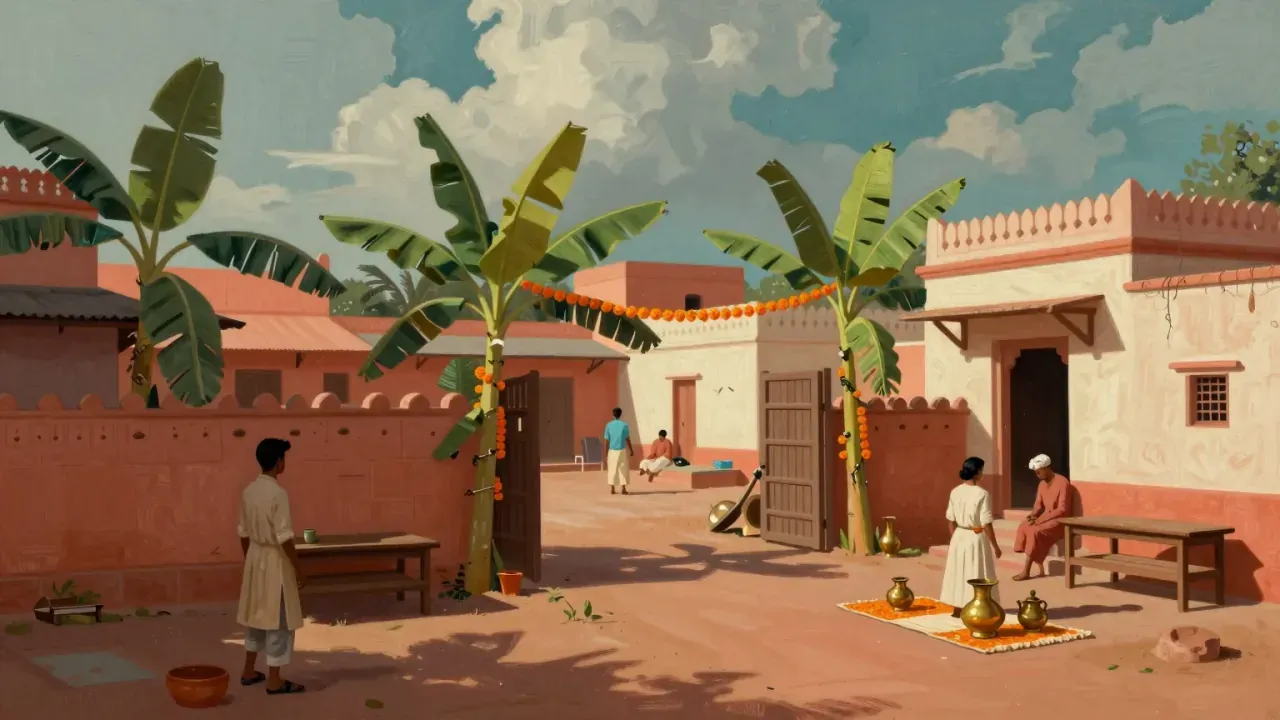
The story unfolds in measured, unforced episodes: Apu’s drift in Calcutta, the impromptu wedding in Khulna, the fragile intimacy with Aparna, her death in childbirth, his abandonment of Kajal, and eventual return. Soumitra Chatterjee’s performance avoids theatricality; his Apu registers change through posture, hesitation, and the gradual softening of his gaze. Sharmila Tagore, aged sixteen at filming, conveys Aparna’s quiet agency and warmth without exposition — her presence is felt in the rhythm of shared meals, in the way she folds laundry or reads aloud. Subrata Mitra’s cinematography favours natural light and shallow focus, keeping interiors dim and faces half-lit, while exterior scenes are shot with patient stillness, often framing characters against open sky or empty courtyards. Ravi Shankar’s score uses sitar and tabla sparingly, its phrases sparse and resonant, never underlining emotion but marking its passage. Dulal Dutta’s editing sustains continuity across years without montage or voiceover — time passes in the length of a train ride, the growth of a child, the wear on a coat. The craft serves restraint, not flourish. (159 words)
What stays with you
What lands most firmly is the film’s refusal to sentimentalise either love or grief. Apu and Aparna’s relationship builds in small, unremarkable moments — sharing tea, reading together, walking home — and feels earned because it is shown, not declared. Their brief domestic happiness carries weight precisely because it is ordinary, unvarnished, and therefore fragile. The childbirth scene avoids melodrama: it is clinical, hushed, and devastating in its matter-of-factness. Later, Apu’s abandonment of Kajal is not framed as villainy but as paralysis — a man hollowed out, unable to hold both memory and responsibility at once. The final reunion works because it resists reconciliation; Kajal’s initial rejection of Apu is neither punished nor rushed, and their slow, wordless reconnection feels true to how children absorb adults who arrive late. The film trusts the viewer to sit with ambiguity: Apu does not ‘get over’ Aparna, nor does he become a perfect father. He simply begins again, tentatively, with no guarantee of success. That humility — in writing, performance, and pacing — gives the film its enduring resonance. (157 words)
Where it asks too much
What does not land for some viewers is the film’s deliberate pace and absence of narrative propulsion. There are no villains, no reversals of fortune beyond those dictated by circumstance, and no dialogue that explains inner states. Apu’s decision to marry Aparna is presented without internal monologue or moral debate; his later withdrawal is similarly unaccompanied by justification. This may read as passivity rather than realism to those accustomed to causal plotting. The film also assumes familiarity with Hindu customs — the urgency of marrying within the auspicious hour, the social weight of widowhood, the role of extended family in child-rearing — without exposition. Some may find the ending unresolved: Apu and Kajal walk away together, but there is no indication of stability, employment, or even housing. The film offers no reassurance that returning is enough — only that it is necessary. Those expecting thematic resolution or character ‘growth’ as linear progression may leave dissatisfied. The film’s power lies in its resistance to uplift, but that same resistance can feel withholding if one arrives seeking affirmation rather than observation. (156 words)
What it says about growing up
The themes that matter are inheritance, responsibility as choice rather than duty, and the quiet persistence of selfhood amid rupture. Apu inherits not wealth or status but memory — of his parents, of village life, of literary aspiration — and must decide which parts to carry forward. His relationship with Kajal is not about redemption but about learning to hold two truths at once: that Aparna is gone, and that this child exists. The film treats fatherhood not as instinct but as practice — something learned slowly, imperfectly, through repetition and error. Class is present but unspoken: Apu’s unemployment, his rented room, Pulu’s clerical job, the contrast between urban precarity and rural obligation — all shape possibility without becoming subject. Time is another theme: not as a force to be mastered, but as a medium in which identity accumulates and erodes. The film suggests that maturity is not arrival but recalibration — adjusting one’s compass after the ground has shifted. There is no transcendence here, only endurance made visible in gesture, silence, and the slow turning of a page. (152 words)
Who it is for
This film is for viewers who value sustained attention over exposition, who find emotional weight in stillness, and who accept that character development need not mean transformation. It suits those familiar with mid-century world cinema or Indian literature, though no prior knowledge is required — only patience with understatement. It is not for those who require clear motivation, narrative momentum, or moral clarity. Viewers who expect protagonists to ‘learn a lesson’ or whose engagement depends on plot twists or verbal wit may find it inert. Those who associate ‘drama’ with heightened conflict or rhetorical intensity will likely disengage. The film’s quietness is not neutrality — it is a formal commitment to observing life as it accrues, not as it climaxes. That stance will alienate some, especially those accustomed to streaming-era pacing or Western dramatic conventions where interiority is voiced. But for those willing to adjust their temporal expectations, the film rewards with cumulative precision — a rare thing in any era. (150 words)
Is it worth your evening
Yes, it is worth your evening — provided you watch it whole, without interruption, and without expectation of payoff. Its 101 minutes ask for nothing more than presence, and they repay that attention with granular honesty about how people live through loss and begin again. It is not ‘entertaining’ in the conventional sense, but it is deeply involving — emotionally precise, visually coherent, and morally unflinching. Those who dislike it tend to do so on grounds of pace or perceived passivity, not technical failure. A different verdict would follow only if one valued narrative efficiency above psychological fidelity, or believed that grief must be dramatised rather than lived in silence. For anyone interested in how cinema can register the weight of ordinary days — how a glance, a pause, a single unlit room can carry the full burden of a life — this remains indispensable. It earns its duration. (150 words)