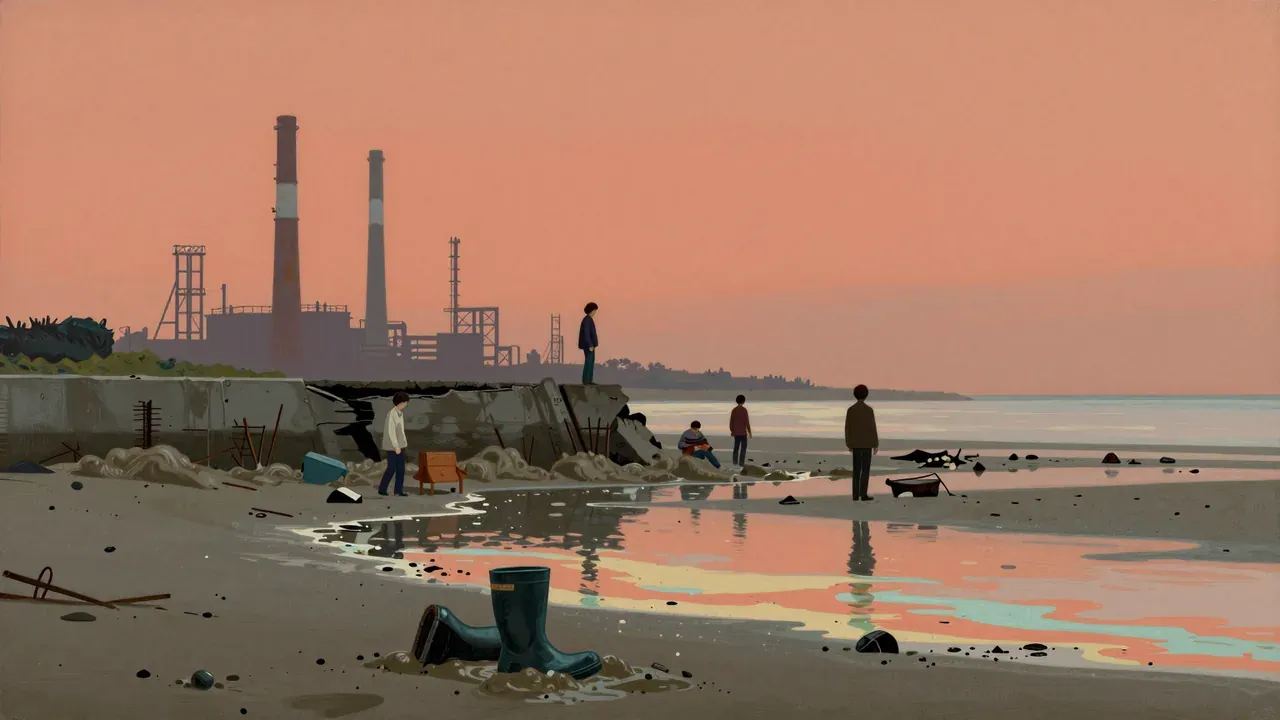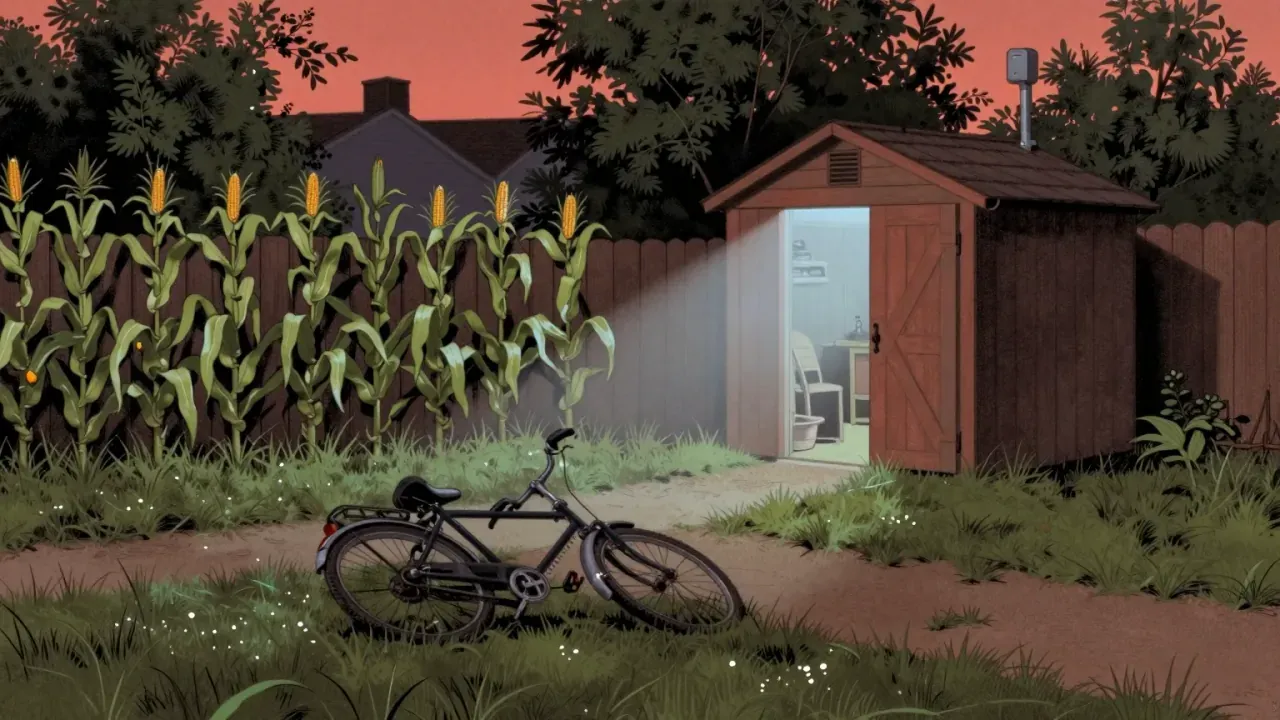
An alien born from a director’s own loneliness
E.T. the Extra-Terrestrial is Steven Spielberg’s 1982 film about a boy named Elliott who discovers an alien stranded on Earth and hides it from his family and from government agents until they can find a way to send it home. Melissa Mathison developed the script from Night Skies, an earlier, harsher alien-invasion project Spielberg had been planning with John Sayles; while filming Raiders of the Lost Ark in Tunisia and missing his family, Spielberg told Mathison about a subplot in which one alien, unlike the rest, befriends a child, and that idea became the whole film. Columbia Pictures rejected Mathison’s script as having limited commercial appeal, and Universal bought it for $1 million instead. The finished film reads less as science fiction than as Spielberg’s own account of growing up after his parents’ divorce.
A shoot filmed in the order the story happens
Filming ran from September to December 1981 in rough chronological order, an unusual choice made specifically to help the child actors build convincing emotion scene by scene rather than out of sequence. Henry Thomas won the role of Elliott after an improvised audition scene in which he drew on memories of his dead dog to produce real tears, and Drew Barrymore was cast as his sister Gertie partly on the strength of a story she invented about leading a punk rock band. Carlo Rambaldi, who had designed the aliens for Close Encounters of the Third Kind, built the E.T. puppet over three months for $1.5 million, giving it an extendable neck inspired by his own painting and a face modelled on Einstein, Carl Sandburg and Ernest Hemingway; two little people and a 12-year-old boy born without legs took turns wearing the costume.
A voice built from sixteen people and no single human
The film’s emotional force comes from small, specific choices rather than spectacle: sound designer Ben Burtt built E.T.’s voice from recordings of sixteen different people and animals, including a burping film professor, raccoons and Spielberg’s own sick and sleeping wife, and the resulting voice never sounds quite human, which keeps the creature strange even as the story asks the audience to love it. Pat Welsh, a retired script supervisor who smoked two packs of cigarettes a day, provided the bulk of that voice for a single nine-and-a-half-hour session and was paid $380 for it. The bicycle flight silhouetted against the moon, engineered as a practical effect rather than pure optical trickery, remains the image the film is best remembered by, and it earns that status.
A cut subplot and a thinner second half
The government agents pursuing E.T. are drawn with almost no interior life beyond their jangling keys and faceless authority, which works as a child’s-eye simplification of adult power but leaves the film’s back half thinner on tension than its earlier, more domestic scenes. A subplot involving Harrison Ford as Elliott’s school principal was cut entirely in post-production, and its absence is one reason the film’s midsection, once E.T. begins to sicken, relies heavily on repetition of the same worried-adult imagery to sustain suspense. John Williams’s score, elsewhere one of the film’s clear strengths, occasionally pushes emotional beats the visuals had already made on their own.
A child’s grief given a shape that can’t speak
Loneliness, specifically the loneliness Spielberg has said he felt after his parents divorced when he was a child, sits underneath every scene between Elliott and E.T., and the alien functions less as a science-fiction premise than as the imaginary companion Spielberg invented for himself at the time. Family is reconstituted rather than simply depicted: Elliott’s father is absent, and the makeshift unit of mother, siblings and a stranded creature that can’t speak English stands in for the family Elliott has actually lost. The film treats a child’s imaginative life as something adults consistently fail to take seriously until it is nearly too late, which is also what makes the story’s ending as much a loss as a rescue.
Who the quiet stretches reward
This suits viewers who want a science-fiction premise handled as family drama rather than adventure, anyone interested in early-1980s practical effects work, or parents looking for a film that treats a child’s grief and imagination with real seriousness rather than condescension. It is a poor match for viewers wanting fast pacing or genre thrills, since long stretches of the film are given over to quiet domestic scenes between Elliott, his siblings and their mother. Very young or sensitive children may also find E.T.’s illness and the government intervention more frightening than the film’s reputation as family entertainment suggests.
A record that held for eleven years
Reception at the time and since has been close to uniform: a 99 percent Tomatometer score, a 92 Metascore and four Academy Awards from nine nominations, and the film held the record for highest-grossing picture in history for eleven years after overtaking Star Wars. At 115 minutes it never outstays the patience of the story it is telling, and its reputation as one of the more purely earnest films Spielberg ever made holds up on rewatching rather than depending on nostalgia. It is worth an evening for exactly the reason it succeeded in 1982: it commits fully to a child’s perspective and never breaks that commitment for a joke or a shortcut.