The subject of it
Time is a documentary film directed by Garrett Bradley, released in 2020, that follows Sibil Fox Richardson over two decades as she campaigns for the release of her husband Rob, incarcerated for 60 years in Louisiana’s Angola prison after an armed bank robbery. It does not reconstruct the crime, explain legal procedure or interview officials; instead it centres Fox Rich’s voice, labour and time — both lived and recorded — as political material. The film uses no talking-head interviews, no expert commentary, no archival news footage. Its aim is not to persuade through argument but to reorient perception: to make duration visible, to let waiting accumulate weight, to show how love persists under structural abandonment. It treats the home video archive not as evidence but as counter-archive — a record made outside institutional control, in defiance of erasure. The film’s structure refuses chronology as progress; it loops, repeats, pauses, holds frames — insisting that justice delayed is not justice deferred but justice denied, daily.
The look of it
The film works through juxtaposition rather than exposition: original black-and-white cinematography shot by Bradley on a Sony FS7 sits alongside 100 hours of Fox Rich’s own mini-DV tapes — grainy, handheld, sometimes silent, often shot from a child’s height or while driving. There are no voiceovers explaining context; narration comes only from Fox’s letters, speeches and voicemails, edited with rhythmic precision. Jamieson Shaw and Edwin Montgomery’s score avoids sentimentality, favouring sparse piano motifs and ambient textures, while Emahoy Tsegué-Maryam Guèbrou’s 1960s recordings introduce a temporal dissonance — music made in one era of resistance echoing into another. Editing by Gabriel Rhodes and Bradley herself stitches past and present without hierarchy: a toddler’s birthday party cuts to Fox’s courtroom testimony; Rob’s prison ID photo dissolves into a home video of him holding a newborn. Performance is unmediated — Fox speaks directly to camera, to her children, to Rob on the phone — never performing for documentary convention but living inside it.
The rhythm of it
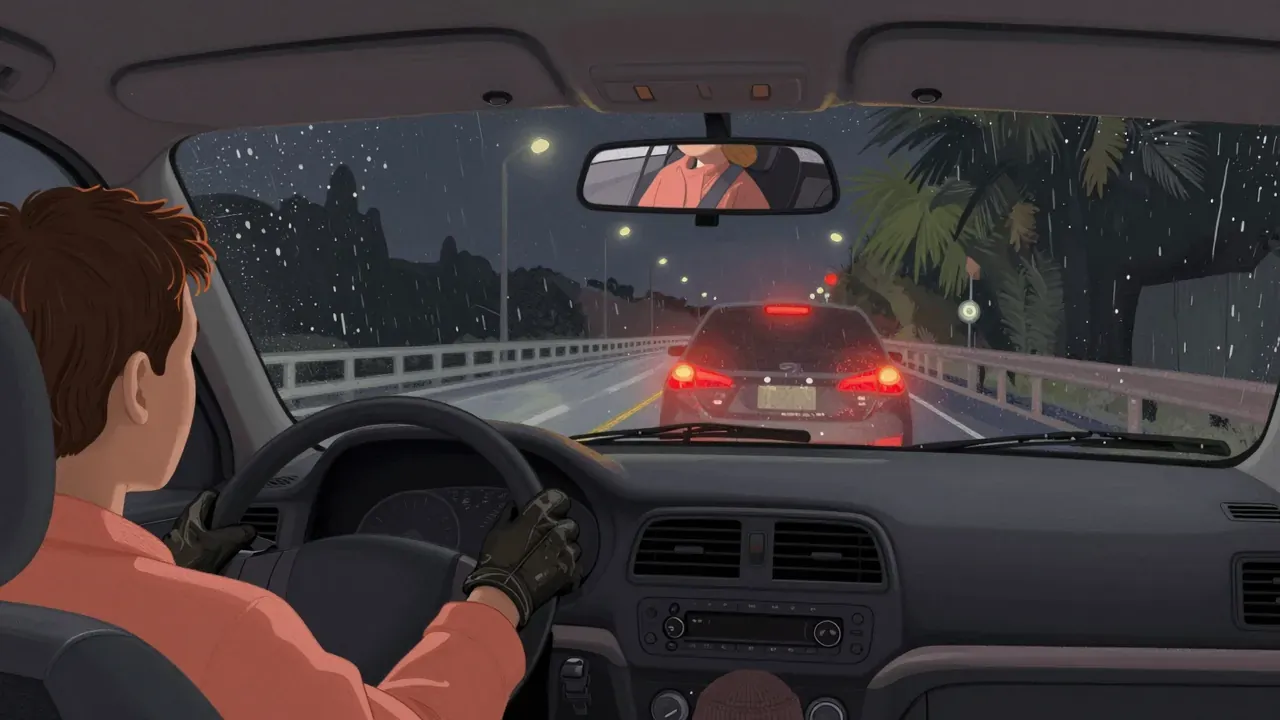
What lands is the sheer physicality of time passing: the way Fox’s hairline recedes across decades, how her voice tightens then steadies, how her children grow up in the margins of her struggle. The film makes bureaucratic cruelty legible not through statistics but through accumulation — repeated visits, unanswered letters, missed birthdays, the slow erosion of legal hope. A sequence where Fox drives alone at night, listening to her own recorded voice planning Rob’s parole hearing, carries more forensic force than any policy analysis. The black-and-white palette does not aestheticise poverty or suffering; it flattens hierarchy between formats, letting home video and cinema-grade footage occupy equal moral weight. When Rob finally appears on screen — not as a prisoner but as a man folding laundry, reading aloud to his sons — the restraint feels earned, not withheld. This is not catharsis but continuity: the film’s emotional power lies in its refusal to resolve, choosing instead to hold space for endurance as practice.
The silence in it
What does not land is any sustained reckoning with the robbery itself. The film declines to clarify Rob’s role, the plea bargain he rejected, or why Fox accepted a shorter sentence while he did not — choices that shape the family’s trajectory but remain opaque. This is not negligence but design: Bradley foregrounds consequence over causation. Yet some viewers may find the absence of legal or moral interrogation frustrating — particularly when the film’s formal elegance risks smoothing over contradiction. The home videos, though vital, occasionally blur narrative focus: a child’s birthday party intercut with prison correspondence can feel associative rather than clarifying. And while the score’s restraint serves the film’s tone, its consistency borders on uniformity — moments that might benefit from silence or dissonance instead repeat the same melancholy cadence. These are not flaws in execution but limits of scope: the film chooses intimacy over explanation, and that choice excludes certain kinds of accountability.
The politics of it
The themes that matter are time as labour, time as punishment, and time as inheritance. The film treats incarceration not as an event but as a condition that reshapes biology, memory and language — Fox’s children learn to speak in sentences that begin ‘When Daddy gets out…’. It examines how abolitionist thought lives inside domestic life: Fox builds businesses, writes letters, organises rallies, all while raising six sons, refusing to separate political action from care work. The film also insists on Black motherhood as archive — Fox’s tapes are not incidental documentation but deliberate preservation, a form of resistance against state erasure. There is no abstract discussion of systemic racism; instead, the system appears in the length of a prison sentence, the cost of a phone call, the distance between Baton Rouge and Angola. Justice here is not procedural but relational: measured in hugs withheld, graduations missed, birthdays celebrated over collect calls. The film’s quietest theme is patience as radical agency — not passive waiting but active, daily refusal to accept the given terms of time.
The audience for it
This film is for viewers who trust image and duration over exposition, who value formal coherence as ethical stance, and who understand documentary as witness rather than report. It is for those already familiar with carceral logic — people who have visited prisons, written letters, navigated parole boards — because its silences speak loudest to those who recognise what is left unsaid. It is not for viewers seeking legal clarity, narrative resolution or biographical completeness. Those who expect documentaries to diagnose causes or propose solutions will find it withholding. Those who associate activism with slogans or rallies may miss how the film locates resistance in bedtime stories, tax returns and school runs. The film assumes its audience can sit with ambiguity, tolerate unresolved tension, and read emotion not as confession but as data. If you need closure before reflection, this will frustrate. If you believe time spent watching should mirror time spent living — uneven, repetitive, tender, exhausting — then it will hold you.
The time it takes
Yes, it is worth your evening — not as relief or diversion but as recalibration. Ninety minutes here do not pass quickly; they settle, like sediment. You will not leave with answers, but with a changed sense of scale: how long 21 years is, how heavy a single letter weighs, how much courage fits inside a woman’s laugh caught on tape. It earns its runtime by refusing shortcuts — no flashbacks, no graphics, no voice-of-God narration — trusting the viewer to follow Fox’s logic, her rhythms, her grief and her grit. Some will argue it is too austere, too interior, too unwilling to name institutions or assign blame. But its power lies precisely in that refusal: to treat a family’s life as worthy of attention without first justifying its significance to systems that have ignored it for decades. If you watch expecting argument, you’ll leave wanting more. If you watch willing to be held, you’ll leave altered — and that is the measure of its worth.


