The founding
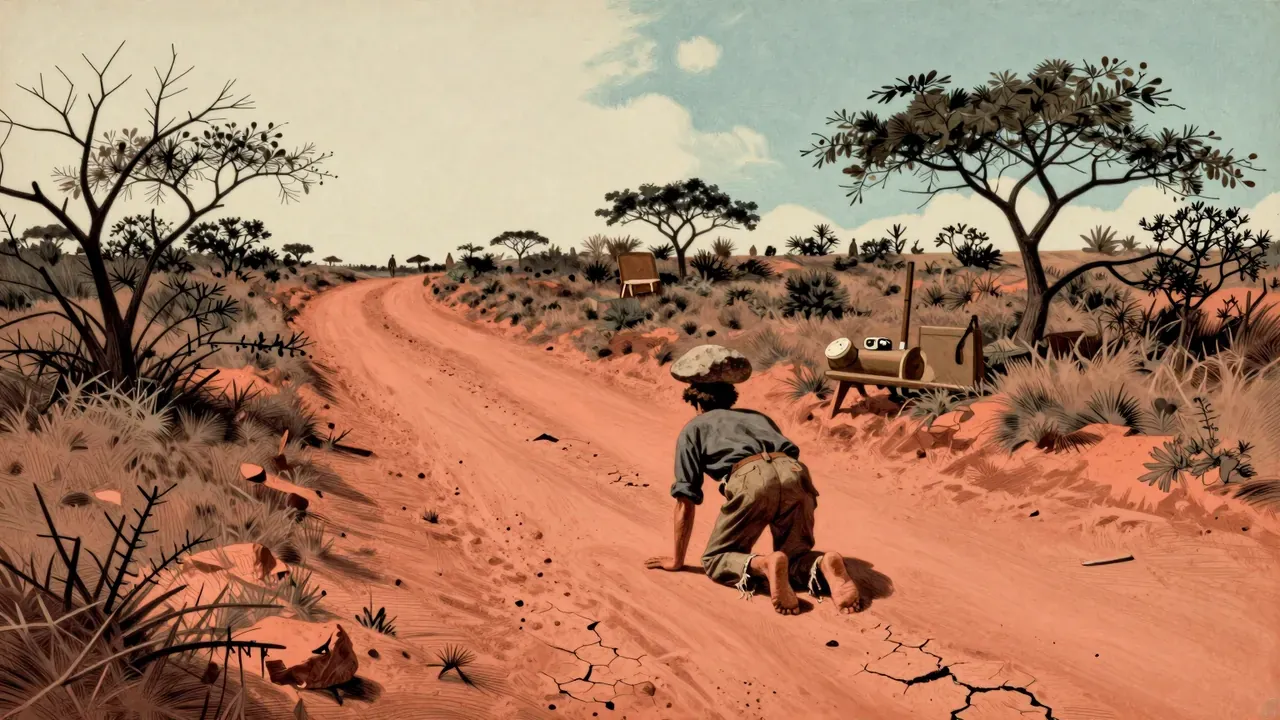
Red River is a 1948 American Western that dramatises the first large-scale cattle drive along the Chisholm Trail, from Texas to Kansas, as a study in authority, succession and paternal rupture. It does not aim for historical fidelity but uses the post–Civil War frontier as a pressure chamber for character: Thomas Dunson’s rigid will versus Matt Garth’s emergent moral agency, both shaped by isolation, violence and unspoken obligation. The film treats the drive not as adventure but as endurance — logistical, psychological, environmental — with the landscape functioning as antagonist and witness. Its ambition is structural as much as thematic: to build a mythic American origin story through intimate conflict rather than spectacle, using the Western form to ask how power passes, whether it can be earned or only seized, and what loyalty costs when duty and justice diverge. It avoids allegory by grounding every decision in physical consequence — thirst, stampede, wound, hunger — and refuses to resolve its central tension cleanly. The ranch is not reclaimed; the son does not inherit; the father does not repent. It ends mid-sentence, leaving the question of reconciliation open, not rhetorical.
The look of it
The story follows a clear arc — founding, expansion, fracture, confrontation — but its force comes from pacing and restraint. Howard Hawks and Arthur Rosson keep the camera steady, Russell Harlan’s black-and-white photography favouring deep focus and long takes over cutting, especially during the drive sequences where movement feels earned, not imposed. John Wayne’s Dunson is coiled stillness: his authority is in posture, timing, silence. Montgomery Clift’s Matt is less reactive than recalibrating — his rebellion is procedural, not emotional, built in glances, pauses, small deferrals. Walter Brennan’s narration in the theatrical cut adds folksy framing but undermines the film’s visual objectivity; the 133-minute pre-release version sustains dramatic distance more rigorously. Dimitri Tiomkin’s score is sparse, functional — horns for warning, strings for strain — never underlining emotion. Christian Nyby’s editing in the longer cut allows scenes to breathe, particularly the river fording and Abilene arrival, where duration becomes argument: this is how long it takes to cross ground, to break trust, to rebuild it.
The breaking point
What lands is the weight of inherited responsibility. Dunson’s bracelet — given to Fen, worn by Tess — becomes a quiet through-line of legacy and substitution, never explained but always present. The cattle drive itself lands because it is shown as labour: men sleeping in dust, mending harnesses, arguing over water, burying comrades. The confrontation at the Red River crossing lands not as climax but as pivot — Matt’s ‘No, you’re not’ is delivered without raising his voice, yet it carries the accumulated fatigue of fourteen years and six hundred miles. The final fight in Abilene lands because it refuses catharsis: Dunson fires, misses, throws away his gun, then punches; Matt absorbs the blows before responding. There is no winner, only exhaustion and interruption. Joanne Dru’s Tess, though underwritten, lands in her refusal to be passive — she names Dunson’s loneliness, demands terms, holds the gun that forces truce. Her presence shifts the resolution from duel to dialogue, however fragile. The film’s realism — in costume, terrain, animal behaviour — lands because it is unvarnished, never picturesque.
The crossing
What does not land is the framing device of Walter Brennan’s narration in the shorter theatrical cut. His voiceover describes events he could not have witnessed — Matt’s night crossing, the Abilene negotiations — breaking the film’s otherwise consistent third-person perspective. The ending lands uneasily because it stops short: Dunson’s final line is cut off, and while that suits the film’s anti-climactic logic, it leaves Tess’s role unresolved and Matt’s future ambiguous in a way that feels structural, not deliberate. Some supporting characters — Coleen Gray’s minor role, Harry Carey’s brief appearance — register as placeholders rather than people. The romance between Matt and Tess develops without texture: their connection is asserted, not built. The film also struggles with its treatment of Indigenous presence — reduced to smoke on the horizon, a threat named but never seen, a narrative convenience rather than a historical force. This omission is not incidental; it hollows out the geography the film otherwise treats with such care.
The inheritance
The themes that matter are succession without consent, authority without legitimacy, and the difference between ownership and stewardship. Dunson founds the ranch alone, brands the land, kills to hold it — but his claim rests on exclusion, not cultivation. Matt earns leadership not by blood but by judgment: he listens to Sutter, spares Kenneally, chooses Abilene over Sedalia, protects the wagon train. The film asks whether institutions — ranches, drives, families — survive by rigidity or adaptation. It treats masculinity as performance under duress: Dunson’s stoicism curdles into tyranny; Matt’s restraint becomes competence; Valance’s cynicism masks vulnerability. Loyalty is tested not in grand oaths but in small refusals — Groot staying, Tess wearing the bracelet, Cherry choosing not to kill Matt. The land itself is a theme: not as backdrop but as agent — the Red River floods, the plains bake, the Chisholm Trail offers no guarantees. History here is not progress but repetition: Dunson repeats the Colonel’s warning, Matt repeats Dunson’s journey, the cycle continues unless interrupted by choice, not fate.
The woman in the room
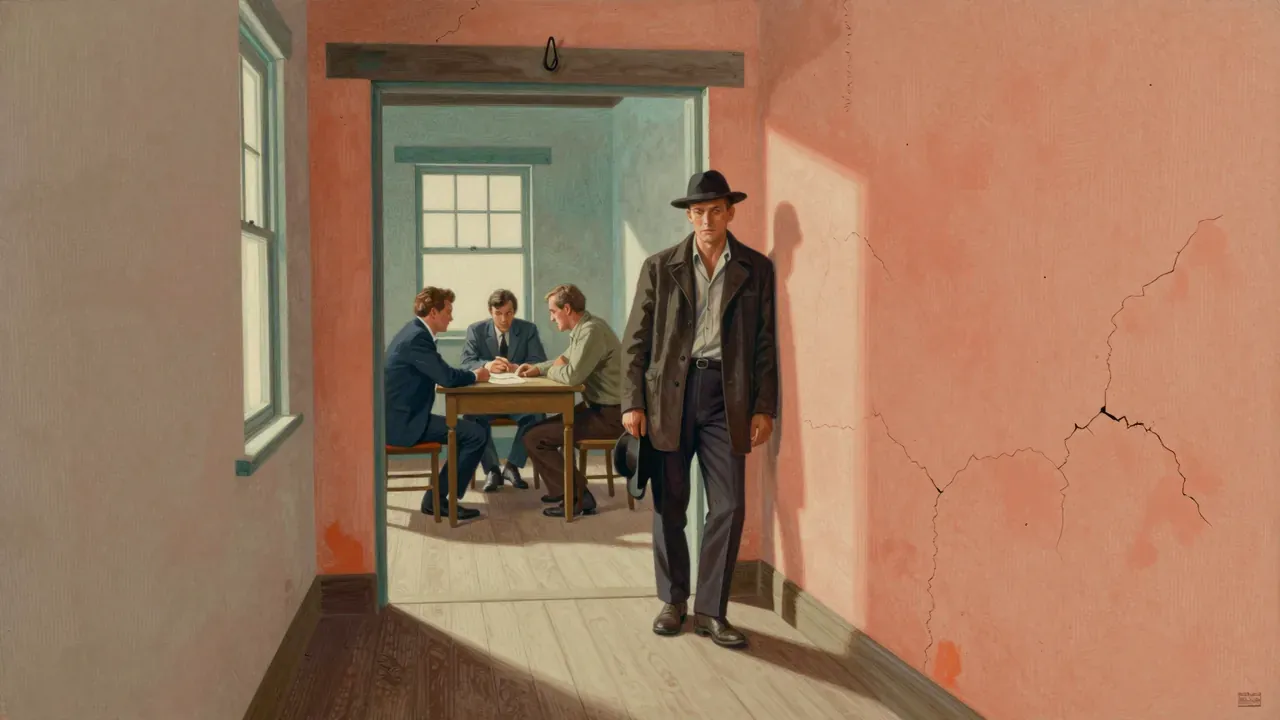
This film is for viewers who value slow-burn structure, psychological precision over plot mechanics, and performances that accrue meaning across time rather than in single moments. It rewards attention to gesture, silence, and spatial relationships — the way Dunson stands apart from the men, how Matt positions himself between them, where Tess places her hands when speaking truth. It is not for those who require clear moral binaries, romantic closure, or exposition that spells out motive. Viewers expecting the mythic sweep of Stagecoach or the operatic scale of The Searchers may find Red River too lean, too withholding. Those put off by black-and-white cinematography or 133-minute runtime without intermission will likely disengage early. The film assumes familiarity with Western conventions — the brand, the trail, the showdown — but subverts them quietly, so newcomers may miss the weight of what is being undone. Its pace is deliberate, its rewards cumulative, its satisfaction deferred.
The unfinished sentence
Yes, it is worth your evening — provided you watch the 133-minute pre-release version, not the narrated theatrical cut. That version sustains the film’s visual integrity and gives its central conflict room to breathe. It repays attention not with spectacle but with density: every frame contains information about hierarchy, terrain, weather, fatigue. Its value lies in how it builds tension through accumulation — of miles, wounds, withheld words — rather than release. Those who prefer tighter pacing or explicit thematic signposting will find it testing. Critics who praised the theatrical cut — including some who heard Hawks endorse it late in life — may disagree, but the longer version aligns more closely with Hawks’s documented preference for objective storytelling and Nyby’s editorial discipline. If the film were shorter, or if Dunson’s arc concluded with clarity, the verdict might shift. As it stands, its endurance is its argument.