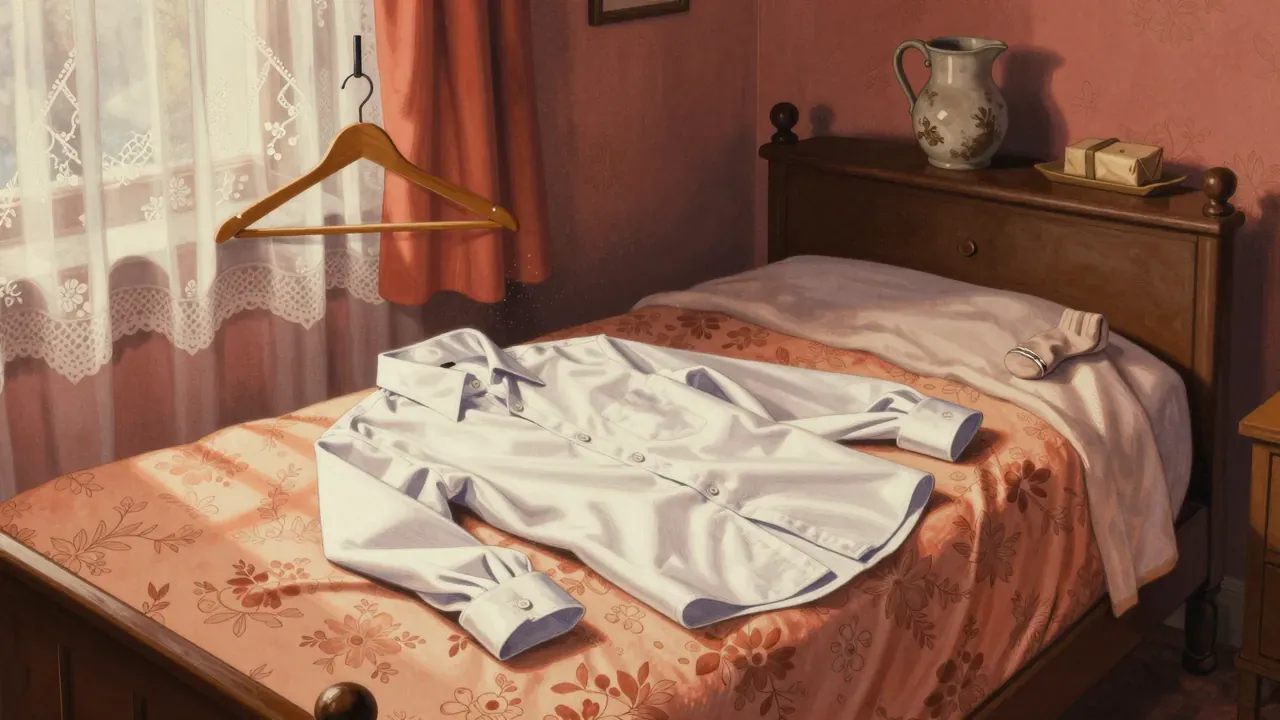
The weight of a clean shirt
King of the Hill is a coming-of-age drama adapted from A. E. Hotchner’s Depression-era memoir, aiming to render with quiet fidelity the inner life of a boy holding himself together amid adult collapse. It does not dramatise poverty as spectacle or trauma as climax; instead, it sustains attention on small acts of self-preservation — a stolen orange, a rehearsed lie, a carefully folded shirt — as moral and practical achievements. The film treats childhood not as innocence lost but as competence acquired under duress, and its ambition is structural as much as emotional: to build narrative tension from absence, silence, and withheld information. It refuses exposition about the father’s whereabouts or the mother’s prognosis, trusting the viewer to infer consequence from gesture and setting. This restraint aligns with Soderbergh’s stated interest in ‘the grammar of survival’, where every shot, cut, and pause serves the boy’s point of view without ever sentimentalising it. The film is neither nostalgic nor corrective; it is observational, precise, and anchored in the material texture of 1930s St. Louis — peeling wallpaper, thin hotel carpets, the weight of a suitcase left too long in a hallway. (158 words)
The look of it
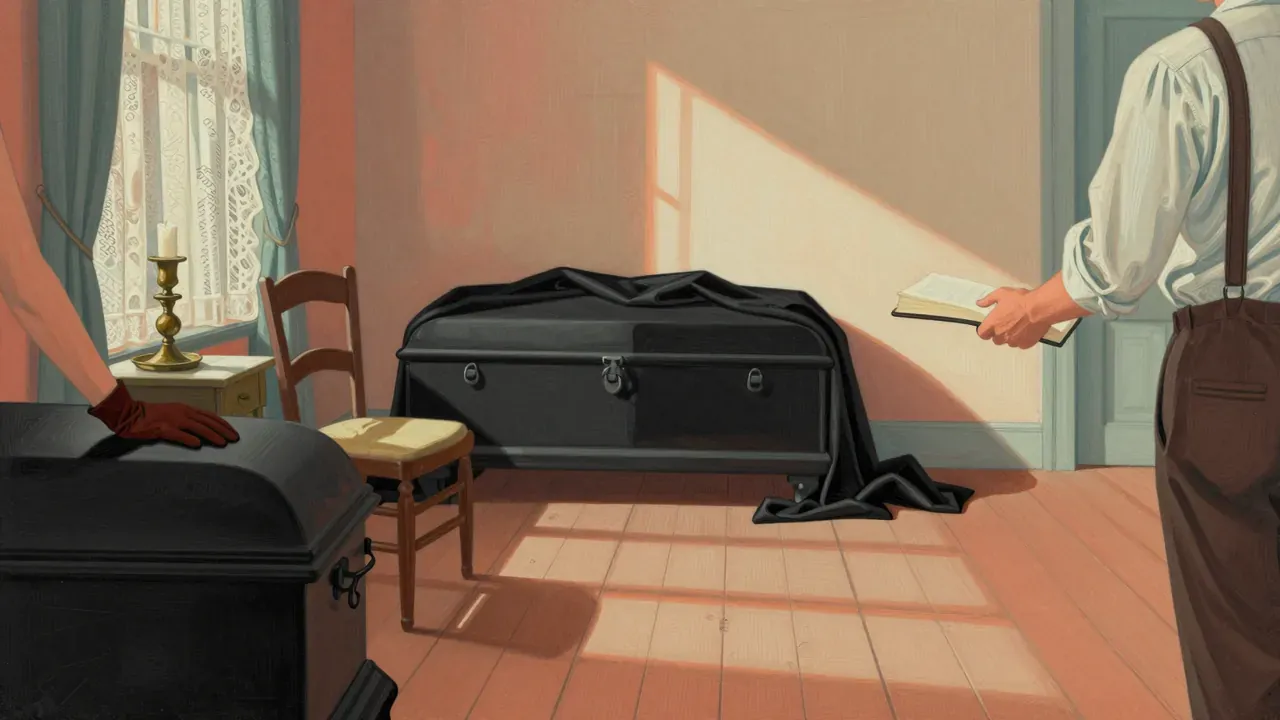
The story unfolds in episodic, low-stakes increments: Aaron navigates hotel corridors, negotiates with indifferent staff, improvises meals, and maintains appearances for visiting relatives. Jesse Bradford carries the film with minimal inflection — his performance registers worry through stillness, not tears. Elliot Davis’s cinematography avoids period postcard warmth; interiors are lit like rooms seen at dusk, with deep shadows pooling under doorframes and around bedposts. Soderbergh’s editing is unhurried but never slack — cuts land on objects before people, on empty chairs before arrivals, reinforcing Aaron’s isolation without stating it. Cliff Martinez’s score is sparse, often absent, using piano motifs that recur like half-remembered lullabies rather than thematic declarations. Supporting actors — Krabbé as the weary, evasive father; Eichhorn as the frail, distant mother; Gray as the brittle, talkative hotel resident — avoid caricature by anchoring their roles in physical specificity: a trembling hand, a delayed blink, a habit of adjusting cufflinks. There is no music cue for pathos, no slow-motion for emphasis. Every craft choice serves the principle that Aaron’s world is real, not illustrative. (159 words)
What sticks
What lands is the cumulative weight of small, unremarkable decisions — choosing not to ask for help, deciding to wear a clean shirt despite having only one, pretending to understand a conversation he cannot follow. These moments accrue because the film trusts their significance without underlining them. The hotel itself becomes legible as a character: its hierarchies, its rhythms, its quiet cruelties and unexpected kindnesses. Aaron’s resourcefulness reads not as precocity but as adaptation — he learns to read adult moods like weather signs, to time his requests to coincide with staff shifts, to fold his vulnerability into routine. The film’s emotional impact arrives not in climactic scenes but in glances: a doorman’s slight nod of recognition after weeks of invisibility; the way Aaron pauses before entering his parents’ room, bracing for what he might find. Even minor characters — Amber Benson’s sharp-tongued girl, Adrien Brody’s sullen bellhop — register as fully inhabited, not plot devices. The restraint pays off: when Aaron finally breaks down, it is off-screen, heard only as muffled sobs behind a closed door, and the effect is more devastating than any close-up could be. (157 words)
Where it holds back
What does not land is the occasional drift into schematic symbolism — a recurring motif of locked doors, for instance, which risks flattening ambiguity into metaphor. The father’s absences, while historically grounded, sometimes feel structurally convenient rather than emotionally inevitable; his departures lack the specific friction of real-world logistics, making his returns less earned. Karen Allen’s role as a sympathetic neighbour, though well-acted, remains underwritten — her kindness arrives without sufficient context or cost, reducing her to a functional counterweight rather than a fully realised presence. The film’s refusal to explain certain plot points — why the younger brother is sent away, how exactly Aaron pays for food — works as aesthetic discipline but occasionally strains plausibility without offering compensating thematic resonance. Some viewers may find the pacing too deliberate, mistaking its patience for passivity; others may wish for clearer stakes beyond survival itself. The film assumes a tolerance for unresolved tension that not all audiences share — it offers no catharsis, no tidy resolution, no retrospective narration to frame the experience as ‘formative’. That is its strength, but also its limit. (156 words)
What it’s really about
The themes that matter are not grand abstractions but lived conditions: the labour of maintaining dignity when resources are exhausted; the difference between being seen and being witnessed; the quiet violence of institutional indifference. Class operates not as backdrop but as physics — it determines who opens doors, who gets served first, whose illness is treated as urgent. The film treats tuberculosis not as tragedy but as infrastructure: it dictates where people sleep, who they see, how long they speak. Memory is shown as unstable and selective — Aaron recalls his mother’s voice but not her face, remembers the smell of her perfume but not the shape of her hands. Time behaves differently for children in crisis: days stretch, routines blur, holidays arrive without celebration. There is no overt commentary on the Great Depression, yet its imprint is total — in the worn soles of shoes, the careful rationing of soap, the way adults speak in hushed tones about ‘next month’. The film’s central concern is agency: not the kind that changes systems, but the kind that preserves selfhood within them. That distinction — between power and persistence — is what gives the film its moral gravity. (159 words)
Who it’s for
This film is for viewers who value precision over propulsion, who find emotional resonance in withheld information and narrative economy. It suits those accustomed to arthouse pacing, attuned to performance subtlety, and willing to sit with discomfort without demanding resolution. It is not for viewers who require clear cause-and-effect chains, explicit motivation, or cathartic release — those seeking narrative payoff will find its structure withholding, its conclusions muted. Parents expecting a ‘child’s-eye-view’ adventure may misread its tone as gentle; it is tender, but unsentimental. Anyone needing exposition, explanation, or emotional signposting will leave frustrated. The film assumes familiarity with mid-century American social history — not as knowledge to be tested, but as atmosphere to be absorbed. Those who reject austerity in form as a failure of engagement will dismiss its restraint as coldness. A different verdict would follow if the film offered even one scene of unambiguous triumph or clarity — but it does not, and that is its design, not its deficit. (159 words)
Is it worth your evening
Yes, it is worth your evening — provided you watch it as an act of attention, not consumption. Its 103 minutes unfold with the quiet insistence of a held breath, rewarding focus with accumulating emotional density. It repays rewatching not for hidden clues but for new details: the pattern on a wallpaper border, the way light falls across a hallway at 4 p.m., the rhythm of a particular door closing. It is not ‘entertaining’ in the conventional sense, but it is deeply involving — a rare film that asks nothing of the viewer except presence, and gives back a sharpened sense of how resilience sounds, looks, and feels in ordinary moments. Those who dislike films that refuse to tell them how to feel will find it alienating. But for anyone open to understatement as a form of honesty, it remains singular — not because it is ‘underrated’, but because it achieves what it sets out to do, with no surplus, no compromise. Its value lies not in scale but in fidelity. (159 words)