The shape of it
A Christmas Tale is a French family drama set over the days before and on Christmas 2006, centred on the Vuillards’ reunion at their Roubaix home after Junon’s diagnosis of acute myeloid leukemia. It is trying to hold together multiple registers at once: clinical realism in the medical urgency, theatrical intensity in the dialogue, literary allusion in its references to Nietzsche and Chekhov, and a kind of domestic farce in the overlapping arguments and miscommunications. Desplechin and Bourdieu do not aim for tidy resolution or emotional catharsis; instead, they treat the family as a contested archive — full of half-remembered grievances, suppressed affections, and inherited trauma — where every character speaks from a different grammar of love and resentment. The film refuses to privilege one perspective, even Junon’s: her authority is acknowledged but never unchallenged, her illness neither sanctified nor sentimentalised. It is not a holiday film in any conventional sense, nor does it seek to comfort. Its ambition lies in sustaining psychological density across three generations without collapsing into exposition or therapy-speak.
The look of it
The story unfolds in overlapping, loosely chronological scenes, anchored by Éric Gautier’s naturalistic yet composed cinematography — interiors lit with the flat, wintry clarity of northern France, faces often held in medium close-up without softening. Catherine Deneuve gives Junon a contained physicality: upright posture, minimal gesture, voice low and precise. Jean-Paul Roussillon’s Abel moves slowly but listens with unnerving patience, his presence a quiet counterweight to the noise. Mathieu Amalric’s Henri is all nervous energy and self-sabotage, while Anne Consigny’s Elizabeth carries a brittle exhaustion that never tips into melodrama. Laurence Briaud’s editing avoids rhythm for its own sake; cuts land where attention shifts — between rooms, between speakers, between past and present tense. Grégoire Hetzel’s score is sparse, mostly piano and strings, used only when silence would be too heavy. There are no montages, no flashbacks with visual cues — memory arrives as interruption: a line repeated, a glance held too long, a photograph glimpsed in passing.
What sticks
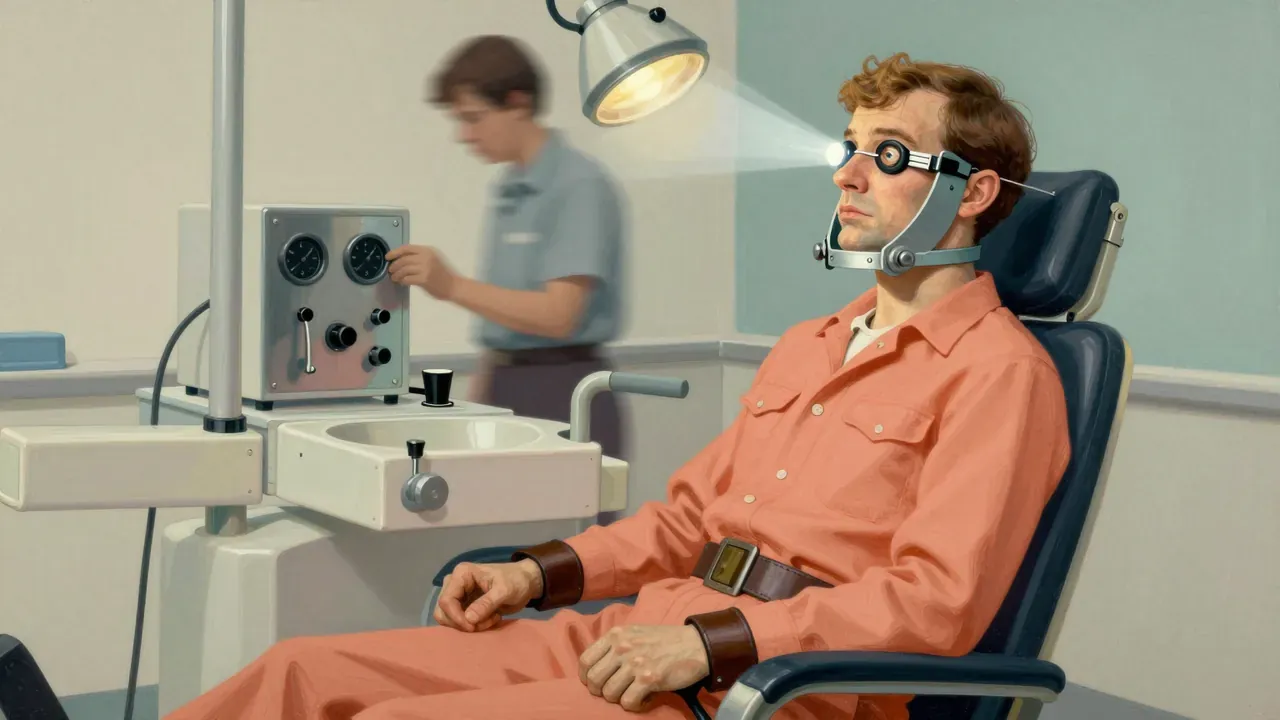
What lands is the accumulation of small, unremarkable truths: the way Sylvia pours tea for her sons without looking up, the weight of Henri’s hand resting on Paul’s shoulder during the blood test, the silence after Rosaimée names what everyone has known but never said about Abel’s mother. The film earns its emotional gravity not through plot turns but through behavioural fidelity — how people avoid saying what they mean, how they test affection with cruelty, how love persists in spite of, and sometimes because of, withholding. The ensemble holds its tonal contradictions: grief and farce coexist without irony, intellectual reference and drunken shouting share the same air. Even the medical urgency feels grounded — the bone marrow search is treated with bureaucratic tedium, not dramatic shorthand. The hospital scenes are underlit, functional, unsentimental. When Henri flips the coin, the camera stays on his face, not the coin, and the ambiguity remains intact. This refusal to resolve — to let meaning sit unresolved — is where the film’s rigour shows most clearly.
Where it slips
What does not land is the attempt to give Simon a full arc. His alcoholism and public brawling are stated but not dramatised; his relationship with Sylvia feels more like narrative necessity than lived consequence. The subplot involving Rosaimée’s visit — though thematically rich — arrives abruptly and departs without resonance beyond Sylvia’s brief reaction. Some of the literary references feel ornamental rather than integrated: Nietzsche’s Genealogy appears as a prop in Abel’s reading, but the film does not engage with its ideas beyond surface-level invocation. The structure, while deliberately episodic, occasionally loses momentum in the middle stretch — particularly the sequence around 23 December, where overlapping conversations begin to blur rather than clarify. A few performances verge on caricature: Azize Kabouche’s minor role as a neighbour lacks texture, and Émile Berling’s Paul, though carefully observed, recedes in the final third, his mental health improvement arriving without visible cause or sustained attention.
What it’s really about
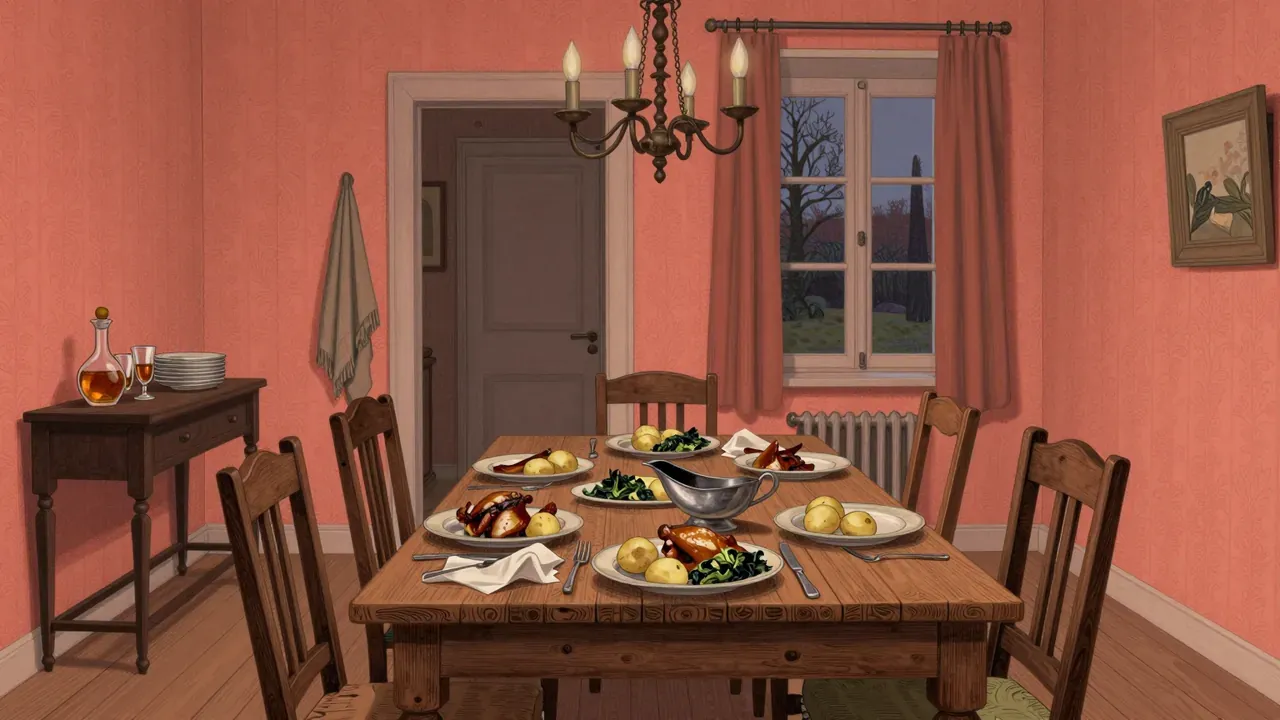
The themes that matter are inheritance — biological, emotional, linguistic — and the ways families reproduce both care and damage across generations. Leukemia is not just illness but metaphor: a disease of replication gone awry, echoing the family’s attempts to replace Joseph, to replicate love, to repeat patterns of control and withdrawal. The film treats memory not as record but as residue — something that clings, distorts, reappears in gesture or syntax. Willpower, as embodied by Junon, is shown to be both armour and wound: it sustains the family’s coherence but also starves it of vulnerability. Grief is not linear but recursive — returning in silences, in food rituals, in the way characters position themselves in doorways. Forgiveness is absent as a concept; what circulates instead is endurance, accommodation, and the quiet recalibration of expectation. The film asks what it means to remain in proximity to people who have hurt you — not out of duty, but because the alternative is a different kind of death.
Who it’s for
This film is for viewers who tolerate ambiguity, who find emotional precision more rewarding than narrative payoff, and who do not require characters to change in order to feel seen. It suits those familiar with French arthouse conventions — the long takes, the talkative interiors, the resistance to closure — but it is not inaccessible to newcomers willing to sit with discomfort. It is not for viewers who need clear moral positions, who dislike overlapping dialogue or extended silences, or who expect illness narratives to follow arcs of hope or redemption. Those who associate ‘Christmas film’ with warmth or reconciliation will find little here to confirm that expectation. The film’s pace and density may frustrate anyone seeking light diversion. Its value lies in its refusal to simplify, so its appeal depends on whether the viewer values complexity over comfort — a distinction that matters more than genre or language.
Is it worth your time
Yes, it is worth your evening — provided you are prepared to meet it on its terms. Its 147 minutes unfold with deliberate, unshowy weight; there are no false climaxes, no manufactured stakes, only the slow accrual of understanding. You leave not with answers but with sharper questions about how families metabolise loss, how love survives without trust, and how identity forms in the gaps between what is said and what is withheld. It rewards attention but does not demand it — moments of stillness are as charged as arguments. Some will find its restraint alienating, especially those accustomed to tighter plotting or clearer emotional signposting. But for those who value psychological fidelity over narrative efficiency, its honesty about familial friction and quiet resilience makes it durable. It does not entertain; it occupies space — and that, for certain evenings, is enough.