A four-year-old dethroned by his own sister
Mirai of the Future follows Kun, a four-year-old whose contented life with his architect father, executive mother and family dog is upended by the arrival of his baby sister, Mirai. His jealousy over the attention she receives builds into repeated tantrums, and Mamoru Hosoda, who wrote and directed the film, has said the project came directly from watching his own son’s mixture of curiosity and resentment on becoming an older brother. Rather than write around a child that young, Hosoda made Kun’s age the film’s actual subject, bringing his own children into the Studio Chizu office as reference so animators could draw from an actual four-year-old’s movement and expression rather than an adult’s idea of one.
Visitors arriving out of order
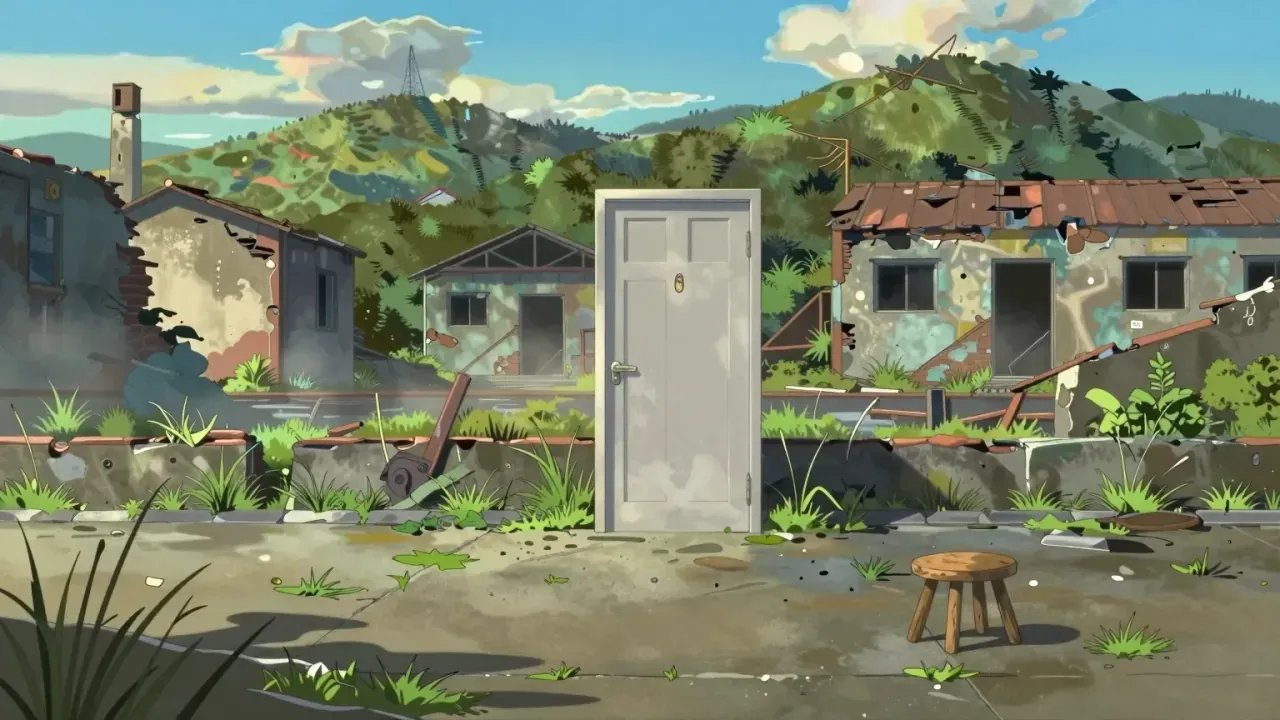
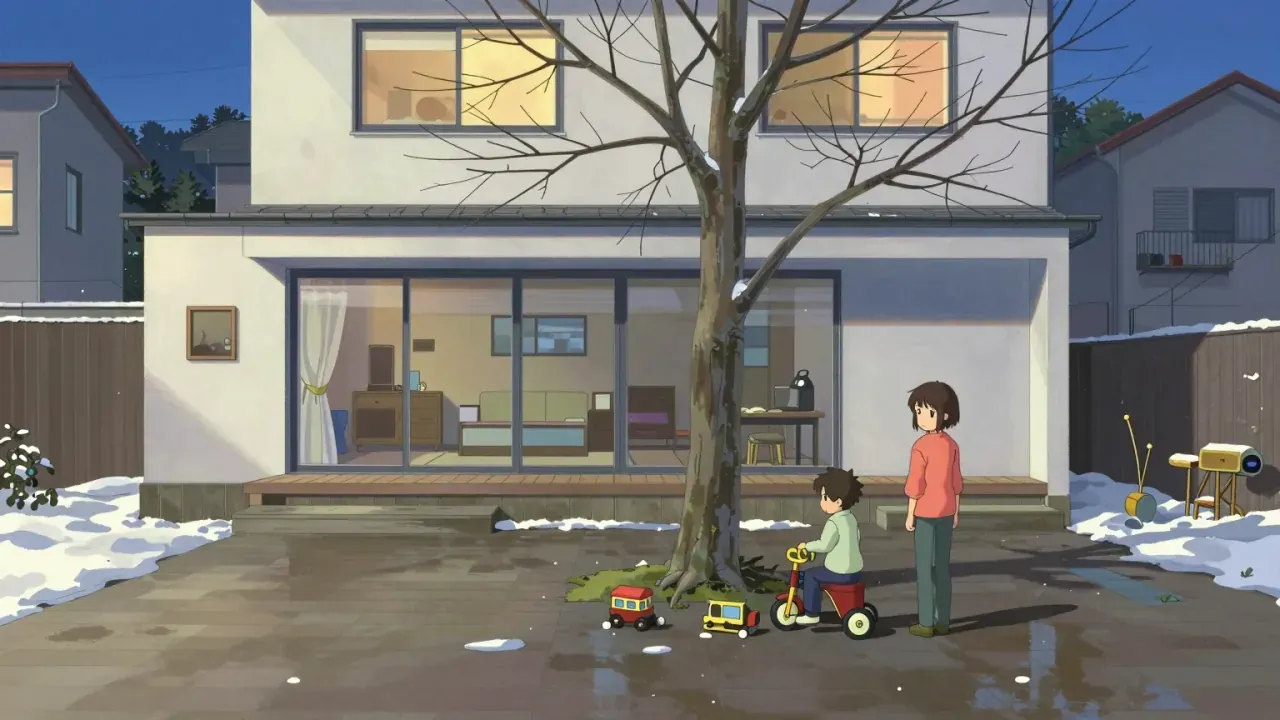
The device that carries the film is a garden behind Kun’s family home, which becomes a place where time stops behaving normally: Kun meets his dog transformed into a sulking, human prince figure, then a fourteen-year-old version of Mirai arriving from the future to fix a Girls’ Day mistake, then his own mother as a scolded little girl, and eventually his great-grandfather as an injured young man on a motorcycle. Each visit is triggered by a specific grievance Kun is having in the present, and each one answers that grievance not with an explanation but with an experience, letting Kun feel a piece of his family’s history rather than being told it.
A child’s logic taken at its own scale
The film’s clearest achievement is its commitment to a four-year-old’s actual scale of experience: learning to ride a bicycle, resenting a sibling, being frightened of a train platform are treated as the major events they genuinely are to a small child, not softened or elevated into more conventionally dramatic terms. That commitment extends to the animation itself, informed directly by observation of real children rather than adult assumptions about childhood, and it gives Kun’s tantrums and small triumphs a specificity that keeps the film from tipping into generic whimsy about family life.
A structure that risks feeling episodic
Structurally, the film is closer to a sequence of largely self-contained vignettes than a single continuous arc, since each garden visit resolves its own particular lesson before Kun returns to the present, and the connective tissue linking one episode to the next is thinner than the episodes themselves. A viewer looking for a plot that builds continuously toward a single climax may find the film’s episodic rhythm slack in places, particularly in the stretch between the mother’s childhood sequence and the great-grandfather sequence, where momentum dips before the film’s stronger final movement.
Family as something that keeps being the same family
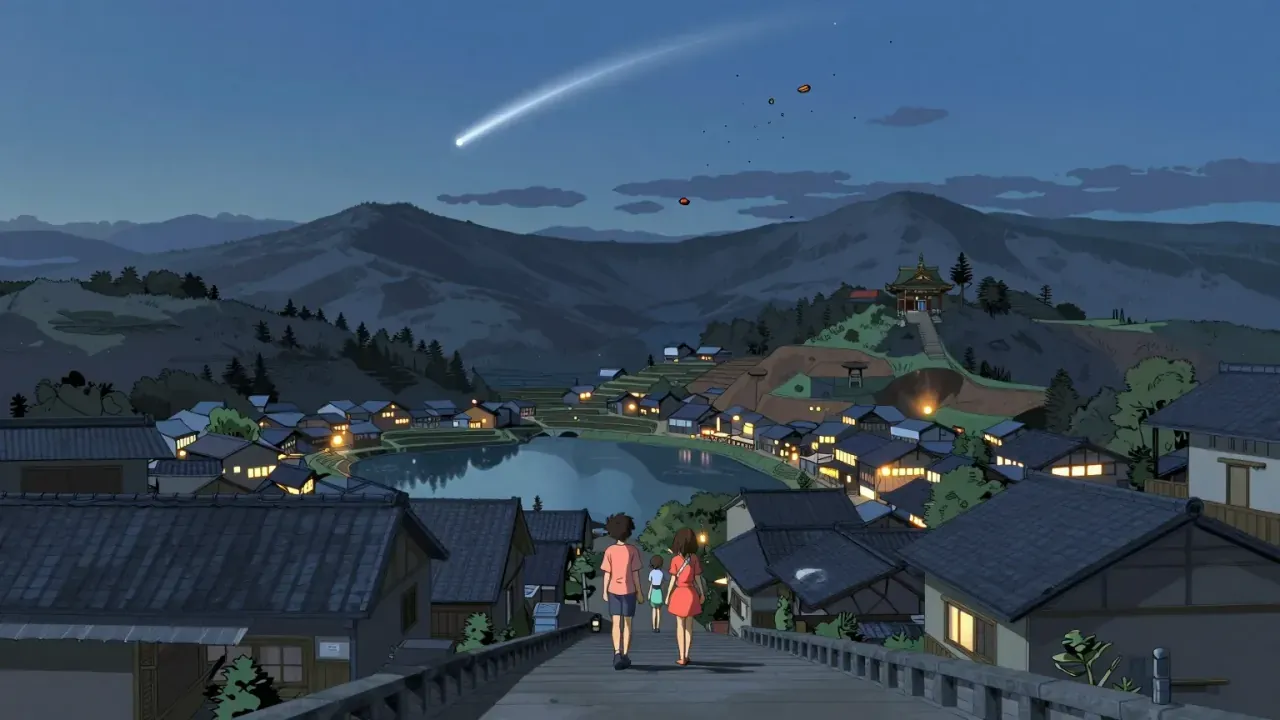
Hosoda has described the film’s organising idea as being about how a family can change while remaining fundamentally itself, and the choice to set it in Yokohama, a city he called constantly changing, reinforces that theme without stating it outright. The device of literally meeting relatives at different points in their own lives, rather than hearing about them secondhand, lets the film make its argument about family continuity through direct encounter rather than exposition, which suits a story aimed partly at an audience too young to follow abstract argument and better able to absorb a feeling that arrives through experience instead of explanation.
A film pitched at parents as much as children
Young children will recognise Kun’s tantrums and his jealousy with some immediacy, but the film’s sharpest emotional material, watching a parent’s harsh childhood scolding land differently once the viewer has their own child, or recognising a grandparent’s history in a young man met by chance, is pitched more directly at the adults watching alongside them. It is a film that works better as a shared viewing experience across generations than as a solo watch for either age group on its own, since much of what it is doing depends on two very different kinds of recognition happening in the same room at once.
A hundred minutes that trades a plot for a portrait
At a hundred minutes, Mirai of the Future does not build toward a conventional narrative climax, closing instead on Kun’s small shift in perspective rather than any external resolution, and viewers expecting a driving plot may come away feeling the film is slighter than its ambitions suggest. As a portrait of how a small child’s anger gets talked down through story rather than instruction, though, it earns its place in an evening, particularly for anyone currently living through the exact sibling dynamic Hosoda built the film around, or anyone willing to sit with a film content to stay small in scale throughout.