The look of it
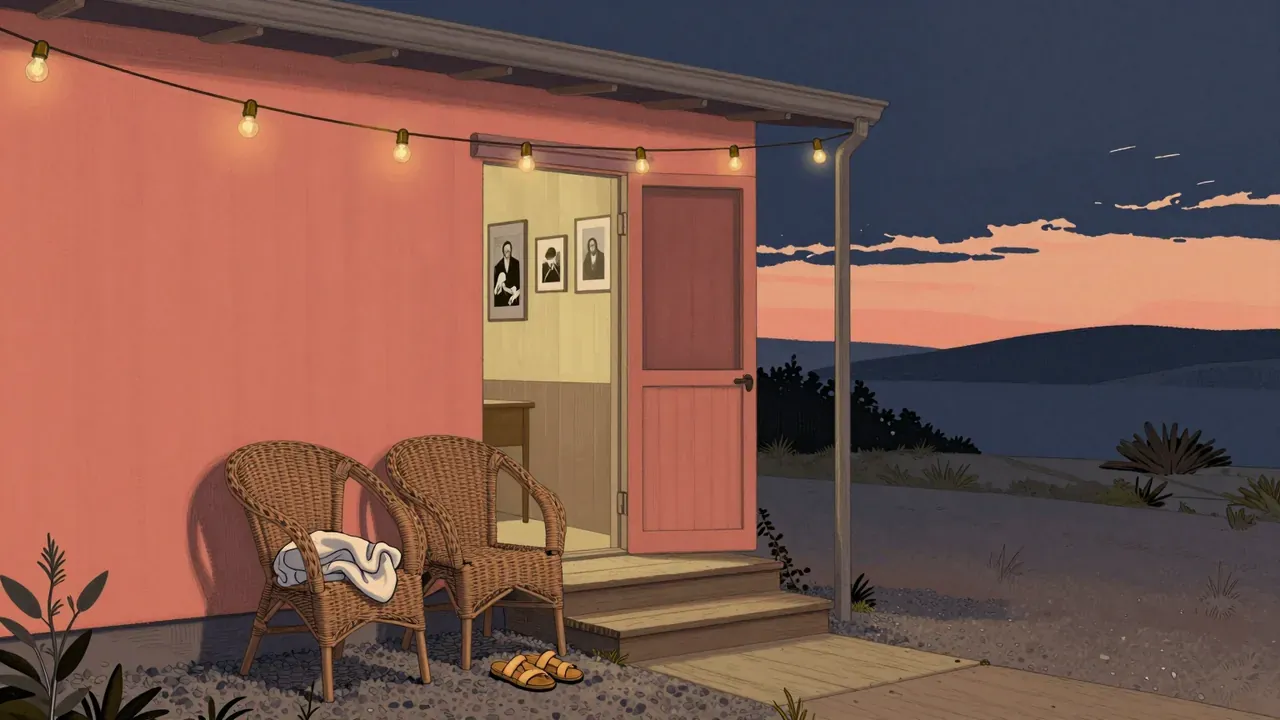
Testament is a small-scale nuclear-war film that refuses the spectacle of destruction. It does not show detonations, military command centres or geopolitical machinations. Instead, it narrows its focus to one family in a quiet California suburb and tracks their slow, unremarkable disintegration over weeks. Its aim is not to warn through shock but to settle into the texture of daily life as infrastructure fails, neighbours die quietly, and children succumb without fanfare. It treats radiation poisoning not as a plot device but as a domestic fact — something measured in dwindling batteries, in the weight of a child’s body, in the effort required to dig a grave with a garden spade. The film was made for public television and retains that medium’s restraint: no score swells at moments of loss, no camera lingers on faces for emotional punctuation. It assumes the viewer will attend without prompting. Its ambition is modest in scale but exacting in implication: to ask what remains of civility when no one is watching, and whether care persists when there is no future to invest in. It is less about the end of the world than about the quiet erosion of the habits that hold it together. (158 words)
The weight of it
The story follows Carol Wetherly as she moves from managing school plays and answering-machine messages to burying her children in the backyard and sewing shrouds from bedsheets. Jane Alexander’s performance grounds every shift in register: her voice tightens but never breaks; her gestures grow smaller, more deliberate. William Devane appears only in audio recordings, his absence a structural choice that deepens the film’s sense of isolation. Steven Poster’s cinematography avoids contrast extremes — interiors are lit as they would be by failing power grids, not by dramatic intent. James Horner’s score is sparse, often absent, and when present uses piano motifs that sound like memory rather than commentary. Editing is unhurried, favouring duration over rhythm: a shot of Carol listening to an unanswered message lasts long enough to register both hope and futility. The film was shot entirely in Sierra Madre, a real town chosen for its unremarkable architecture and intact street grid — a decision that reinforces its anti-spectacle stance. There are no flashbacks, no exposition dumps, no symbolic objects beyond what the characters handle: a graham cracker, a ham radio, a home-movie projector. Every craft choice serves the principle of withholding. (159 words)
The loss in it
What lands is the accumulation of small, irreversible losses. The moment Scottie’s teddy bear is buried with him feels heavier than any explosion could, because it is specific, unrepeatable and untheatrical. The school play — rehearsed before the war, performed after — works not as irony but as ritual: a way for adults to witness childhood while pretending nothing has changed. Roxana Zal’s Mary Liz fades with the same quietness with which she earlier recites lines from The Pied Piper, her illness marked by a slight hesitation in speech, then a pause too long between breaths. The film’s refusal to name the enemy, to locate blame or assign motive, makes its horror feel structural rather than contingent. Even the final scene — candlelight, a graham cracker, a home movie — lands not as catharsis but as endurance: the act of remembering becomes the last form of resistance. This is not a film about survival but about how long dignity can persist in the absence of reward, audience or consequence. It trusts the viewer to notice the fraying of language, the slackening of posture, the way light changes as power fails — details that do not shout but accumulate like fallout dust. (157 words)
The gaps in it
What does not land is the framing of Hiroshi’s adoption as a gesture of continuity. His presence feels narratively convenient rather than emotionally earned — a late insertion meant to suggest renewal, but without the groundwork to make it resonate. The character lacks interiority; his disability is treated as a condition rather than a perspective, and his integration into the Wetherly household proceeds without friction or ambiguity. Similarly, Brad’s transition from child to de facto adult occurs off-screen: we see him take over the radio, but not the internal shift that precedes it. The film’s commitment to understatement occasionally crosses into omission — particularly around grief’s physicality. Carol’s collapse into radiation sickness arrives with little physiological detail, making her final indecision about suicide feel abstract rather than visceral. Some viewers may find the pacing too even, mistaking its lack of peaks for lack of tension. Others may resist the film’s moral neutrality: it offers no critique of policy, no indictment of militarism, no suggestion that prevention was possible. That is a choice, not a failure — but it leaves no room for anger, only sorrow, and sorrow alone may not satisfy those seeking political urgency. (156 words)
The thinking in it
The themes that matter are domesticity under erasure, the labour of care without return, and the persistence of routine as both comfort and delusion. Testament treats the home not as sanctuary but as archive — a place where birthday parties, answering machines and school plays accumulate meaning precisely because they are ordinary. When those things stop functioning, the loss is ontological: not just of people, but of the grammar that made them legible. The film interrogates what happens to ethics when consequences vanish — not through moral collapse, but through exhaustion. There is no looting, no violence between neighbours, yet order still dissolves, not from malice but from the sheer weight of unmet need. Memory becomes both burden and compass: Carol’s final wish — ‘that we remember it all’ — is neither nostalgic nor redemptive, but forensic. The film also treats time as a material: days lengthen not through editing but through diminishing returns — fewer working lights, slower walks, longer silences. It suggests that nuclear war’s true devastation is not instantaneous, but metabolic: a slow starvation of possibility, measured in the space between one breath and the next. (155 words)
The watching of it
This film is for viewers who tolerate stillness, who trust silence as narrative weight, and who do not require resolution or explanation. It suits those familiar with mid-century American domestic realism — Cassavetes, early Altman, certain episodes of The Twilight Zone — and who value emotional precision over propulsion. It is not for viewers who expect narrative escalation, psychological exposition or moral clarity. Those who need villains, stakes defined in real-time, or catharsis through action will find it inert. It also asks patience with its televisual origins: the budget constraints show in repeated locations and minimal props, and its PBS lineage means it assumes cultural literacy — familiarity with 1980s suburban rhythms, with the texture of analogue media, with the unspoken hierarchies of small-town life. A younger viewer raised on algorithmic pacing may misread its slowness as emptiness. But that slowness is the point: it forces attention onto what most films edit out — the space between decisions, the weight of a glance, the sound of a refrigerator powering down for the last time. (158 words)
The staying of it
Yes, it is worth your evening — provided you watch it as the film intends: not as entertainment, but as immersion. Its ninety minutes pass without hurry, and that is the condition of its power. It does not demand attention; it requires presence. You will not leave energised, but you may leave recalibrated — noticing, for instance, how much of daily life depends on shared assumptions that could vanish overnight. It is not a film to consume, but to inhabit briefly, like stepping into a room where the air has grown thin. Those who dismiss it as ‘depressing’ or ‘slow’ are not wrong, but they are measuring it against different criteria — ones Testament deliberately rejects. Its value lies in its refusal to flinch, simplify or console. It is not for everyone, but for those it is for, it stays. Not as trauma, but as a quiet calibration — a reminder that the most consequential endings are rarely loud, and the most enduring acts of courage often go unrecorded. (159 words)