The shape of time
Through a Glass Darkly is Ingmar Bergman’s first film in what became his ‘Faith Trilogy’, a tightly wound psychological drama structured as a three-act chamber play. It attempts something precise: to stage, in real time and confined space, the collapse of a young woman’s grasp on reality—not as spectacle, but as intimate erosion. Bergman wrote it as a ‘desperate attempt’ to articulate a simple philosophy—‘God is love, and love is God’—but the film’s force lies less in that proposition than in its refusal to let that idea settle. It is not an essay on faith, nor a clinical study of schizophrenia, but a sustained pressure test on familial intimacy under conditions of silence, expectation, and artistic hunger. The setting—a remote island off Sweden—functions not as backdrop but as acoustic and psychological amplifier: every footstep, foghorn, and cello note carries weight because there is nowhere else for sound or meaning to go. The film’s ambition is structural and ethical: to hold four people in frame long enough that their roles—as caregiver, patient, artist, adolescent—begin to fray at the edges.
The look of it
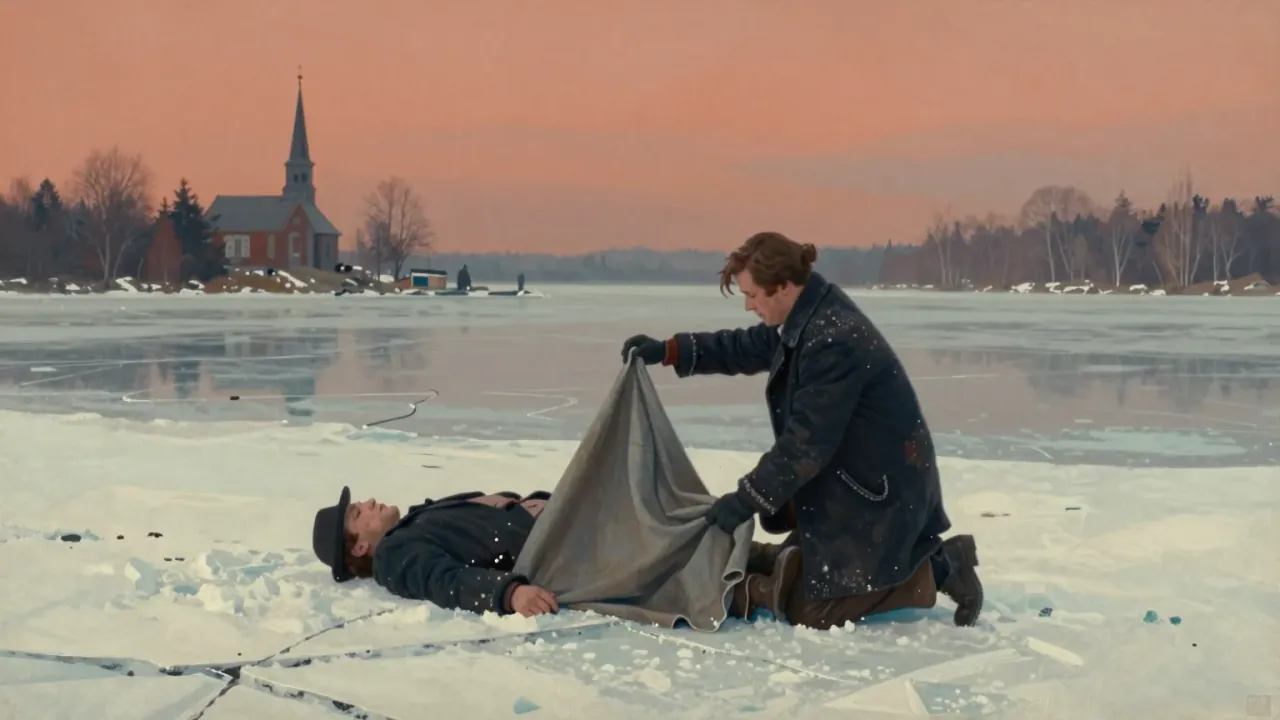
The story unfolds over twenty-four hours, with no cuts to exterior time or location: all action stays within the island’s house, beach, attic, and wrecked ship. Harriet Andersson’s performance as Karin anchors the film in physical specificity—her tremors, sudden stillnesses, and shifts between lucidity and dissociation are rendered without theatricality. Max von Sydow, as Martin, modulates quiet competence into exhausted tenderness; Gunnar Björnstrand’s David moves from intellectual detachment to raw confession with minimal inflection. Lars Passgård, then untested, conveys Minus’s sexual confusion and yearning without melodrama. Sven Nykvist’s cinematography avoids flourish: static frames, shallow focus, and natural light dominate; interiors are lit as if by the characters’ own attention, not a designer’s plan. Bach’s cello suites—four variations on the Sarabande—are used not as commentary but as rhythmic counterpoint, their gravity matching the weight of pauses. The sound design privileges absence: wind, waves, and silence are recorded with forensic care, making the cello’s entry after the incest scene feel like a breach rather than a cue.
The crack in the wall
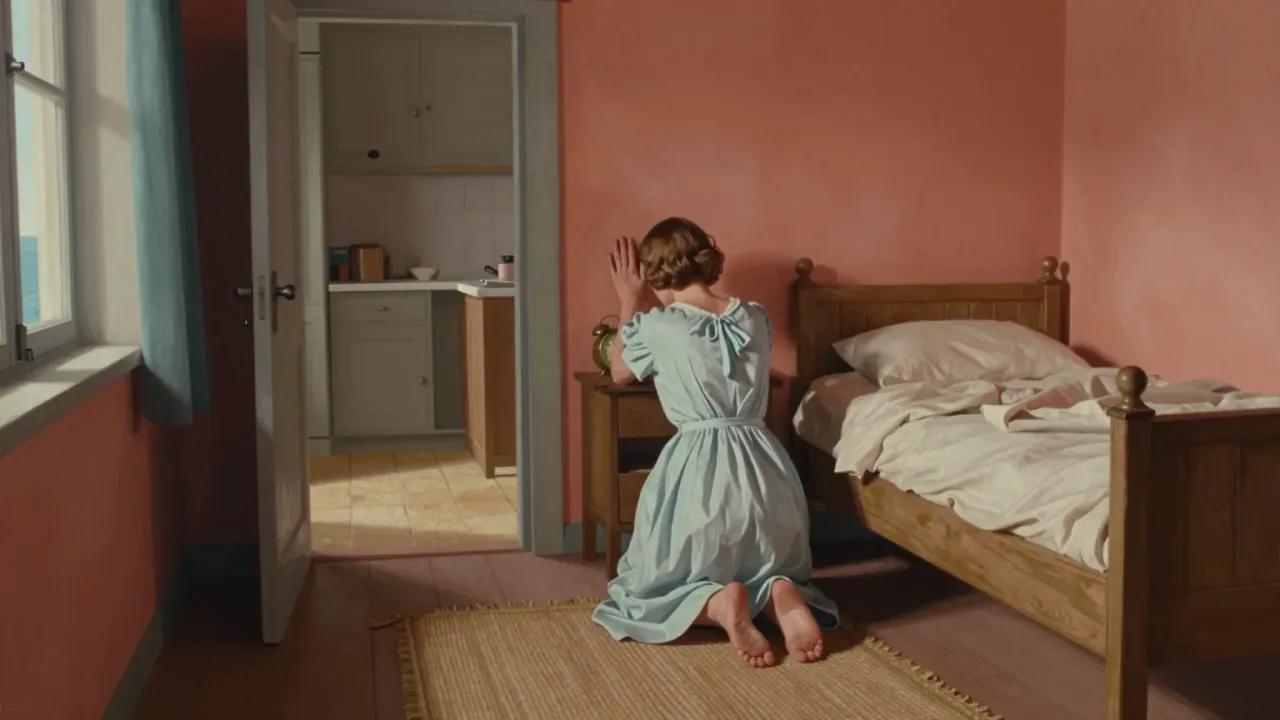
What lands most firmly is the film’s restraint in depicting psychosis—not as hallucination-as-spectacle, but as a slow misalignment between perception and shared reality. Karin’s belief that God will emerge from a crack in the wall gains power precisely because the camera does not cut away, does not dramatise the vision, but holds her gaze until the helicopter’s noise fractures the moment. The attic sequence works because it refuses explanation: the spider is neither metaphor nor symptom, but the shape her terror takes when language fails. Andersson’s performance lands because it never performs ‘madness’—it performs listening, waiting, misreading, then recoiling. The father-son conversation at the end lands too: David’s admission of suicidal despair and his tentative claim that love might be ‘something to hold on to’ avoids uplift, settling instead on a fragile, earned humility. The film’s formal discipline—the single location, the tight timeframe, the refusal of exposition—means every gesture carries cumulative weight, and nothing feels inserted for effect.
The tacked-on hope
What does not land is the film’s stated philosophical resolution. Bergman later called the epilogue ‘tacked loosely onto the end’, and it shows: David’s final speech about love as hope arrives without sufficient dramatic preparation, feeling less like revelation than retreat. The film’s earlier tension—between art and ethics, observation and care—dissolves too neatly into a consolatory abstraction. The incest scene, while psychologically coherent, risks flattening Minus’s adolescence into mere catalyst for Karin’s breakdown, and the script gives him little interior life beyond frustration and fear. The character of Martin, though grounded in von Sydow’s understated presence, remains functionally passive—his moral clarity is asserted but not dramatised in action. And while the island setting intensifies claustrophobia, it also isolates the family so completely that their crisis feels detached from any social or medical context, which may distance viewers seeking realism over parable. The film’s rigour becomes, at points, its limitation: it insists on purity of form at the cost of psychological nuance in secondary figures.
Who is watching whom
The themes that matter are not the ones announced in interviews—God-as-love, or art-as-exploitation—but those embedded in behaviour: how silence functions as both refuge and weapon; how diagnosis circulates as rumour before it becomes care; how writing about suffering can mimic witnessing it, even as it displaces it. The film treats schizophrenia not as pathology but as a rupture in intersubjectivity—Karin’s voice-hearing is less about delusion than about the failure of others to hear her as her, not as case or character. The attic wallpaper, the crack, the spider: these are not symbols to decode but thresholds where language stops and embodiment begins. Sexuality appears not as transgression but as misdirected contact—Minus reaching for Karin because she is the only person who names his confusion aloud. And the film’s most persistent theme is the asymmetry of attention: David watches Karin to write; Martin watches her to treat; Minus watches her to understand himself; Karin watches the wall, waiting for something to watch back. That imbalance is the film’s quiet engine.
The weight of waiting
This film is for viewers who tolerate stillness, who trust that a pause can carry more tension than a chase, and who do not require narrative closure to feel emotionally addressed. It suits those familiar with mid-century European arthouse conventions—Strindbergian dialogue, chamber staging, Bach as structural element—and those interested in mental-health representation that resists clinical framing. It is not for viewers who need exposition, plot propulsion, or psychological realism anchored in social context: there are no doctors beyond Martin, no nurses, no institutional critique, no discussion of treatment options. Those who find Bergman’s later work (like Winter Light) too austere may find this comparatively accessible, but those expecting warmth or catharsis will leave unsettled. A viewer who values emotional precision over comfort, and who accepts ambiguity as argument rather than evasion, will find it essential. Someone who requires moral clarity, narrative symmetry, or visual dynamism would likely reject it—not as flawed, but as deliberately unaccommodating.
What remains unsaid
Yes, it is worth your evening—if you accept that ninety minutes of concentrated human proximity, stripped of ornament or distraction, constitutes a full dramatic event. Its value lies not in what it resolves but in how thoroughly it sustains a single, difficult question: what do we owe each other when reality itself becomes unstable? It repays attention not through revelation but through accumulation: the weight of a glance held too long, the exhaustion in a sigh, the way light falls across a face just before a decision is made. Someone who prefers narrative momentum or tonal variety may find it monotonous; someone who equates emotional impact with volume or pace may call it inert. But for those who believe cinema can be a place of ethical listening—where silence is scored, and stillness is action—it remains indispensable. Its duration is not indulgence but necessity: the film needs its eighty-nine minutes to make its point felt in the body, not just understood in the mind.