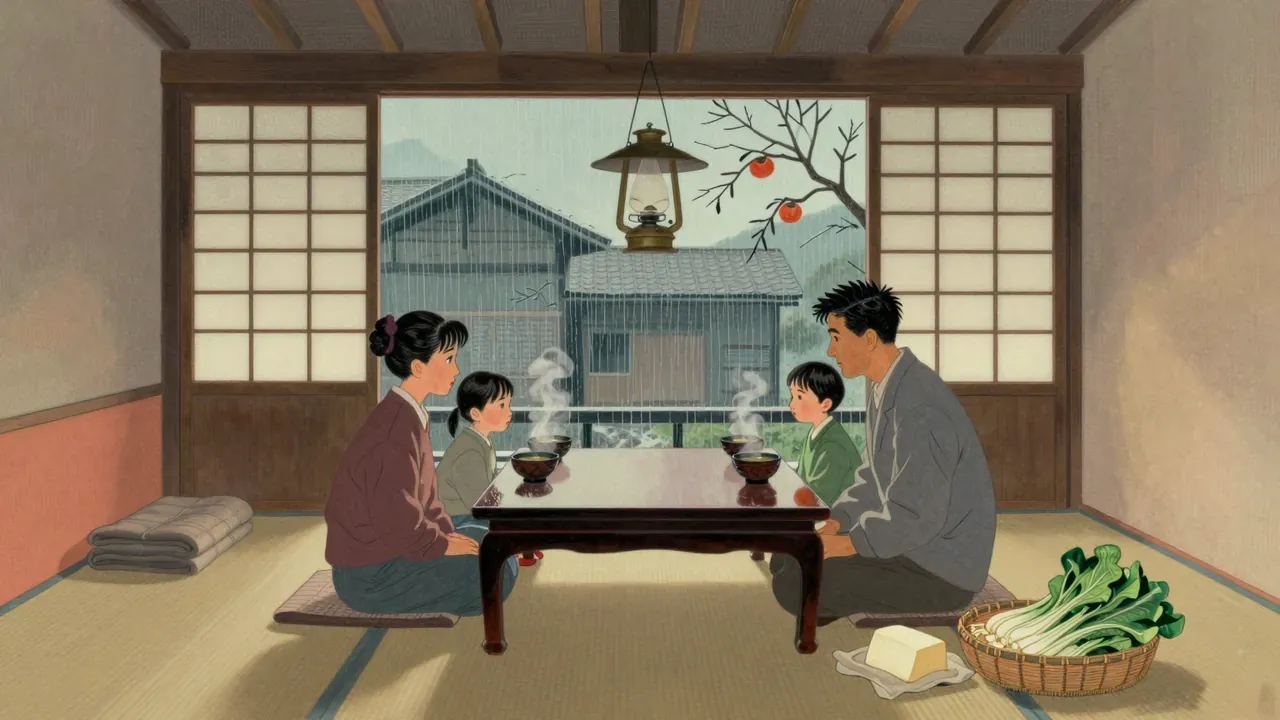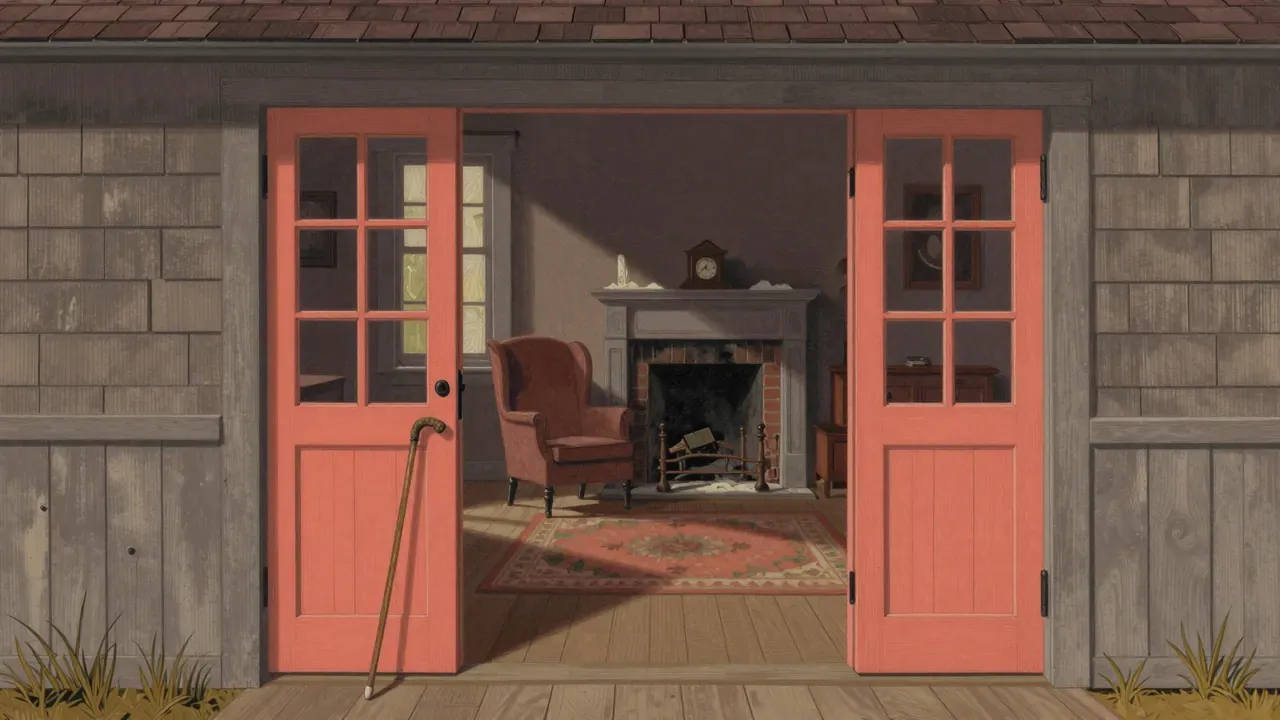
The place it stays
Make Way for Tomorrow is a 1937 American drama about an elderly couple displaced by foreclosure and dispersed among their adult children. It does not aim to entertain, persuade or instruct in any conventional sense; it sets out to hold steady on a single, unvarnished proposition: that society abandons its oldest members without ceremony, and that the emotional cost of that abandonment falls most heavily on those who have already given everything. The film avoids moralising, satire or exposé. It makes no claim about systemic failure beyond what the situation implies — no speeches on pensions, no cutaways to breadlines, no voiceover lamenting the times. Its method is strictly observational: it watches Barkley and Lucy move through rooms they no longer belong in, speak to people who listen only until they must reply, and rehearse hope long after it has ceased to be plausible. It tries to make visible what polite society keeps off-screen: the quiet erosion of dignity when love is rationed, deferred, then withdrawn.
The look of it
The story unfolds with surgical economy: five children, four households, one afternoon of freedom before separation. Victor Moore and Beulah Bondi carry the film not through virtuosity but through unbroken consistency — their performances are calibrated to the weight of years, not the demands of climax. Moore’s Barkley retains a courtly softness even as his hands tremble; Bondi’s Lucy sustains a gentle, almost ritualised optimism that never tips into denial. William C. Mellor’s cinematography avoids expressionist shadows or dramatic angles; instead, he frames interiors with shallow depth, keeping doorways half-open and hallways just out of focus — spaces that suggest transition but never arrival. LeRoy Stone’s editing refuses emphasis: cuts land where breath would pause, not where emotion peaks. George Antheil’s score is sparse, often absent — music enters only when the couple do something that feels like a last act of self-possession, such as returning to their honeymoon hotel. There are no flashbacks, no narration, no symbolic objects. Everything is held at arm’s length, which makes it impossible to look away.
The weight of what isn’t said
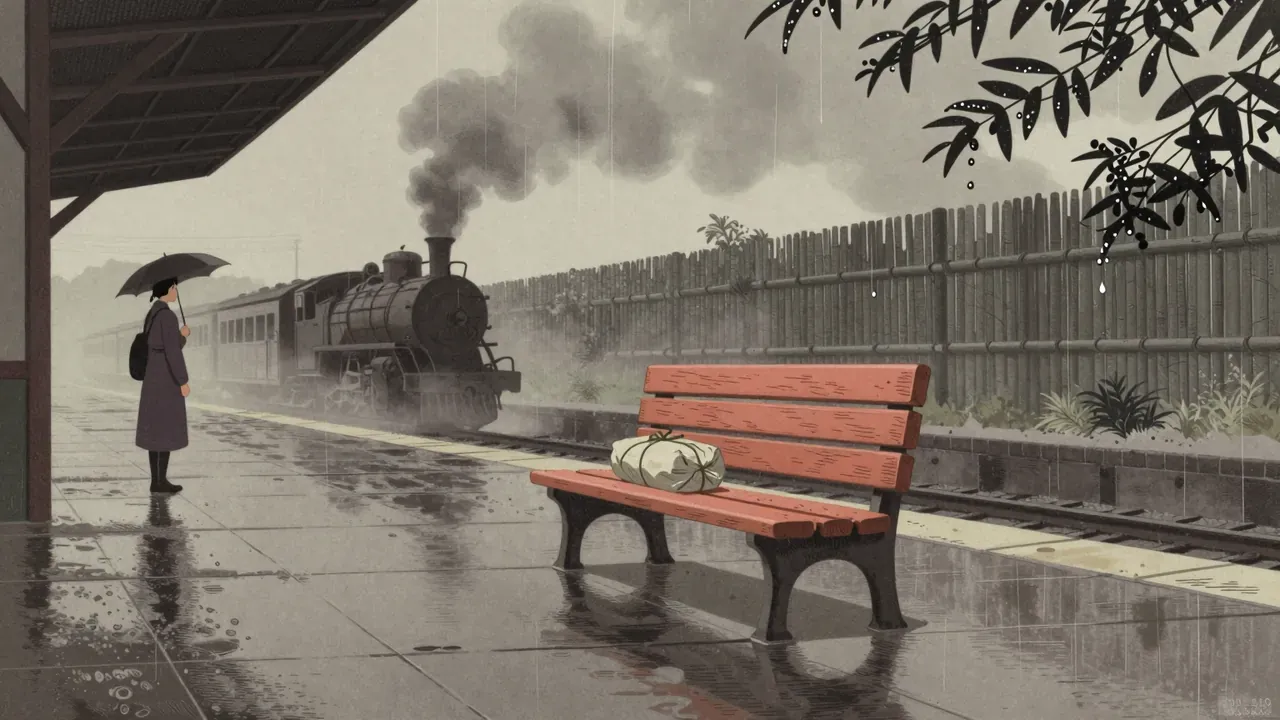
What lands is the cumulative pressure of small refusals: a daughter turning her back mid-sentence, a son glancing at his watch while his mother speaks, a granddaughter delivering truth with the casual cruelty of someone who has never had to weigh it. The film’s power resides in its refusal to isolate any one moment as the breaking point — there is no shouting match, no slammed door, no villainous monologue. Instead, the hurt accumulates in silences that last half a second too long, in gestures withheld, in plans made behind closed doors and announced as settled fact. The final train-station farewell works because it is understated: no music swells, no close-up lingers on tears. Barkley and Lucy speak plainly, wave plainly, turn away plainly. Their love is not dramatised; it is simply the ground beneath every scene. That plainness makes the ending neither cathartic nor punitive — it is documentary in tone, inevitable in shape, and devastating in its restraint.
The shape of neglect
What does not land is any sense of structural critique beyond the domestic. Though released during the Great Depression and coinciding with the rollout of Social Security, the film makes no reference to policy, economics or collective responsibility. Its world contains no unions, no relief agencies, no neighbours who intervene — only family, and the silence between them. This narrow frame is deliberate, but it leaves no room for irony, counterpoint or ambiguity in the children’s behaviour: they are uniformly self-absorbed, tactless, emotionally illiterate. Thomas Mitchell’s George, Fay Bainter’s Anita and Elisabeth Risdon’s Cora are drawn with such consistent flatness that their motivations remain opaque — not psychologically complex, but underwritten. There is no suggestion that any child wrestles with guilt, exhaustion or genuine constraint. The film’s moral clarity comes at the cost of psychological texture; it asks us to witness neglect, not understand it. That choice strengthens its emotional force but limits its reach as social portraiture.
What endures
The themes that matter are not ageing or poverty in the abstract, but the specific mechanics of erasure: how language shrinks around the elderly, how space contracts, how time is no longer shared but parcelled out in increments of inconvenience. It treats memory not as nostalgia but as labour — Lucy’s recollections are acts of maintenance, Barkley’s jokes are defences against irrelevance. The film also explores the asymmetry of care: children expect gratitude for minimal accommodation, while parents apologise for existing. There is no redemption arc, no late awakening of conscience — only a slow, mutual recognition that love persists even when it can no longer be housed, fed or witnessed. The film’s quietest theme is endurance without purpose: Barkley continues job-hunting not because he believes he will succeed, but because stopping would mean admitting he has become surplus. That endurance is not heroic. It is just what remains when everything else has been taken.
Who it asks for
This film is for viewers who can sit with sustained discomfort without requiring resolution, explanation or uplift. It suits those accustomed to Ozu or Bresson — people who value duration over exposition, gesture over dialogue, implication over statement. It is not for viewers who need narrative propulsion, character development or tonal variation. Anyone seeking catharsis, irony, historical context or even basic fairness in the distribution of screen time will find it withholding. Those who associate ‘drama’ with heightened conflict or moral reckoning may mistake its stillness for emptiness. A viewer expecting the warmth of McCarey’s contemporaneous The Awful Truth will be disoriented — this is not a film that forgives, distracts or reassures. Its value lies precisely in its refusal to accommodate expectation. To call it ‘difficult’ misstates the case: it is simply unyielding. That unyieldingness is its integrity — and its limit.
How it stays with you
Yes, it is worth your evening — but only if you accept that some films exist not to fill time but to measure it. Ninety-one minutes here pass with the weight of decades, not the pace of plot. It repays attention not through revelation but through accumulation: each scene adds another grain to the quiet landslide of the couple’s displacement. You will not leave energised, enlightened or entertained in the usual sense. You may leave unsettled, attentive, slightly altered in your posture toward elders — not because the film tells you to, but because it shows you what happens when you don’t. Those who dismiss it as ‘depressing’ are not wrong, but they mistake mood for method. Its sadness is structural, not incidental. To skip it is to miss one of the few American studio films to treat old age as a condition of being, not a plot device — and to do so without condescension, ornament or evasion.