A boy too weak to fight, so he builds instead
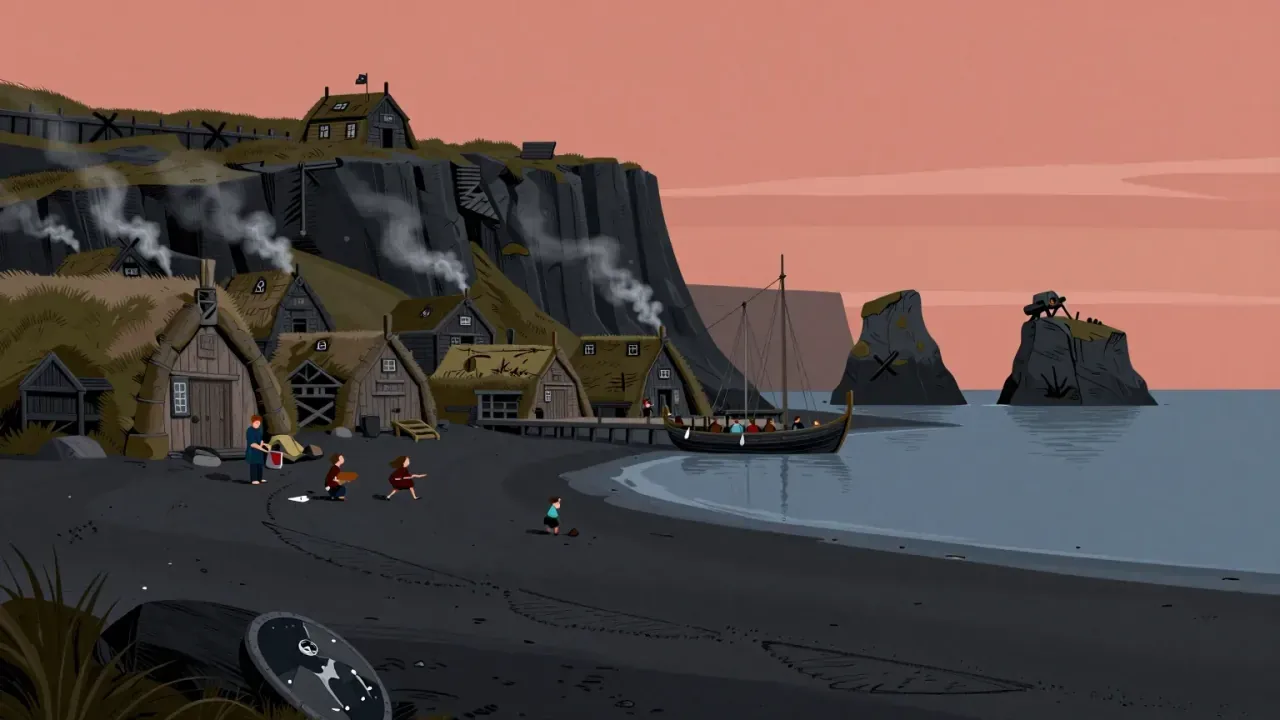
How to Train Your Dragon, directed by Chris Sanders and Dean DeBlois and released in 2010, is set in the Viking village of Berk, where dragon raids are a constant nightly threat and the undersized teenager Hiccup, son of the chieftain, is considered too physically weak to join the fight against them. Based loosely on Cressida Cowell’s novel, the film reworks the source material considerably at the studio’s direction, changing Hiccup’s dragon Toothless from a small, common breed described in the book into the rarest and most formidable dragon species said to exist anywhere in their world.
Sparing an enemy instead of finishing the job
Hiccup shoots down Toothless, a Night Fury, using a mechanical bolas launcher he designed and built himself in the village blacksmith’s forge, but when he finds the dragon injured and trapped in a forest clearing he cannot bring himself to finish the kill and sets it free instead, against everything he has been raised to believe about dragons. The exchange that follows, where Toothless pins Hiccup to the ground but ultimately chooses not to hurt him, is staged almost entirely through animation, timing and eye contact rather than any dialogue, and it is the quiet hinge the entire rest of the story turns on.
A live-action cinematographer hired for a cartoon
Directors Sanders and DeBlois hired cinematographer Roger Deakins, known for his work with the Coen brothers, as a visual consultant specifically to bring what they called a live-action feel to the film’s lighting and camera movement, an unusual choice for an animated feature at the time that pays off most clearly in the flight sequences, which carry a sense of weight, scale and physical space that more conventionally cartoonish animation of the period often lacked entirely. Extensive research into how fire and flight actually behave went into the film well before any animation was finalised.
A village that changes its mind slower than its hero does
The film’s tension comes less from any single clear villain than from the widening gap between what Hiccup has secretly learned about dragons through Toothless and what the rest of Berk, including his own chieftain father Stoick, still firmly believes to be true and necessary for survival. That gap does not close in one convenient scene; the village’s dragon-fighting training class continues in full even as Hiccup is quietly training Toothless behind everyone’s back, and the film lets that contradiction sit uncomfortably for a long stretch rather than rushing to resolve it early.
What the friendship is actually arguing
What the film is actually arguing, underneath its friendship story, is that an enemy’s hostility often has considerably more to do with how it has historically been treated and hunted than with anything essential or fixed about its underlying nature, and it extends that idea outward from the one dragon Hiccup personally befriends to the entire species by the film’s climax. It is a fairly simple argument, delivered without a great deal of subtlety along the way, but the film commits to it fully and follows it through to a satisfying conclusion.
Who should watch it
This suits families across a wide age range looking for a shared watch, and viewers who appreciate technically accomplished action and flight sequences without necessarily needing a more unconventional plot structure to go along with them. It does not ask much of an audience specifically looking for structural surprise or narrative risk-taking, since the underdog-proves-himself shape of the story is familiar and legible from the very first scene onward. Christopher Mintz-Plasse, Jonah Hill, Kristen Wiig and T.J. Miller were given room to improvise in the recording booth, which gives the secondary cast an energy the plot alone does not require.
A confident 98 minutes
At 98 minutes, with John Powell’s score combining orchestral scale with Scottish and Irish folk instrumentation including penny whistle and bagpipes, How to Train Your Dragon backed up its critical acclaim with $494.9 million worldwide against a $165 million production budget and has held its reputation since as one of the stronger animated films of its entire decade. It is a dependable, well-made choice for an evening that rarely surprises but never once falters in its execution, and it launched a franchise that includes two sequels and a 2025 live-action remake.