A man, an island, and no way to leave it
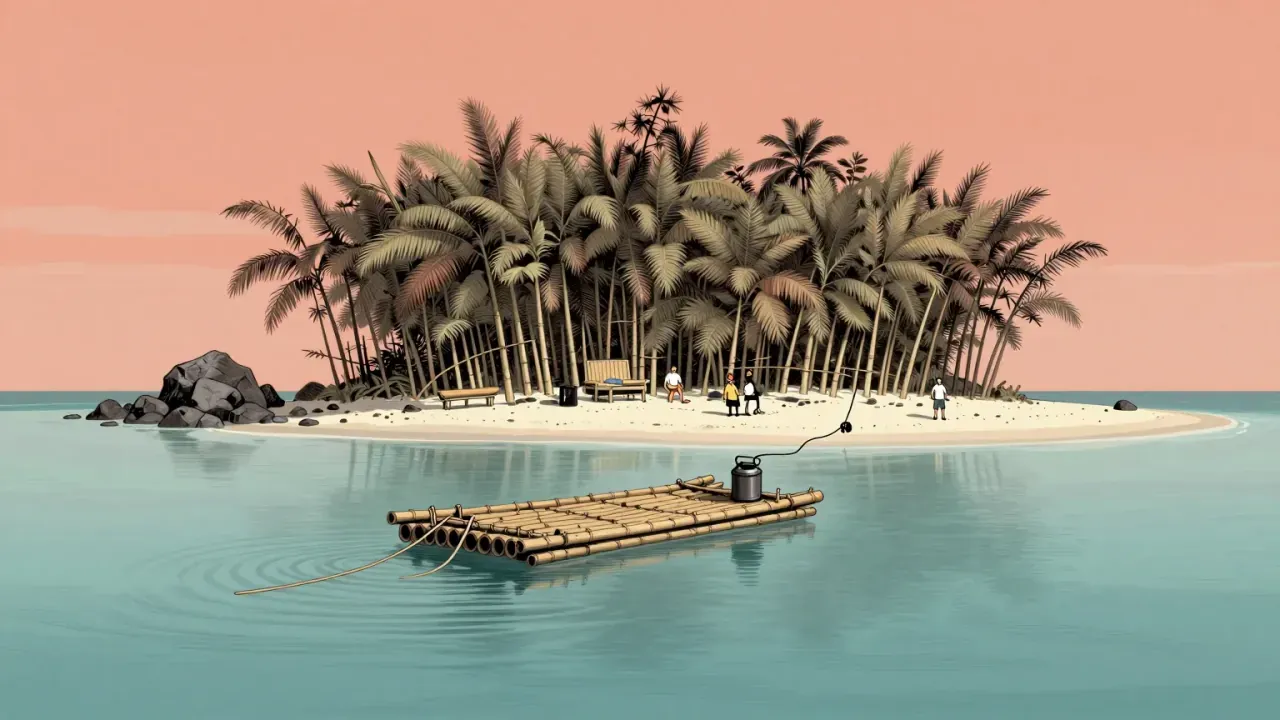
The Red Turtle strands an unnamed man on an uninhabited island with fresh water, fruit, and bamboo enough to build a raft, and then spends its opening act denying him the one thing the island cannot provide: a way to leave. Three attempts to sail away are each destroyed by something unseen beneath the water, and Michaël Dudok de Wit, making his feature debut after years of short films, builds this repetition deliberately rather than as padding, training the audience into the same frustration the man feels before revealing what has been sabotaging him. The project began when Studio Ghibli co-founder Hayao Miyazaki saw Dudok de Wit’s short Father and Daughter and said he was the only foreign animator Ghibli would ever want to make a feature with.
An act of violence that changes the story
The saboteur turns out to be a giant red sea turtle, and when the man finally corners it on the beach, he responds with an act of real violence, striking it and flipping it onto its back to strand it in the sun. His remorse afterward, returning with water once his anger has passed, is the hinge the entire film turns on, and what happens to the turtle next moves the story out of straightforward castaway survival and into something closer to a fable, without the film ever announcing the shift in tone through dialogue, since there is none anywhere in the film’s eighty minutes.
A family raised without a single line of dialogue
From that point the man’s solitary island life expands into a family spanning three generations, built entirely through gesture, timing and physical staging rather than a single spoken word. Dudok de Wit’s animators used live-action footage purely as reference, isolating what they called each actor’s strongest poses rather than rotoscoping directly, and the resulting movement has a specificity that carries relationships a script would normally have to explain: a couple’s reconciliation, a child’s first swim, an old man’s final walk down the beach at night. The technique asks animation to do the narrative work dialogue usually does, and mostly it succeeds.
A style that prizes restraint over incident
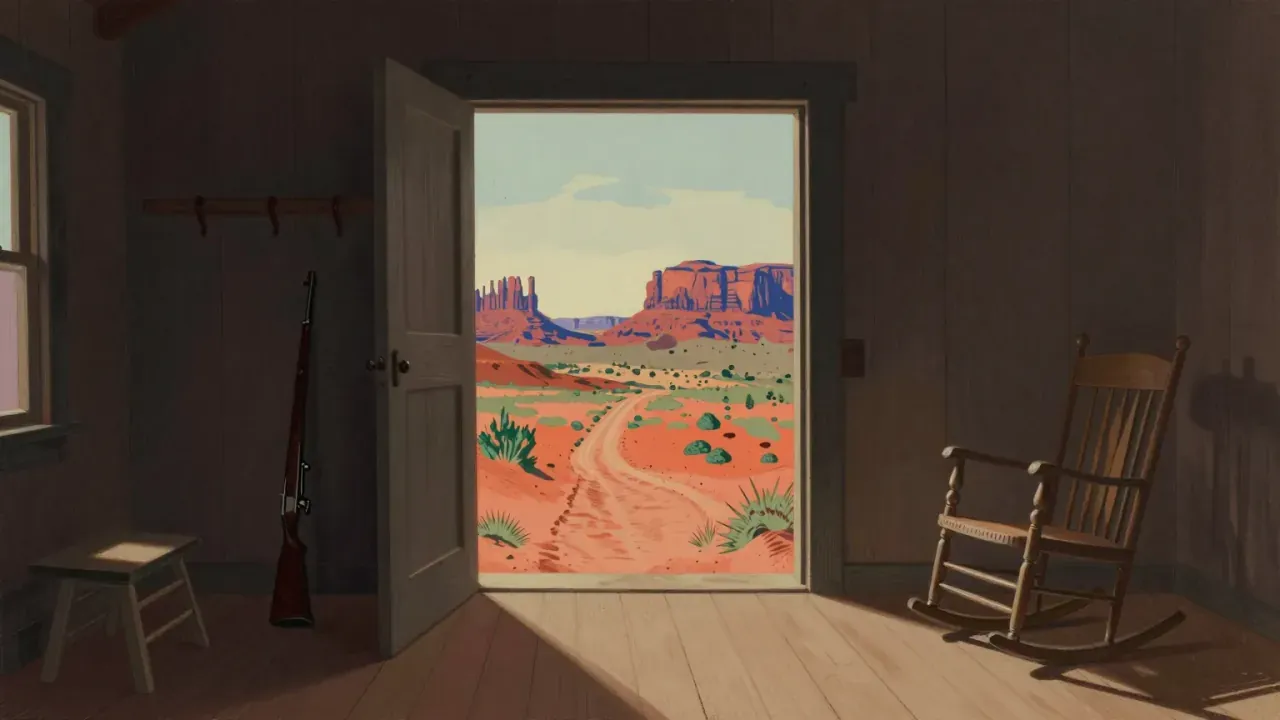
The visual approach, charcoal-drawn backgrounds scanned and digitally coloured, with CGI used only for the raft and the turtle before being hand-retraced frame by frame, produces a restrained, muted palette that matches the film’s unhurried pace. Long stretches pass with very little incident, a man walking the same stretch of sand, tending the same bamboo grove, and the film does not hurry past these passages to get to the next event. This is a deliberate choice rather than a structural flaw, but it means the film asks for a kind of patience that a plot-driven survival story would not.
Cycles of life read plainly rather than explained
Birth, ageing, a tsunami that destroys most of the island’s bamboo forest, a death, and a closing transformation back into the turtle all occur without a line of commentary attached to any of them, and the film trusts the accumulation of image and rhythm to register as meaning rather than explaining what any of it is supposed to represent. It is a film about a life cycle observed rather than interpreted, and the absence of dialogue keeps it from tipping into the kind of statement a script would be tempted to make explicit.
Patience required, reward not guaranteed for everyone
Viewers who respond to slow, wordless, image-led storytelling will find a fully realised fable here, one that rewards close attention to gesture and pacing rather than plot incident, and that suits anyone already familiar with Ghibli’s visual sensibility looking for something adjacent but distinct from the studio’s usual house style. Anyone who needs dialogue, faster momentum, or a conventional resolution to the castaway setup, a rescue, an escape, may find the film’s eighty minutes trying rather than absorbing, since it never offers those satisfactions and is not interested in pretending it will. It is not a film to put on as background company while doing something else in the room.
Eighty minutes that ask to be watched, not half-watched
The Red Turtle premiered in Un Certain Regard at Cannes and earned an Academy Award nomination for Best Animated Feature, and aggregate critical scores were strong, in the low nineties on Rotten Tomatoes and the mid eighties on Metacritic. It made a modest six and a half million dollars at the box office, a figure that suits a film built for close, undistracted attention rather than mass appeal. Watched properly, set aside as its own evening rather than squeezed alongside a screen, it delivers on the patience it asks for.