The Sunday meal
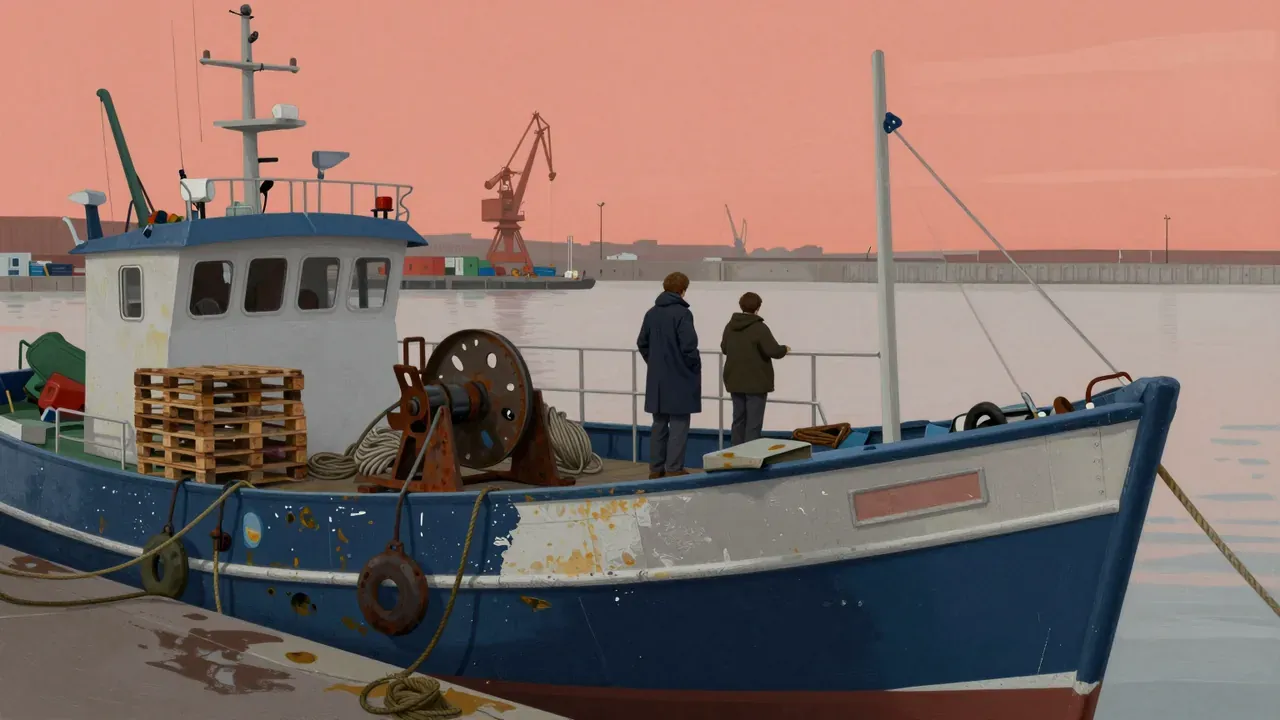
The Secret of the Grain is a French drama about Slimane Beiji, a sixty-one-year-old Maghrebi immigrant in Sète, laid off from the shipyard and determined to open a couscous restaurant aboard a converted boat. It tries to render, without commentary or framing, the texture of an extended Franco-Arab family — its affections, rivalries, silences, and unspoken obligations — as it coalesces and fractures around one man’s quiet, stubborn ambition. The film does not position Slimane as a symbol of integration or resistance, nor does it treat bureaucracy as villainy: the permits, inspections, and municipal delays are presented as procedural facts, not metaphors. Its aim is structural and temporal: to let scenes breathe at their natural length, to follow conversations past their narrative utility, and to treat each adult and adolescent as a centre of gravity rather than a function of plot. It refuses to compress time or motivation; no character explains themselves, and no scene resolves cleanly. This is not a film about overcoming obstacles but about persisting within them — physically, bureaucratically, relationally — for as long as breath and dignity allow. (158 words)
The look of it
It works through accumulation: long takes, overlapping dialogue, and spatial continuity that keeps characters in frame even when they are not speaking. Lubomir Bakchev’s cinematography avoids contrast or flourish — interiors are lit with the flat, even glow of fluorescent tubes and afternoon sun through dusty plexiglass; exteriors hold the damp, low-saturation light of the Mediterranean coast in winter. Performances are grounded in duration: Hafsia Herzi’s Rym moves with restless physicality but never gestures beyond what her body knows; Bouraouïa Marzouk’s Souad cooks, speaks little, and occupies space with unbroken calm; Habib Boufares plays Slimane with a stillness that gathers weight across 155 minutes, his face registering fatigue before decision, resignation before action. Editing by Camille Toubkis and Ghalya Lacroix sustains scenes until their emotional logic exhausts itself — a Sunday lunch stretches over twenty minutes, a bureaucratic meeting over twelve, the final gala over forty-five. There are no score cues, no close-ups to signal importance, no cuts to reaction shots. What registers is rhythm: the scrape of a spoon on metal, the clink of glasses, the pause before a question is answered or ignored. (159 words)
The weight of a pause
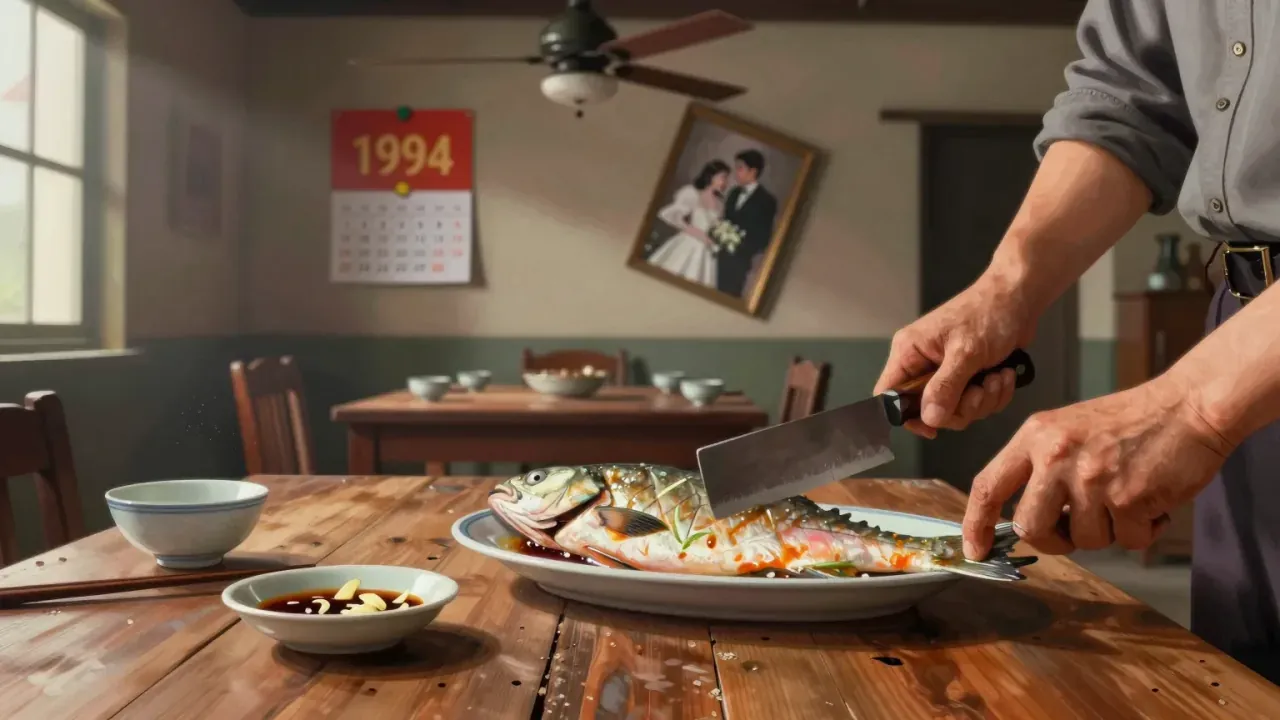
What lands is the cumulative realism of interdependence — how food, labour, memory, and inheritance circulate through a family without being named as such. The Sunday couscous meal is not ritualised but repeated: same pot, same stove, same distribution of tasks across generations. Rym’s belly dance does not resolve the crisis but suspends it, shifting energy without solving logistics — and that suspension feels true, not theatrical. The film trusts its audience to register the significance of small things: Souad’s habit of setting aside a plate for a ‘poor man’; Latifa’s silence when she walks away from the boat mid-crisis; Majid’s exit not as betrayal but as predictable, unremarkable evasion. Even the bureaucratic hurdles land not as satire but as friction — the kind that wears down joints and alters plans without ever becoming dramatic. The cast avoid caricature because they are never asked to represent anything beyond their immediate wants: a loan, a promotion, a moment alone, a plate of food, a chance to be seen. No performance feels rehearsed; all feel inhabited, down to the way fingers grip a glass or shoulders slump after a long walk. (157 words)
The belly-dance interruption
What does not land is the film’s refusal to clarify certain relationships or motivations beyond what is shown — not as ambiguity, but as omission. Julia’s isolation is palpable, yet her interior life remains inaccessible beyond gesture and tears; Sergei’s diplomacy has no counterpoint in dialogue that reveals his own stakes. The deputy mayor’s wife appears only as Majid’s lover, never as a person with history or agency outside that function. Some scenes — particularly those involving minor officials or neighbours — feel like placeholders, their presence justified by social realism but not by dramatic necessity. The film’s commitment to duration occasionally tips into inertia: a ten-minute sequence of Slimane walking between buildings yields little beyond exhaustion, and the motorbike chase, while visually precise, repeats a single beat without variation or escalation. The ending collapses without catharsis or pivot — Slimane falls, unmoving, and the frame holds. That choice is coherent with the film’s ethics, but it leaves no room for reflection, only residue. A viewer expecting psychological exposition or narrative pay-off will find neither; the film offers observation, not explanation, and that boundary is absolute. (156 words)
The grain and the mullet
The themes that matter are inheritance as practice rather than possession, dignity as endurance rather than triumph, and family as infrastructure rather than sentiment. The restaurant is not a business plan but a vessel — for Souad’s recipe, Rym’s energy, Slimane’s patience, the sons’ labour, the daughters’ care. The grain and the mullet are literal ingredients, not metaphors: they anchor the film in material culture, in the transmission of skill across generations and borders. Ageing is treated without pathos — Slimane’s body fails him slowly, without fanfare; Souad’s hands remain steady even as her voice grows quieter. Migration is background, not subject: accents, names, and dishes mark difference, but the film never frames identity as conflict or negotiation. Class operates quietly — in the peeling paint of the Hotel de l’Orient, the worn soles of work boots, the way wine is poured only after appetisers are served. Bureaucracy matters not as oppression but as terrain: something to navigate, adapt to, circumvent, or wait out. The film treats love as repetition — showing up, cooking, listening, carrying cauldrons — not as declaration or sacrifice. Its deepest concern is how people continue, day after day, without certainty of reward or recognition. (155 words)
The boat and the building
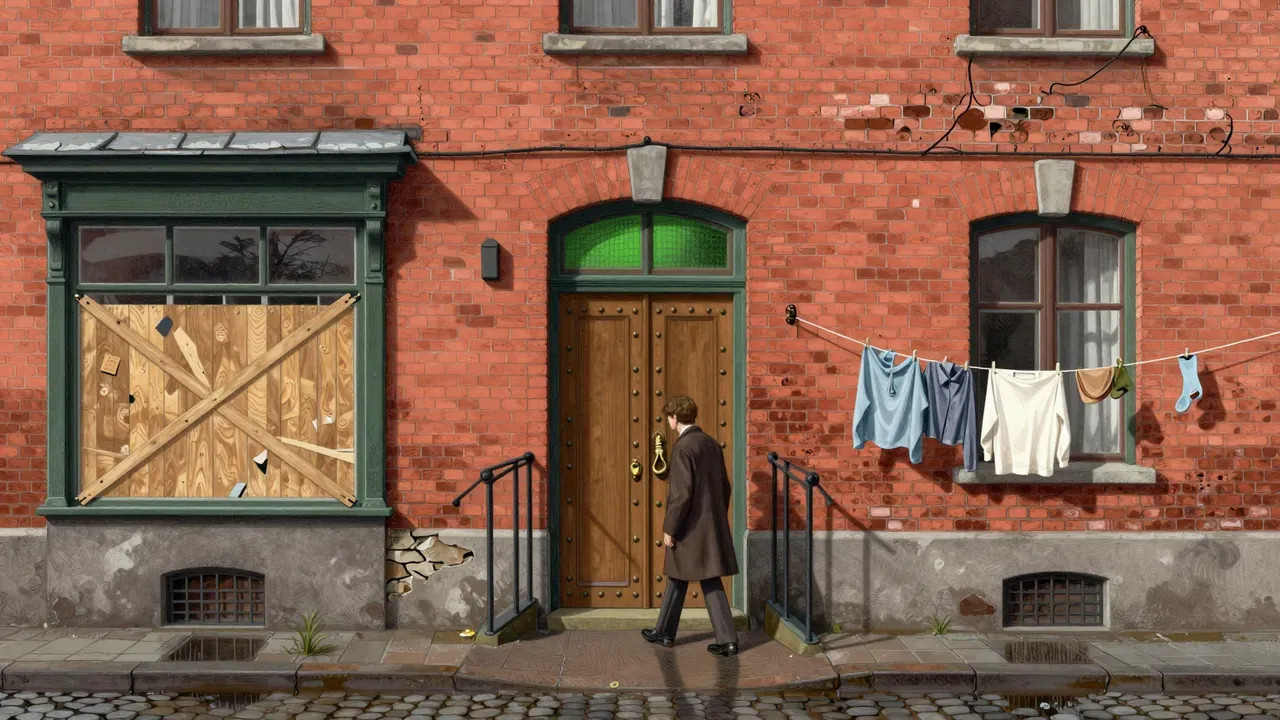
It is for viewers who value duration over exposition, who trust silence and gesture more than dialogue, and who do not require narrative closure to feel satisfied. It suits those familiar with slow-cinema conventions or with lived experience of multigenerational households where decisions unfold over weeks, not scenes. It is not for viewers who need clear cause-and-effect, psychological exposition, or tonal consistency — the film shifts from kitchen intimacy to public humiliation without modulation. Those who expect immigrant stories to foreground discrimination, assimilation, or trauma will find none here; the film’s refusal to engage xenophobia or overt racism is deliberate, not evasive, but may read as omission to some. Anyone requiring propulsion — a ticking clock, escalating stakes, rising tension — will grow impatient. The film rewards attention to detail, not plot tracking. A viewer who watches for theme rather than story, for behaviour rather than motive, will find it rich; one who watches for resolution will leave empty. Its pace is not indulgent but calibrated — every minute serves the film’s central proposition: that dignity resides in persistence, not outcome. (159 words)
The fall on the pavement
Yes, it is worth your evening — if you accept its terms. It asks for sustained attention, not passive consumption, and repays it with a rare fidelity to how people actually live: in overlapping concerns, partial understanding, and unremarkable resilience. Its 155 minutes do not feel long because they are not filled with incident but with presence — the weight of a glance, the rhythm of shared labour, the exhaustion of hope deferred. It is not entertainment in the conventional sense, nor is it didactic; it simply shows. Those who dislike it tend to cite its length or lack of narrative drive — fair objections, but objections to its form, not its failure to meet another form’s standards. Change the verdict? Only if you change the premise: shorten it, add exposition, resolve the ending, or insert a thematic voiceover. None would improve it. Its value lies precisely in its refusal to accommodate expectations it does not share. To watch it is to sit with a family — not to judge, interpret, or summarise, but to witness. (158 words)