Eighteen years in a tower, then a decision
Tangled, directed by Byron Howard and Nathan Greno and released in 2010, retells the Brothers Grimm story of Rapunzel, a princess with magical, glowing, endlessly long hair kept locked away in a tower by the woman who abducted and raised her. Originally conceived by animator Glen Keane in 2001 as Rapunzel Unbraided and developed across multiple abandoned versions, including one that relocated the story entirely to modern-day San Francisco with human teenagers transported into the fairy tale, the film that finally reached screens nine years later returns to the fairy tale’s original roots after a long run of false starts.
A thief who becomes the reason she can leave at all
Rapunzel’s decision to finally leave the tower is driven by her own restless curiosity about the world rather than by any external rescue, and she gets her actual chance when the fleeing thief Flynn Rider stumbles into her tower while being chased by the royal guard for an earlier theft. The pairing avoids a straightforward damsel dynamic because neither character initially wants what the other wants: Rapunzel needs an escort to see the kingdom’s floating lanterns in person, and Flynn only agrees to guide her because she is holding his stolen satchel hostage until he does.
Six years to make a painting move
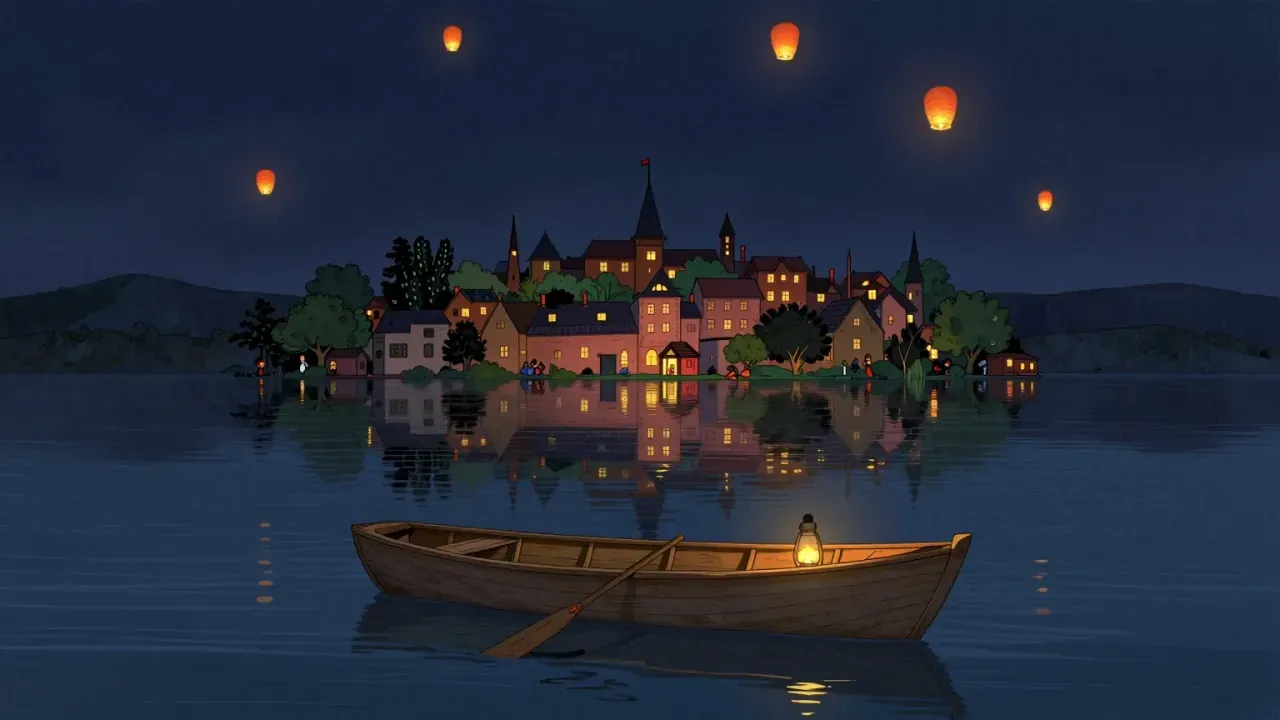
The film’s visual approach, blending computer-generated imagery with non-photorealistic rendering techniques to evoke a painted, storybook look, took years of development and contributed to a reported production cost of $260 million, making it the most expensive animated film made up to that point and one of the most expensive films of any kind. That considerable investment shows most clearly in the lighting and texture work throughout, particularly in the floating lantern sequence that became the film’s single most recognisable and widely reproduced image. Cinematographers Scott Beattie and Mohit Kallianpur worked to make the light behave the way it would in an actual painting rather than a purely digital render.
A villain problem the writers solved with lanterns
Director Nathan Greno has said the production’s hardest structural problem was giving Rapunzel a plausible reason to leave the tower that did not immediately resolve the entire plot in one stroke, since escaping her captor Mother Gothel too cleanly and too early would remove the story’s central obstacle before the film had properly begun. The eventual solution, framing the whole film’s climax around Rapunzel’s specific wish to see the kingdom’s floating lanterns in person on her birthday, came from a single idea pitched by animator John Ripa in an otherwise stuck story meeting, and it holds the entire film’s momentum together from that point forward.
A title changed to avoid one word
Underneath its fairy-tale plot, Tangled is a story about a young woman testing how much of her identity was ever actually her own choice versus what she was simply told to believe by the person controlling her, since Rapunzel only discovers she is the kingdom’s long-lost princess near the very end of the film rather than at the outset. The film’s decision to withhold that royal revelation until last, rather than opening with the stakes of a missing princess, keeps the earlier scenes personal and character-driven rather than purely mechanical plot delivery.
Who should watch it
This suits families across a wide age range looking for a shared watch, longtime fans of Disney’s musical tradition eager to hear composer Alan Menken’s return to the studio after prior collaborations, and viewers who appreciate the sheer technical achievement of the film’s painterly rendering style. It offers comparatively little for those specifically hoping for a more unconventional or subversive treatment of the fairy tale’s underlying structure and expectations. The title itself was changed from Rapunzel specifically to broaden its appeal beyond an audience assumed to avoid anything read as a girls’ film.
A hundred minutes of dependable craft
At 100 minutes, Tangled earned $591.8 million worldwide, a solid return on its unusually large production budget, and received a Best Original Song nomination at the Academy Awards for its songs written by Menken and lyricist Glenn Slater. It is a dependable, well-crafted evening’s entertainment rather than a boundary-pushing one, and it delivers exactly what a family expecting a classic Disney princess musical would reasonably want from it, even if it never seriously risks giving them anything more ambitious than that comfortable expectation. The film also went on to spawn a short sequel, a video game and a stage musical, extending its reach well past its initial theatrical run.