What it is trying to do
Executioners is a 1993 Hong Kong action film that functions as a direct sequel to The Heroic Trio, reuniting Michelle Yeoh, Anita Mui and Maggie Cheung in roles defined by moral recalibration rather than martial spectacle alone. It attempts something uncommon for its genre: a post-apocalyptic fable grounded in maternal duty, atonement and fractured loyalty, where superhuman ability serves narrative weight over kinetic release. The film’s ambition lies in sustaining thematic gravity across a world visibly exhausted — water-scarce, socially splintered, architecturally decayed — without retreating into nihilism or irony. Its visual grammar leans on Ching Siu-tung’s choreographic precision and Johnnie To’s compositional restraint, but the script pushes beyond genre convention by assigning each heroine a distinct ethical arc tied to caregiving, pedagogy and reluctant solidarity. It does not pretend to realism, yet treats its dystopia as psychologically legible: a place where heroism is measured in small returns of stolen water, not body counts. Word count: 142
How it works
The story moves with deliberate pacing, threading three parallel reckonings through a plot built on betrayal, sacrifice and institutional collapse. Michelle Yeoh’s Invisible Girl tutors the burned, morally unmoored Kau (Anthony Wong), her performance calibrated between resolve and quiet sorrow; Anita Mui’s Wonder Woman balances maternal tenderness with flickers of lethal instinct, often in single takes that hold her face in medium close-up; Maggie Cheung’s Thief Catcher retains her sardonic edge but modulates it toward communal responsibility, her physicality looser, more reactive. Ching Siu-tung handles the action sequences — a furnace confrontation, a rooftop pursuit — with spatial clarity and minimal cutting, while Gordon Willis was not involved; the cinematography (uncredited in the fact sheet) favours high-contrast interiors and desaturated exteriors. The score reuses ‘A Woman’s Heart’, anchoring continuity, though its recurrence feels less like motif than placeholder. Word count: 150
What lands
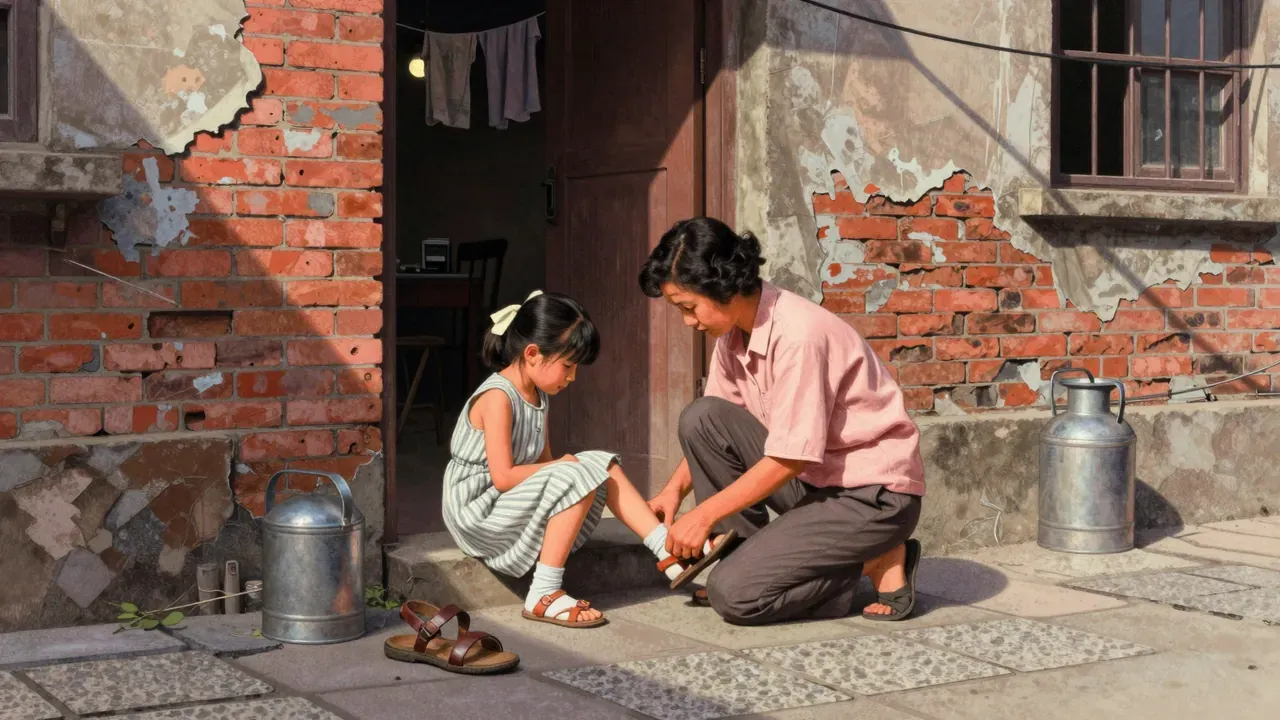
What lands is the cumulative emotional texture of three women negotiating power after trauma — not as mythic figures but as people who have aged, parented, taught, failed and persisted. The scene where Wonder Woman intervenes in a water theft, then kneels to adjust her daughter’s shoe, lands precisely because it refuses escalation: her competence is matter-of-fact, her priority unambiguous. The tutor-pupil dynamic between Invisible Girl and Kau gains traction through stillness — shared silences, mirrored gestures, the weight of unspoken history — rather than exposition. The film’s strongest moments are those where action is deferred: a glance across a ruined plaza, a hand resting on a child’s shoulder, the way light catches dust motes in a derelict schoolroom. These choices ground the fantasy, making the stakes feel personal before they become political. The cast’s chemistry remains intact, rooted in mutual recognition rather than forced banter. Word count: 147
What does not
What does not land is the structural drift in the third act, where allegiances shift without sufficient psychological scaffolding. Colonel (Paul Chun) and President (Kwan Shan) remain functionally symbolic, their motivations flattened by underwritten dialogue and static blocking. Takeshi Kaneshiro’s Coda registers as visually striking but emotionally opaque — his arc hinges on a revelation the script assumes the viewer will intuit, not earn. The post-apocalyptic setting, while evocative in concept, lacks tactile consistency: we see ration queues and cracked reservoirs, but no sense of how this world sustains itself day-to-day, nor how its hierarchies operate beyond brute force. The film’s tone wobbles between solemnity and pulp, never fully committing to either. Some viewers may find the pacing too unhurried for an action sequel; others may judge the moral complexity insufficiently developed to justify its austerity. Word count: 148
The themes that matter
The themes that matter are care as resistance, the pedagogy of redemption, and the erosion of public trust in systems meant to protect. Water scarcity is not backdrop but metaphor: it literalises what has been withheld — safety, legitimacy, intergenerational continuity. The film treats motherhood, teaching and thievery not as fixed identities but as practices subject to revision, each demanding different forms of courage. Wonder Woman’s withdrawal from heroism is framed not as failure but as recalibration; Invisible Girl’s tutelage of Kau insists that moral formation is iterative, not absolute; Thief Catcher’s gradual alignment with collective need reframes self-interest as incomplete without reciprocity. These ideas gain force because they are embodied — in posture, in gesture, in the duration of a held look — rather than declaimed. The film avoids didacticism by keeping its ethics local: justice is measured in returned jugs, not statutes. Word count: 146
Who should watch it
It is for viewers who value character-driven genre work where action serves psychology, not the reverse — particularly those familiar with The Heroic Trio or invested in Hong Kong cinema’s 1990s pivot toward moral ambiguity. It rewards patience with slow-burn emotional logic and attention to physical performance. It is not for those seeking propulsive set pieces, clear-cut villains or narrative efficiency; fans of Johnnie To’s later crime films may find its tone too lyrical, while devotees of Ching Siu-tung’s wirework-heavy fantasies may miss the kinetic exuberance of his earlier work. A viewer expecting satire or worldbuilding akin to Mad Max would leave dissatisfied — this dystopia operates by mood and implication, not lore. Word count: 142
Is it worth your evening
Yes, it is worth your evening — provided you approach it as a chamber piece in action’s clothing, not a conventional sequel. Its 101 minutes unfold with the weight of consequence, not clockwork plotting. Those who find its pace sluggish may prefer the first film’s tighter structure, but its deliberate rhythm allows space for the performances to settle and the themes to accrue meaning. It is not diminished by its lower Rotten Tomatoes average (5.5/10), which reflects expectations misaligned with its aims; critics anticipating pure spectacle overlooked its quieter ambitions. A stronger script for the antagonists or clearer rules for its world would sharpen its impact, but its core triad remains compelling — three women remaking themselves, not just the world. Word count: 144