The shape of it
The Flavor of Green Tea over Rice is a domestic drama set in early-1950s Tokyo, following a childless, middle-aged couple whose quiet estrangement unfolds alongside their niece’s resistance to an arranged marriage. Yasujirō Ozu and Kōgo Noda’s script does not aim for crisis or catharsis but for quiet recalibration: it traces how habit, silence, and small shared acts—like preparing ochazuke in the kitchen at night—can re-anchor a marriage without resolving its underlying tensions. The film avoids symbolic weight or moral framing; its attention stays fixed on posture, timing, and the unspoken rhythms of cohabitation. It treats marital drift not as failure but as weather—persistent, unremarkable, and subject to minor shifts in pressure. Though written in 1939 and revised after wartime censorship forced its postponement, the final version bears no trace of that history in its texture. It is not a film about postwar Japan but about the interior life of a specific household, rendered with patience and precision. Its ambition is structural modesty: to hold space for what people do when nothing much is happening.
The look of it
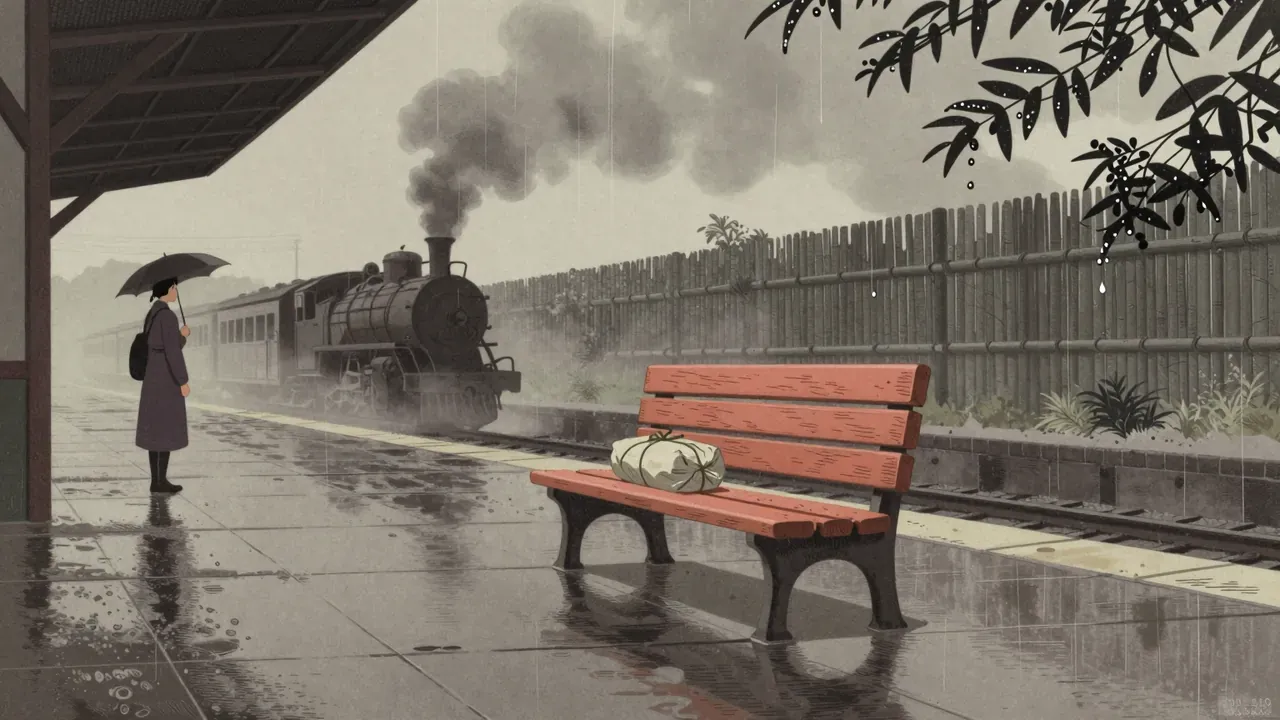
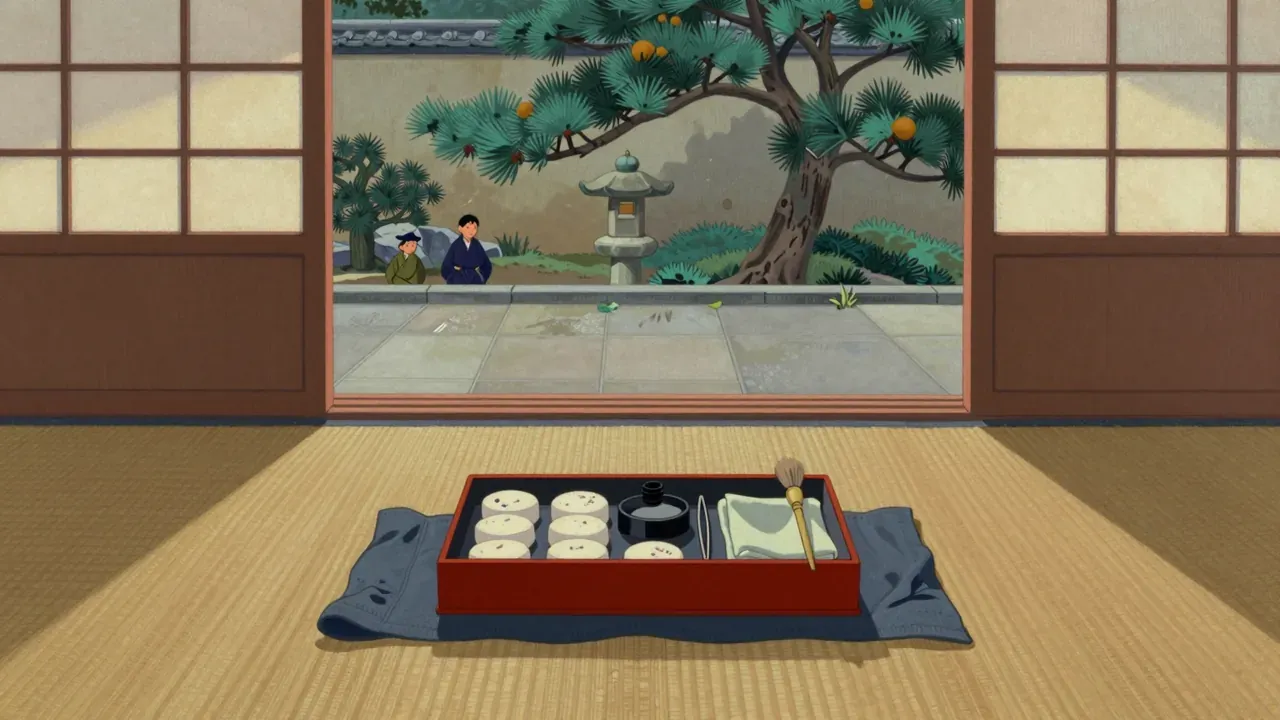
The story moves through overlapping domestic orbits—Taeko’s evasions, Setsuko’s refusals, Mokichi’s quiet routines—linked by repetition rather than cause. Shin Saburi and Michiyo Kogure perform with minimal inflection, their restraint anchoring the film’s tone: Saburi’s Mokichi carries authority without dominance, Kogure’s Taeko registers irritation not in outbursts but in the angle of a glance or the pause before answering. Yūharu Atsuta’s cinematography keeps the camera low and still, framing characters within doorways and tatami lines, his lighting soft and even, never dramatic. Ichirō Saitō’s score is sparse, used only in transitions and end credits, leaving room for ambient sound—the clink of bowls, train announcements, distant pachinko machines. Editing follows Ozu’s signature ‘pillow shots’: empty corridors, street signs, laundry lines—moments that register duration without narrative function. The craft serves continuity over emphasis: every cut, every composition, every silence is calibrated to sustain attention on the ordinary, not elevate it.
The weight of it
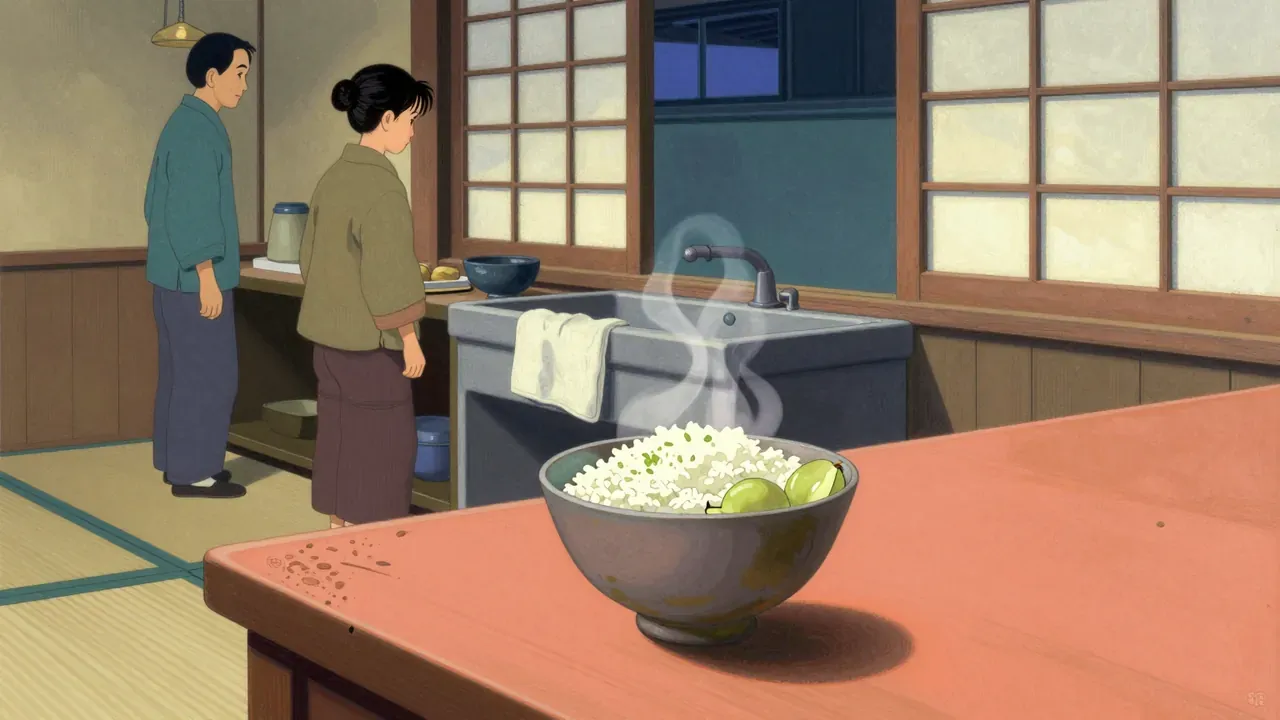
What lands most firmly is the cumulative weight of small reconciliations. The final ochazuke scene works because it arrives without fanfare: no music swells, no close-up lingers, no dialogue explains the shift—just two people moving side-by-side in a dim kitchen, fumbling slightly, then settling into rhythm. That moment feels earned not because it resolves conflict but because it mirrors earlier, unremarked habits: Mokichi smoking cheap cigarettes, Taeko adjusting her obi before stepping out. The subplot with Setsuko also lands—not as rebellion but as generational friction expressed through evasion: her repeated exits from the kabuki theatre, her late-night ramen talk with Noboru, her final walk away with him, arguing playfully. These are not gestures of liberation but of alignment, quietly asserting agency within inherited forms. Even the airport miscommunication—a missed farewell, a plane turning back—lands because it refuses irony: the mechanical fault is incidental, the return unheralded, the reunion domestic and unceremonious. Nothing here needs underlining; the film trusts the viewer to notice what matters.
The rhythm of it
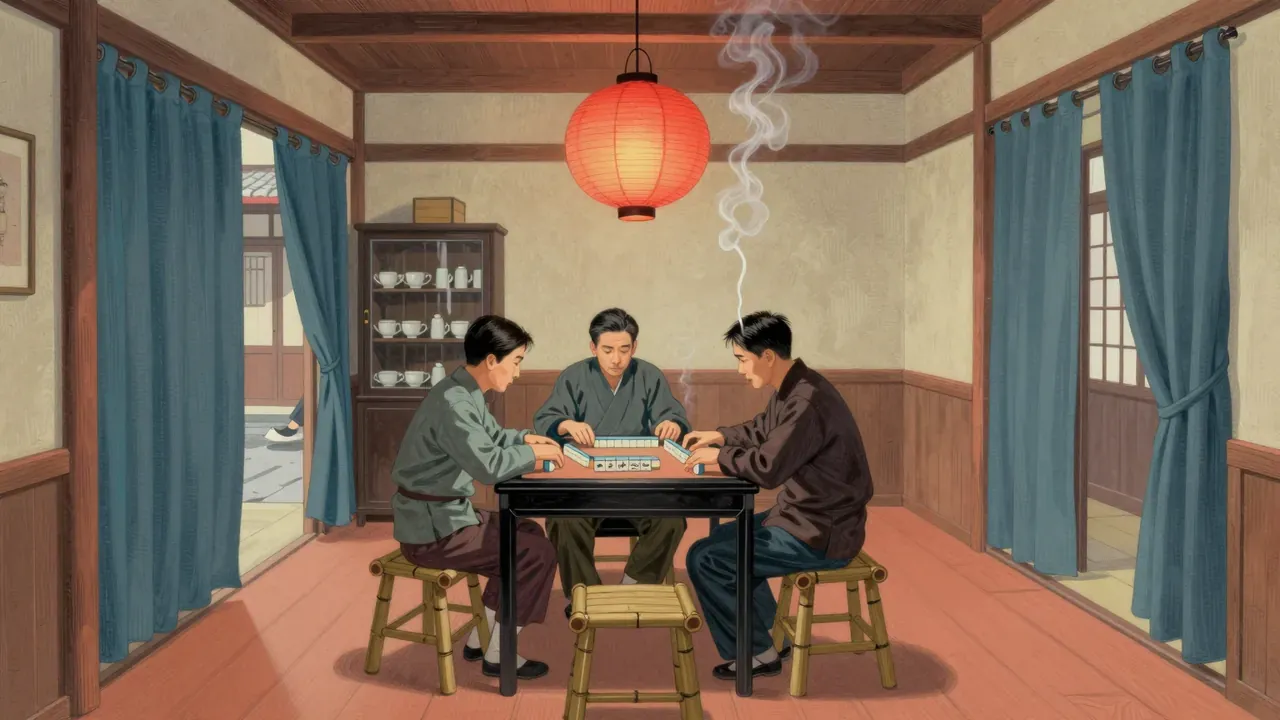
What does not land is the subplot’s tonal inconsistency, particularly the spa sequence where the women compare Mokichi to a slow-moving black koi. The scene’s lightness sits uneasily beside the film’s prevailing reserve, and its humour feels borrowed from a different register—more like a shōshimin-eiga comedy than Ozu’s usual measured irony. Similarly, the baseball game interlude, with its public announcement and Aya’s husband spotted with another woman, introduces a note of social exposure that the rest of the film deliberately avoids. These moments lack the density of implication found elsewhere: they gesture toward satire or farce but stop short of either, leaving gaps the film does not fill. The military-buddy subplot—Mokichi meeting Sadao at the pachinko parlour—also remains underdeveloped, its wartime past left unspoken and unexplored. None of this undermines the central thread, but it does create pockets where the film’s attention frays, where narrative convenience overtakes psychological fidelity. It is not that these elements are badly made, but that they sit outside the film’s core discipline.
The grain of it
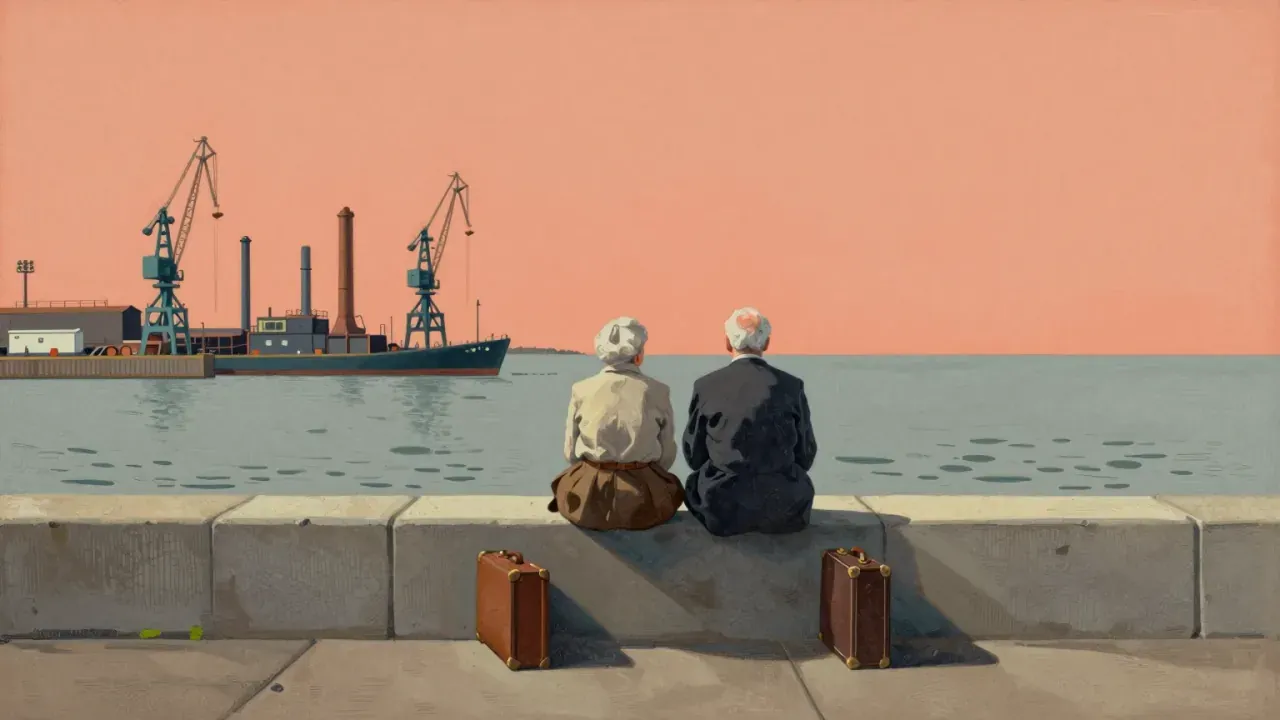
The themes that matter are continuity and quiet reciprocity. Not love as feeling, but love as practice—repeated, unremarkable, often unacknowledged. The film treats class not as conflict but as texture: Mokichi’s third-class train travel and Taeko’s first-class preference are not ideological positions but habits rooted in different upbringings, neither condemned nor romanticised. Arranged marriage appears not as oppression but as infrastructure—something Setsuko navigates, tests, and ultimately reshapes without rejecting its framework. Time is another theme: not linear progression but layered recurrence—the same streets, same meals, same silences, each iteration carrying subtle variation. Ageing is present not in decline but in adjustment: Mokichi’s nostalgia for simpler pleasures is not regret but recalibration; Taeko’s anger is not rupture but realignment. The film refuses transcendence. Its moral centre lies in the kitchen at midnight—not in revelation, but in shared labour, imperfectly executed, done together because it must be done, and because doing it together changes nothing outwardly but everything inwardly.
The demand of it
This film is for viewers who value sustained attention to behaviour over exposition, who find emotional resonance in posture and pacing rather than plot turns. It rewards those comfortable with ambiguity, who do not require closure or character arcs to feel satisfied. It is not for viewers who rely on narrative propulsion, heightened stakes, or clear moral signposting—those expecting thematic clarity or dramatic escalation will find it inert. Some admirers of Ozu’s later work, like Late Spring or Tokyo Story, may find this comparatively slight: its domestic scale is narrower, its emotional palette more muted. Others, particularly those drawn to mid-century Japanese realism or studio-era restraint, will find it rich in detail and nuance. The Criterion release’s extras—including Bordwell’s essay—help contextualise its place in Ozu’s development, but the film itself assumes no prior knowledge. Its accessibility lies in its specificity: it asks only that you watch closely, and trust that what is shown is enough.
The length of it
Yes, it is worth your evening—if you approach it as a study in duration, not destination. Its 115 minutes unfold at the pace of real time, asking you to inhabit its rhythms rather than consume its story. Those who expect momentum or resolution may grow restless, particularly during the extended pachinko and ramen sequences, which serve atmosphere over advancement. But the film’s power accumulates in the margins: the way Taeko’s hand hesitates before pouring tea, how Mokichi’s shoulders relax when he hears her footsteps in the hall. It is not a film to ‘get’ but to absorb. Viewers who dislike static framing or minimal scoring will find it alienating; those open to its quiet insistence will find it deeply humane. Its worth lies not in what it says but in how long and how carefully it watches—and how, in turn, it invites you to do the same.