A pet who steals an education
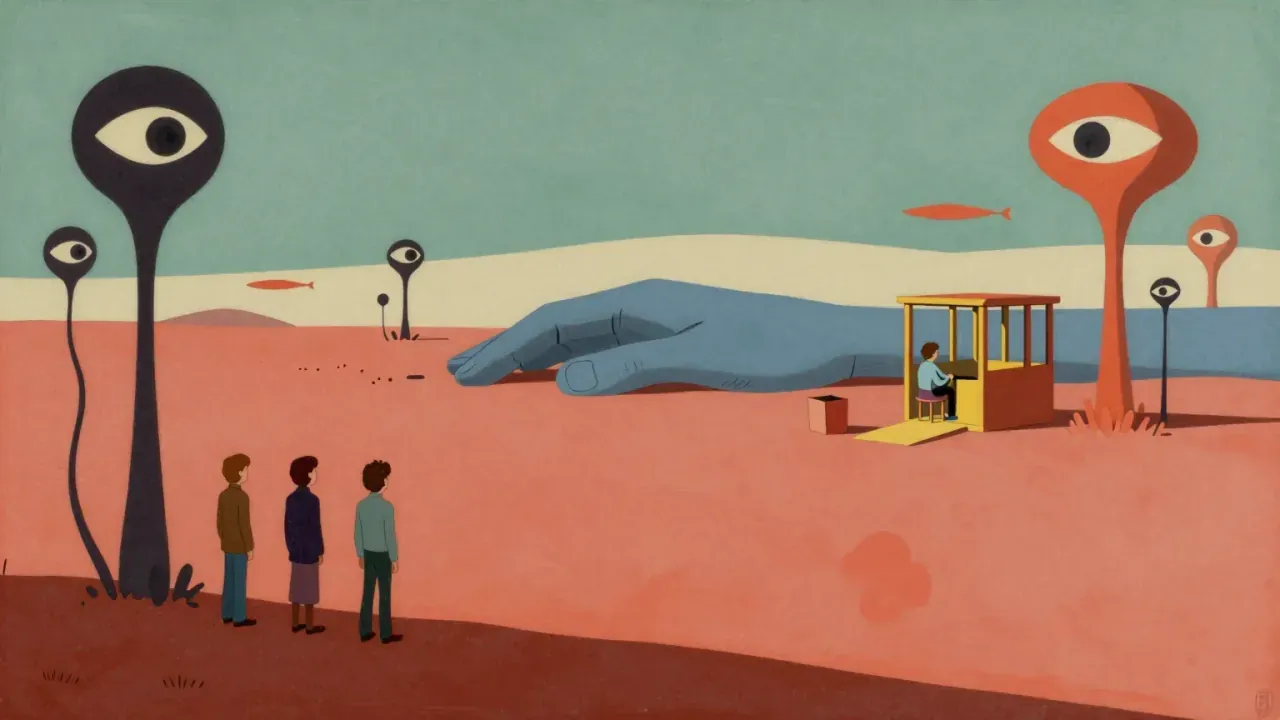
Fantastic Planet is set on the planet Ygam, where giant blue Draags keep small humans, called Oms, as pets or hunt them in the wild to control their numbers, treating them the way humans elsewhere treat animals rather than as fellow intelligent beings. The story follows Terr, an Om whose mother is killed by Draag children and who is raised as a pet by Tiwa, the daughter of a senior Draag official, until a defect in his restraining collar lets him absorb the same advanced education Tiwa receives through a headset. Director René Laloux, working from Roland Topor’s production design and Stefan Wul’s 1957 novel, built the film as a science-fiction premise carrying an unmistakably political charge rather than as pure fantasy adventure.
Built across two countries under one roof
The film was a co-production between France and Czechoslovakia, animated at Prague’s Jiří Trnka Studio using cutout animation techniques distinct from the cel animation dominating Western studios at the time, giving Fantastic Planet a flatter, more graphic visual texture than its contemporaries. Alain Goraguer’s score, later compared by critics to Pink Floyd’s Atom Heart Mother Suite for its mellotron and wah-wah guitar, blends psychedelia, jazz and funk in a way that has made the soundtrack an object of its own cult following, sampled by later hip-hop artists. Production reportedly began as early as 1963, meaning the finished film represents roughly a decade of development before its 1973 premiere at Cannes, where it won the Grand Prix special jury prize.
Where the allegory refuses to specify itself
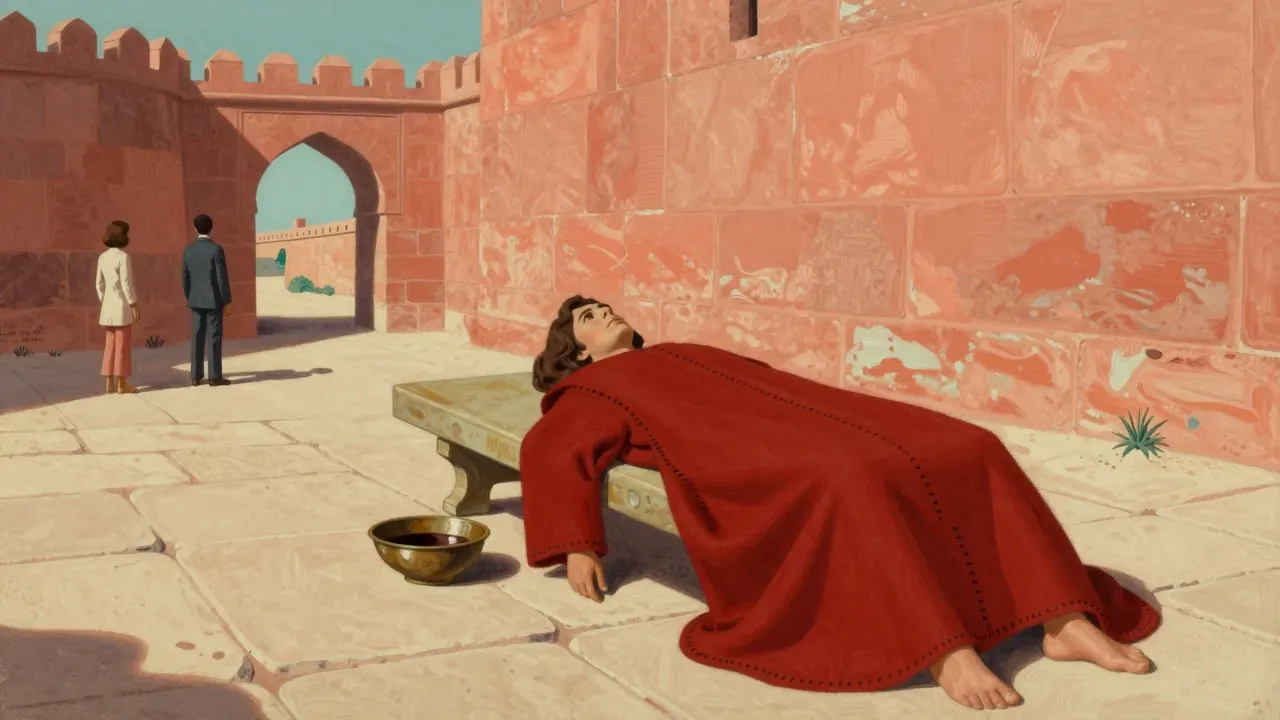
The film is at its sharpest in showing exactly how the Draags manage their Om population: not through spectacle but through calm, bureaucratic culls when wild Om numbers grow too large, a detail that lands harder than a more dramatic massacre might because it is presented as routine administration rather than atrocity. Terr’s theft of Draag education, and his subsequent use of it to teach an entire tribe of wild Oms to read, ties the film’s politics to a specific mechanism: literacy and access to knowledge as the actual lever of liberation, not just courage or numbers. That specificity is why critics across decades have applied the allegory to widely different histories, from apartheid to the Holocaust to civil rights, without the film ever needing to name any one of them directly.
A pace some critics never warmed to
Not every critic found the deliberate pacing rewarding on its own terms; Gene Siskel dismissed the film outright as a science-fiction premise pretending to profundity, and the film’s dreamlike, unhurried rhythm remains a real barrier for viewers expecting the escalating incident of a conventional adventure story. At seventy-two minutes, the film moves through Terr’s escape, his years building the rebellion in an abandoned Draag rocket depot, and the eventual journey to the Fantastic Planet itself at a measured pace that some retrospective reviews still describe as thin rather than meditative.
Extermination dressed as population control
The Draag-Om relationship in Fantastic Planet works as a genuinely open allegory rather than a coded reference to one specific historical event, which is precisely why it has supported readings tied to civil rights, apartheid, colonial rule and animal rights simultaneously without any single interpretation feeling forced. The film’s insistence on showing Draag culls of wild Oms as routine, unremarkable administration, rather than as dramatic villainy, keeps the metaphor uncomfortably close to how real systems of domination actually operate, through procedure rather than melodrama. Terr’s rebellion succeeding only once knowledge itself becomes shared property, rather than through force alone, reinforces that the film’s politics run through access and literacy as much as through open conflict.
Who should watch it
This suits viewers interested in 1970s political science fiction, in Cold War-era co-productions between Western and Eastern Bloc studios, or in the psychedelic and prog-adjacent musical currents that shaped Goraguer’s score. It rewards patience with a slow, dreamlike pace and an allegory that declines to specify its target. It is a poor match for anyone wanting brisk pacing, a conventional hero’s journey, or an allegory that resolves into one clear historical statement rather than several overlapping ones. Viewers who need their science fiction to move quickly from setup to resolution should expect a much slower, more meditative ride than the genre’s usual pacing.
Worth the seventy-two minutes
Yes. Fifty years after its Cannes prize, Fantastic Planet’s central image, humans kept and culled as pets by an indifferent, more advanced species, still reads as unusually direct rather than dated, helped by a visual and musical style specific enough to Prague’s animation tradition and early-1970s psychedelia that nothing else looks quite like it. Its seventy-two minutes ask for patience rather than pace, but the film’s willingness to let its politics stay procedural rather than melodramatic gives it a staying power that flashier science-fiction allegories from the same decade have mostly lost.