The look of it
La Jetée is a 28-minute French photomontage from 1962, assembled almost entirely from still black-and-white photographs and framed by a voice-over narration. It does not attempt conventional cinema: there are no moving performances, no continuous action, no dialogue beyond murmurs and a single narrator’s measured cadence. Instead, it uses the grammar of stillness—duration, sequence, rhythm, dissolve—to construct time as a physical space one might traverse, inhabit, or be trapped inside. Chris Marker built it as a photo novel, not a film, and its ambition is structural and philosophical: to test whether memory, image, and fate can be made coextensive. It treats time travel not as technological speculation but as psychological recursion — a loop where cause and effect are inseparable, and where the past is not revisited but re-enacted. Its form is its argument: that perception, not motion, constitutes continuity; that what we call ‘now’ is a sustained illusion held together by repetition and selection. It asks the viewer to attend not to what happens, but to how attention itself is directed, delayed, and returned. (158 words)
The sound of it
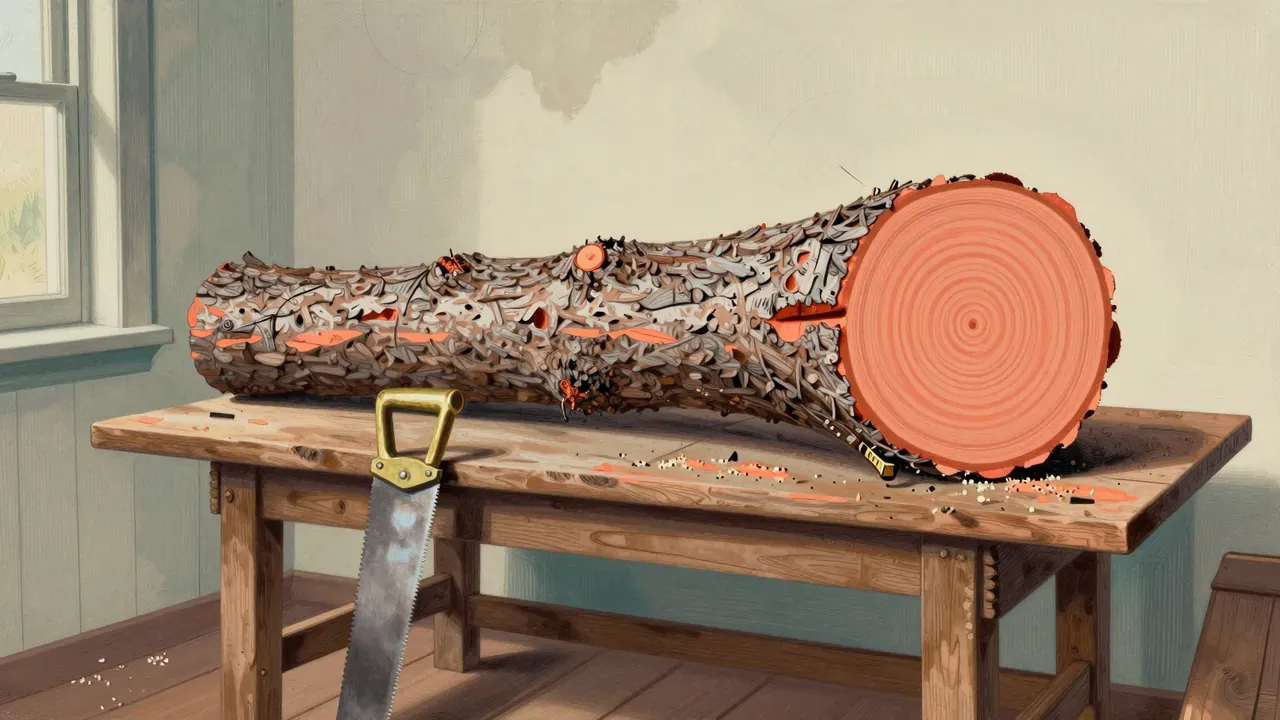
The story follows a man selected for time travel after World War III, his eligibility rooted in a single childhood memory — a woman on the jetty at Orly Airport, and a death he witnessed but did not comprehend. Jacques Ledoux plays the experimenter; Jean Négroni the narrator; Hélène Châtelain the woman; Davos Hanich the man, though he appears only in stills save for two brief filmed fragments: her mouth opening for four seconds, then her eyes blinking for six. Chris Marker shot the stills on a Pentax Spotmatic; the motion footage on a 35 mm Arriflex rented for one afternoon. Jean Ravel’s editing stitches the images with precise dissolves, each timed to Trevor Duncan’s sparse orchestral score. The sound design is minimal — narration, low strings, airport ambience, distant German muttering — and functions as the sole continuous thread across static frames. There are no sets beyond archival locations: the Palais de Chaillot’s underground galleries, Orly’s terminal, a cut-away tree trunk echoing Vertigo. The film’s coherence emerges not from performance but from the weight given to individual images, their recurrence, and the pauses between them. (159 words)
The loop of it
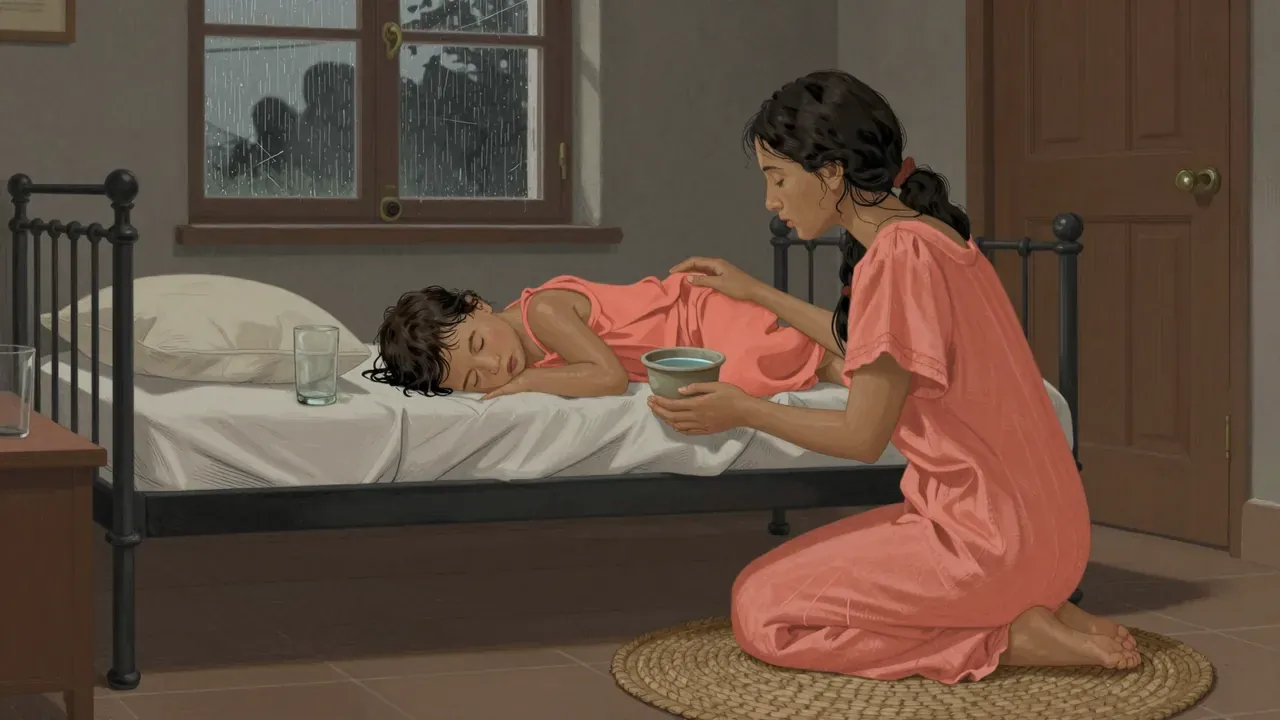
What lands is the cumulative pressure of recurrence: the jetty, the woman’s face, the child’s back, the tree ring, the man’s blindfolded stillness. These images gain gravitational force through repetition and rhythmic spacing, making memory feel tactile and inescapable. The final revelation — that the man’s childhood trauma was his own death — lands not as plot twist but as structural inevitability, confirmed by the film’s circular architecture. The absence of motion sharpens attention to gesture: a blink, a glance, a hand placed on wood. The soundtrack’s restraint amplifies silence, so that even a breath or a footstep carries narrative weight. The film’s austerity becomes its authority: when the narrator says ‘he remembers’, the image that follows does not illustrate but enacts remembrance — holding duration, resisting cutaway, forcing the eye to linger until recognition dawns. This is not storytelling by exposition but by durational insistence. The 1963 Prix Jean Vigo recognised this precision: La Jetée works because every frame is both evidence and verdict, every dissolve both transition and trap. Its power lies in how little it gives, and how much it demands the viewer hold. (157 words)
The weight of it
What does not land is any sense of lived consequence beyond the central loop. The post-war setting remains schematic — rubble, tunnels, uniforms — never embodied. The scientists have no motive beyond exposition; the future society offers no logic, only a power unit handed over like a prop. The German muttering and airport chatter add texture but no meaning, functioning as ambient noise rather than world-building. The romance between the man and the woman exists only in narration and repeated glances; without movement or speech between them, their bond stays conceptual, not felt. Some viewers will find the stillness oppressive rather than immersive — a formal exercise that mistakes constraint for depth. Others may resist the fatalism, reading the ending not as poetic inevitability but as narrative surrender. The film refuses psychological interiority beyond what the narrator states; it offers no access to doubt, hesitation, or change of mind. Its rigour is also its limit: it cannot accommodate ambiguity within the loop, only around it. Those who require causal clarity, emotional escalation, or moral dimension beyond predestination will find it withholding, not austere. Its power depends on accepting that some questions — why the jetty, why her, why him — are answered only by the structure itself. (159 words)
The world of it
The themes that matter are memory as architecture, time as non-linear recurrence, and perception as agency. The film treats the mind not as a recorder but as a site of selective fixation — the man survives the war not because he is strong, but because he clings to one image. That image becomes both compass and cage. The jetty is not a place but a hinge: between past and present, life and death, witness and subject. The tree ring scene signals that time is not layered but concentric — all moments coexist, visible only in cross-section. Dystopia here is not political or environmental but epistemological: the future and past are inaccessible except as echoes, and even those echoes are unstable, self-referential. The film’s Left Bank affiliation shows in its resistance to linear progress — history repeats not as farce but as syntax. Free will is neither affirmed nor denied; it is simply absent from the grammar. What persists is the act of looking: the camera’s gaze, the man’s gaze, the viewer’s gaze, all converging on the same threshold. The final image is not of death but of recognition — the moment the loop closes not with violence, but with understanding. (156 words)
The demand of it
It is for viewers who treat attention as a muscle, not a reflex — those willing to sit with stillness, to let rhythm build meaning, to accept that narrative propulsion can come from repetition rather than progression. It rewards patience, pattern-recognition, and comfort with unresolved causality. It is not for those who rely on performance, dialogue, or spatial continuity to orient themselves; nor for those who read dystopia as warning rather than condition. Anyone expecting exposition, character development, or emotional catharsis will leave frustrated. A viewer who finds David Lynch’s Eraserhead or Tarkovsky’s Stalker opaque may find La Jetée equally resistant — not because it is obscure, but because it operates on different terms. Its brevity does not make it accessible; its economy demands more, not less, from the viewer. Change the form — add motion, dialogue, explanation — and the film collapses. Its value is inseparable from its constraints. (158 words)
The measure of it
Yes, it is worth your evening — provided you watch it once, undistracted, in a single sitting, and allow its logic to settle over the next few hours. Its 28 minutes ask for nothing more than sustained attention, and return a recalibration of how time, memory, and image relate. It is not entertainment, nor instruction, but calibration: a reset of perceptual habit. Those who dismiss it as ‘just slides’ miss how precisely each image is weighted, how each dissolve performs work, how silence is scored. It repays rewatching not for hidden detail but for shifted emphasis — noticing, on second viewing, how often the narrator says ‘he remembers’ before the image arrives, training the ear before the eye. Its influence on 12 Monkeys, Sans Soleil, and countless audiovisual artists confirms its functional grammar, not just its historical status. To skip it is to miss a pivot point in how cinema thinks. But if you need narrative momentum, emotional release, or visual variety, it will feel like deprivation, not discipline. (159 words)