The world it lives in
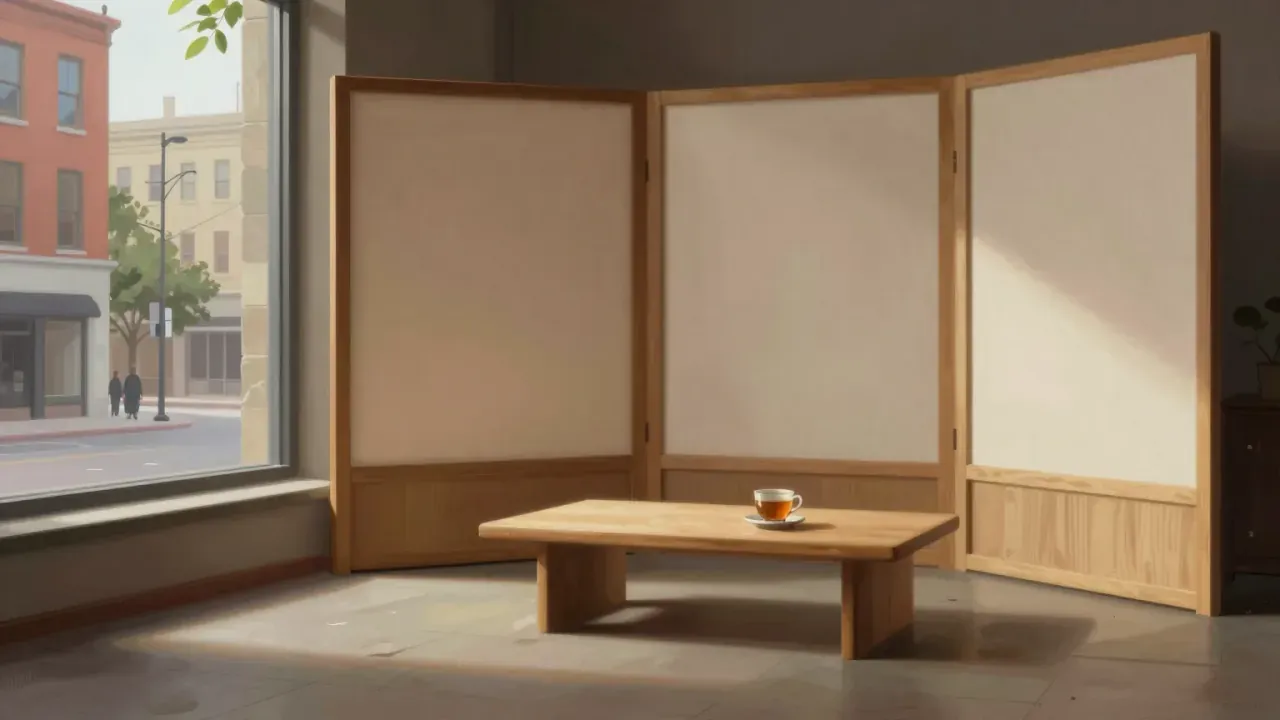
After Yang is a science fiction drama set in a quiet, unspecified future where technology is ambient but unobtrusive, and loss is treated with the same gravity as memory itself. It adapts Alexander Weinstein’s short story ‘Saying Goodbye to Yang’, and its central aim is not to speculate about AI capabilities or societal collapse, but to use an android’s malfunction as a lens for human attachment, inheritance, and the quiet labour of care. The film avoids exposition about its world — no corporate villains, no system-wide breakdown — and instead narrows its focus to domestic scale: a tea shop, a living room, a museum archive, a repair workshop. Its ambition is structural and ethical: to ask what persists when function ends, and whether meaning resides in utility, relationship, or record. It treats Yang not as a plot device or philosophical prop, but as a presence whose absence reshapes everyone around him — not through action, but through silence, repetition, and withheld information. This is science fiction that proceeds by subtraction, not escalation.
The shape of the story
The story unfolds in measured increments, anchored by Colin Farrell’s restrained performance as Jake, a man whose grief is expressed in hesitation, not outburst. Jodie Turner-Smith gives Kyra a grounded pragmatism that never hardens into dismissal; her resistance to sentiment is tactical, not emotional. Justin H. Min’s Yang appears only in memory fragments or stillness, yet his presence dominates the film’s rhythm. Benjamin Loeb’s cinematography favours soft focus, shallow depth, and muted interior light — rooms feel lived-in but slightly detached, as if viewed through glass. Ryuichi Sakamoto’s score uses piano, field recordings, and sparse electronics to mirror the film’s preoccupation with resonance and decay. Kogonada edits with deliberate pauses, letting scenes breathe longer than narrative convention requires. Dialogue is sparse and functional, rarely explanatory; characters speak to each other, not past them. There are no montages, no voiceover, no flashbacks that clarify more than they complicate. The craft serves restraint: every decision defers resolution, trusting the viewer to sit with uncertainty rather than resolve it.
The weight of small things
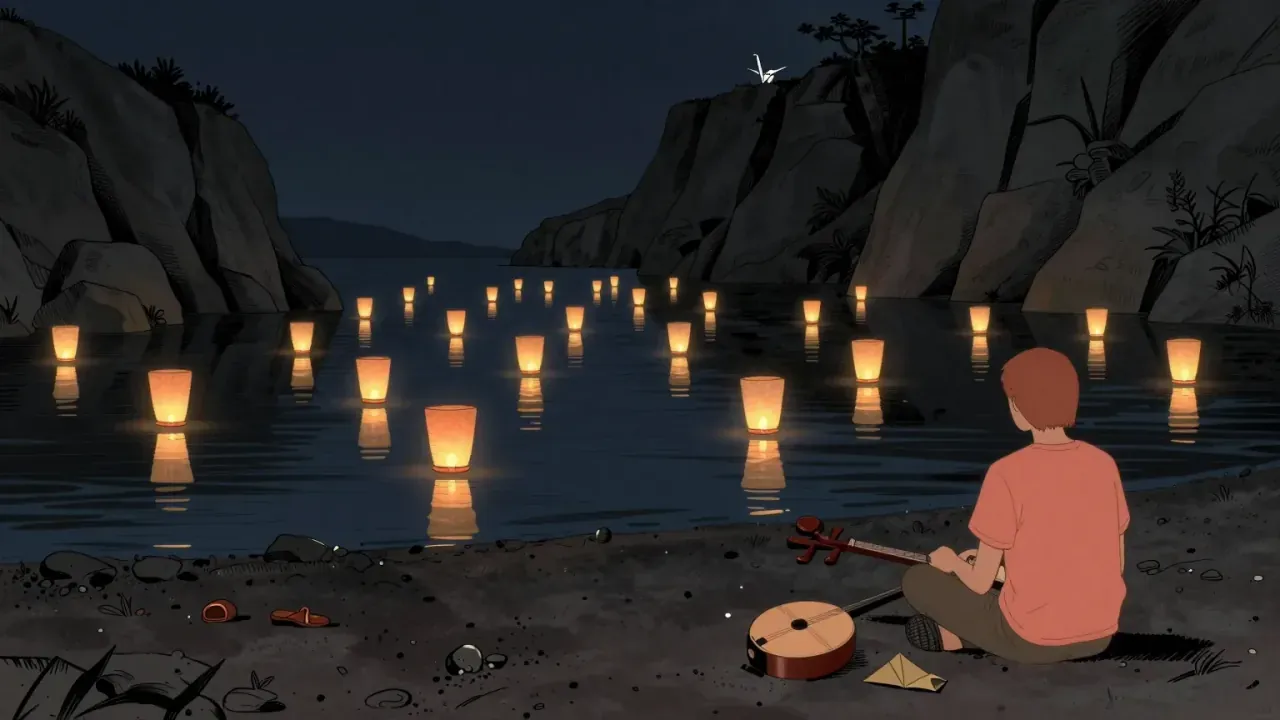
What lands is the cumulative weight of small, unremarkable moments: Mika humming a fragment of song she heard in Yang’s memory, Cleo tracing the edge of a memory chip with gloved fingers, Jake watching a loop of Yang holding a teacup while rain streaks the window behind him. The film earns its emotional register not through climax but through accumulation — the way repeated images (a bamboo plant, a ceramic bowl, a hallway at dusk) accrue meaning across viewings. The museum sequence works because it refuses spectacle: the donation is quiet, bureaucratic, almost banal, making the farewell all the more precise. Ada’s arrival carries no melodrama — just two people recognising shared history without needing to name it. The final image — Mika singing, off-key and unselfconscious — lands because it is the first time the film allows sound to persist beyond its source, suggesting continuity without closure. These moments succeed because they are underwritten, not underlined; they trust attention over emphasis, and patience over payoff.
The edges it leaves open
What does not land is the film’s occasional drift into abstraction without sufficient grounding. The implied post-apocalyptic context remains so vague it risks irrelevance — the ‘non-dystopian’ future feels less like a choice and more like an omission, leaving thematic connections underdeveloped. Some supporting characters exist only as functions: George offers exposition, Russ supplies plot mechanics, Nancy delivers backstory — none are given enough texture to register as people beyond their utility. The subplot involving Yang’s first owner and the cloned Ada introduces metaphysical questions about identity and continuity, but the film neither explores nor resolves them, leaving them as ornamental rather than structural. The pacing, while deliberate, occasionally stalls without purpose — a long take of Jake walking down a corridor adds atmosphere but no insight. These lapses do not break the film, but they dilute its coherence, making some stretches feel like mood without momentum.
What it keeps returning to
The themes that matter are memory as physical artefact, grief as deferred labour, and care as a practice that outlives reciprocity. The film treats memory not as subjective recollection but as data — stored, corrupted, recoverable, shareable — and asks what happens when that data becomes the only remaining trace of a relationship. Mortality here is not biological but functional: Yang dies not when he stops moving, but when his capacity to witness and respond ends. Loss is framed not as absence but as redistribution — of responsibility, of narrative authority, of emotional labour. The adoption of Mika and Yang’s role as cultural unit foreground questions of authenticity and belonging, but the film resists easy answers, preferring ambiguity: heritage is mediated, identity is layered, connection is partial. What matters most is how the family negotiates these uncertainties not through resolution, but through continued presence — sitting together, listening, waiting, singing.
Who it meets halfway
This film is for viewers who tolerate long silences, who find emotional resonance in gesture over dialogue, and who accept that some questions — about consciousness, legacy, or what survives us — have no answer, only articulation. It suits those accustomed to arthouse pacing and willing to hold ambiguity as substance, not deficit. It is not for viewers who require narrative propulsion, clear stakes, or moral resolution; those expecting a technological thriller or a family melodrama will find its pace inert and its conclusions elusive. Fans of Hirokazu Kore-eda or early Sofia Coppola may recognise its tonal kinship, but those drawn to the genre conventions of science fiction — world-building exposition, systemic critique, speculative consequence — will likely feel underserved. Its value lies in its refusal to explain itself, and that refusal is precisely what will alienate as many as it rewards.
What it asks of your time
Yes, it is worth your evening — provided you arrive without expectation of payoff and with willingness to sit inside its quiet architecture. Its 96 minutes unfold with the unhurried logic of a ritual, not a plot: each scene is calibrated to accumulate, not advance. The film earns its duration not through incident but through attention — to light on skin, to the weight of a pause, to the way a child’s voice cracks mid-note. Those who leave disappointed will likely have expected either a treatise on AI ethics or a tearful family reconciliation; this film offers neither. It offers something narrower and rarer: a sustained meditation on what endures when function ends. Change the verdict? Only if the film were shorter, sharper, or louder — but then it would be another film entirely. Its worth lies in its fidelity to its own terms, not in meeting anyone else’s.