The nature of scanning
Scanners is a Canadian science-fiction thriller that attempts to fuse body horror with corporate paranoia, using psychic powers as both plot device and metaphor for unmediated consciousness. David Cronenberg wrote and directed it as a deliberate pivot from his earlier low-budget horror work toward a more commercially viable but still conceptually rigorous form — one that could sustain narrative momentum while testing the limits of physical transformation on screen. The film does not aim for psychological realism or moral ambiguity; instead, it treats scanning as a literal neurological condition, rooted in pharmaceutical intervention (ephemerol) and genetic anomaly. Its ambition lies in constructing a coherent, cause-and-effect logic for telepathy and telekinesis — not as magic, but as unstable biology. It seeks to make psychic violence feel visceral, procedural, and systemic: the head explosion is not spectacle for its own sake, but the first visible symptom of a larger breakdown in cognitive boundaries. The film’s tone is clinical, its pacing urgent but unshowy, and its world-building sparse by design — less about world-expansion than about tightening the screws on perception itself. (158 words)
The look of it
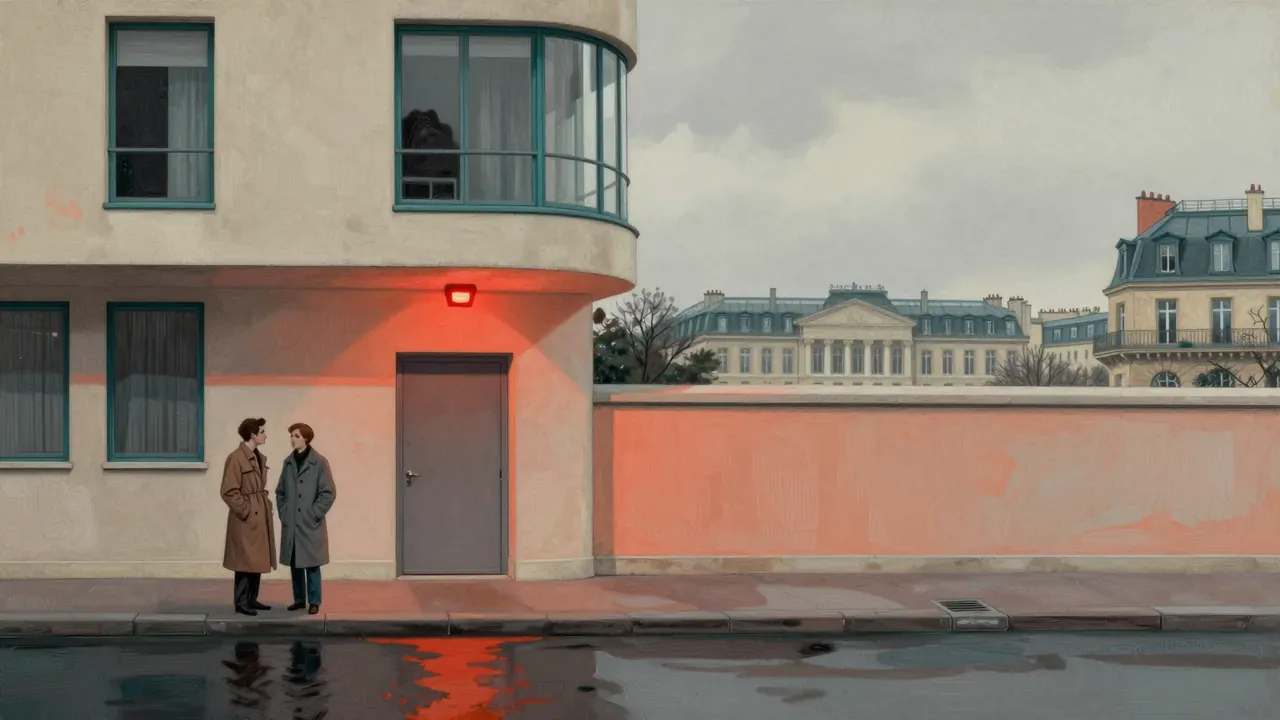
The story follows Cameron Vale’s induction into ConSec’s scanner programme and his pursuit of Darryl Revok, structured as a series of escalating confrontations rather than a conventional arc. Stephen Lack plays Vale with minimal inflection, leaning into dissociation rather than charisma; Michael Ironside’s Revok is all contained volatility, his performance calibrated to register menace without overstatement. Jennifer O’Neill’s Kim Obrist carries quiet authority, though her role is truncated by the script’s focus on male antagonism. Mark Irwin’s cinematography favours tight frames and flat lighting — interiors are functional, exteriors desaturated, with little visual ornament. Howard Shore’s score uses analog synths to generate unease through repetition and tonal drift, avoiding melody in favour of pulse and pressure. Ronald Sanders’ editing sustains tension through abrupt cuts and withheld reaction shots, particularly in the lecture-hall sequence where Revok’s attack unfolds in real time without editorial cushioning. The effects work — especially the exploding head — is integrated not as interruption but as culmination: the moment where internal rupture becomes external fact. (159 words)
What holds the frame
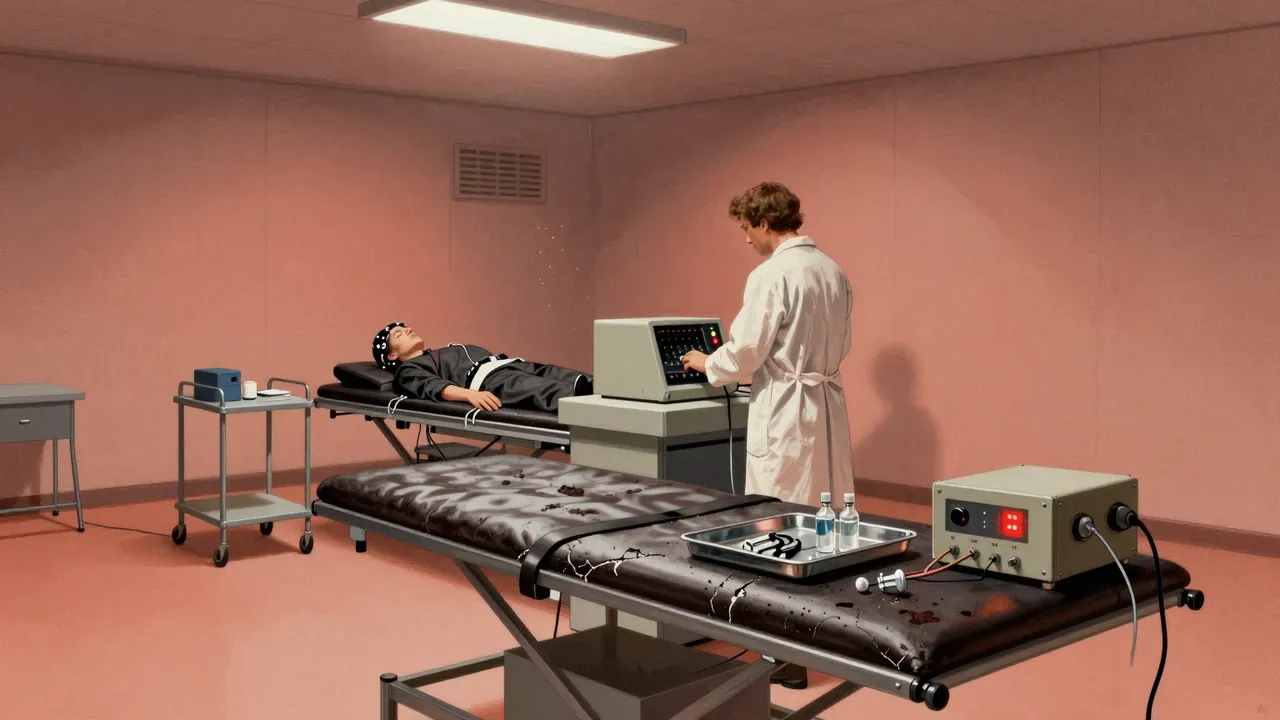
What lands is the film’s central conceit: that psychic ability is less superpower than sensory overload, a neurological liability requiring pharmacological suppression. The early mall scene — Vale triggering a seizure in a stranger — works because it feels involuntary, uncontrolled, and physically exhausting. The ConSec demonstration sequence remains effective forty years on: its staging is simple, its escalation inevitable, its payoff grotesque but earned. The film’s restraint elsewhere makes that moment land harder — there are no chase montages or exposition dumps before it, just mounting dread and a slow zoom on Revok’s face. The industrial locations — the Future Complex, the water treatment plant — ground the sci-fi in tangible, slightly decayed infrastructure, lending credibility to ConSec’s militarised pragmatism. Even the ephemerol subplot lands: the drug isn’t magical, it’s administered like insulin, stored in vials, handled with clinical care. This consistency — between premise, performance, and production design — gives Scanners a rare kind of coherence for a genre film made under tax-shelter constraints. It doesn’t ask you to believe in scanners; it asks you to accept their consequences as physically legible. (157 words)
Where the wires show
What does not land is the emotional scaffolding around Vale and Obrist. Their alliance lacks development beyond tactical necessity, and the film offers no insight into why she trusts him or what she stands to lose. Lawrence Dane’s Keller is underwritten to the point of opacity — his betrayal arrives without foreshadowing or motive beyond generic treachery. The Biocarbon Amalgamate subplot dissolves mid-stride; the film ends before resolving its implications about ephemerol’s origins or Ruth’s complicity. Patrick McGoohan’s Dr. Ruth is compelling in fragments — his paternal authority and clinical detachment suggest layers — but the script denies him any real confrontation or revelation. The final duel between Vale and Revok is visually stark but narratively thin: two men in a warehouse, exchanging psychic blows until one collapses. There is no thematic payoff to their opposition beyond ‘control versus chaos’, and the resolution feels procedural rather than earned. Some viewers will find the pacing sluggish between set pieces; others will note how much exposition is delivered via flat dialogue rather than dramatised consequence. The film’s austerity serves it well in moments of intensity, but leaves little room for resonance beyond them. (156 words)
What it’s really about
The themes that matter are permeability, control, and the weaponisation of cognition. Scanners treats the mind not as sovereign territory but as porous architecture — vulnerable to intrusion, manipulation, and collapse. Telepathy here is less about communication than contamination: Vale’s illness is the inability to filter other people’s thoughts, making empathy indistinguishable from assault. ConSec’s interest in scanners is never ideological but logistical — they seek to contain, deploy, and ultimately eliminate unpredictability. The film’s cold-war-inflected paranoia is less about nations than about neural sovereignty: who owns your attention, your memory, your impulse to act? Ephemerol functions as both sedative and social tool — a chemical boundary marker, like antidepressants or stimulants in later decades. Revok’s rebellion is not political but ontological: he refuses containment, choosing instead to shatter the interface between self and other. The film’s enduring power lies in how literally it takes interiority — how it maps anxiety, dissociation, and surveillance onto bodies that cannot hold themselves together. It is not about the future of technology, but about the present condition of being constantly scanned — by algorithms, by employers, by strangers on the street. (159 words)
Who it’s for
This film is for viewers who value conceptual rigour over emotional catharsis, and who respond to horror as physiological fact rather than symbolic allegory. It suits those familiar with Cronenberg’s earlier work, or with 1980s Canadian genre cinema’s pragmatic aesthetic — people who find tension in silence, implication, and architectural emptiness. It is not for viewers seeking character depth, romantic subtext, or moral resolution; those expecting a clear hero-villain dichotomy or thematic closure will leave unsatisfied. Fans of high-gloss action or psychological thrillers built on misdirection may find its pacing deliberate to the point of austerity. Anyone unsettled by sudden, graphic bodily rupture — particularly the head explosion — should be warned: it is not stylised, not ironic, and not easily dismissed. A viewer who values mood over momentum, or who finds dread in clinical precision rather than shadowy atmosphere, will respond more readily. Those who require exposition to be dramatised rather than spoken will likely resist its method. (158 words)
Is it worth your evening
Yes, it is worth your evening — provided you approach it as a tightly wound mechanism rather than a character study. Its 103 minutes pass with purpose, its shocks are earned, and its ideas remain materially grounded even at their most outlandish. It rewards attention to texture: the hum of fluorescent lights, the grain of concrete walls, the way actors hold still when under psychic pressure. A viewer who dislikes it will likely cite its emotional reserve or narrative ellipses — and they would be right to do so, if their priority is immersion over interrogation. What would change the verdict? A longer cut restoring the Biocarbon Amalgamate thread, or deeper exploration of Ruth’s ethics, might shift it from cult object to canonical text. But as it stands, Scanners earns its place not through polish or warmth, but through unwavering commitment to its own logic — a logic that still feels unnervingly close to how attention, influence, and identity function today. (159 words)