The time of it
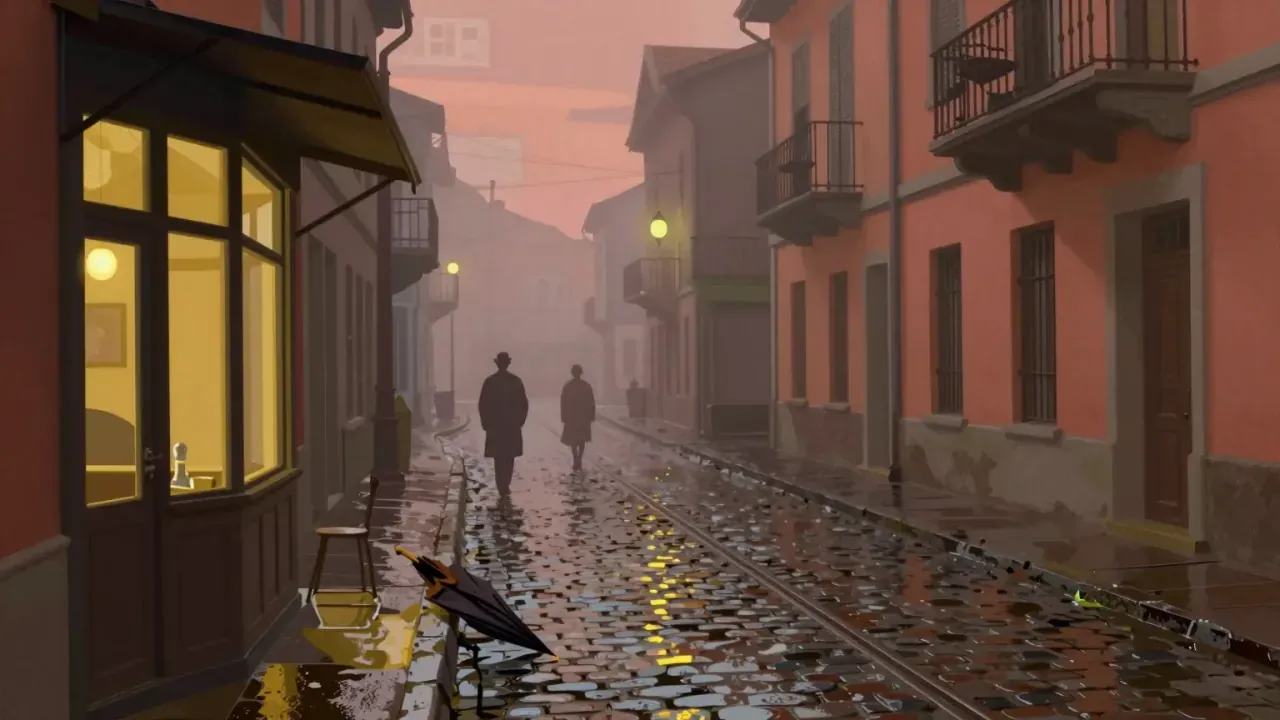
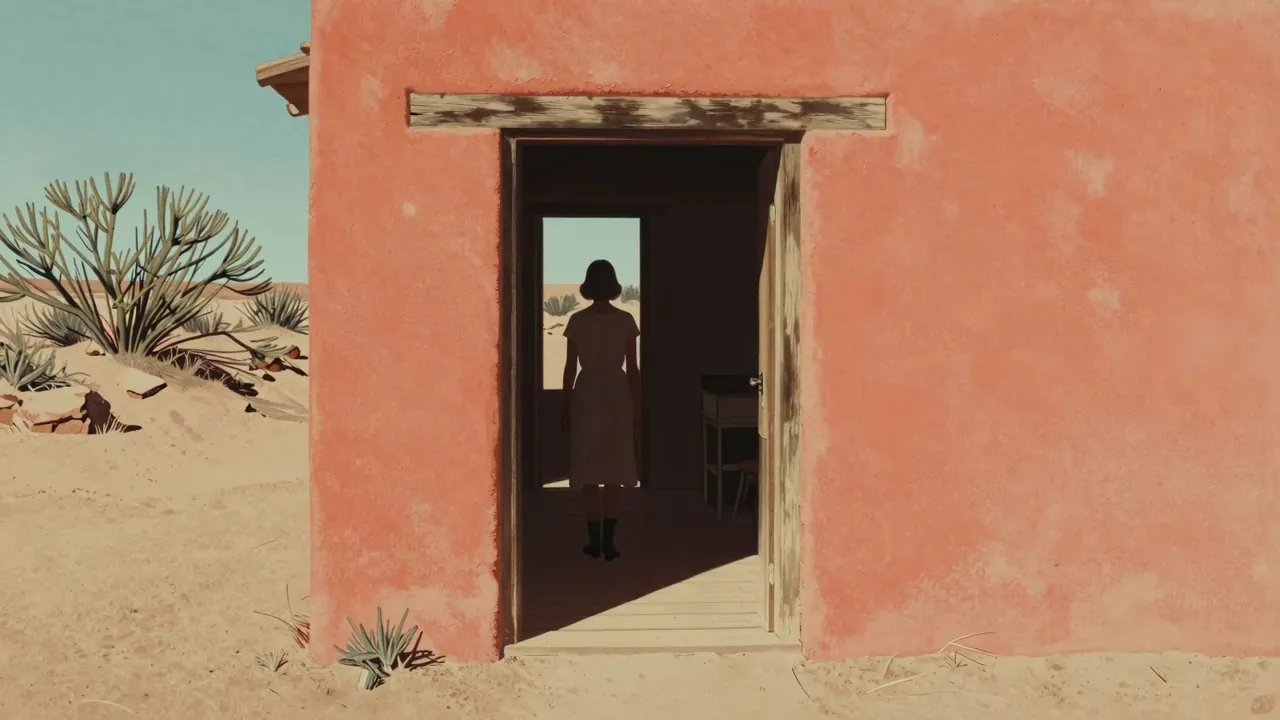
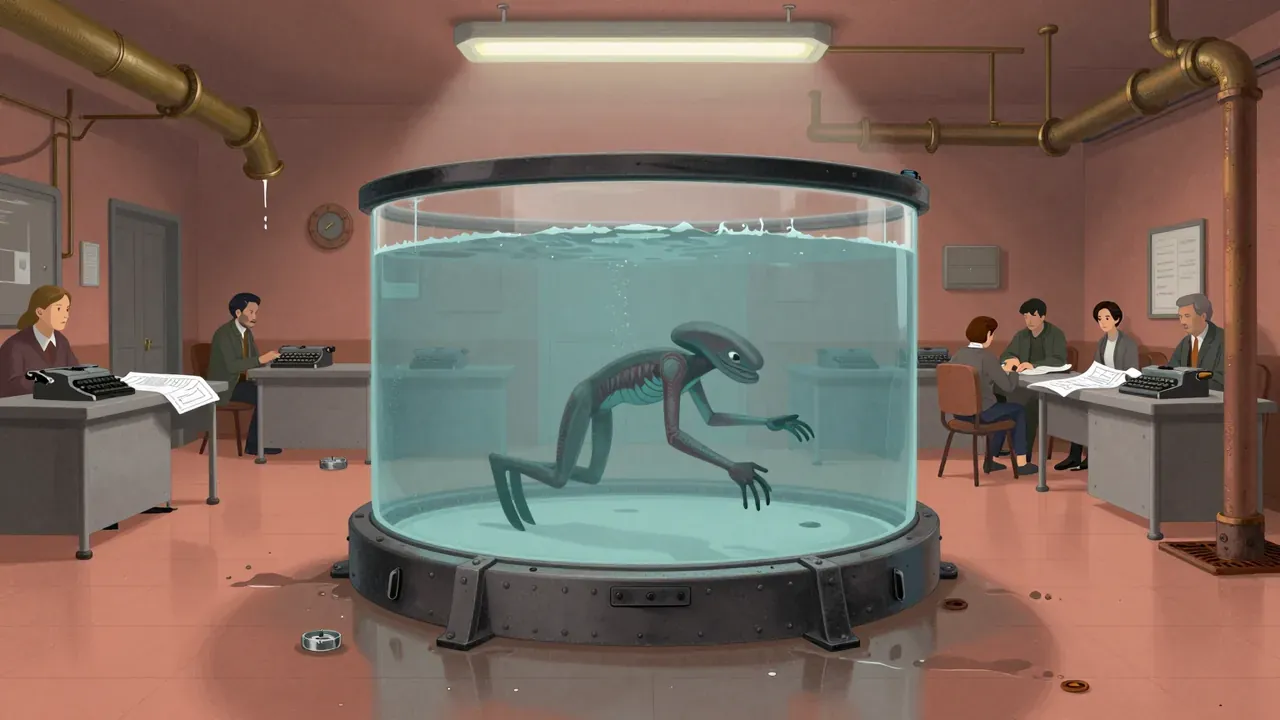
The Shape of Water is a 1962-set romantic fable about muteness, otherness, and tenderness between beings deemed incompatible by the world around them. It positions itself as a corrective to Creature from the Black Lagoon — not by revising the monster’s fate, but by shifting perspective entirely: the amphibian man is neither threat nor spectacle, but subject; Elisa, mute and marginalised, is neither passive nor pitiable, but deliberate and desiring. Guillermo del Toro and Vanessa Taylor construct the film as a fairy tale told in the language of mid-century realism — green-tinted tile, cigarette smoke, typewriter clatter — to hold political resonance at arm’s length while letting it seep in. Its ambition is not to simulate history but to use its textures as insulation: the period setting allows the film to speak plainly about xenophobia, ableism, homophobia and institutional violence without triggering defensiveness. It asks the viewer to accept emotional logic over procedural logic — to believe that love might be legible across species, that silence can carry more weight than speech, and that care is a form of resistance. This is not allegory dressed as genre; it is genre made literal, then tenderly unspooled.
The pace of it
The story follows Elisa Esposito, a mute cleaner at a Baltimore laboratory, as she forms a bond with an amphibious creature held captive for dissection. Sally Hawkins performs almost entirely through gesture, posture and gaze, her physicality calibrated to Chaplin and Laurel — small shifts in weight, pauses that land like punctuation. Doug Jones, encased in prosthetics and moving with matador-like precision, gives the Amphibian Man a dignity that never wavers into anthropomorphism. Michael Shannon’s Strickland is all clipped vowels and knuckle-cracking menace, his authority brittle beneath a veneer of Cold War certainty. Dan Laustsen’s cinematography favours shallow focus and saturated aquamarine and ochre tones; water appears constantly — in pipes, rain, baths, reflections — not as motif but as medium. Alexandre Desplat’s score avoids leitmotif in favour of fluid, overlapping arpeggios that mimic breath and tide. Sidney Wolinsky’s editing sustains rhythm without urgency, allowing scenes to settle rather than propel. Production design by Paul D. Austerberry renders the 1962 world tactile: linoleum, vinyl, brass fixtures, the grain of celluloid itself feels present.
The shape of it
What lands most firmly is the film’s central emotional contract: that love need not be spoken, recognised or sanctioned to be real, consequential or transformative. Elisa and the Amphibian Man’s relationship builds through touch, shared meals, music, and mutual observation — sequences that avoid sentimentality by refusing exposition. The supporting performances anchor the fantasy: Octavia Spencer’s Zelda speaks for Elisa with warmth and weary wit, Richard Jenkins’ Giles offers quiet solidarity without condescension, and Michael Stuhlbarg’s Dr. Hoffstetler provides moral ambiguity without melodrama. The production design earns its Academy Award — every surface feels lived-in and era-specific, from the Orpheum Theatre’s velvet seats to the lab’s brushed-steel cages. Desplat’s score does not accompany action so much as inhabit atmosphere, swelling only when emotion breaches containment. Even the creature’s design avoids grotesquerie: its scars are visible, its movements deliberate, its eyes expressive without being human. These choices cohere into something rare: a film where empathy is structural, not rhetorical.
The cracks in it
What does not land is the film’s handling of consequence. Strickland’s cruelty lacks psychological scaffolding beyond caricatured ambition; his final act of self-mutilation reads less as breakdown than narrative convenience. The government lab operates with no bureaucratic logic — security is porous, protocols arbitrary, oversight absent — which weakens the stakes of Elisa’s rebellion. The subplot involving Giles’ failed advertising pitch feels underdeveloped, its thematic link to erasure and invisibility gestured at but not deepened. Some visual flourishes — the recurring egg motif, the floating dream sequences — arrive with symbolic weight but little narrative integration. The film’s refusal to name Elisa’s muteness as medical or social leaves it unmoored from any specific context, which serves its fairy-tale logic but blunts its critique of disability representation. And while the colour palette is lush, its consistency occasionally flattens contrast: night scenes bleed into day, interiors lack temperature variation, and the overall tonal evenness muffles dramatic escalation. These are not failures of craft, but of calibration — moments where aesthetic control overrides dramatic necessity.
The weight of it
The themes that matter are not those announced in interviews but those embedded in repetition and restraint: the politics of voicelessness, not as absence but as alternative grammar; the erotic charge of care, especially when offered across boundaries of species, ability or status; and the quiet violence of institutions that classify, contain and discard what they cannot understand. Del Toro treats the 1962 setting not as backdrop but as diagnostic tool — segregation, McCarthyism and the space race all appear as ambient pressures, not plot points. The film’s strongest statement is formal: it insists on slowness as resistance, on stillness as agency, on touch as translation. Its critique of Strickland is not that he is evil, but that he mistakes control for competence, order for morality, and dominance for safety. The amphibian man is never explained, never pathologised, never asked to assimilate — his existence is sufficient. That refusal to render difference legible to power is the film’s quietest and most radical act. It does not argue for tolerance; it assumes kinship, then shows how fragile and necessary that assumption is.
The fit of it
This film is for viewers who trust atmosphere over exposition, who find emotional logic persuasive without needing causal chains, and who value craft that serves character rather than spectacle. It suits those comfortable with muted pacing, symbolic density, and romance that expresses itself through shared silence and submerged glances. It is not for viewers who require clear moral binaries, tightly wound plotting, or protagonists whose interiority is verbally articulated. Those who find allegory heavy-handed or period detail distracting may feel distanced by its stylisation. Fans of del Toro’s earlier work expecting gothic grandeur or mythic scale may find its intimacy disorienting. Its approach to disability — presenting muteness as a mode of perception rather than a condition to overcome — will frustrate some advocates who seek explicit social commentary, while resonating deeply with others who recognise its refusal to define Elisa by her silence. A shift toward documentary realism or tighter narrative economy would alter its core proposition — but that proposition is precisely what makes it distinctive.
The hold of it
Yes, it is worth your evening — provided you arrive prepared for its tempo and texture. At 123 minutes, it moves deliberately, asking for attention not as vigilance but as receptivity: to Hawkins’ micro-expressions, to Desplat’s undulating motifs, to the weight of water in every frame. It rewards patience with cumulative emotional force, not plot twists. Its pleasures are tactile and tonal — the warmth of a boiled egg held in gloved hands, the hush before a record needle drops, the way light fractures on wet tiles. Those seeking diversion or narrative propulsion may find it withholding; those open to immersion will find it generous. Its box office return and award tally reflect broad appeal, but its endurance lies in quieter virtues: its integrity of tone, its consistency of vision, its refusal to simplify love or otherness. It is not a film that demands agreement, but one that invites alignment — with its rhythms, its ethics, its belief that tenderness, however improbable, is always worth staging.