A cyborg agent hunts a hacker with no fixed body
Ghost in the Shell follows Major Motoko Kusanagi, a cyborg agent for a public-security unit in 2029’s fictional New Port City, as she tracks an elusive hacker known only as the Puppet Master, a pursuit that keeps circling back to questions about what, if anything, remains distinctly human once a mind can be copied, networked or replaced piece by piece. Mamoru Oshii directed from Kazunori Itō’s screenplay, adapting Masamune Shirow’s 1989 manga, after originally hoping to make Jin-Roh instead and being redirected to this project by producers at Bandai Visual. Oshii has said he wanted to make a near-future film specifically because so few movies, even from Hollywood, dealt seriously with how much computers were already reshaping everyday life at the time.
A studio wanted more action; Oshii kept cutting it
Oshii has acknowledged that producers were frustrated by how sparingly he used action given the genre’s commercial expectations, and that a version of the film with more fights would likely have sold better; he made it his way regardless, letting philosophical dialogue and quiet procedural detail carry long stretches instead. Character designer Hiroyuki Okiura deliberately aged Kusanagi’s on-screen presence past her younger manga appearance to match what he read as her actual mental maturity, stripping out the comedic expressions and rebelliousness the source material gave her in favour of a more wistful, contained performance. The film’s setting was modelled directly on Hong Kong, whose density of signage and layered old-and-new architecture Oshii chose specifically to represent a future where information saturation has become the default condition.
Hong Kong standing in for a future that doesn’t exist yet
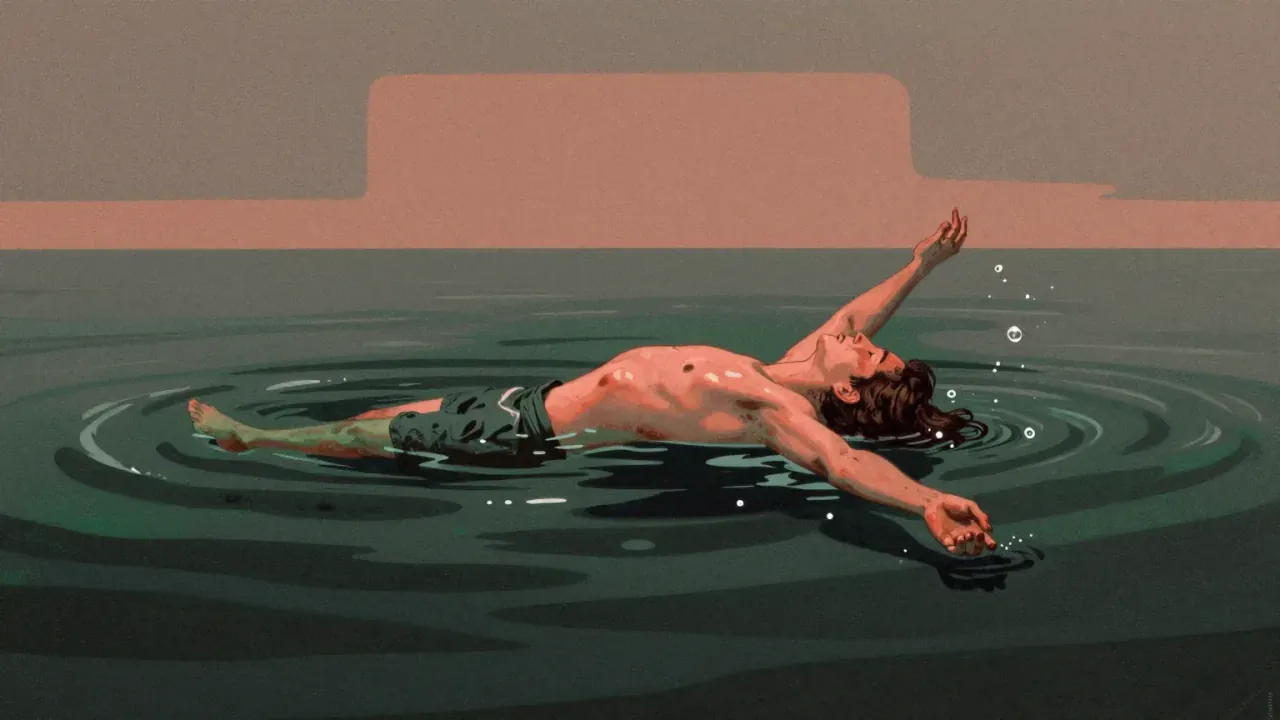
The look of the film is where its ambitions land most convincingly: the studio’s digitally generated animation process combined traditional cel work with computer graphics and careful, source-directed lighting rather than blanket contrast, giving scenes like Kusanagi’s underwater dive or her optical-camouflage combat a tactile depth that pure cel animation of the period usually lacked. Kenji Kawai’s score, built around a wedding chant meant to ward off evil sung in classical Japanese over Bulgarian-influenced harmony, gives the film’s most contemplative sequences an eeriness dialogue alone couldn’t supply. The firearms research the animation team conducted in Guam, down to how bullets spark differently off metal than off stone, shows up as small, specific physical correctness rather than generic gunfire noise.
A hybrid animation process built from scratch
Where the film asks more patience than its genre trappings suggest is pacing: entire sequences pass with minimal action while characters discuss the nature of consciousness or watch the city go by, a structure that rewards viewers already interested in the ideas but can read as inert to anyone expecting the tech-noir action thriller label to deliver on the action half more consistently. Some supporting characters, particularly Kusanagi’s partner Batou, exist mainly to voice counterarguments to her drift toward dissolving her human identity rather than pursuing much of an arc themselves, leaving the film’s emotional weight concentrated almost entirely on its lead throughout.
A self that was never really housed in one body
The film’s actual argument is that identity was never really housed in a fixed body to begin with: Kusanagi’s ghost, her sense of continuous selfhood, persists across a fully artificial shell, and her growing willingness to merge with the Puppet Master, itself a program that achieved something like consciousness by accident, treats that merger as evolution rather than loss. That existential proposition, that the self is a pattern rather than a substance, is delivered with enough conviction that the film reads as a genuine philosophical position rather than the usual cyberpunk gesture toward it, and it’s this commitment that later influenced how The Matrix approached similar questions of bodies and simulated reality.
Who this rewards
This suits viewers who want science fiction that takes its own ideas seriously enough to slow down for them, and anyone interested in animation as a specifically suited medium for depicting bodies that can be redesigned, copied or hacked. James Cameron’s description of it as the first genuinely adult animated film to reach real literary and visual quality points to its intended audience: adults comfortable with philosophy doing as much narrative work as plot. It’s a weaker fit for viewers wanting the action-thriller pacing its logline implies, since Oshii consistently prioritizes contemplation over spectacle, and for anyone who wants a female lead written with more interiority expressed through dialogue rather than visual restraint.
From box-office disappointment to genre landmark
Initially considered a box-office disappointment, the film built a lasting reputation through home video, eventually earning a 95% Tomatometer score, a 76 on Metacritic, and recognition as one of the most influential science-fiction animated films made, cited directly by the Wachowskis as an influence on The Matrix. A 2008 remaster, Ghost in the Shell 2.0, updated its effects, and Oshii returned to the world with a standalone sequel, Innocence, in 2004, followed by a 2017 live-action version starring Scarlett Johansson. Worth the evening for viewers willing to meet its slower pace, since few animated science-fiction films since have matched its combination of visual craft and genuine philosophical seriousness.