The look of it
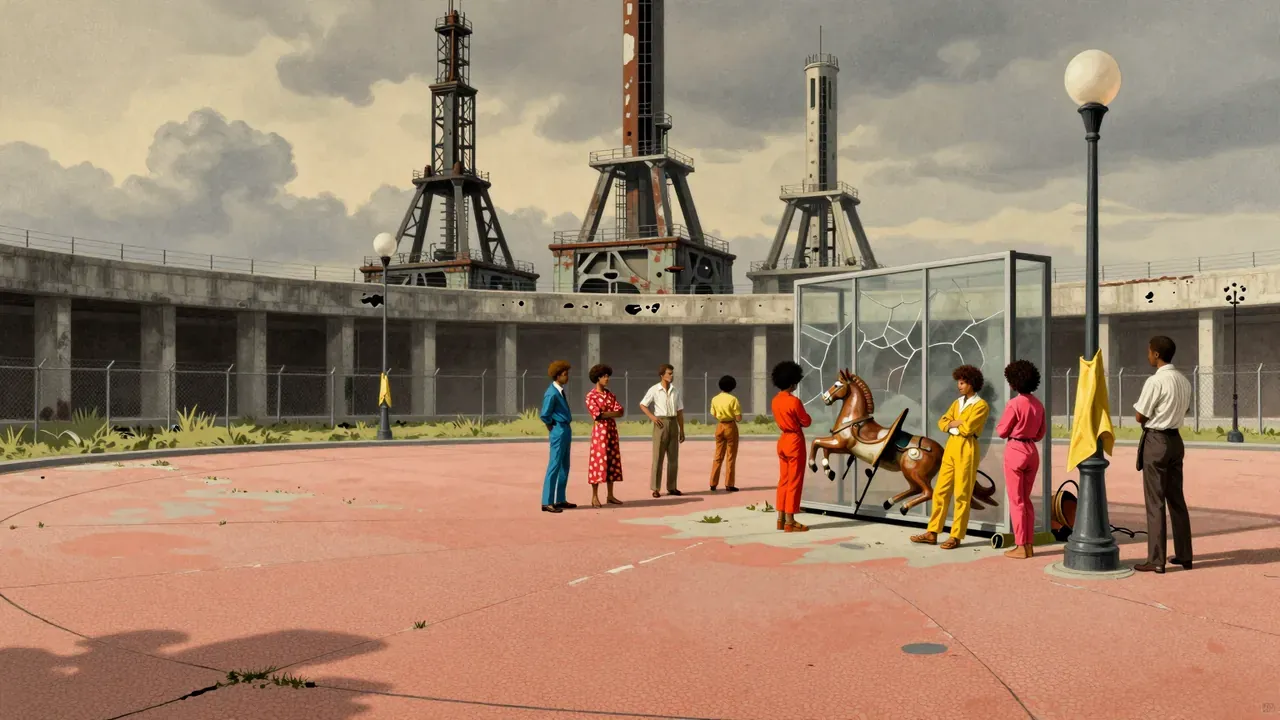
Jellyfish Eyes is Takashi Murakami’s debut feature film, a Japanese drama released in 2013 that attempts to translate his signature pop-surrealist visual language — rooted in otaku culture, kawaii aesthetics, and post-3/11 anxiety — into narrative cinema. It sets out to dramatise childhood vulnerability amid institutional opacity, using the conceit of children piloting digital-fantastical creatures called F.R.I.E.N.D.s as both metaphor and plot engine. The film positions itself between allegory and fable: the jellyfish-shaped Kurage-bo is not just a companion but a vessel for unspoken grief, while the Black-Cloaked Four and their research facility evoke unchecked technocratic ambition masked as benevolence. Murakami does not treat the genre conventions lightly; he leans into them — schoolyard rivalries, secret devices, climactic battles — but infuses them with an artist’s preoccupation with authorship, control, and the ethics of creation. This is not a genre exercise dressed up as art, nor an art project pretending to be a film. It is a sustained, deliberate attempt to make a children’s parable that carries adult weight without condescension or evasion.
How it moves
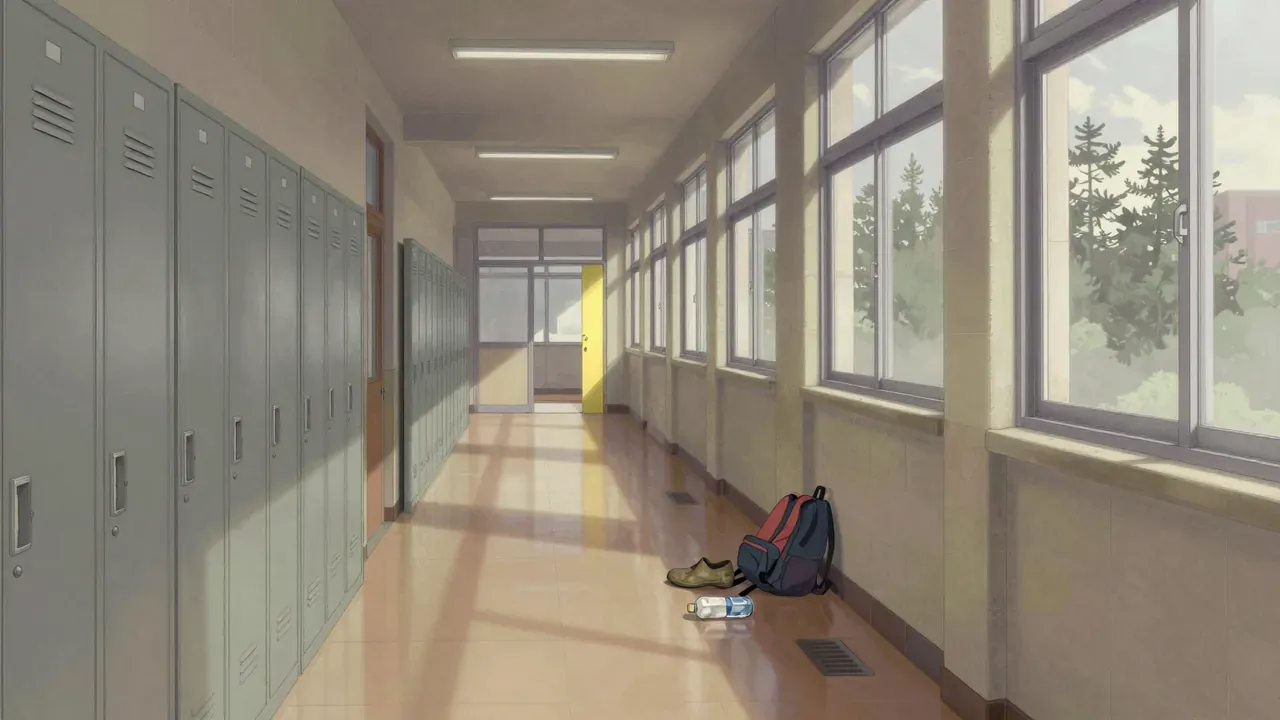
The story follows Masashi Kusakabe, a sixth-grader relocated after his father’s death in an earthquake, as he bonds with Kurage-bo, a floating, jellyfish-like creature that responds to emotion rather than commands. Yoshihiro Nishimura’s editing moves deliberately, often holding on quiet moments — a backpack zipped shut, a device powered down — rather than accelerating tension. Livetune’s score is bright, synthetic, and insistently cheerful, clashing intentionally with scenes of distress. Performances are muted and naturalistic: Takuto Sueoka avoids precocity, Mayu Tsuruta’s Yasuko speaks in hushed, exhausted tones, and Asuka Kurosawa’s Shizuko registers belief without caricature. The special effects are deliberately low-fidelity: F.R.I.E.N.D.s appear as semi-transparent CGI overlaid on real locations, their movements slightly unmoored from physics. There is no attempt at photorealism; instead, the film sustains a consistent visual grammar where digital and physical coexist uneasily, like a child’s sketchbook animated mid-draft. Murakami directs with the patience of someone used to large-scale installations — long takes, frontal compositions, minimal camera movement — trusting the weight of objects (a locker, a shrine gate, a glowing orb) to carry meaning.
What stays with you
What lands most securely is the film’s emotional texture: the ache of displacement, the awkwardness of early adolescence, and the way children absorb adult silence as instruction. Kurage-bo’s design — soft-edged, translucent, responsive only to sincerity — works precisely because it refuses anthropomorphism; its charm lies in its muteness and its refusal to explain itself. The classroom scenes, where children surreptitiously deploy Devices under desks, capture a specific kind of collective secrecy, one born of shared confusion rather than conspiracy. The final sequence, in which Koh uses his phone to restore the F.R.I.E.N.D.s not as weapons but as companions, lands with quiet conviction: it reasserts agency not through mastery but through communal care. Murakami’s decision to avoid voice-over narration or expository dialogue pays off here — the children’s moral shifts are shown through gesture, proximity, and stillness, not speech. Even the underlit interiors and shallow focus of many domestic scenes reinforce a sense of containment, of lives lived just inside thresholds, which feels true to the film’s central concern: how much of the world a child is allowed to hold at once.
Where it slips
What does not land is the film’s structural reliance on genre scaffolding it never fully inhabits. The battle sequences lack kinetic logic or escalating stakes; they feel like interruptions rather than developments, their outcomes dictated by thematic necessity rather than internal cause. The Black-Cloaked Four remain abstract antagonists — visually striking in their monochrome robes and mirrored masks, but narratively inert, their motives reduced to a single line about ‘rebirth through destruction’ that arrives without groundwork. Naoto’s arc collapses under its own ambiguity: his sudden death, his duplicate’s emergence, and his final confrontation lack psychological or spatial clarity. The university protest subplot — involving Shizuko’s cult and the research centre — is introduced with weight but resolved without consequence, its ideological friction flattened into background noise. The pacing sags noticeably in the second act, where exposition accumulates without forward motion, and the film’s resistance to conventional suspense begins to read less like restraint and more like indecision. Its refusal to clarify the rules of the F.R.I.E.N.D. system leaves key emotional beats unsupported.
What it’s really about
The themes that matter are grief as deferred action, technology as delegated feeling, and friendship as repair rather than rescue. Masashi does not overcome loss so much as learn to carry it alongside something else — Kurage-bo is not a replacement for his father but a companion in the work of remembering. The F.R.I.E.N.D.s function as externalised emotional states: Yupi’s aggression, Luxor’s protectiveness, Ko2’s quiet loyalty — each reflects the inner condition of its handler, not their conscious intent. The film treats childhood not as innocence but as acute perception: the children see the instability adults deny, and their Devices become tools not for domination but for articulation. Murakami frames this as fundamentally political — the research centre does not create chaos but exploits existing fractures, turning sorrow and loneliness into energy sources. The ending’s restoration of the F.R.I.E.N.D.s is not a return to normality but a renegotiation of terms: companionship is possible only when it is voluntary, reciprocal, and untethered from institutional control. That the final image is not triumph but quiet reunion — children sitting together, creatures hovering nearby — underscores the film’s modest, persistent hope.
Who it’s for
This film is for viewers who value atmosphere over propulsion, who find resonance in visual rhythm and tonal consistency, and who approach genre not as a set of expectations but as a vocabulary to be remixed. It suits those familiar with Murakami’s broader practice — his collaborations with Kaikai Kiki Co., his Superflat theory — or with Japanese experimental animation of the 2000s, where narrative ellipsis is a formal choice, not a shortfall. It is not for viewers who require clear cause-and-effect plotting, tightly wound pacing, or character arcs defined by decisive action. Those expecting a conventional fantasy adventure or a polished anime-style spectacle will find its pacing sluggish and its effects rudimentary. Critics who dismissed it as derivative — comparing it to Pokémon, Digimon, or even Miyazaki — missed its deliberate distance from those models: Murakami rejects the logic of collection, training, and hierarchy in favour of something closer to symbiosis. A viewer who values coherence over mood, or resolution over reverberation, would likely leave dissatisfied — though such a verdict says more about their priorities than the film’s failure to meet them.
Is it worth your evening?
It is worth your evening if you are willing to sit with its slowness and accept its unresolved edges — not as flaws, but as features. Its 101 minutes unfold like a series of linked tableaux, each weighted with attention to texture, light, and silence. It rewards patience not with payoff but with accumulation: small gestures gain resonance across repeated viewings, and the final restoration of the F.R.I.E.N.D.s lands more deeply when you’ve felt the weight of their absence. It is not a film to consume but to inhabit — best watched alone, in daylight, with room to linger on a single frame. Those who demand narrative efficiency or technical polish will find it wanting, and that is a valid position: the film makes no apology for its priorities. What would change the verdict is not better effects or tighter editing, but a willingness — on the part of the viewer — to treat the film as a slow-release capsule of feeling rather than a plot-driven delivery system. Its value lies in what it holds still, not in what it moves forward.