The premise is not the plot
Naked Lunch is a deliberate, self-conscious adaptation of William S. Burroughs’s 1959 novel—not as literary translation but as psychological and biographical reconfiguration. David Cronenberg treats the book not as scripture but as raw material: he discards its cut-up structure and replaces it with a semi-autobiographical frame centred on William Lee, a writer whose descent into hallucination follows the accidental killing of his wife. The film attempts to externalise the mechanics of addiction, authorship, and repression—not through metaphor but through literalised surrealism: typewriters speak, beetles issue orders, insecticide vapours dissolve reality. It does not seek coherence in plot but in psychic logic: every distortion serves the proposition that writing emerges from trauma, compulsion, and chemical derangement. Cronenberg’s aim is neither fidelity nor satire, but embodiment—making visible the interior state from which Burroughs’s prose was forged. That state is not one of rebellion for its own sake, but of desperate, unmoored cognition trying to impose order on chaos. The film’s ambition lies in rendering that process as physical fact.
The look of it
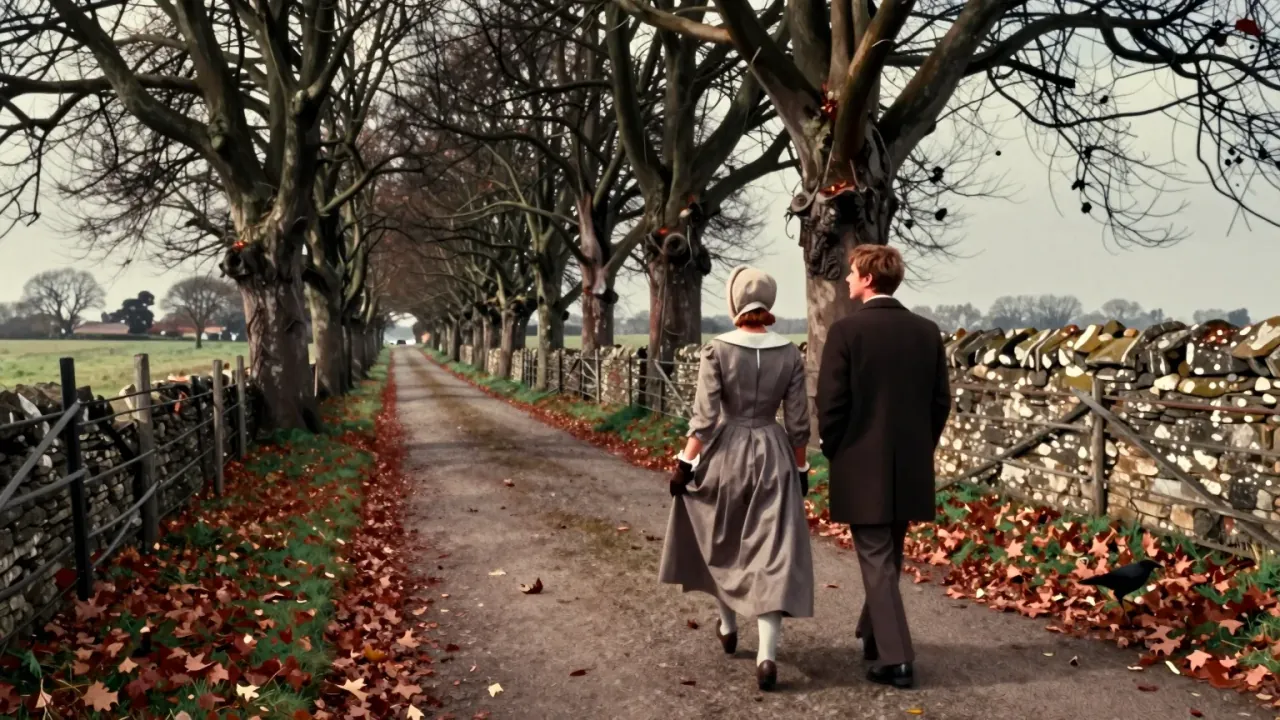
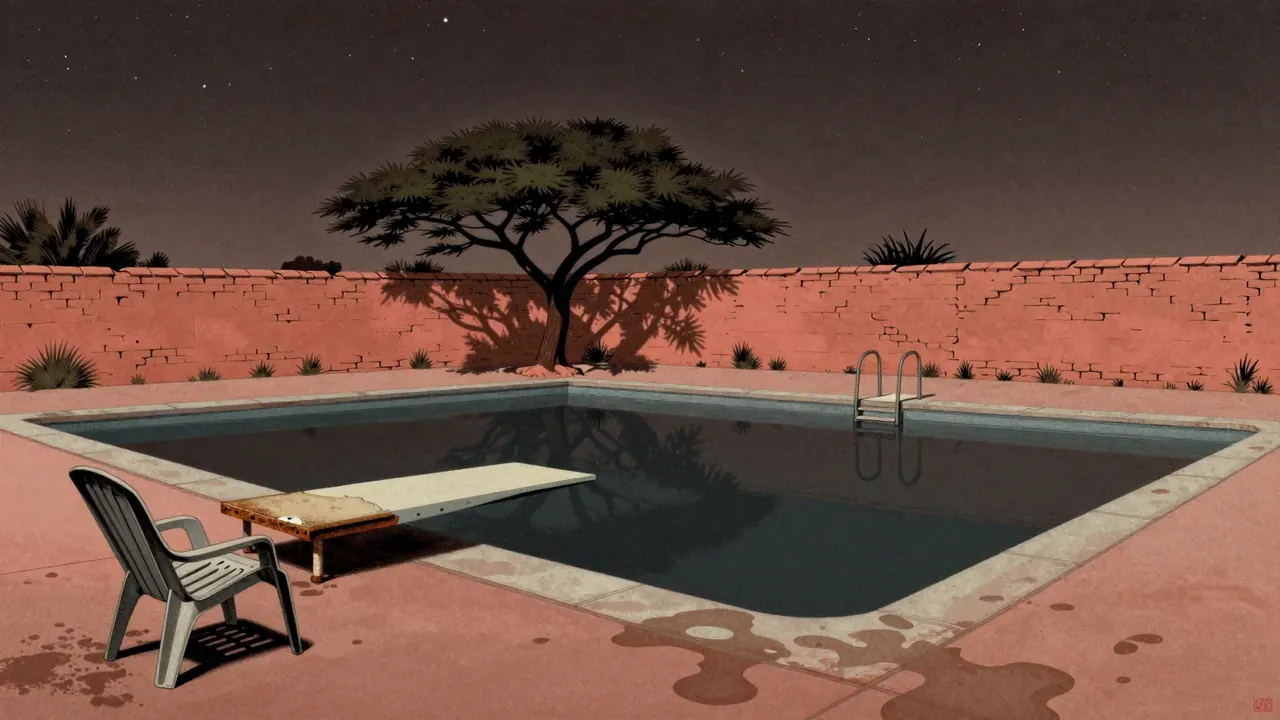
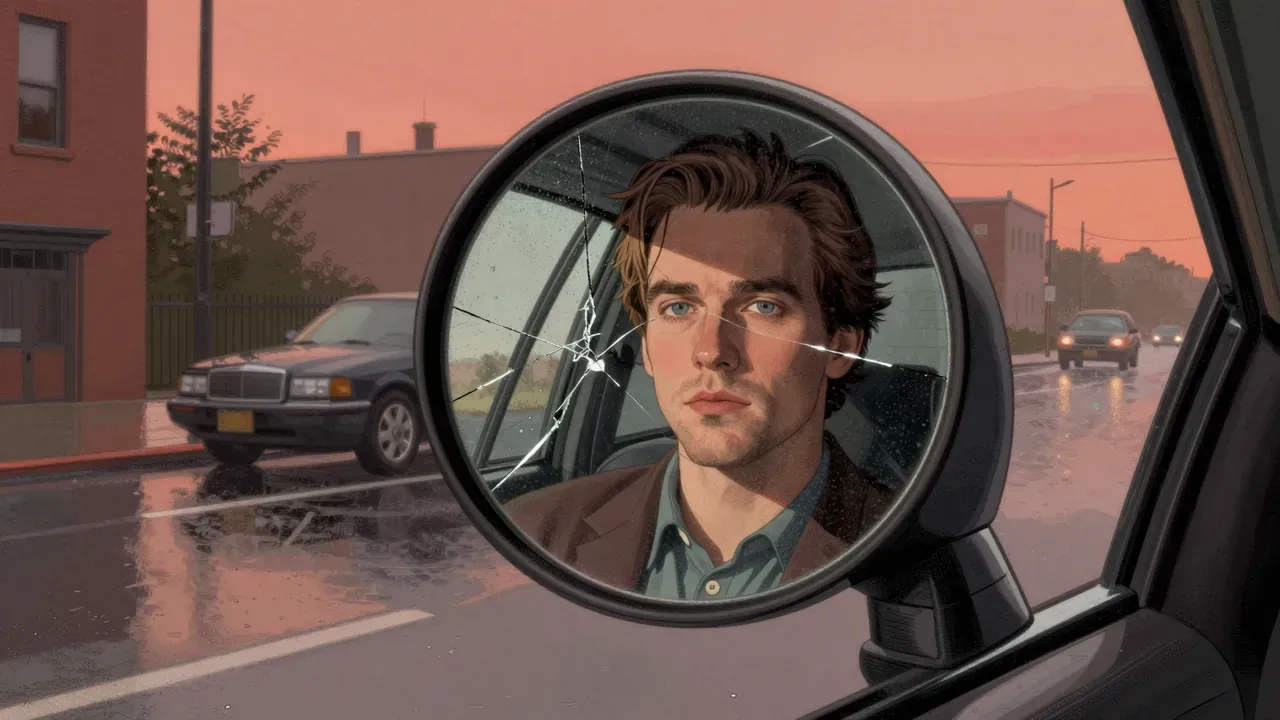
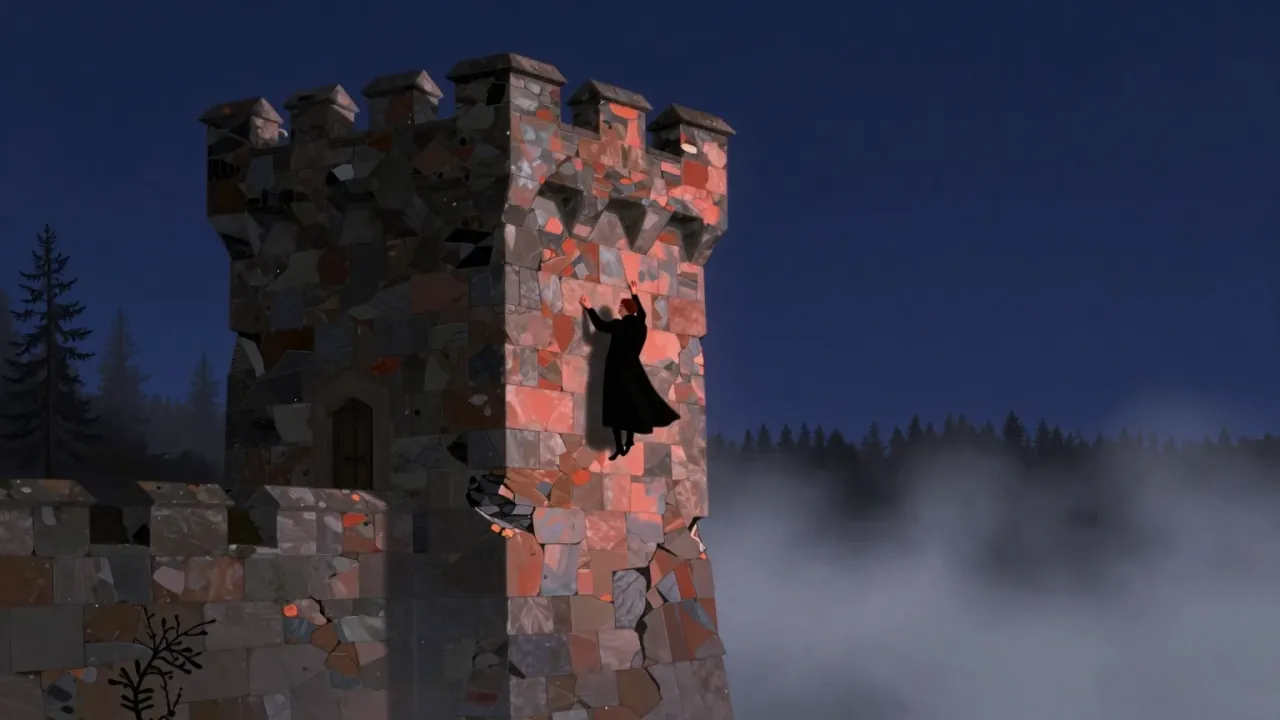
The story unfolds as a fractured fugue, anchored by Peter Weller’s performance: restrained, hollow-eyed, rhythmically detached. He moves through scenes like a man sleepwalking through his own nervous system, never overplaying the disorientation because the disorientation is the baseline. Judy Davis plays Joan with brittle intimacy; Ian Holm’s Dr. Benway is all clipped authority and clinical menace. Peter Suschitzky’s cinematography avoids expressionist flourish: interiors are flatly lit, exteriors drained of warmth, colour held in tight, muted registers. Howard Shore’s score combines Ornette Coleman’s free jazz with North African motifs, but it does not underscore emotion—it punctuates rupture. Ronald Sanders’ editing sustains unease through abrupt cuts and withheld context, refusing to smooth transitions between reality, memory, and hallucination. Chris Walas’s practical effects—especially the bug typewriters—are tactile, not digital, their grotesquerie grounded in texture and weight. There are no visual shortcuts: each transformation feels earned, however illogical, because it obeys the film’s internal grammar of decay and substitution.
The performance and the frame
What lands most firmly is the film’s sustained tonal control: its refusal to flinch, explain, or reassure. The opening sequence—Lee watching Joan snort insecticide, then being arrested while hallucinating cockroaches crawling from his mouth—establishes the rules without exposition. The beetle boss scene works not as fantasy but as bureaucratic absurdity made flesh: its voice is dry, its demands banal, its presence utterly matter-of-fact. Weller’s deadpan delivery makes even the most outlandish lines land with grim plausibility. The Tangier section, though shot in Toronto, gains credibility from its emptiness and architectural austerity—no attempt at exoticism, only estrangement. The Clark Nova typewriter’s emergence feels inevitable, not gimmicky, because the film has already established language itself as unstable, animate, predatory. The final stretch—Lee dictating the book’s genesis while surrounded by shifting doubles and insectoid paraphernalia—coheres as a portrait of authorship as involuntary excretion: the text is not written but expelled, shaped by trauma and chemistry rather than intention.
What holds together
What does not land is the film’s structural reliance on biographical shorthand at the expense of narrative momentum. The pivot from Lee’s crime to Tangier happens too abruptly, leaving emotional cause-and-effect underdeveloped. Roy Scheider’s Tom Frost appears late and functions more as plot device than character—his confrontation with Lee lacks stakes beyond servicing the typewriter theft. Some sequences—particularly those involving the Interzone bureaucracy—risk monotony through repetition of tone without variation in rhythm or escalation. The film’s resistance to exposition becomes a liability in passages where motivation blurs entirely: we understand Lee is addicted, paranoid, grief-stricken, but the precise interplay of those states remains opaque, not suggestive. Julian Sands’ Hank is underwritten to the point of irrelevance, and Monique Mercure’s Yves is visually striking but narratively inert. The film assumes familiarity with Burroughs’s life and aesthetic, and without that anchor, certain choices—like the framing of Joan Frost as doppelgänger rather than distinct person—feel arbitrary rather than resonant.
The subject is writing itself
The themes that matter are authorship as compulsion, language as contagion, and addiction as epistemology. The film treats writing not as craft but as symptom: Lee does not choose to write Naked Lunch—he is compelled to transcribe his hallucinations, which themselves are shaped by insecticide, grief, and guilt. Words mutate on the page; typewriters breed; syntax collapses into biological imperative. This is not metaphor but operational logic: the film insists that how we articulate reality determines what reality can be. Surveillance, control, and bureaucratic violence recur not as political allegory but as extensions of addiction’s internal policing—the self monitoring, correcting, punishing itself. The Master Musicians of Jajouka’s music underscores this: ritual sound as both invocation and incursion. The film’s deepest concern is not with drugs or sex but with the moment language stops describing experience and begins generating it—when the map becomes the territory, and the territory is a wound.
Who it is for
This film is for viewers who tolerate sustained ambiguity, who find intellectual rigour in formal constraint, and who value precision in surrealism over spectacle. It rewards attention to texture, pacing, and subtext—not plot resolution or emotional catharsis. Those who require clear causality, empathetic arcs, or conventional narrative propulsion will find it alienating, not challenging. Viewers expecting the anarchic energy of Burroughs’s prose may be disappointed by Cronenberg’s colder, more surgical approach; fans of Cronenberg’s earlier body-horror might miss visceral immediacy in favour of cerebral density. It is not for those who read films for comfort, clarity, or closure. Its appeal rests on a specific alignment: between a viewer’s tolerance for abstraction and the film’s unwavering commitment to its own logic. Change the pacing or add exposition, and the film collapses—not into incoherence, but into something else entirely: a thriller, a biopic, or a satire. None of those would serve its purpose.
Why it lasts
Yes, it is worth your evening—if you accept that time spent with Naked Lunch is not passive consumption but active calibration. It demands recalibration of expectation: not ‘what happens next?’ but ‘how is this constructed?’ Not ‘who do I root for?’ but ‘what is being modelled here?’ Its 110 minutes pass without hurry, yet never drag, because every frame sustains a single, unbroken proposition about consciousness under duress. It is not pleasurable in the usual sense, but it is exacting, consistent, and strangely generous in its refusal to simplify. Those who leave frustrated have likely expected a different kind of film—one with answers, or catharsis, or even consistent rules. But Naked Lunch offers something rarer: a fully realised, self-contained cognitive environment. To watch it is to inhabit that environment, however briefly. That is not entertainment, but encounter—and for the right viewer, it is irreplaceable.