The intention behind it
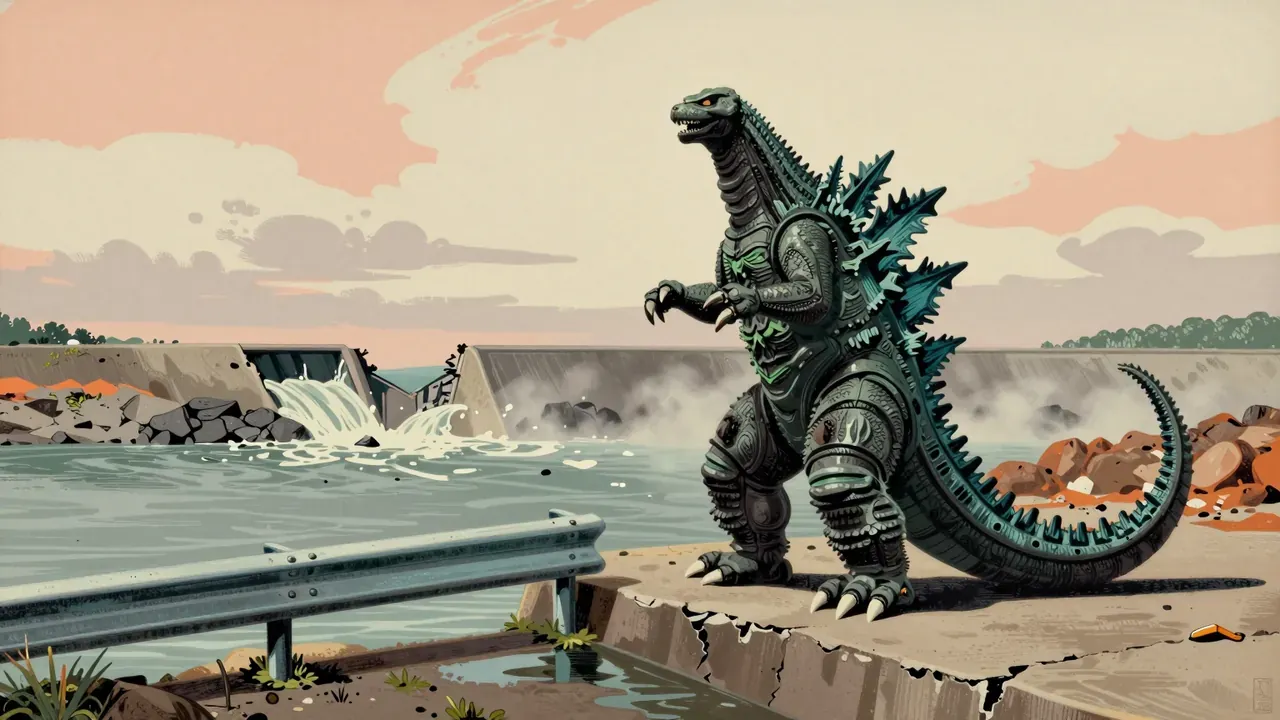
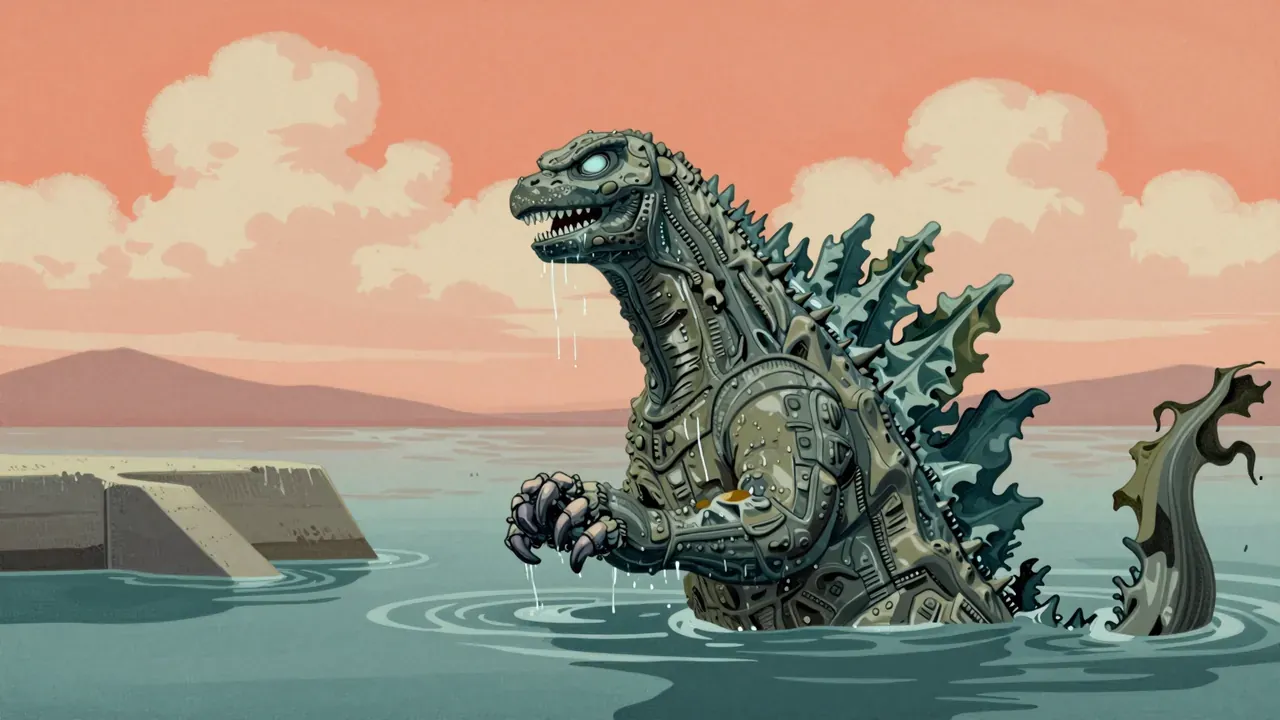
Godzilla vs. Gigan is a 1972 Toho kaiju film directed by Jun Fukuda, produced by Tomoyuki Tanaka as a deliberate course correction after the underperforming Godzilla vs. Hedorah. It aims to re-anchor the franchise in its mid-1960s formula: bright colour, brisk pacing, clear hero–villain lines, and monster spectacle over allegory. The film returns King Ghidorah — absent since 1964 — and introduces Gigan, a new space monster designed for visual distinctness rather than thematic weight. Its narrative architecture is built around repetition and reassurance: familiar monsters (Godzilla, Anguirus), familiar human roles (scientist, reporter, military liaison), and a plot that treats alien invasion as logistical theatre — a scheme to be foiled by teamwork and timely roars. It does not attempt sociopolitical critique or formal innovation. Instead, it seeks to deliver what audiences had responded to in earlier entries: clarity, kinetic set pieces, and the ritual satisfaction of Godzilla’s return to dominance. This is studio-driven genre maintenance, executed with the efficiency of a production unit operating on tight budgets and tighter schedules. Word count: 138
The rhythm of it
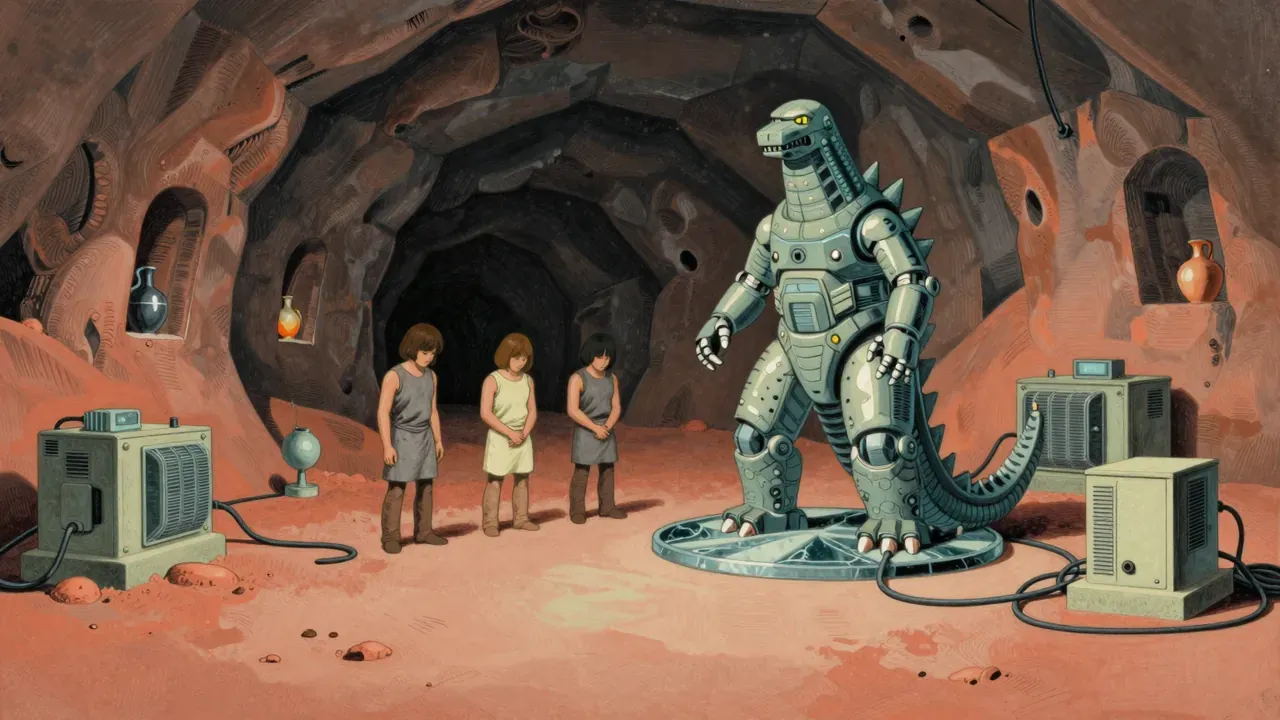
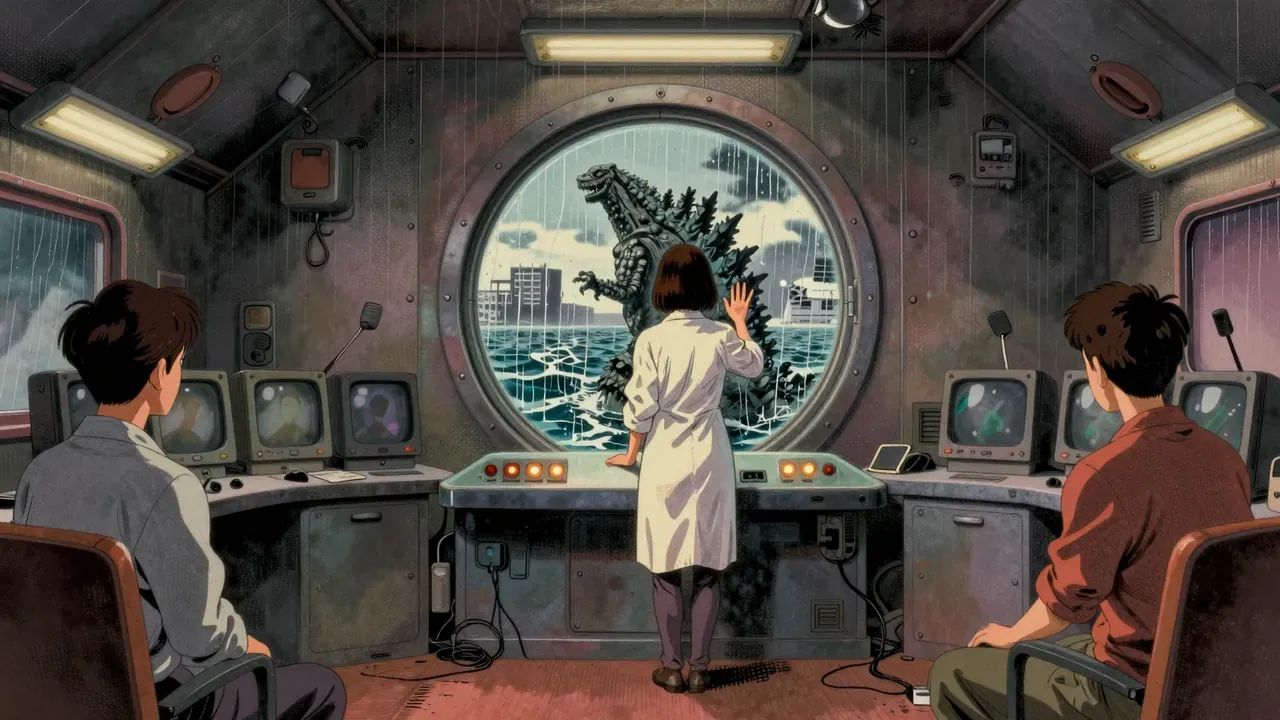
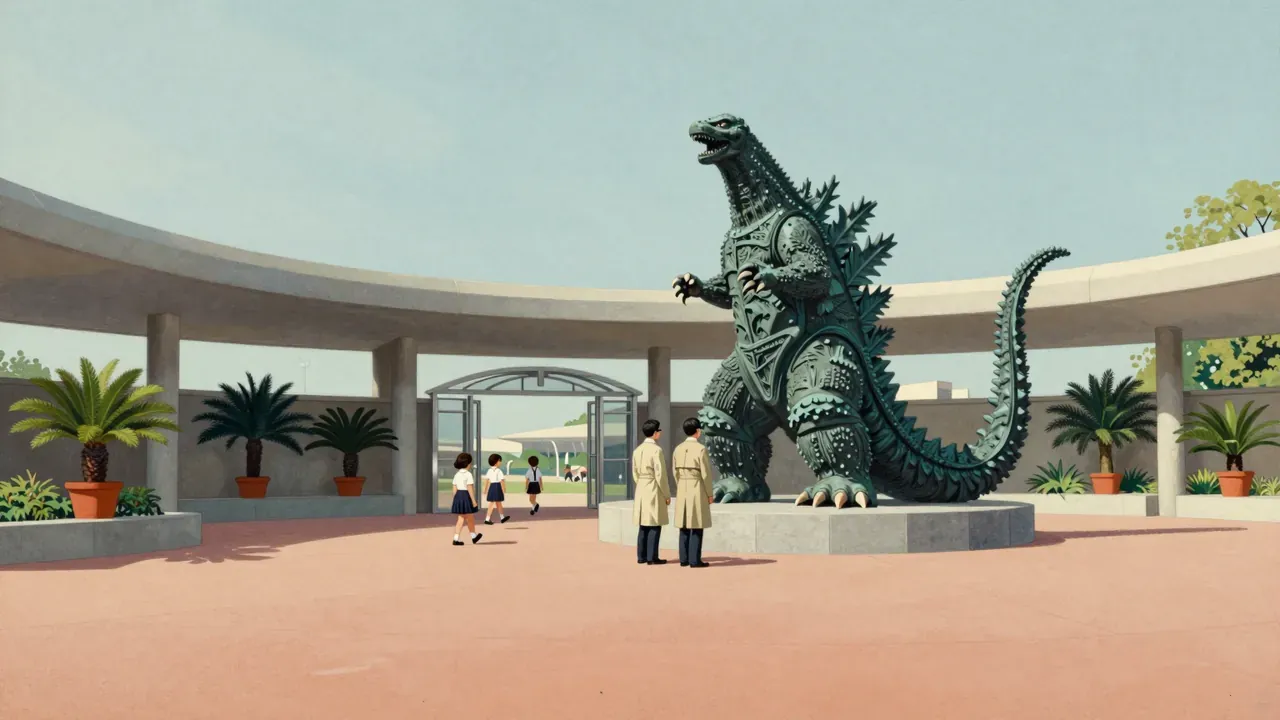
The story follows the Nebulans — insectoid aliens disguised in human skin suits — who build World Children’s Land as a front for their invasion, centred on the Godzilla Tower statue. They control Ghidorah and Gigan via ‘Action Signal Tapes’, prompting attacks on Tokyo. Haruo Nakajima performs Godzilla for the final time, his suit work retaining its physical authority despite visible wear; Kenpachirō Satsuma’s Gigan is stiff but striking, its buzzsaw chest and angular design foregrounded in close-ups. Shinichi Sekizawa’s script moves briskly, with dialogue functional and exposition delivered through news bulletins and lab briefings. Kiyoshi Hasegawa’s cinematography favours wide shots during monster action, keeping scale legible, while interiors are lit flatly, avoiding mood in favour of readability. Akira Ifukube’s score is almost entirely repurposed from earlier Toho films, though the new ‘Godzilla March’ adds a jaunty, almost cartoonish punctuation. Stock footage is used extensively — particularly for Ghidorah’s flight and Godzilla’s roar — not as a flaw but as an accepted grammar of the series. Word count: 152
The moments that hold
What lands is the film’s unapologetic commitment to its own logic. The Nebulans’ plan is absurd — a theme park housing a monster-control tower — yet it is presented without irony, and the film’s internal consistency makes it persuasive on its own terms. Gigan’s design succeeds precisely because it refuses naturalism: its avian neck, geometric torso, and exposed mechanical organs register as alien without needing explanation. The battle sequences, though reliant on stock shots, are tightly edited, with cuts timed to impact beats and camera angles chosen to emphasise collision rather than continuity. The moment Godzilla sheds blood — first on his shoulder, then on his forehead — lands with quiet force, not as gore but as a marker of stakes: this is the first time he is visibly wounded, and it signals that even mythic figures can be strained. Yuriko Hishimi and Tomoko Umeda bring grounded energy to their roles as reporter and scientist, anchoring the absurdity with unflustered professionalism. The film never asks to be taken seriously — only to be followed. Word count: 149
The gaps in it
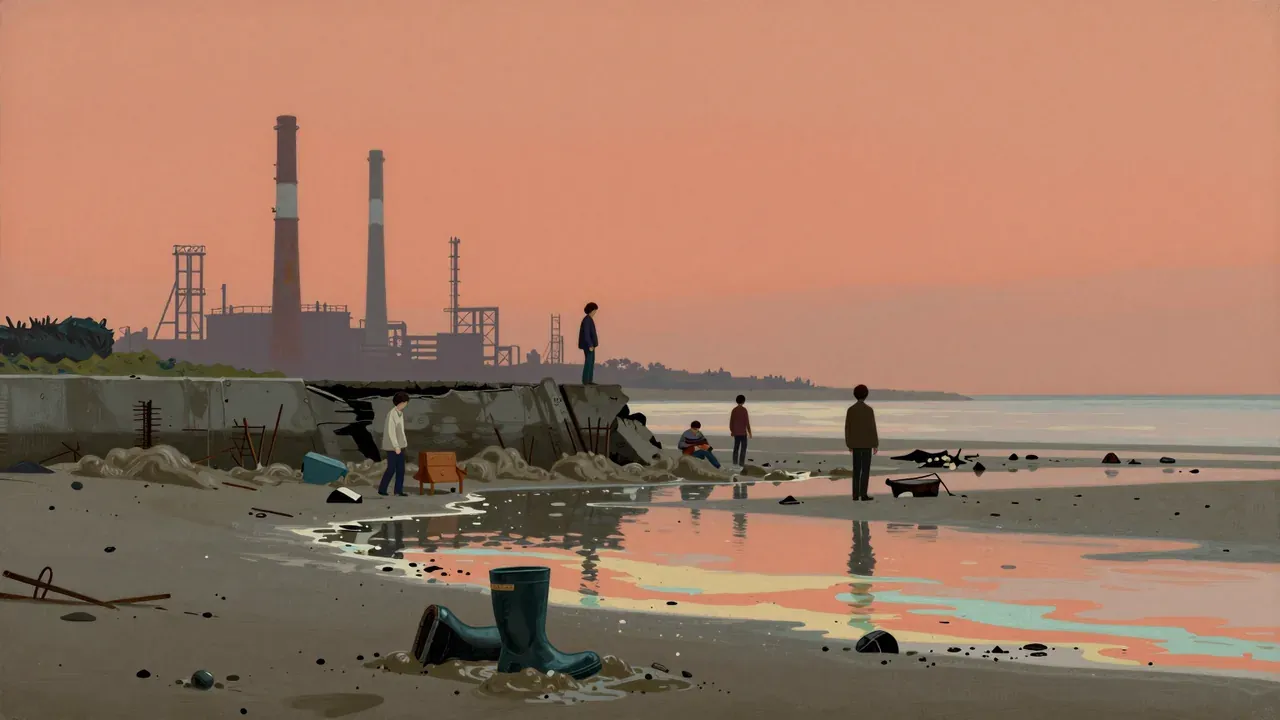
What does not land is the attempt at emotional texture beyond the monster arena. The human subplot — centred on a journalist investigating the theme park — lacks development or consequence; characters vanish mid-scene and reappear without explanation. The Nebulans’ motivation — planetary ruin caused by pollution — is stated once and never revisited, making their villainy decorative rather than resonant. Their disguises are visually effective but narratively inert: no tension arises from the possibility of exposure, nor any moral ambiguity in their mimicry. The Godzilla–Anguirus ‘conversation’ — rendered in comic-book speech bubbles in the Japanese version — feels like a missed opportunity for tonal play; its removal in the English dub leaves a silence where character might have lived. The reliance on stock footage becomes noticeable not in its reuse but in its mismatch: Ghidorah’s 1964 head movements do not sync with his 1972 body language, creating micro-dissonances that accumulate. These are not failures of craft so much as symptoms of a production prioritising throughput over cohesion. Word count: 147
The weight of it
The themes that matter are stewardship, recurrence, and the materiality of myth. The Nebulans’ ruined homeworld echoes Japan’s post-industrial anxieties, but the film treats ecological collapse as backdrop, not argument — a condition that enables invasion, not a subject for reflection. More potent is the film’s preoccupation with repetition: Ghidorah’s return, Nakajima’s farewell, the re-use of Ifukube’s motifs, the recycling of footage — all point to a franchise reckoning with its own history as archive. The Godzilla Tower is not satire but literalisation: myth made monument, then weaponised. The film also insists on the physicality of its icons — Godzilla bleeds, Anguirus is cut, Gigan’s buzzsaw grinds visibly — refusing abstraction in favour of tactile consequence. This is not a film about ideas but about persistence: of monsters, of music, of men inside rubber suits. Its central question is not ‘what if?’ but ‘what next?’, answered not with innovation but with iteration. Word count: 139
The audience for it
This film is for viewers who value genre literacy over novelty — those who recognise the weight of Nakajima’s final performance, who hear Ifukube’s cues as citations rather than clichés, who find pleasure in the precise geometry of Gigan’s design. It rewards attention to craft continuity: how Hasegawa frames a two-shot of Godzilla and Anguirus, how the Action Signal Tape’s whine cuts through dialogue, how the Godzilla March’s brass stings after silence. It is not for viewers seeking psychological realism, thematic depth, or narrative surprise. Those who expect coherence across human and monster plots will be frustrated; those who require fresh iconography may find Gigan’s sharpness undercut by Ghidorah’s recycled presence. A viewer who values worldbuilding over world-wrecking will likely disengage. The verdict shifts if the film were approached as archival artefact rather than standalone text — but as a 1972 theatrical release, it assumes its audience already speaks the language. Word count: 142
The time it takes
Yes, it is worth your evening — provided you watch it as a pivot point, not a peak. At 89 minutes, it moves without pause, offering spectacle without pretension, music without flourish, and monsters without apology. Its pleasures are specific: the crispness of Gigan’s silhouette against a blue sky, the thud of Anguirus’s tail on concrete, the way Godzilla’s roar swells just before he turns. It is not essential viewing for newcomers to kaiju, but it is indispensable for understanding how the Shōwa era sustained itself — through economy, repetition, and unembarrassed fun. Those who dismiss it as ‘just another monster fight’ miss its quiet precision: every frame serves the rhythm of escalation. A viewer expecting the gravitas of the 1954 original or the surrealism of Hedorah will leave unsatisfied. But for anyone willing to meet it on its own terms — brisk, bright, and built for rewatching — it delivers exactly what it promises. Word count: 146