The look of it
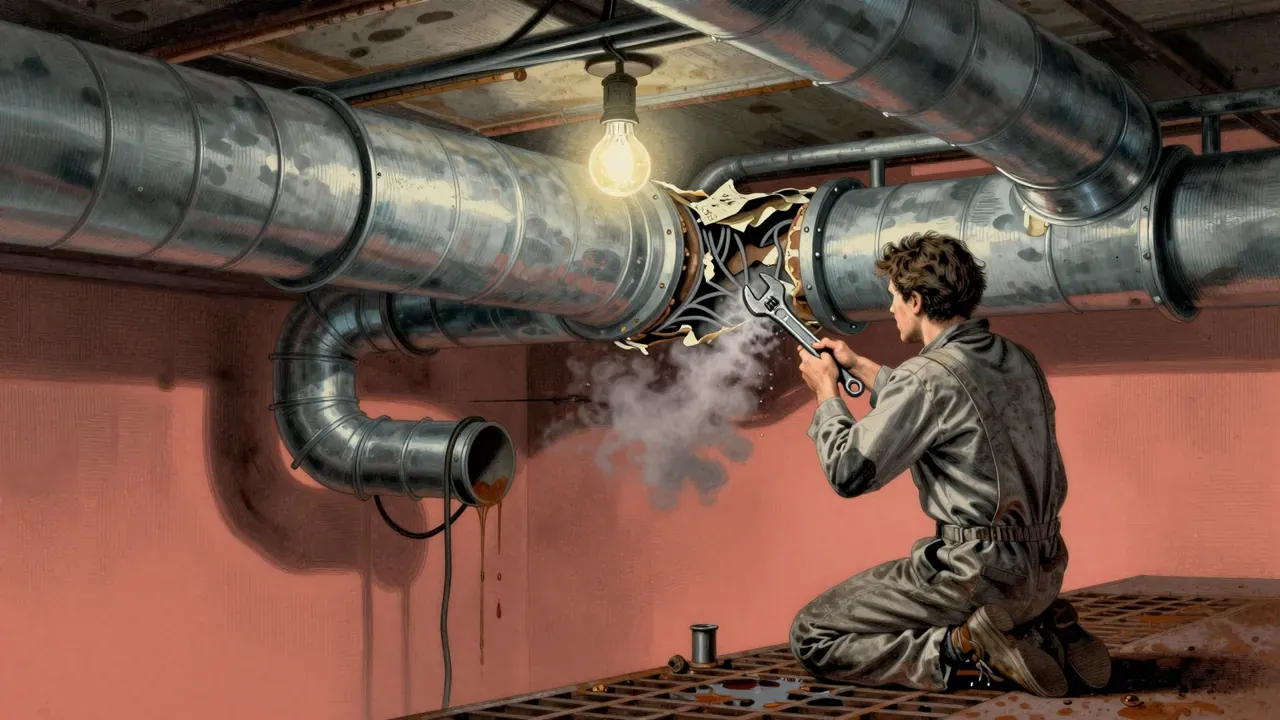
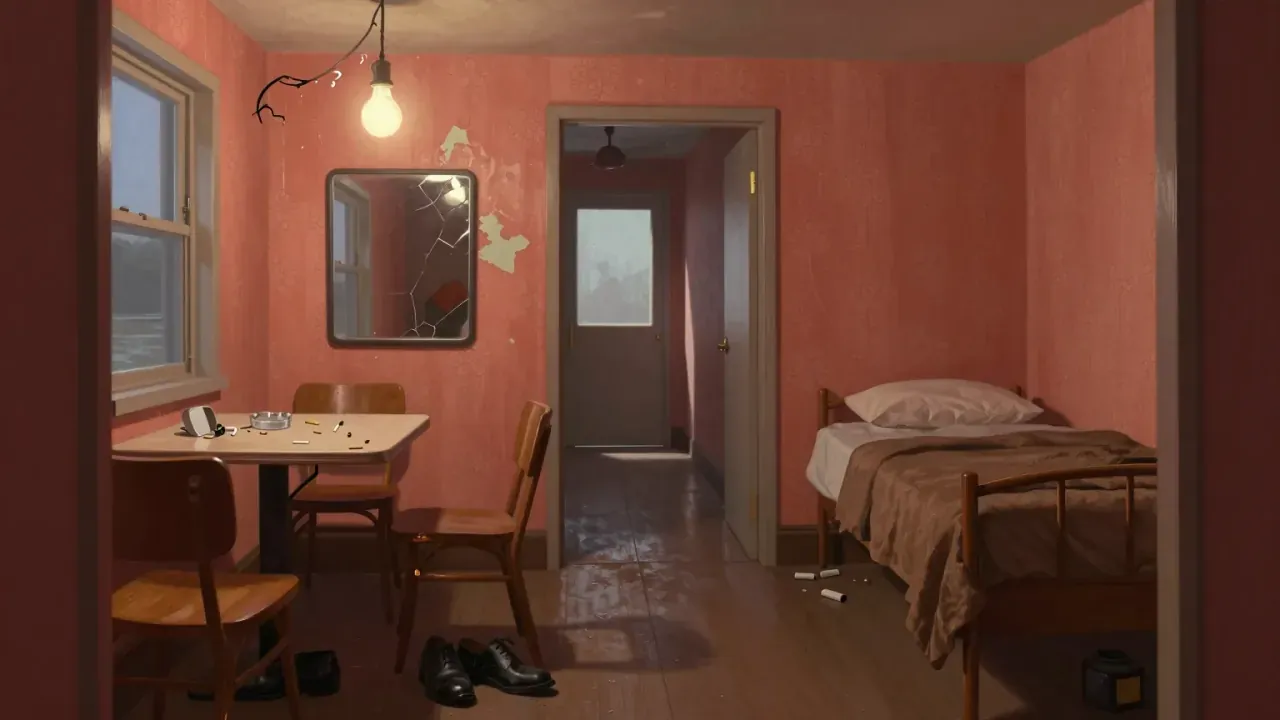
Delicatessen is a French post-apocalyptic black comedy set in a crumbling, grain-scarce apartment block where meat is rationed and butchered on site. It tries to sustain a sustained tonal paradox: horror without dread, farce without levity, dystopia without exposition. There is no voiceover, no flashback, no historical context — only the logic of the building itself, governed by hunger, ritual, and brittle social contracts. The film does not explain its world; it enacts it, treating cannibalism as mundane economics and resistance as a matter of plumbing access. Its ambition lies in worldbuilding through texture rather than exposition: wallpaper peeling like old skin, grain dust settling on every surface, the muffled thud of a cleaver through floorboards. It avoids allegory by refusing to name its catastrophe, anchoring its satire instead in the physical grammar of domestic space — stairwells, bathtubs, refrigerators — all repurposed for survival or control. This is not speculative fiction in the sense of forecasting; it is speculative behaviour, extrapolated from scarcity, habit, and the quiet violence of routine. (158 words)
How it holds together
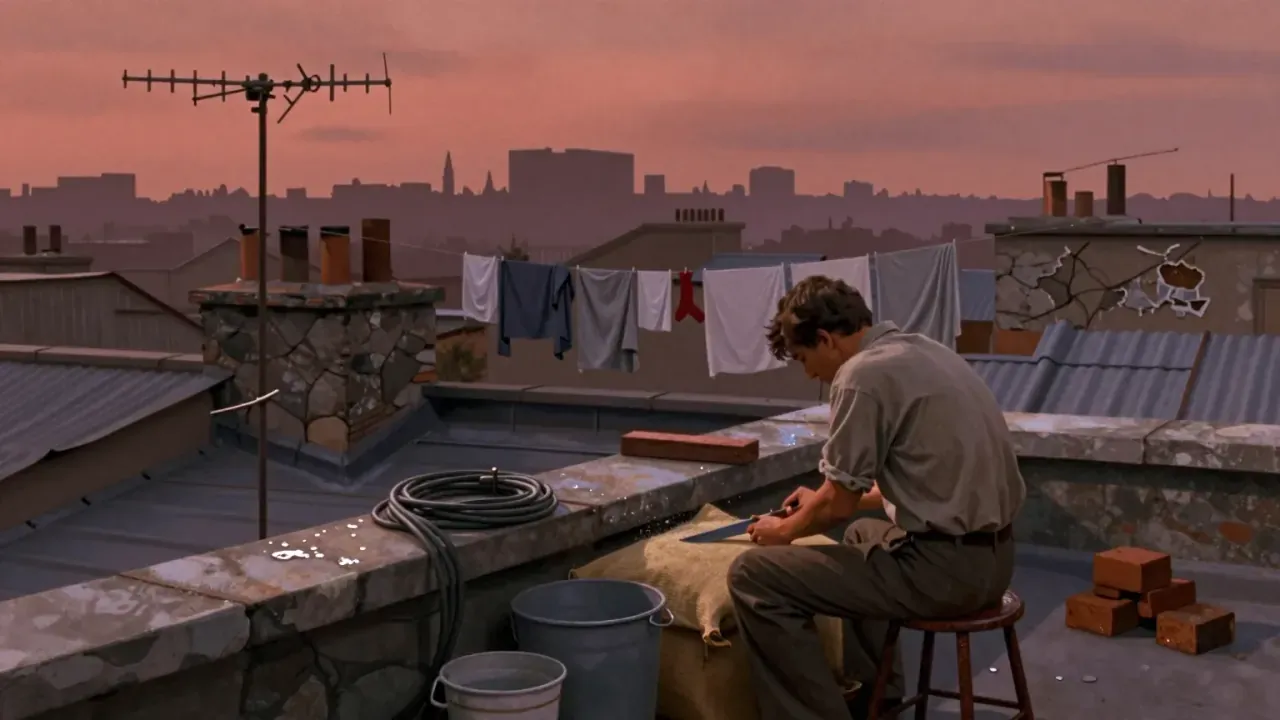
The story moves by set piece, not cause and effect: Louison’s job interview, Julie’s descent into the sewers, Clapet’s rooftop ambush, the flooded bathroom. Performances are stylised but precise — Dominique Pinon’s clownish physicality never slips into caricature, Marie-Laure Dougnac’s Julie holds stillness like tension, Jean-Claude Dreyfus’s Clapet speaks in clipped, bureaucratic menace. Darius Khondji’s cinematography uses tight frames, shallow focus, and a palette of damp ochres and bruised greys; light comes from single bulbs or streetlamps bleeding through grimy windows. Carlos d’Alessio’s score is percussive and sparse, often mimicking plumbing or machinery. Hervé Schneid’s editing favours abrupt cuts and held silences — a door closing, a knife landing, a pause before laughter. The production design, which won the European Film Award, treats every prop as evidence: mismatched crockery, hand-lettered signs, grain sacks stamped with faded logos. Nothing feels improvised; everything feels found, worn, and recontextualised. (159 words)
What sticks
What lands is the film’s tactile coherence — the way its absurdity is grounded in weight, texture, and consequence. The butcher shop’s ledger, the tenants’ barter system in grain, the Troglodytes’ subterranean vegetable plots: these details accrue meaning without explanation. The romance between Louison and Julie works because it is built on small, unspoken gestures — a shared glance over a boiled egg, a boomerang knife passed hand to hand — not dialogue. The visual rhythm sustains momentum: each corridor shot implies surveillance, each stairwell ascent carries threat or release. Even the slapstick — the flood, the antenna shock, the self-inflicted cleaver wound — lands because it follows internal logic: water pressure, faulty wiring, misaimed force. The film’s humour does not undercut its stakes; it reframes them. When Mademoiselle Plusse emerges from the sewer clutching a knife, it is both ridiculous and chilling — a moment that balances tone without collapsing it. That balance, sustained across ninety-five minutes, is its central achievement. (157 words)
Where it loosens
What does not land is the final stretch’s reliance on escalating chaos over escalation of meaning. The rooftop chase, the bathtub flood, the accidental suicide — all function as gags first, revelations second. The film’s earlier restraint gives way to a kind of kinetic exhaustion: sets are wrecked, props scattered, but little new about the characters or their world is disclosed in the process. Janet Maslin’s criticism — that the last half-hour becomes a washout — identifies a real structural softening. The Troglodytes, introduced late and underdeveloped, remain more symbol than society; their vegetarianism reads as moral shorthand rather than lived conviction. Some performances falter under the heightened pace: Rufus’s Marcel Tapioca recedes into broad panic, and Howard Vernon’s cameo as a silent, shuffling tenant adds atmosphere but no dimension. The script’s refusal to name the apocalypse begins to feel less like discipline and more like evasion when the stakes shift from survival to spectacle. The film’s wit remains intact, but its precision blurs. (156 words)
What it’s really about
The themes that matter are scarcity as social architecture, food as power, and resistance as domestic repair. Delicatessen treats hunger not as metaphor but as infrastructure: grain is currency, meat is utility, vegetables are rebellion. The Troglodytes do not fight with weapons but with compost and irrigation — their politics are horticultural. Clapet’s butcher shop operates like a petty bureaucracy, complete with job ads, rent ledgers, and performance reviews; his horror lies in its banality. The film’s most persistent motif is maintenance: Louison fixes antennas, unclogs pipes, sharpens knives — acts that preserve the building’s fragile order even as he undermines its moral foundations. Romance, too, is framed as upkeep: Julie and Louison tune a radio together, play music on the roof, close the shop. Their victory is not revolution but reoccupation — of space, of rhythm, of ordinary time. The film’s quietest theme is dignity in repetition: the same stairs climbed daily, the same knife sharpened, the same grain measured out, until one day the measure changes. (159 words)
Who it’s for
It is for viewers who value design as narrative, who find comedy in constraint, and who trust visual logic over exposition. Those who require psychological realism, linear causality, or moral clarity will find it alienating — its characters act on instinct and habit, not motivation. Fans of Terry Gilliam’s early work may expect similar anarchic energy, but Delicatessen is tighter, more deliberate, less reliant on verbal wit. Viewers put off by bodily grotesquerie — bloodless but insistent — or by sustained tonal ambiguity should pass. It is not for those who need resolution: the ending offers peace, not answers. Anyone expecting political allegory rooted in occupied France will be disappointed; the film’s resistance is practical, not ideological. A viewer who values craft over commentary, texture over thesis, will find it rich. Someone who needs the film to declare its position on cannibalism, or on vegetarianism, will leave unsatisfied. Its pleasures are cumulative, not declarative. (158 words)
Is it worth your evening
Yes, it is worth your evening — if you are prepared to meet it on its own terms. It demands attention to detail, tolerance for unresolved unease, and pleasure in the handmade. Its ninety-five minutes pass with the density of a well-constructed short story: every shot serves the world, every performance reinforces the rules. It is not a film to watch while distracted; its rewards lie in noticing how a shadow falls across a stairwell, how a character’s posture shifts when holding a knife, how silence stretches before a door opens. Those who dislike stylisation, who find surrealism exhausting without emotional anchor, or who prefer narrative propulsion over atmospheric accumulation, will not warm to it. Its cult status is earned not through accessibility but through consistency — a rare thing in debut features. To dismiss it as whimsy is to miss its rigour; to call it profound is to overstate its ambitions. It is exact, inventive, and quietly humane — and that is enough. (159 words)