A last look at Earth before the station
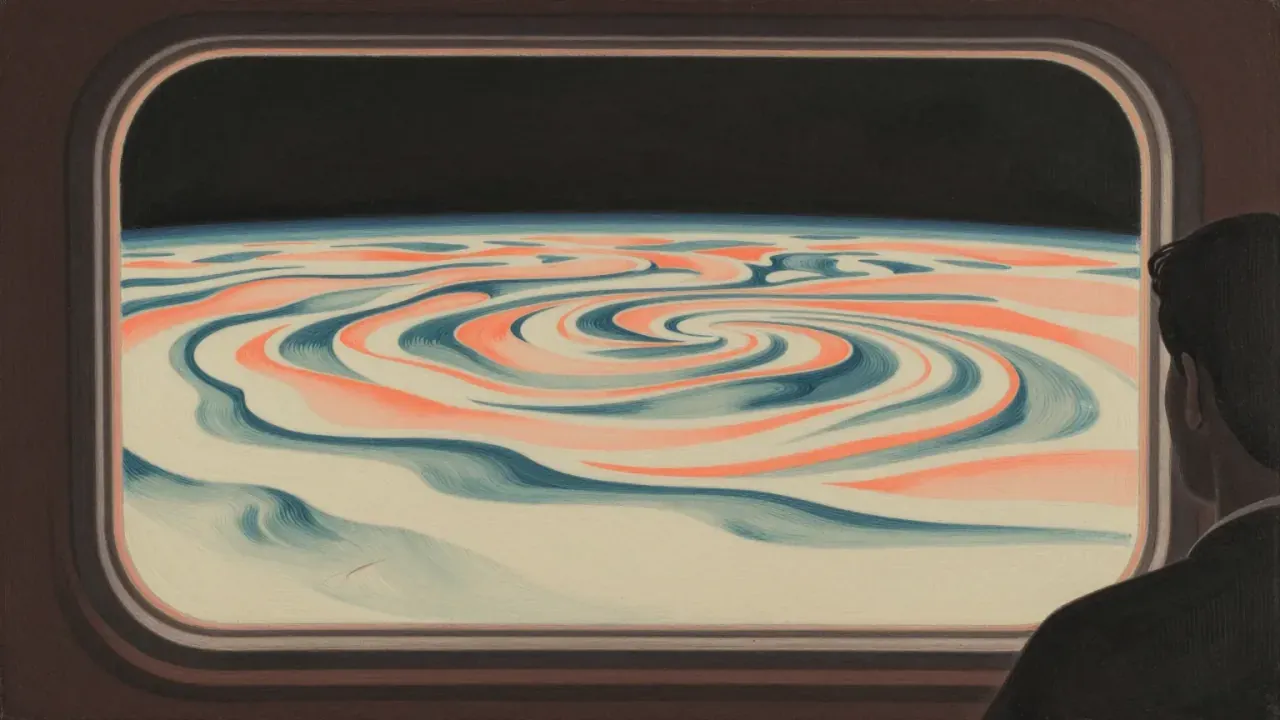
Solaris opens on Earth, with psychologist Kris Kelvin spending an unhurried last stretch of time at his father’s country house before departing for a space station orbiting the distant ocean planet Solaris, where the small remaining crew has stopped communicating properly with mission control. On arrival, Kelvin finds one scientist dead by suicide and the survivors evasive, and he soon learns why: the ocean covering the planet has begun generating physical, seemingly living visitors drawn directly from each crew member’s memory. When Kelvin’s own dead wife Hari appears in his quarters, with no awareness that she has already died once, the film shifts from investigation into an extended reckoning with grief, guilt and what a person actually owes to a memory that will not stay still.
A crew unravelling one visitor at a time
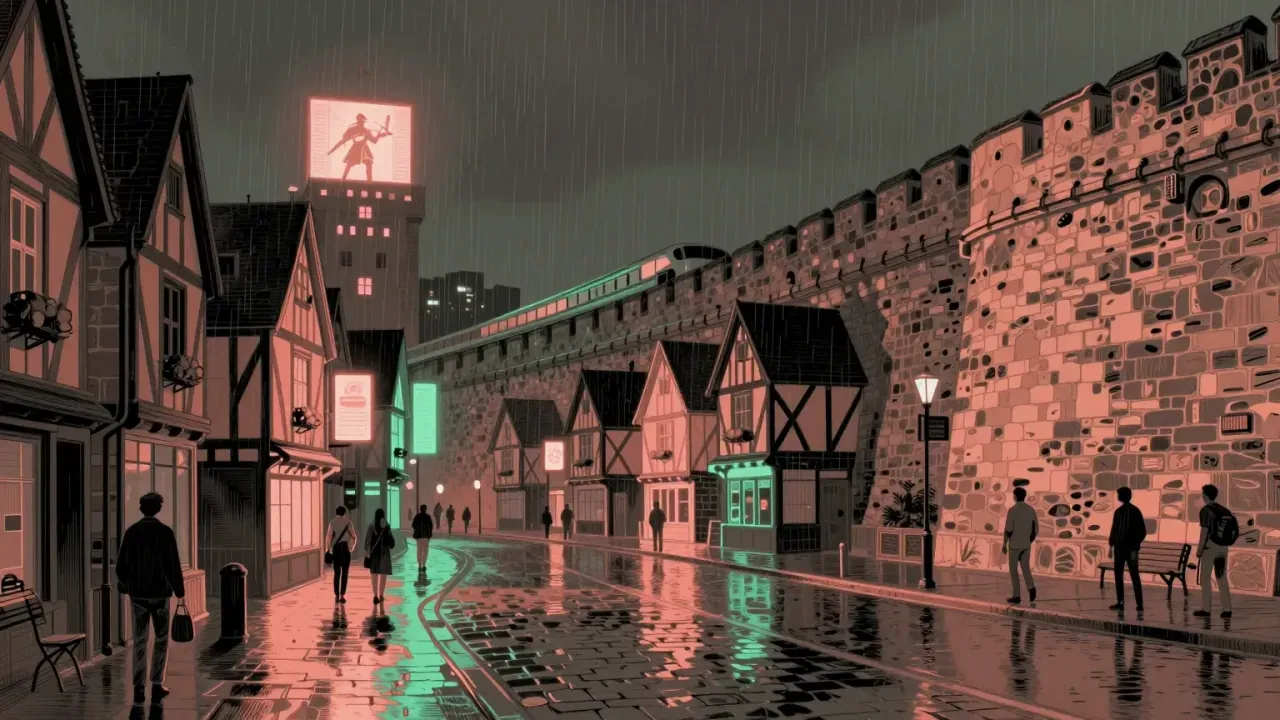
Vadim Yusov’s cinematography holds long, static or slowly moving shots of both the sparse, metallic station interiors and the earlier Earth sequences, deliberately establishing a contrast between a lush, overgrown home planet and an austere, enclosed vessel that the ocean’s visitors then disrupt. Eduard Artemyev’s electronic score is built around a recurring arrangement of a Bach chorale prelude, giving the film’s most emotionally exposed scenes an almost devotional quality. Donatas Banionis plays Kelvin’s unravelling with restraint rather than visible panic, while Natalya Bondarchuk, as Hari, has to perform a being who is simultaneously fully human in feeling and aware, in fragments, that she may not be real. Tarkovsky has said he made the film partly in response to Stanley Kubrick’s 2001, which he considered emotionally hollow despite its technical achievement.
Hari returns, built from guilt as much as love
The station’s interior is dressed with full-scale reproductions of Pieter Bruegel the Elder’s sixteenth-century landscape paintings, a deliberate visual collision between the coldest possible setting and some of the warmest, most populated images in European art, and the camera returns to them at moments when Kelvin is most disoriented. Bondarchuk’s performance as Hari, moving from confusion to devotion to a dawning, horrified understanding of her own manufactured nature, gives the film’s emotional centre real weight rather than treating the concept as a purely intellectual puzzle. The scientist Snaut’s late observation, that the crew do not need to travel to alien worlds so much as confront what is already inside themselves, crystallises the film’s argument without ever feeling like a line dropped in for effect.
A rebuttal aimed squarely at 2001
At 160 minutes, with numerous extended sequences, including a lengthy, near-wordless driving sequence through Tokyo standing in for a future Earth, the film moves at a pace that will test viewers expecting science fiction built around discovery or incident rather than sustained emotional dwelling. Some of the station crew beyond Kelvin and Hari remain thinly sketched, present mainly to voice positions in the film’s philosophical arguments about contact with alien intelligence rather than as fully rounded characters in their own right. Viewers coming to the film expecting the technological specificity or hard-science texture of the novel it is based on may find the adaptation’s focus on Kelvin’s marriage narrower than they anticipated.
Old paintings in a sealed metal station
Grief is treated here as something that cannot simply be worked through by encountering its object again, since Hari’s return forces Kelvin to relive the guilt of her original death rather than resolve it, complicated further by his uncertainty over whether to treat her as a person or a phenomenon. Memory itself is the material the ocean uses to build its visitors, which makes Solaris less a story about first contact with alien intelligence than about what happens when human memory is handed back to a person with none of its context removed. The Earth-versus-station structure keeps returning the film to a question about whether space exploration is worth pursuing if it only sends people’s own unresolved feelings back at them rather than genuine external knowledge.
Slow, and unconcerned with hiding it
This suits viewers interested in slow, emotionally driven science fiction that treats its speculative premise as a route into grief and memory rather than adventure, and anyone curious how directly the film argues against the more detached tradition of the genre. It is a difficult fit for viewers wanting the visual spectacle or plot momentum associated with space-set science fiction, since much of the film takes place in a small number of rooms carried by extended dialogue and silence. Those who found 2001 rewarding for its cool detachment should expect Solaris to pull in the opposite emotional direction rather than complement it.
A long, sorrowful watch worth the time
At 160 minutes, including some notably unhurried stretches, this asks for real patience, but the emotional core built around Kelvin and Hari’s relationship gives the film a sustained ache that most science fiction of the period was not attempting. Its Grand Prix win at Cannes and its lasting status as one of the genre’s most significant Soviet contributions reflect an achievement distinct from, rather than simply an answer to, the film it was partly conceived against. Worth the evening for anyone willing to let a science-fiction premise serve a story about mourning, and a slower, sadder watch than its premise might suggest going in.