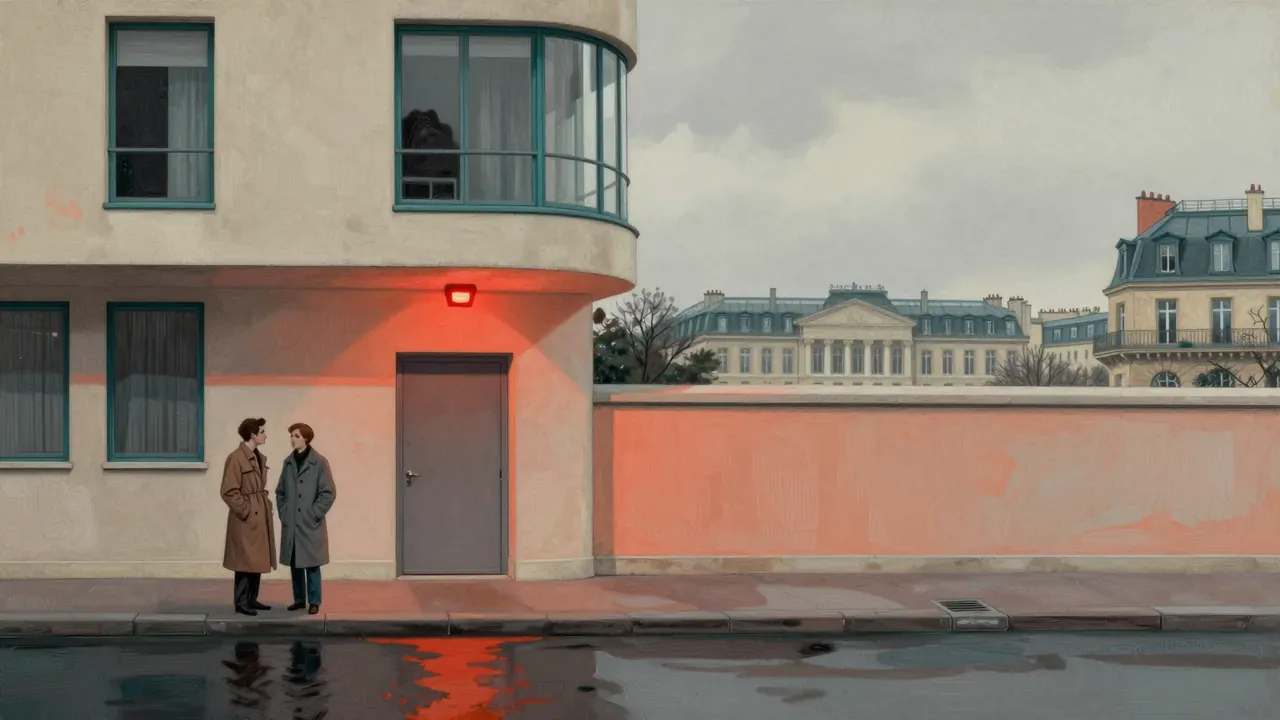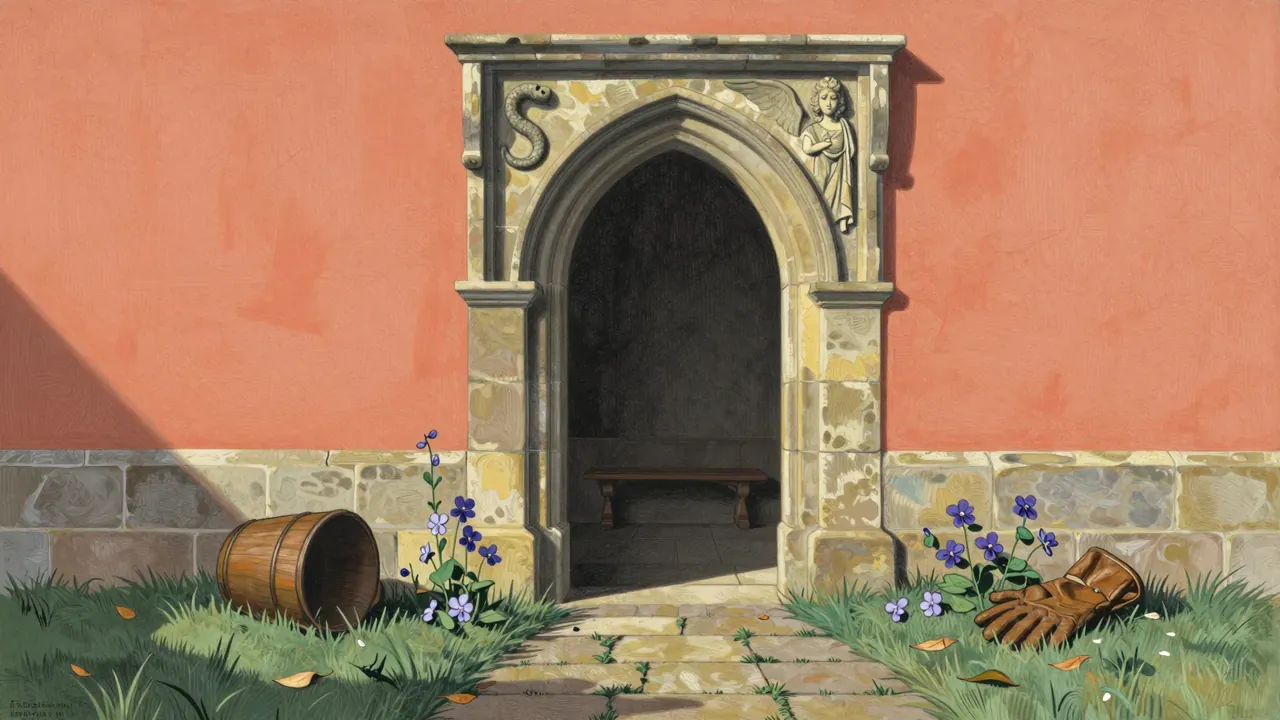
The look of it
Valerie and Her Week of Wonders is a 73-minute Czechoslovak fantasy film made at Barrandov Studios in 1969, released in October 1970. It adapts Vítězslav Nezval’s 1935 novel as a Gothic, surrealist coming-of-age fable set in a dream-logic Renaissance town. The film does not aim for psychological realism or linear exposition but constructs a self-contained symbolic world where desire, authority, bloodline and transformation operate by their own internal grammar. Its ambition is formal and tonal: to render adolescence as uncanny terrain — porous, perilous, erotic and sacred — using the language of folklore, Catholic ritual and vampire myth without anchoring any of them in literal belief. It treats religion, sexuality and inheritance as overlapping systems of power, each with its own costume, architecture and syntax. The film’s coherence lies not in plot resolution but in the consistency of its metaphors: earrings as lineage, pearls as chastity, blood as memory, masks as sanctioned identity. It is less an allegory than a ritual object — designed to be entered, not decoded.
The rules of the world
The story unfolds as a series of linked tableaux rather than cause-and-effect scenes: Valerie’s awakening coincides with the arrival of missionaries, actors and vampires; her grandmother shifts between roles — matriarch, seductress, vampire — without explanation; Orlík appears first as thief, then brother, then lover, then actor, with no rupture in tone. Jaroslava Schallerová, aged thirteen during filming, performs with stillness and watchfulness, never emoting beyond what the frame permits. Jan Čuřík’s cinematography uses shallow focus, soft diffusion and deliberate framing to flatten depth and heighten texture — cobblestones, lace, candle smoke, skin. Luboš Fišer’s score avoids melody in favour of choral clusters and prepared piano, reinforcing disorientation. Ester Krumbachová’s production design treats Slavonice’s real Renaissance buildings as found sets, dressing them with minimal props that carry symbolic weight: a drum, a spyhole, a waterfall, a crypt repurposed as brothel. Editing by Josef Valušiak favours abrupt cuts over dissolves, sustaining unease without resorting to shock.
What sticks to the skin
What lands is the film’s sustained atmosphere — a humid, honeyed dread that never breaks into horror or farce. The visual grammar holds: every interior feels consecrated, every exterior slightly tilted, every character’s gaze weighted with unspoken history. The casting of non-professionals from Slavonice as townsfolk grounds the surrealism in physical presence — their faces are weathered, unperforming, quietly authoritative. The use of real locations — Kostelní Vydří monastery, Slavonice’s arcaded square — gives the fantasy architectural gravity. The film’s brevity works in its favour: at 73 minutes, it refuses sprawl or exposition, trusting repetition and variation — the earrings reappear, the mask recurs, the forest returns — to build meaning through rhythm rather than explanation. The erotic charge is palpable but never voyeuristic; desire circulates among characters without being fixed to one body or one outcome. This is not a film about sex but about the moment before naming, when attraction and threat occupy the same breath.
What stays silent
What does not land is any attempt to read the film as narrative logic. Characters shift identities without transition — Elsa is grandmother, mother, vampire, cousin — and the script offers no clarifying line or flashback. Viewers expecting motivation, backstory or moral alignment will find none. The film resists psychological causality: Gracián’s attempted assault follows no build-up, Richard’s confession of paternity arrives mid-sentence, Hedvika’s healing occurs off-screen after a single night in bed. There is no ‘why’ offered for the vampire transformation, the pearl’s power or the earrings’ magic. The film also assumes familiarity with Catholic liturgy and Czech folk motifs — the significance of the drum, the role of the constable, the weight of convent vows — without exposition. Its refusal of clarity is deliberate, but it leaves no foothold for viewers who require anchor points in character or consequence. The ending’s pastoral dance feels less like resolution than suspension — a return to sleep, not synthesis.
What it is really about
The themes that matter are inheritance as haunting, authority as masquerade, and puberty as ontological rupture. Blood ties are literalised: Valerie’s blood sustains Richard and Elsa; Orlík’s heart is proposed as transplant material; Hedvika’s bite transmits both illness and cure. The church, the state and the family all wear masks — the Constable’s leather visor, the priest’s collar, the grandmother’s youthful disguise — exposing institutional power as performance. Sexuality is neither punished nor celebrated but treated as elemental: a force that alters biology, architecture and time. The film’s critique of clerical control is structural, not rhetorical — rituals are repeated until they lose meaning, confessions yield no absolution, vows become contracts for exploitation. Its feminism is embedded in form: Valerie’s agency lies in observation, evasion and swallowing — actions that resist capture without asserting dominance. There is no triumph, only endurance, and no clarity, only continuity: the forest, the bed, the earrings, the drum — recurring not as symbols but as conditions.
Who walks with it
This film is for viewers who accept ambiguity as texture, not deficiency — those comfortable with folklore as logic, with silence as exposition, with costume as character. It rewards attention to light, fabric, gesture and recurrence over plot parsing. It is not for viewers who require causal chains, psychological plausibility or moral framing. Those who expect horror to frighten, fantasy to world-build, or coming-of-age to resolve will find it withholding. A viewer who values thematic density over narrative legibility will respond; one who reads films for information or instruction will not. The film’s value lies in its resistance to interpretation — it does not ask to be understood but to be inhabited. Its 1970 release, post-Prague Spring, matters only if you bring that context; the film itself makes no reference to politics, censorship or invasion. Its power is aesthetic, not documentary — and that distinction is decisive.
What it costs you
Yes, it is worth your evening — provided you approach it as a sensory object rather than a puzzle to solve. Its 73 minutes pass without drag because its pacing is rhythmic, not chronological: scenes breathe, recur, invert. You do not need fluency in Czech or knowledge of Nezval’s novel — the film’s logic is visual and tonal, not linguistic. What would change the verdict? A demand for closure, for explanation, for emotional payoff. Those who dislike films where characters remain unknowable, where motives stay buried, where endings circle back instead of concluding, will find it frustrating. But for those who value sustained mood, precise composition and the quiet audacity of a thirteen-year-old girl holding a frame without blinking — it is rare, unhurried, and complete.