The premise as engine
Face/Off is a 1997 American action film directed by John Woo, built around a surgical face-swap between an FBI agent and a terrorist. It attempts to fuse high-concept science fiction with operatic violence, using identity exchange not as speculative inquiry but as a narrative engine for role reversal, moral inversion, and physical confrontation. The film does not interrogate the medical plausibility of facial transplantation — which was still experimental in 1997 — nor does it dwell on psychological disintegration; instead, it treats the swap as a clean, irreversible switch enabling two men to occupy each other’s lives with near-total fidelity. Its ambition lies in scale and rhythm: long takes, symmetrical framing, dual choreography, and set pieces calibrated for maximum kinetic clarity. It seeks neither realism nor restraint, but a heightened grammar where gesture, gaze, and gunplay carry emotional weight without exposition. The premise serves less as philosophical provocation and more as structural scaffolding — a way to stage parallel performances, escalate stakes through irony, and sustain tension across a tightly wound 133 minutes.
The performances as mirror
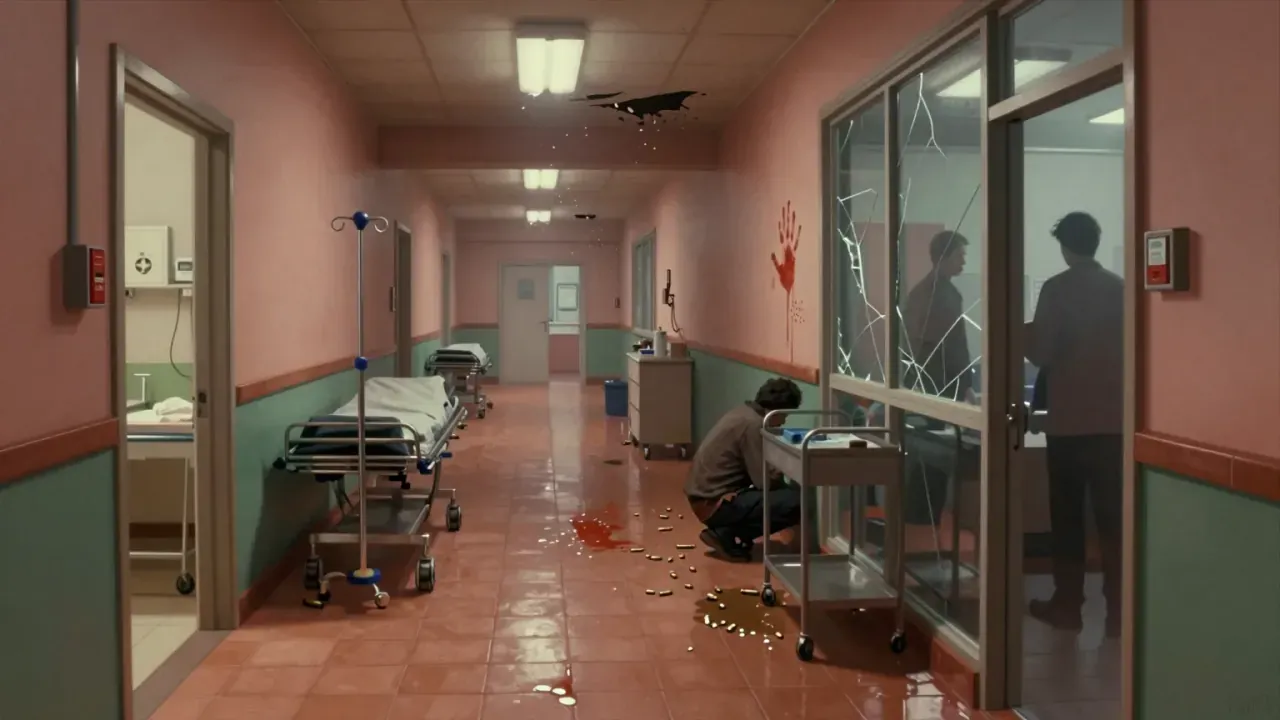
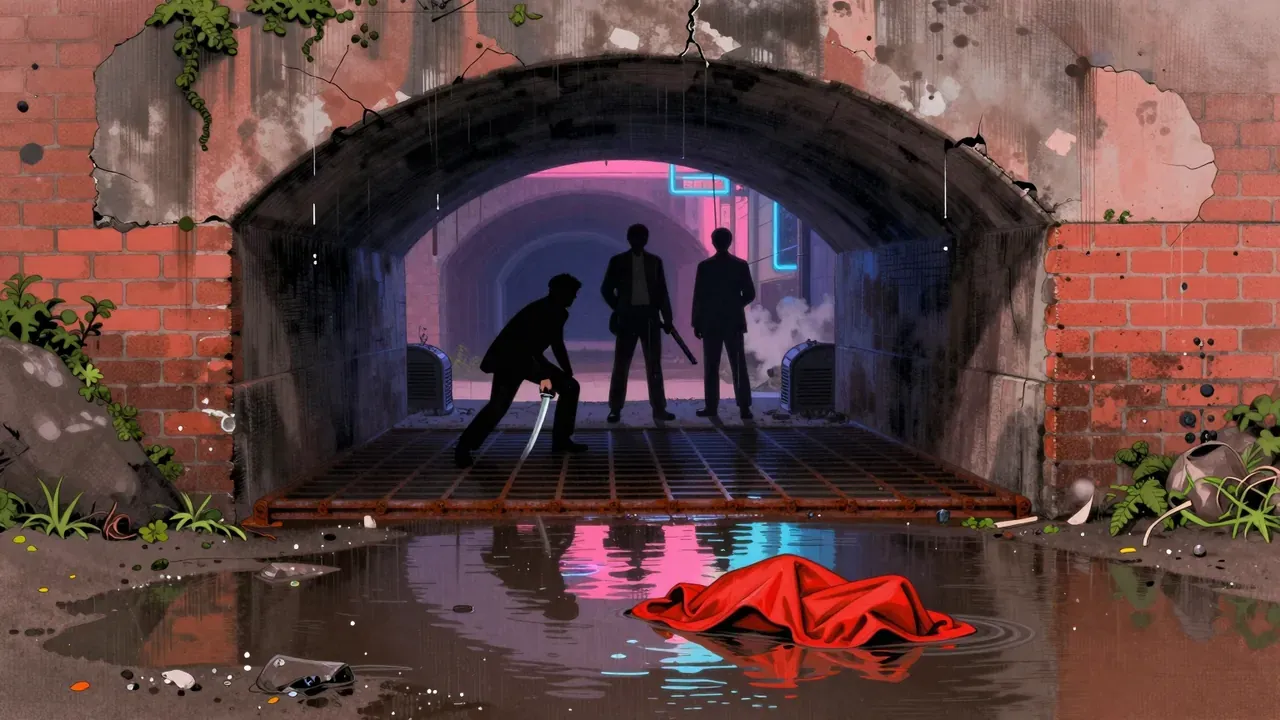
The story follows FBI agent Sean Archer’s six-year vendetta against terrorist Castor Troy, culminating in a forced face transplant that swaps their appearances, voices, and access to each other’s worlds. John Travolta and Nicolas Cage commit fully: Travolta plays Archer-as-Troy with coiled menace and sudden vulnerability; Cage plays Troy-as-Archer with manic precision, modulating between bureaucratic mimicry and predatory charm. Oliver Wood’s cinematography favours wide lenses, slow push-ins, and deliberate staging — particularly in the prison riot and dockside chase — while John Powell’s score, produced by Hans Zimmer, layers brass, choir, and electronic pulses to underscore both gravitas and absurdity. Steven Kemper and Christian Wagner edit with muscular continuity, holding shots just long enough to register consequence before cutting. The production design avoids futurism; Los Angeles stands in for itself — concrete, sun-bleached, functional — grounding the outlandish plot in tangible locations. Every stunt, every bullet hit, every blood spray is placed with compositional intent, not chaos.
The look of it
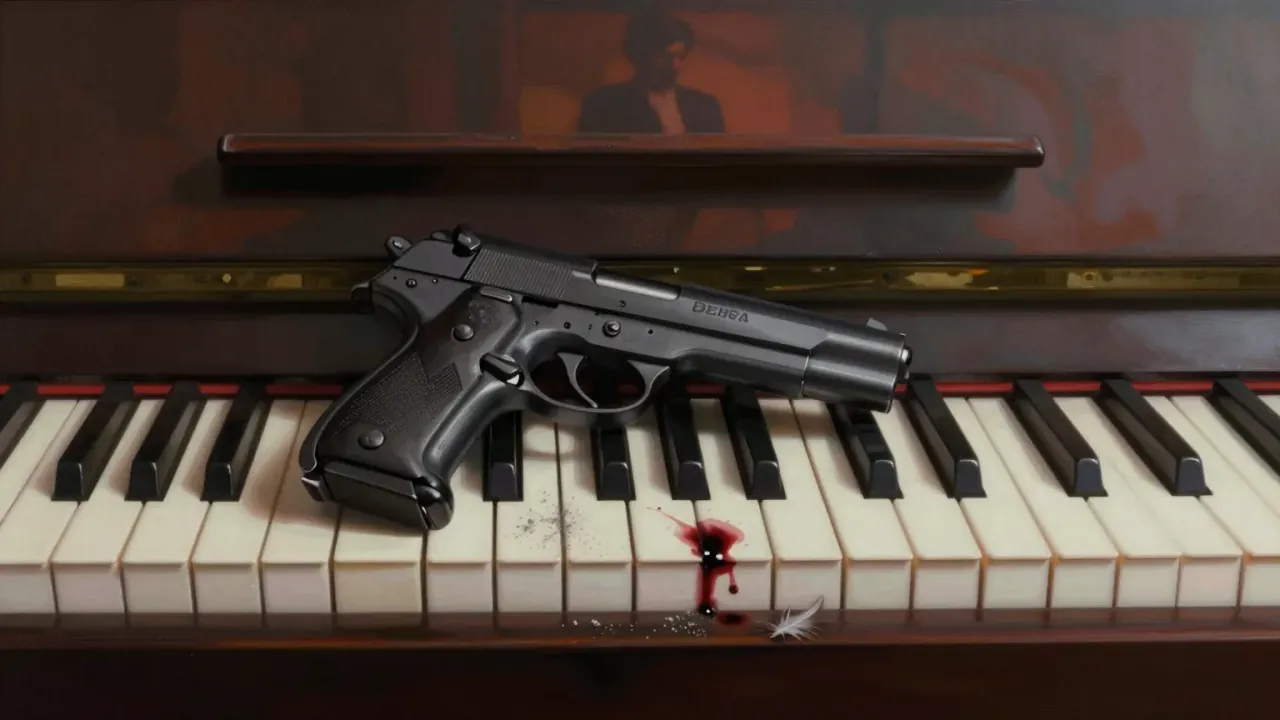
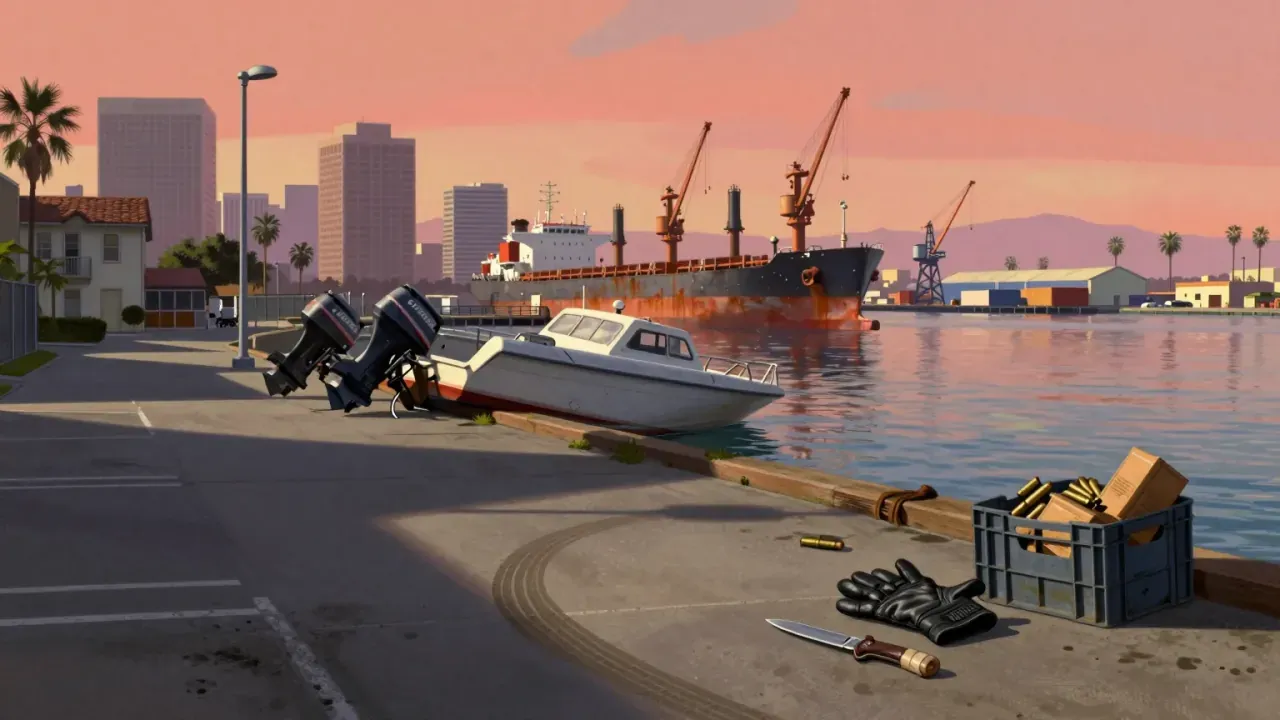
What lands most decisively is the central performance duality: Cage and Travolta do not merely impersonate each other — they inhabit the behavioural residue of each man’s history. Cage’s Troy-as-Archer moves like a man who has studied authority from the outside, mimicking posture and tone with unsettling fluency, then slipping into cruelty with no transition. Travolta’s Archer-as-Troy carries grief like ballast, his violence never gratuitous but always tethered to loss. The dockside speedboat chase delivers sustained physical logic and spatial coherence rare in late-1990s action cinema; its collision and aftermath unfold with clear cause and effect. Joan Allen’s Eve Archer registers doubt and dawning horror without melodrama, anchoring the emotional pivot when she tests blood to confirm identity. The film’s visual syntax — twin frames, mirrored gestures, recurring motifs like the butterfly knife — reinforces theme without explanation. Even minor roles land: Gina Gershon’s Sasha possesses quiet agency, her final act one of choice rather than sacrifice, and her son Adam becomes the sole uncorrupted vessel for redemption.
Where the wires show
What does not land is the script’s underdeveloped political or institutional critique. Though the FBI is portrayed as bureaucratically rigid and morally porous, the film never interrogates its own power structures — Lazarro’s murder goes unexamined beyond personal vengeance, and Castor’s rapid promotion feels narratively expedient rather than satirical. The science-fiction element remains strictly cosmetic: no time is spent on immune rejection, neural adaptation, or voice modulation — the transplant works because the plot requires it to. Some supporting characters evaporate mid-film (Pollux, Dietrich) without thematic payoff, their deaths serving only as escalation. The ending, reshot after test screenings, abandons Woo’s original ambiguity for a tidy domestic resolution — Archer and Eve adopting Adam — which softens the film’s earlier moral friction. The dialogue often defaults to exposition or quip, rarely achieving the poetic economy of Woo’s Hong Kong work. And while the action is coherent, it lacks the spiritual gravity of The Killer or the tragic momentum of Hard Boiled — here, violence is spectacle first, lament second.
What it’s really about
The themes that matter are identity as performance, parenthood as inheritance, and vengeance as recursion. Archer and Troy do not simply wear each other’s faces; they inherit each other’s relationships — Archer gains access to Troy’s son, Troy to Archer’s wife and daughter — making parenthood the axis on which loyalty and corruption turn. The film treats family not as sanctuary but as contested territory: Jamie’s butterfly knife, given by Castor, becomes her instrument of self-defence; Adam, raised by criminals, is offered a different future not through ideology but through embodied care. The face-swap literalises the idea that identity is not fixed but assembled — through gesture, speech, clothing, and context — yet the film refuses to let either man fully dissolve into the other. Their core motivations remain intact: Archer seeks atonement, Troy seeks domination. The real transformation is situational, not ontological. This makes the film less about ‘who we are’ than ‘what we do when no one recognises us’ — a distinction that gives its moral architecture weight without pretension.
Who it’s for
This film is for viewers who value choreographed action as narrative language, who respond to committed, stylised acting, and who accept genre premises without demanding scientific rigour. It rewards attention to composition, timing, and physical storytelling — those who watch for how a shot is held, how a gun is drawn, how silence precedes impact. It is not for viewers who require psychological realism, ethical consistency, or thematic subtlety; those seeking measured pacing, interiority, or social critique will find its rhythms too insistent and its ideas too bluntly rendered. Fans of Michael Mann’s procedural grit or Kathryn Bigelow’s tense minimalism may find Face/Off’s operatic excess alienating. A viewer who dislikes stylisation full stop — who finds slow-motion gunfire inherently silly — will reject it outright. Change the editing to remove all symmetrical framing and slow motion, or recast the leads with naturalistic actors, and the film collapses. Its virtues are inseparable from its chosen mode.
Why it holds up
Yes, it is worth your evening — provided you approach it as a crafted object, not a puzzle to be solved. Its 133 minutes move with purpose, its set pieces build with logic, its performances sustain interest across shifting perspectives. It offers no easy answers, but it does offer clarity: every choice serves the central conceit, every image reinforces duality, every beat escalates with intention. Those who dismiss it as empty spectacle miss how precisely its excess is calibrated — the boat chase is not just loud, but legible; Cage’s line readings are not just loud, but rhythmically controlled. A viewer expecting nuance in motive or realism in consequence will leave unsatisfied, but that is not what the film promises. It promises visceral coherence, and delivers it. To ask for more is to misread its contract. To ask for less is to ignore what it achieves: a sustained, unbroken pitch of cinematic confidence.