The time it chooses
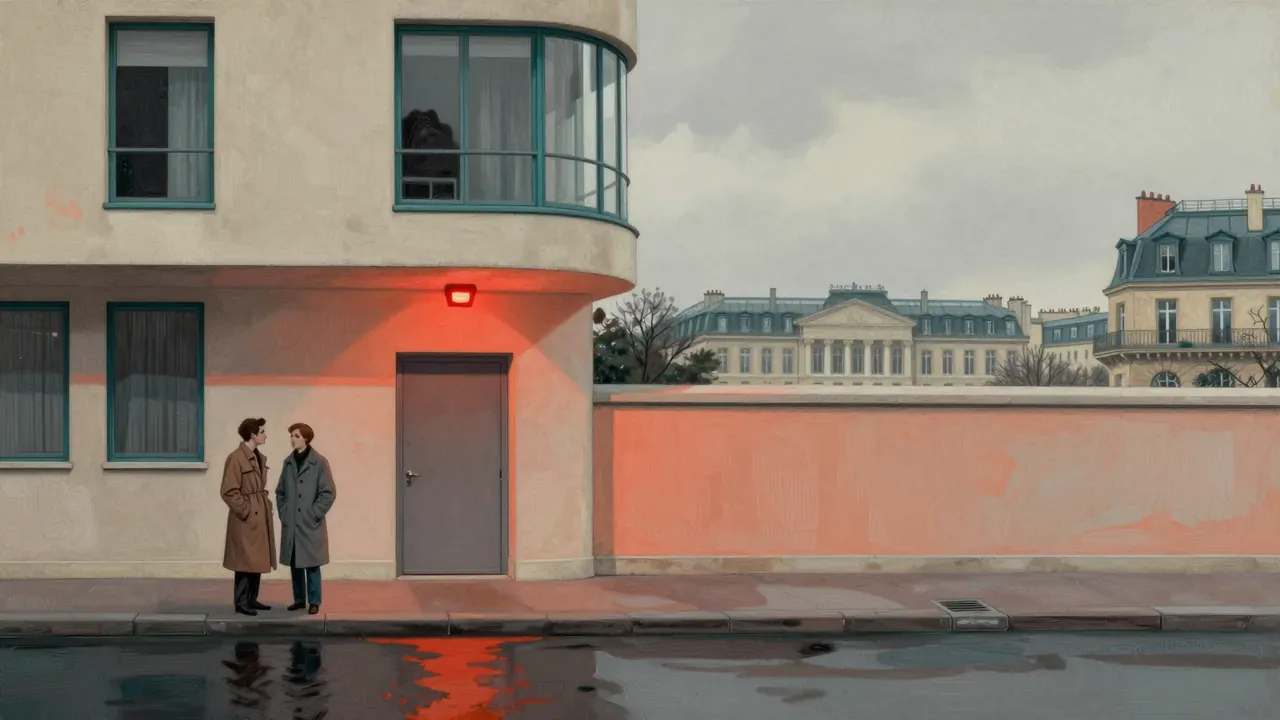
Les Visiteurs du Soir is a French fantasy film made in Vichy France during the Nazi occupation, released in December 1942. It is not a wartime documentary or polemic, nor does it depict contemporary events directly. Instead, it uses a late-medieval frame — May 1485, a castle feast, devils disguised as minstrels — to stage a confrontation between supernatural coercion and human love. Marcel Carné and Jacques Prévert chose this setting deliberately: historical distance and allegorical form offered shelter from censorship while allowing emotional and moral weight to accumulate without explicit reference to the present. The film attempts something precise: to sustain a tone of baroque solemnity while embedding vulnerability in its central romance; to treat damnation as procedural rather than theological; and to let love function not as triumph but as quiet, stubborn persistence beneath stone. Its ambition is structural and atmospheric — to build a world where enchantment feels habitual, evil bureaucratic, and tenderness anomalous but unerasable.
The rhythm of return
The story moves with ceremonial slowness: two emissaries of the Devil arrive at a baron’s castle, deploy seduction as routine labour, and find their assignments unravelling when one falls in love. Arletty’s Dominique carries authority without warmth, Alain Cuny’s Gilles grows hesitant in gesture and gaze, and Jules Berry’s Devil speaks with weary, clipped precision — less tempter than inspector enforcing policy. Roger Hubert’s cinematography keeps interiors dim and candlelit, faces half-lost in shadow, costumes rich but textures muted. Maurice Thiriet’s score avoids flourish, favouring low strings and sparse harpsichord figures that underscore silence more than action. Editing by Henri Rust allows scenes to settle — a glance held too long, a pause after a vow — without rushing consequence. The production design, though constrained by wartime shortages, builds density through layered fabrics, carved wood, and deliberate asymmetry. Performances avoid naturalism: this is declamation shaped by theatre, where posture signals allegiance and stillness implies danger. Every choice serves the film’s central paradox — that enchantment is mundane, and resistance is tender, not loud.
The weight of a glance
What lands most firmly is the film’s sustained tonal control: its refusal to resolve tension into catharsis, its commitment to ambiguity as atmosphere. The lovers’ final transformation into statues does not read as defeat but as continuation — their beating hearts audible beneath stone because the film has spent 121 minutes treating interior life as physically consequential. Arletty’s dominance in every scene she occupies is undeniable, not through charisma but through economy: a tilt of the head, a still hand, a line delivered without inflection that lands like a verdict. The supporting cast — particularly Fernand Ledoux’s Baron Hugues, whose pride curdles slowly into bewilderment — grounds the fantasy in recognisable human frailty. The production’s material constraints become virtues: the limited sets, the subdued palette, the absence of spectacle all sharpen focus on gesture and implication. Even the Devil’s arrival feels less like intrusion than administrative follow-up — which makes his ultimate impotence before sustained love more unsettling than triumphant. This is a film where restraint does the work of revelation.
The limits of enforcement
What does not land is the structural reliance on repetition: the pattern of seduction, betrayal, punishment, and re-seduction recurs with diminishing variation across the second half, risking monotony where it intends ritual. Simone Signoret’s maid, briefly beautified by Gilles, disappears without narrative consequence — a promising thread left slack. Some transitions feel abrupt, particularly the shift from courtly farce to metaphysical stakes, as if the screenplay assumes familiarity with medieval morality play conventions that modern viewers may lack. The Devil’s motives remain underdeveloped: he acts out of obligation, not malice or curiosity, which flattens his presence just as the film needs him most. A few performances — notably Marcel Herrand’s Renaud — lean too heavily on caricature, reducing political threat to theatrical bluster. The film’s resistance to exposition also works against clarity: we are never told why the Devil sends envoys to this castle, or what happens beyond its walls, and while that omission serves mood, it occasionally undermines dramatic urgency. The pacing, though deliberate, can congeal in stretches where rhythm relies on repetition rather than escalation.
What beats beneath stone
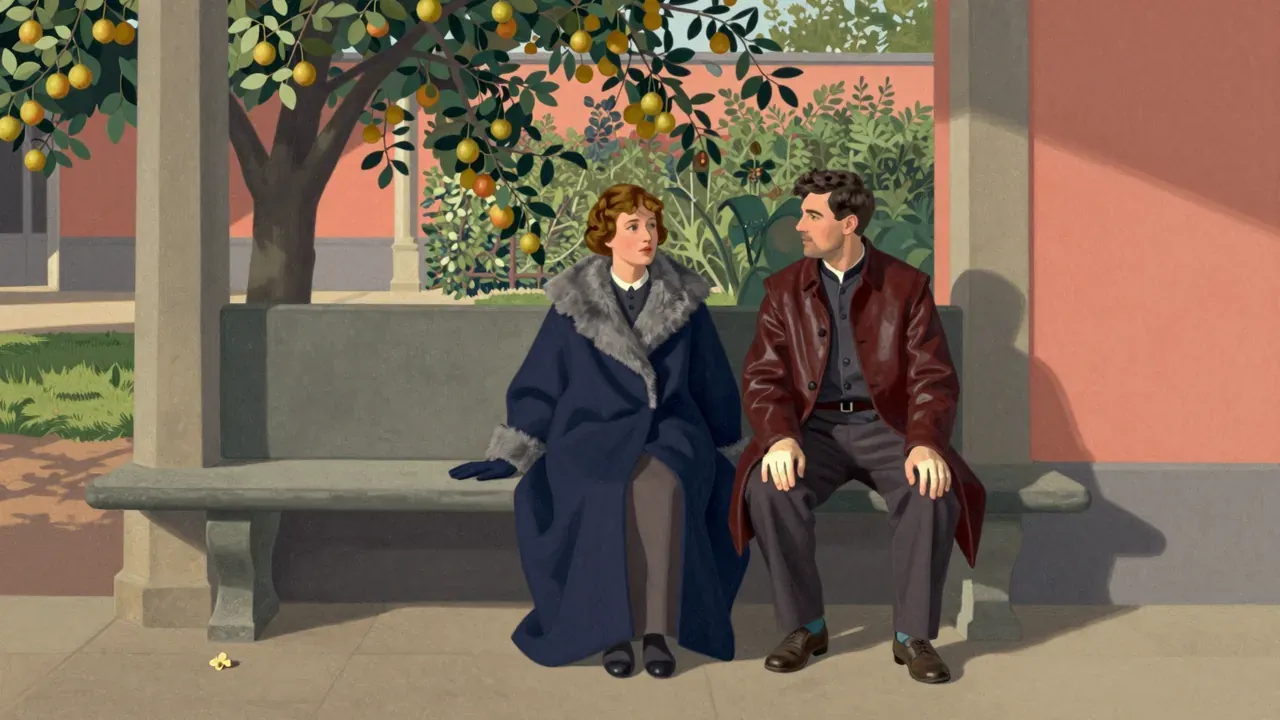
The themes that matter are not hope versus despair, but fidelity versus function, memory versus mandate, and love as embodied continuity rather than emotional climax. The film treats love not as a state but as an act repeated across conditions — whispered vows, shared glances, returning to a fountain — each time asserting continuity despite external erasure. Memory here is physical: chains break, names fade, but the heart persists beneath stone. The Devil represents institutionalised power — not evil incarnate, but enforcement machinery indifferent to individual consequence. His failure is not moral but logistical: he cannot stop a pulse he did not anticipate measuring. The film also engages with performance as survival: everyone wears masks — minstrels, barons, fiancés — and authenticity emerges only in moments where the mask slips, not where it is removed. There is no redemption arc, no conversion, only endurance enacted through small, repeated choices. This is a film about how meaning persists not in grand declarations but in the refusal to let a rhythm fall silent.
The cost of attention
This film is for viewers who value atmosphere over exposition, who accept slow accumulation as narrative strategy, and who find resonance in formal discipline — those accustomed to mid-century European art cinema or familiar with Prévert’s poetic syntax. It rewards attention to texture, silence, and the weight of a held pause. It is not for viewers who require clear cause-and-effect plotting, psychological realism, or narrative propulsion; those expecting fantasy as escapism will find its rigour alienating. Anyone needing immediate emotional payoff or moral clarity will leave impatient. The film assumes patience with ambiguity and tolerance for unresolved tension — qualities that some associate with pretension but which here serve a precise philosophical aim. A viewer who dislikes Arletty’s performative stillness or finds Hubert’s low-contrast lighting visually fatiguing would be justified in disliking it. Nothing in the film changes if watched faster, louder, or with subtitles turned off — its logic is embedded in duration and restraint, not information density.
The shape of persistence
Yes, it is worth your evening — provided you approach it as a crafted object of sustained mood, not a story to be solved. Its 121 minutes unfold with the gravity of a liturgical rite: every shot calibrated, every silence weighted, every gesture carrying consequence. It does not offer diversion, but it offers coherence — a rare thing in wartime art, and rarer still in fantasy. Those who find beauty in limitation — in what is withheld, implied, or left beating beneath stone — will feel its force long after the credits. It is not for casual viewing, nor for background consumption; it asks for presence, not participation. A viewer who values thematic density over plot mechanics, or who finds emotional truth in restraint rather than release, will consider the time repaid. Those who prefer narrative velocity or psychological transparency will not. Nothing about the film would improve with trimming, modernisation, or explanation — its power lies precisely in its refusal to accommodate haste.