What it is
First Man into Space is a British science fiction-horror film from 1959, conceived as a low-budget, high-concept exploitation piece built around a single arresting image: a man transformed by space exposure into a breathing, blood-seeking creature encrusted in meteoric dust. It aims to bridge the gap between sober Cold War aviation realism and Gothic body horror, borrowing structure and tone from The Quatermass Xperiment while tailoring its pacing and visual language for American drive-in and double-bill distribution. Its ambitions are modest but precise: to deliver a coherent, atmospheric transformation narrative within tight financial and technical constraints, using scientific plausibility as scaffolding rather than ornament. It does not seek philosophical depth or social allegory as ends in themselves, but deploys them where they serve suspense — particularly in the physiological logic of Dan Prescott’s metamorphosis and the clinical detachment of the medical response. The film treats its premise with seriousness, not camp, and assumes its audience will accept the central conceit as a physical fact to be investigated, not questioned.
How it works
The story follows a linear, cause-and-effect chain: altitude test, unexplained ascent, crash, contamination, mutation, predation, identification, containment. Marshall Thompson grounds the film with restrained, procedural authority as Commander Prescott; Bill Edwards conveys physical strain and disorientation both before and after transformation, his wheezing breath becoming the film’s most consistent sonic motif. Geoffrey Faithfull’s cinematography works within studio confines and limited location shoots — Hampstead Heath stands in for Central Park, Brooklyn air bases are evoked through stock footage and dialogue — yet sustains claustrophobic tension in interiors and gives weight to the creature’s first appearances through careful framing and shadow. Buxton Orr’s score avoids bombast, favouring low brass pulses and sparse, atonal strings that underscore biological unease rather than melodrama. Peter Mayhew’s editing maintains momentum without rushing exposition, and the make-up — though rudimentary by later standards — holds up in medium and close shots because it is integrated into performance and lighting, not isolated as spectacle.
What lands
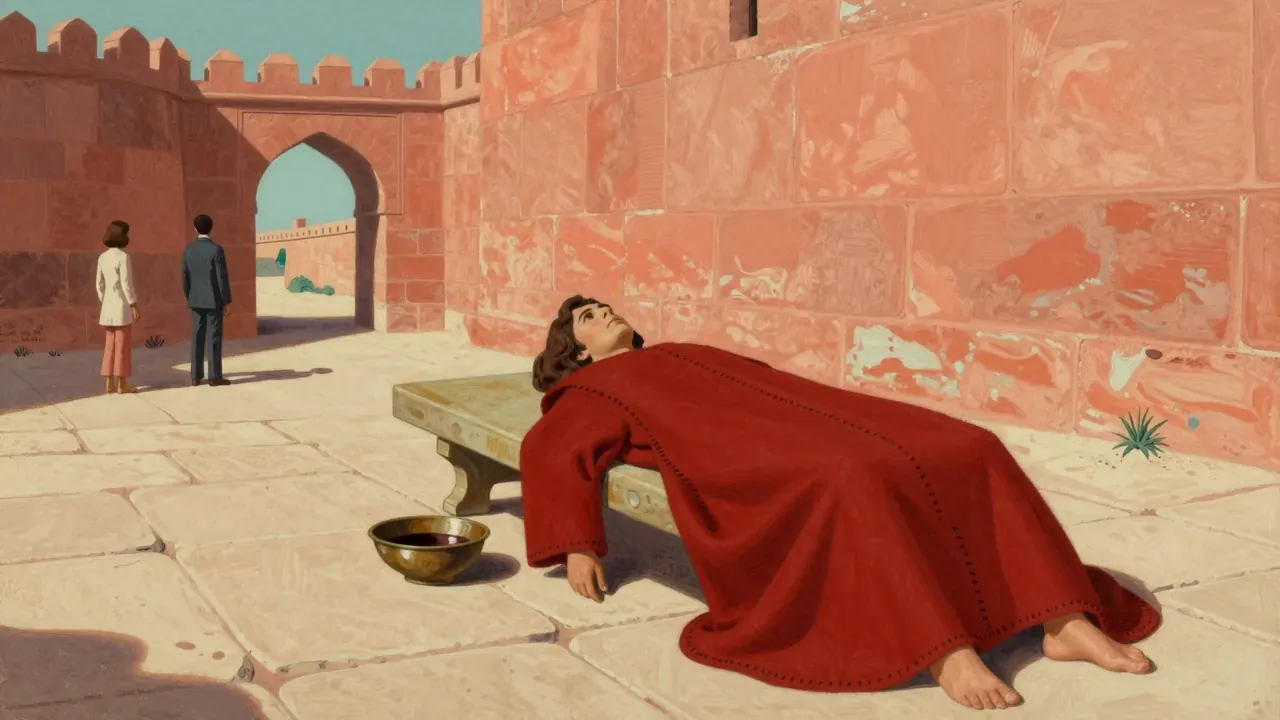
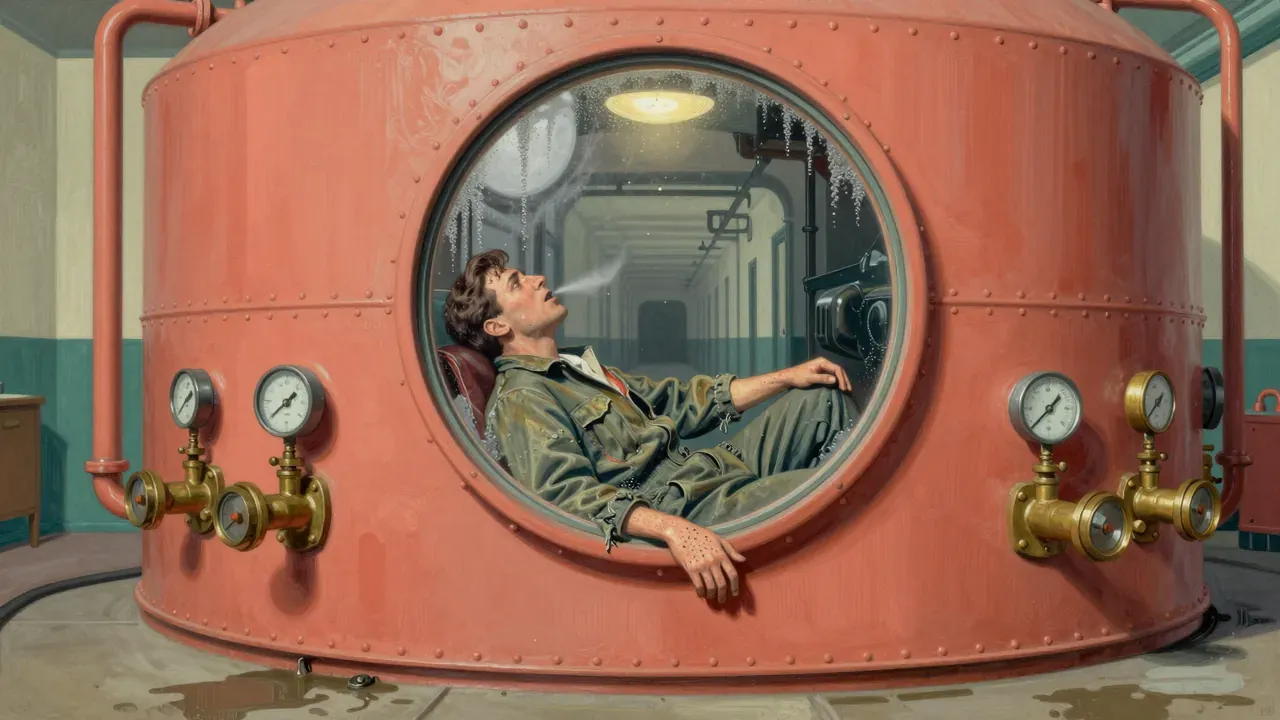
What lands is the film’s central metaphor made flesh: spaceflight as irreversible bodily violation. The encrustation is neither arbitrary nor decorative; it functions as both shield and shackle, protecting Dan from vacuum while sealing him off from terrestrial life. His descent into violence reads less as madness than metabolic necessity — a logic the script honours even when the science falters. The final sequence in the high-altitude chamber carries emotional weight because it treats Dan not as a monster to be destroyed but as a patient whose condition demands specific, calibrated intervention. The quiet collapse of his last breath lands precisely because the film has spent its runtime establishing the cost of ambition in physiological terms. The performances avoid histrionics: Thompson’s grief is internalised, Landi’s concern is practical, Ayres’ military rigidity softens only when confronted with the human reality of the experiment’s failure. This restraint makes the horror feel earned, not imposed.
What does not
What does not land is the attempt to stretch the premise beyond its natural limits. The Mexican Consul subplot adds bureaucratic friction without thematic resonance; his scenes exist solely to delay resolution, not deepen character or consequence. The New Mexico setting remains underdeveloped — the landscape is functional, not expressive — and the shift from US Air Force base to rural crime scene feels logistical rather than atmospheric. Dialogue occasionally lapses into exposition-as-declaration, especially in von Essen’s lab explanations, which state conclusions rather than dramatise discovery. The film’s attempt to gesture toward cosmic philosophy — ‘the first man into space’ as both achievement and erasure — arrives too late and too vaguely to cohere with the grounded mechanics of the rest. It wants to echo Bradbury but lacks his lyrical compression; the weight of the ending rests on physiology, not poetry, and when the script reaches for grandeur, it strains against its own economy.
The themes that matter
The themes that matter are endurance, contamination, and the body as frontier. Not the frontier of territory or ideology, but of biology: what happens when human tissue is exposed to conditions for which it has no evolutionary precedent. The film treats space not as void but as active medium — one that deposits particles, alters metabolism, and rewrites function. Contamination is literal and irreversible: the meteor dust adheres, integrates, transforms. Endurance is reframed as suffering: Dan survives not through strength but through radical, dehumanising adaptation. There is no triumph in being first; there is only survival with consequences. The military and medical institutions respond with competence, not compassion — protocols govern, not people — and the tragedy lies in how thoroughly the system absorbs Dan’s fate without altering its course. Ambition is present but not celebrated; it is the catalyst, not the subject. The real subject is the body’s vulnerability to scale: how a few hundred miles of altitude can dissolve identity, not just oxygenate blood.
Who should watch it
This film is for viewers who value coherence over spectacle, atmosphere over action, and biological logic over mythic resonance. It rewards attention to craft choices — how light falls on Edwards’ suit, how Orr’s score drops out before a kill, how Mayhew cuts away from gore to a close-up of specks on a doorframe. It is not for those who require psychological complexity in its leads, narrative surprise, or visual polish beyond its means. Fans of Quatermass or early Hammer will recognise its lineage, but those expecting the operatic dread of The Haunted Strangler or the surreal menace of Fiend Without a Face may find it comparatively subdued. Its pacing assumes patience with procedural detail; its horror depends on implication, not shock. A viewer who dislikes films where the monster’s motivation is physiological, not moral, will leave unsatisfied — and rightly so. Change the budget or the era, and the verdict shifts: with modern VFX, it might become clinical; with more time, it might grow ponderous. As it stands, its limitations are its integrity.
Is it worth your evening
Yes, it is worth your evening — provided you approach it as a tightly wound specimen of late-1950s British genre filmmaking, not as a precursor to Alien or a rival to 2001. Its seventy-seven minutes pass without dead air, its central idea is sustained with discipline, and its conclusion delivers emotional weight without sentimentality. It asks little of the viewer beyond willingness to follow its internal logic, and repays that trust with consistency and quiet gravity. Those who dismiss it as ‘just another monster movie’ miss how deliberately it subordinates horror to cause-and-effect physiology. It is not for viewers who require fast cuts, witty banter, or moral ambiguity — but then, it never sets out to supply those things. Its value lies in its singularity: a film that treats space exposure as toxicology, not theology, and finds tragedy not in death but in the slow, wheezing return to breath.