The look of it
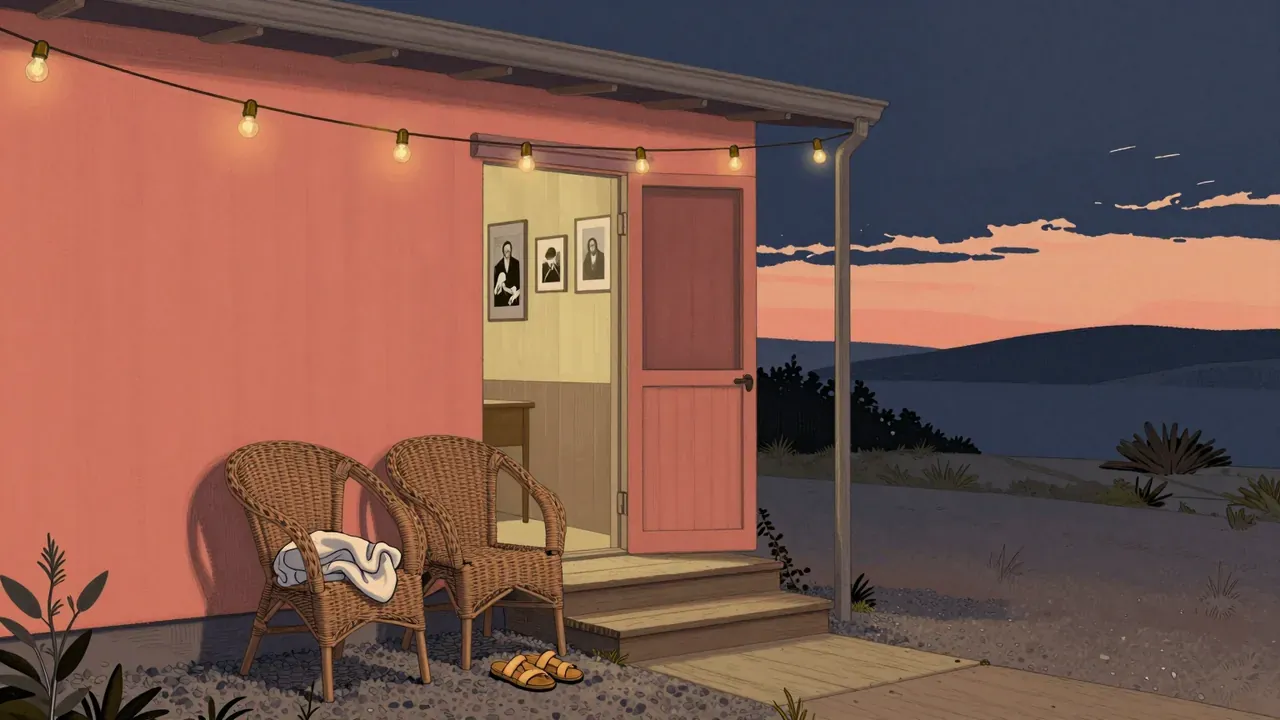
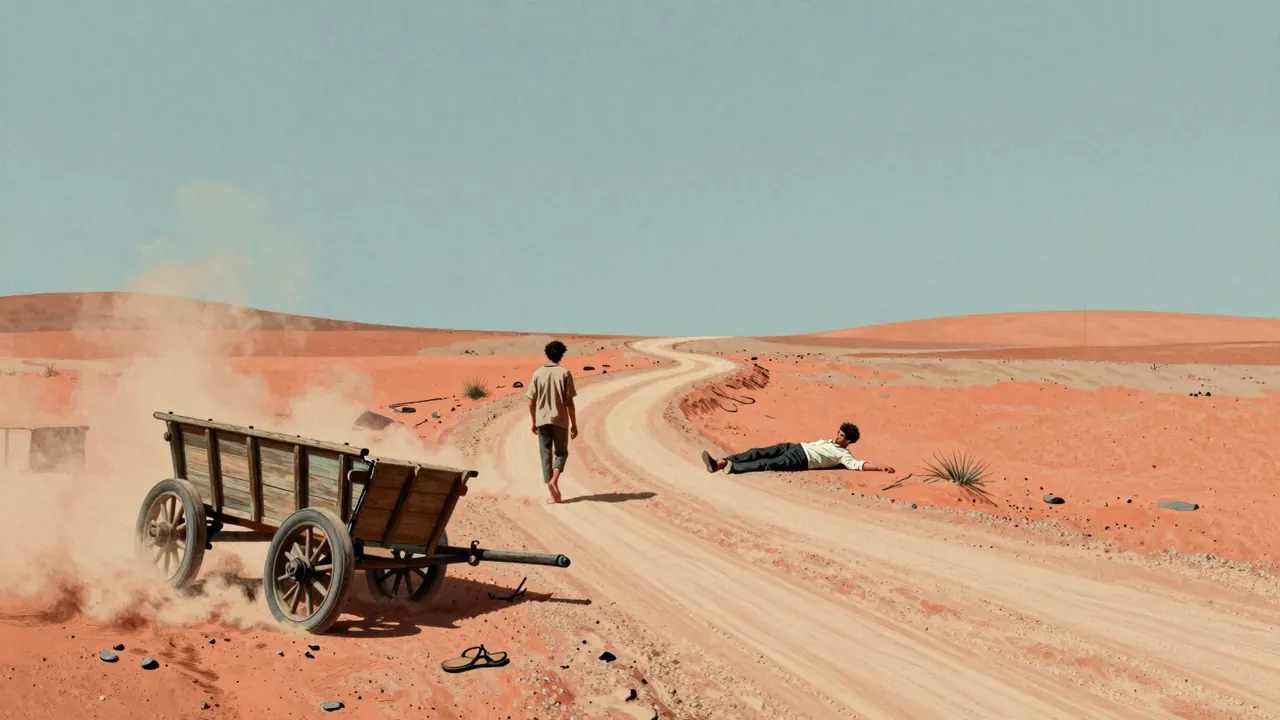
Nowhere is Gregg Araki’s 1997 ensemble teen film, the third and final part of his Teenage Apocalypse trilogy. It attempts a sustained, stylised collapse of narrative logic and social realism — not as parody, but as structural principle. The film treats Los Angeles college life as a hallucinatory loop: time dilates, causality frays, characters reappear in altered states or vanish mid-scene, and genre signifiers — alien abduction, televangelism, rape, suicide, surreal violence — are deployed with equal weight and zero exposition. Araki does not ask the viewer to believe in the plot, but to inhabit its tonal velocity: a saturated, hyperreal drift through late-1990s youth disaffection. Its ambition lies in sustaining that drift across 82 minutes without recourse to conventional character arcs or moral framing. It is less a story about teenagers than an audiovisual field test of what happens when teenage subjectivity is stripped of developmental expectation and left vibrating at its own frequency. The film’s formal premise — that emotional extremity and absurdity are indistinguishable in this milieu — is consistent from first frame to last.
The rhythm of it
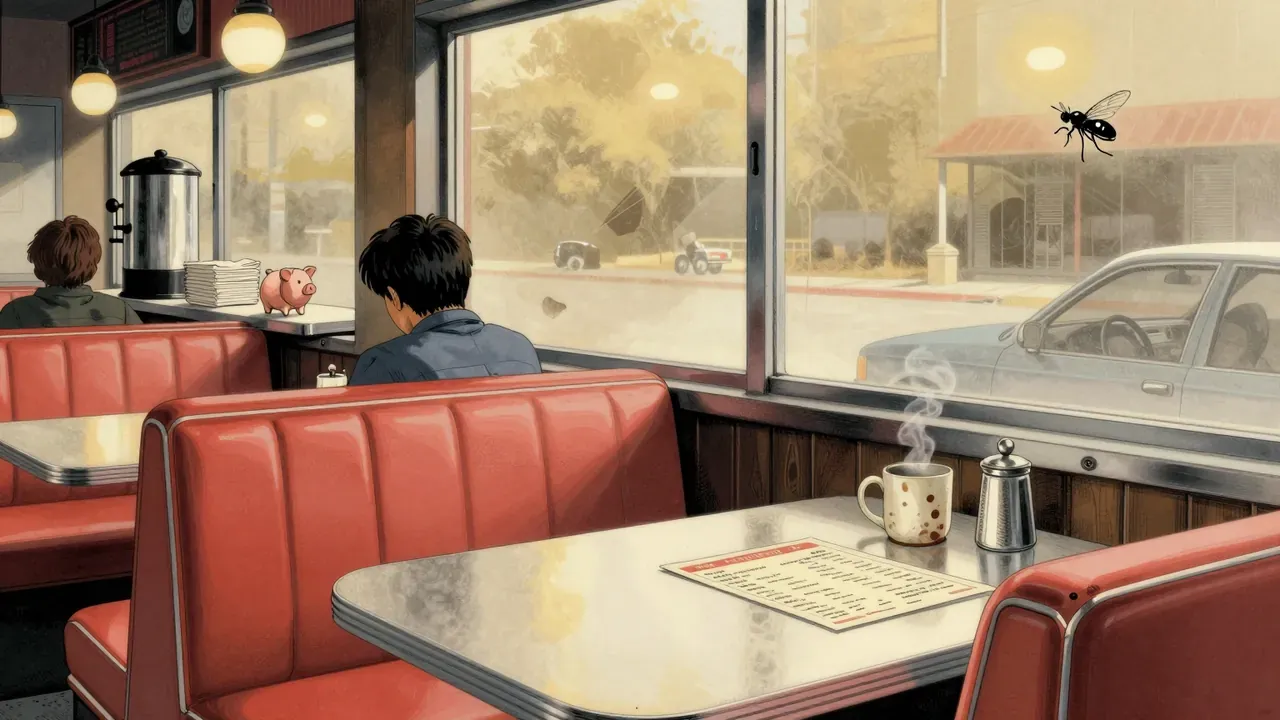
The story unfolds over a single day, fractured across overlapping vignettes involving Dark, Mel, Lucifer, Alyssa, Dingbat, Egg, Cowboy, and others — all played by actors who largely perform in a register of detached affect, their line deliveries flat or deliberately uninflected. James Duval anchors the film with a quiet, watchful presence; Rachel True matches him in stillness, her performance calibrated to absorb rather than project. Araki edits the film himself, using jump cuts, abrupt blackouts, and rapid-fire intercutting — notably in the sex scene between Alyssa and Elvis, which cross-cuts three separate couplings into one rhythmic unit. Suede and Hole dominate the soundtrack, but the score’s real function is textural punctuation: needle drops land like punches, not cues. Cinematographer Thomas Burstyn keeps colour temperatures unstable — fluorescents bleed green, daylight turns sickly yellow, interiors pulse with artificial magenta. There are no establishing shots of LA; geography is implied by car radios, bus-stop benches, and the recurring café. The craft is tightly controlled, even when pretending to be chaotic.
What sticks
What lands most decisively is the film’s tonal coherence: its refusal to soften, explain, or moralise. The alien encounters — sudden, bloodless, unexplained — work because they are treated with the same matter-of-factness as a broken relationship or a failed drug deal. The visual grammar holds — saturated but never glossy, artificial but never cartoonish — and the editing sustains a rhythm that feels like neural static rather than narrative propulsion. Certain images imprint: Montgomery’s arrival at Dark’s window, the soup-can murder, the final cockroach crawl, the repeated motif of video cameras recording events they cannot comprehend. The soundtrack choices land precisely because they are non-diegetic yet emotionally adhesive — ‘Trash’ doesn’t comment on the scene, it is the scene’s nervous system. Even the performances, though often muted, cohere as a collective posture: not apathy, but exhaustion masquerading as irony. This consistency gives the film a stubborn integrity — it does not waver in its commitment to its own internal logic, however arbitrary that logic may be.
Where it pulls back
What does not land is any sustained investment in consequence. Characters suffer trauma — rape, overdose, suicide, alien disintegration — but the film offers no psychological residue beyond the immediate image. This is intentional, but it also hollows out moments that might otherwise carry weight: Bart’s heroin addiction, Cowboy’s ultimatum, Alyssa’s assault — all pass with the same visual weight as a character ordering coffee. The satire of Hollywood brat culture, while present, lacks bite because it refuses to distinguish between genuine precarity and performative nihilism. The film’s refusal to judge becomes indistinguishable from indifference, and its stylistic excess occasionally tips into self-parody — particularly in the finale, where the alien’s exit line breaks the film’s own gravity. Some viewers will find the pacing monotonous: the repetition of motifs (bus stops, TVs, locker rooms) reads as structural rigour to some, as inertia to others. And while the cast includes performers soon to become household names, their roles here are deliberately flattened — a choice that serves the film’s aims but sacrifices individual resonance.
What it’s really about
The themes that matter are not those announced in dialogue — alien invasion, apocalypse, sexual fluidity — but those embedded in form and recurrence. Repetition without resolution: characters return to the same locations, repeat phrases, re-enact gestures, yet nothing resolves. Mediated reality: every major event is either filmed on a camcorder, watched on TV, or interrupted by a broadcast — Moses Helper’s sermon, Baywatch reruns, news fragments — suggesting perception is always already filtered. Emotional saturation without release: desire, grief, rage, and boredom all occupy the same decibel level, none permitted dominance. The film treats adolescence not as a stage to be passed through, but as a persistent condition — one defined by proximity to catastrophe without agency to prevent it. Its politics are ambient: queer relationships exist without explanation or apology; race and class appear as texture, not topic; gender is performed, shifted, discarded — not debated. These are not themes argued, but conditions assumed, and that assumption is the film’s quietest and most durable claim.
Who it’s for
This film is for viewers who value tonal consistency over narrative payoff, who find emotional resonance in stylisation rather than exposition, and who accept that a film can be both deeply felt and deliberately alienating. It suits those familiar with Araki’s earlier work or with 1990s American indie film’s rejection of mainstream pacing and psychology. It is not for viewers who require causal clarity, character motivation, or ethical anchoring — those who expect trauma to yield insight, or absurdity to resolve into meaning, will leave frustrated. Fans of Dazed and Confused or Kids may misread Nowhere as a peer; it shares neither their warmth nor their sociological curiosity. Those seeking representation as affirmation, rather than as aesthetic material, will find its treatment of queerness and mental health too detached. A viewer who values craft over catharsis, who trusts mood as argument, and who accepts that some films are meant to linger like smoke — not settle like dust — will find it rewarding. Others will find it exhausting, opaque, or emotionally withholding.
Whether it’s worth your time
Yes, it is worth your evening — but only if you approach it as a sensory object, not a story to be solved. Its 82 minutes move with a deliberate, almost hypnotic slowness, and its rewards are cumulative: the way light pools on a linoleum floor, the rhythm of a repeated camera zoom, the precise pitch of a synth swell under a suicide broadcast. It repays attention to texture more than plot, and its power grows with familiarity — first viewings often register as confusion, second viewings as control. Those who dismiss it as shallow provocation miss how rigorously it sustains its own rules. Critics who called it ‘lost up its own arse’ were reacting to its refusal to meet conventional expectations — a verdict that changes only if you accept that its ambition lies elsewhere. It is not for everyone, but for its audience — attuned to the aesthetics of dislocation, fluent in the grammar of 90s alt-culture — it remains singular, uncompromising, and quietly devastating.