The place it began
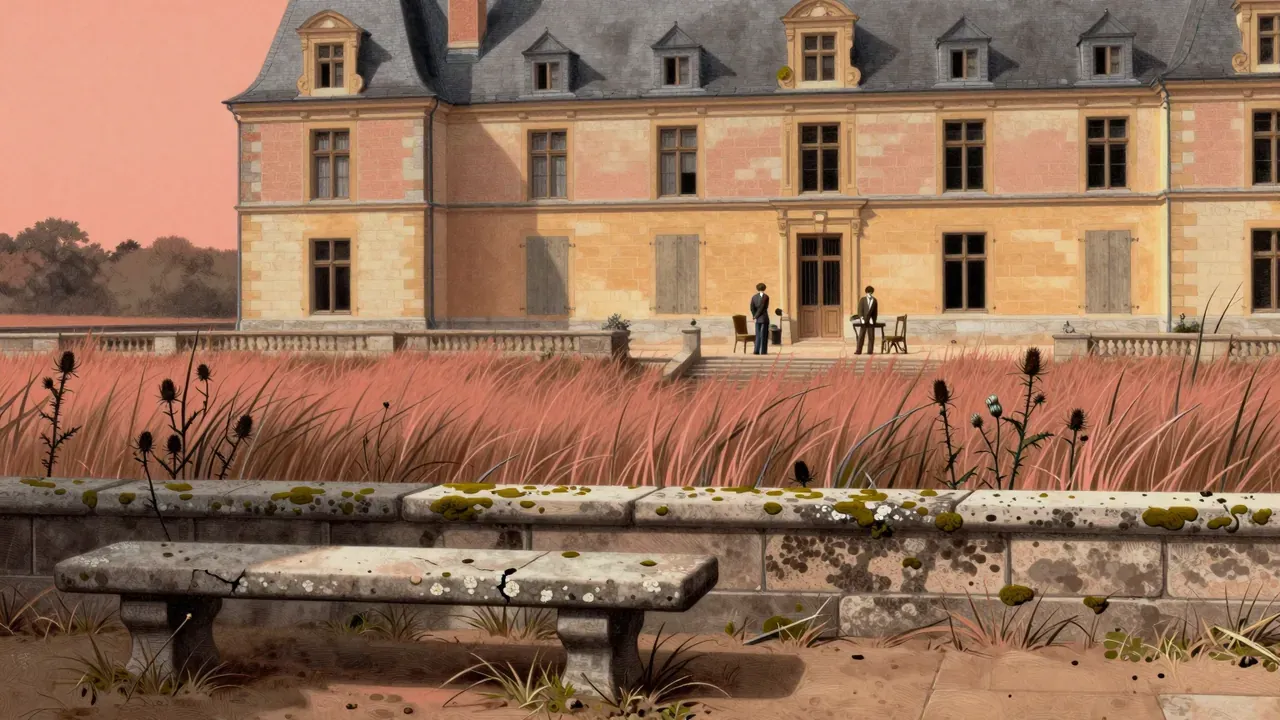
Black Moon is a self-consciously opaque fantasy film, made in France but spoken in English, that attempts a sustained dream-logic without narrative scaffolding. Louis Malle conceived it as an intimate, limit-testing experiment — not allegory, not satire, not even coherent myth, but a visual and tonal drift through archaic countryside and decaying interior space. It draws on Alice in Wonderland less for plot than for permission: to treat logic as optional, causality as decorative, and language as incidental. The film’s structure follows no war chronology, no character arc, no psychological progression — only the protagonist’s movement from road to meadow to château, and her slow absorption into a world where time, gender, and biology behave with deliberate inconsistency. Malle shot it at his own estate in Quercy, letting the landscape’s ancient, hostile stillness dictate rhythm and mood. This is not a film about civil war or feminism or psychoanalysis, though all three flicker across its surface; it is a film about the texture of disorientation, held in place by craft rather than sense.
The shape it takes
The story unfolds as a sequence of unexplained tableaux: Lily’s flight, the hanged shepherd, the naked children herding pigs, the resurrected old woman, the telepathic siblings named Lily. Cathryn Harrison performs with minimal inflection, holding the frame without anchoring it — a choice that works only because the film refuses to grant her agency or exposition. Therese Giehse, in her final role, delivers brittle, radio-mediated menace from a bed; Alexandra Stewart and Joe Dallesandro play their roles with ritual gravity, not psychology. Sven Nykvist’s cinematography is the film’s most consistent force: interiors are kept under-lit, exteriors drained of direct sun, every composition weighted with stillness and decay. Diego Masson’s score is sparse, often absent; Suzanne Baron’s editing sustains a hypnotic, anti-dramatic pace. There are no close-ups for emphasis, no cuts to clarify — only lingering, off-kilter framings that treat the human figure as one element among sheep, rats, unicorns and alarm clocks.
The look of it
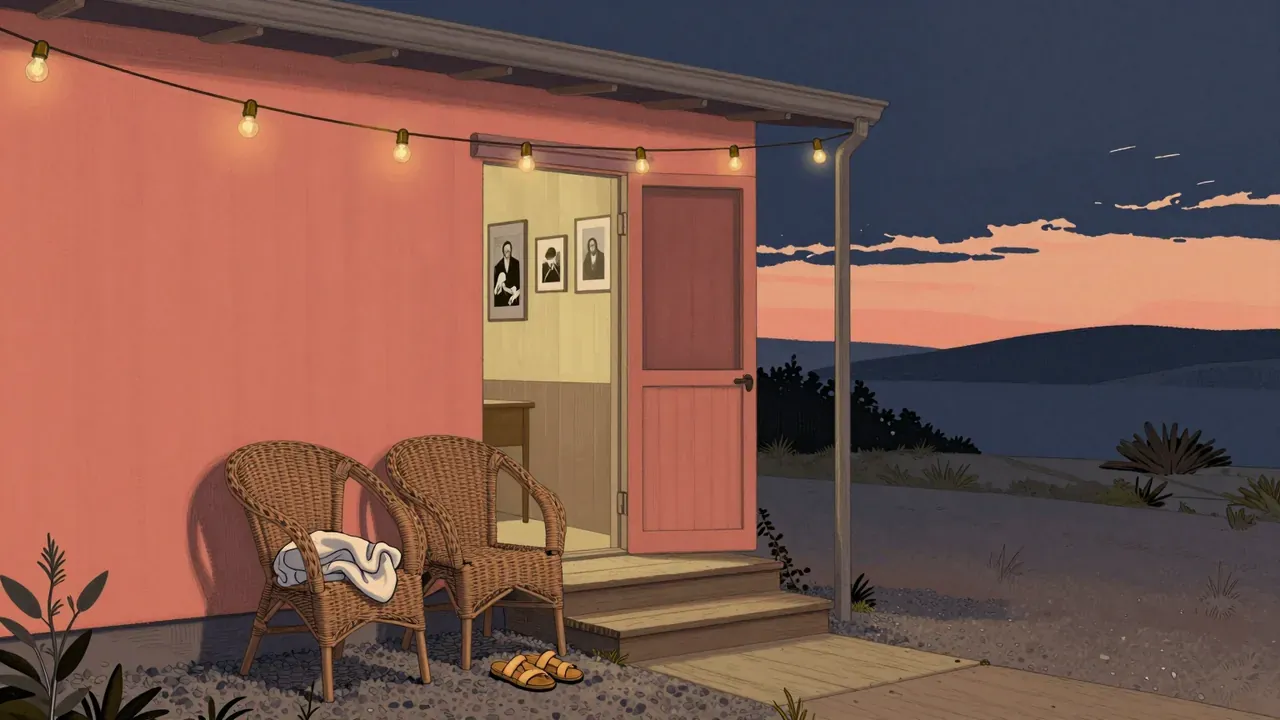
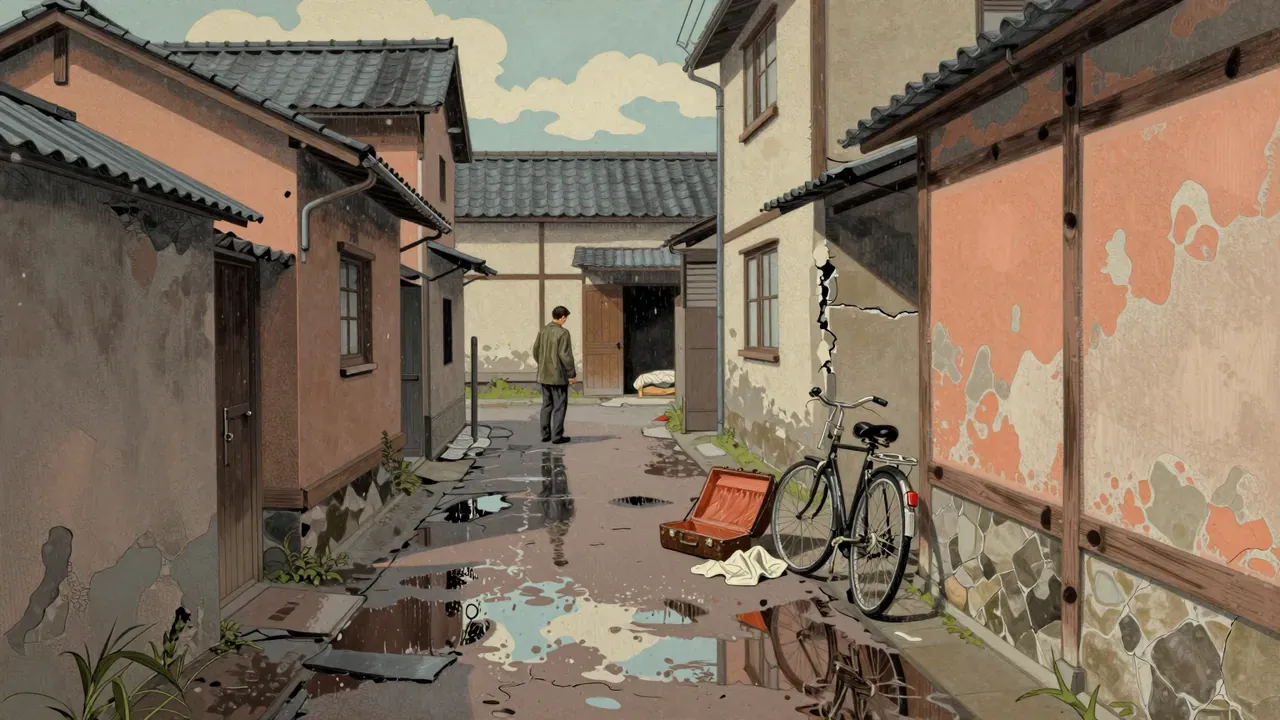
What lands is the atmosphere: the damp chill of the château, the unnerving quiet between gunfire and birdcall, the way the camera holds on a flower trembling before Lily hears it cry. The film’s physical presence — the grain of wood panelling, the dust motes in shafts of weak light, the weight of Humphrey the rat’s gaze — carries more conviction than any symbolic gesture. The recurring motifs — breastfeeding as both nurture and violation, the unicorn as judge not guide, the radio as disembodied voice with impossible knowledge — accrue resonance not through explanation but repetition and variation. The César-winning sound design makes silence feel occupied: footsteps echo too long, wind sounds like breath, the eagle’s entry is preceded by a pause so absolute it registers as pressure. Even the absurdities — Brother and Sister reenacting Tristan und Isolde while painted, the old woman returning to life mid-sentence — land because they are performed without irony and photographed without distance. This is a film that trusts duration over disclosure.
The gaps in it
What does not land is coherence — but that is by design, not failure. Where it stumbles is in its refusal to sustain even its own internal grammar: the gender war vanishes after the opening minutes, the civil conflict never reappears, and the rules governing resurrection, telepathy or lactation shift without warning. The film’s attempt to evoke pre-adolescent subjectivity curdles into affectation when it relies on childish logic as a substitute for structure. Some sequences — the pig-chase, the eagle decapitation — feel arbitrary rather than inevitable, their power undercut by the absence of emotional or spatial consequence. The English-language dialogue, written by Malle with Joyce Buñuel and Ghislain Uhry, often sits awkwardly in the mouths of non-native speakers, exposing the artifice without gaining surreal purchase. And while the imagery is potent, its accumulation begins to resemble inventory rather than argument: one unicorn, two breasts, three alarm clocks, four naked children — the pattern feels procedural, not poetic.
The questions it asks
The themes that matter are not political but ontological: the instability of selfhood when language, gender and memory dissolve; the body as contested site, alternately nurturing and violated; the house as both womb and tomb, archive and asylum. The film treats childhood not as a stage but as a condition — one where cause and effect are provisional, where authority figures speak in riddles and die when slapped, where animals understand more than people. Its engagement with femininity is oblique: Lily is neither empowered nor victimised, but permeable — absorbing roles (daughter, sister, mother, nurse) without consent or clarity. The civil war framing is discarded early, suggesting Malle was less interested in gender conflict than in the collapse of categories altogether. What endures is the sense of a world regressing into mythic infancy — not hopeful, not tragic, but stubbornly, unsettlingly alive in its refusal to mean anything fixed.
Who it is for
This film is for viewers who value texture over traction, who find patience a form of attention and ambiguity a condition of honesty. It suits those familiar with avant-garde European cinema of the 1970s — particularly the work of Cocteau, Vigo or early Resnais — and who do not require narrative resolution to feel engaged. It is not for viewers who rely on exposition, causal logic or character motivation to orient themselves. Those who expect fantasy to build consistent rules, or horror to generate dread through escalation, will find it inert. Anyone seeking political clarity on gender, war or power will leave frustrated. A viewer who values strong performances anchored in psychology may find Harrison’s blankness alienating. The film assumes comfort with silence, slowness and unresolved imagery — and offers no apology, no translation, no key. Its audience is narrow but precise: those who watch films not to follow, but to inhabit.
What it gives
Yes, it is worth your evening — but only if you arrive prepared to surrender narrative expectation and accept duration as meaning. Its 101 minutes pass slowly, deliberately, without concession; the reward is not insight but immersion — a rare, fully realised sensory environment built from light, sound and architectural decay. Those who dismiss it as pretentious or incoherent are not wrong about its methods, only about its aims: it does not fail to explain itself — it refuses to. The verdict would change only if the film were shorter, tighter, or more legible — but that would make it another film entirely. Its value lies precisely in its resistance: to interpretation, to utility, to the demand that art serve understanding. To watch Black Moon is to sit inside a dream whose logic is felt in the spine before it reaches the mind. That experience remains singular, uncompromised, and quietly formidable.