The look of it
Metropolis is a German silent science-fiction film made in 1927, directed by Fritz Lang and co-written with Thea von Harbou. It sets out to visualise class division as physical architecture: a city split vertically between the ruling elite above and the workers below, linked only by rigid routine and suppressed revolt. Its ambition is not narrative subtlety but monumental allegory — to render ideology as geography, labour as ritual, and mediation as moral necessity. It draws on expressionist design, industrial scale, and mythic structure rather than psychological realism. The film does not aim to persuade through character logic or historical plausibility, but through accumulation: of scale, repetition, contrast, and symbolic gesture. Its central proposition — that harmony requires a heart bridging head and hands — is stated outright in its final intertitle, leaving no interpretive gap. This is not a film about ambiguity; it is a diagram in motion, built to be legible across language and time. It treats politics as geometry, faith as iconography, and technology as both temple and tomb. Its project is didactic, architectural, and operatic — less a story told than a system staged. (153 words)
How it moves
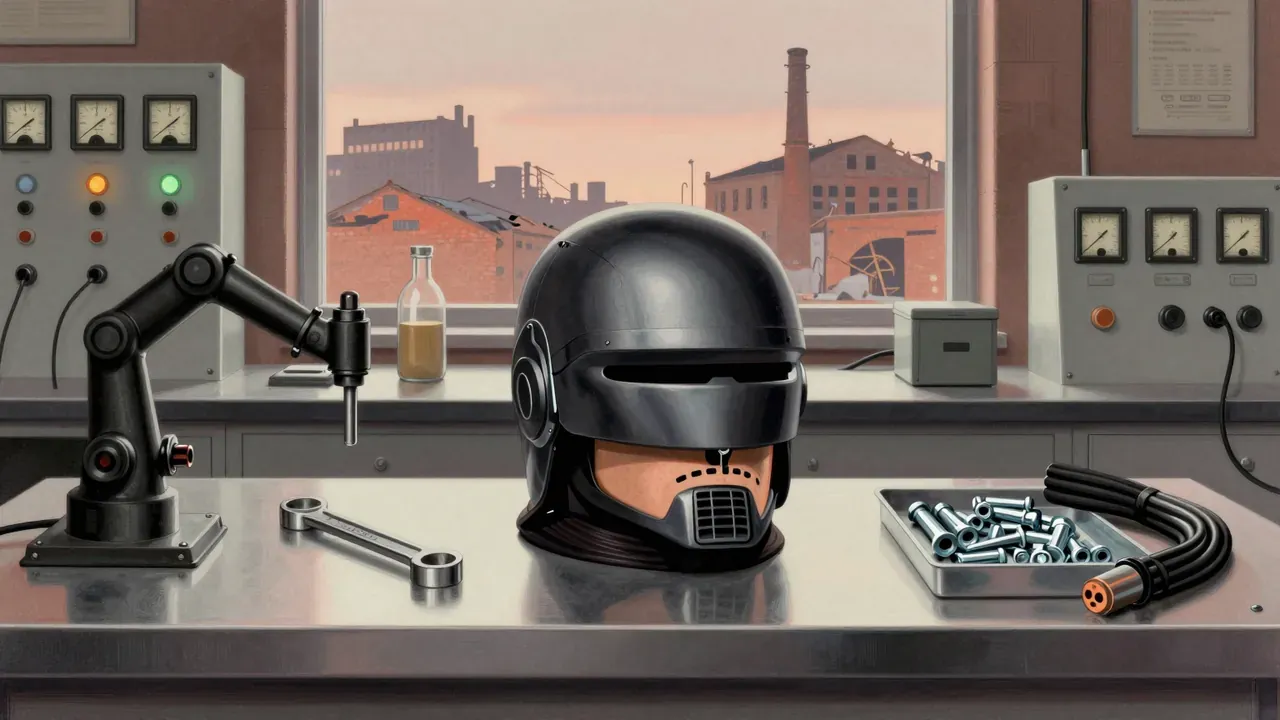
The story follows Freder Fredersen, son of the city’s master, as he descends into the workers’ underground city, encounters Maria, and witnesses the creation of a robot double meant to incite chaos. Performances are stylised and physically demanding: Gustav Fröhlich conveys anguish through posture and duration; Brigitte Helm shifts between two distinct physical registers — Maria’s stillness and the robot’s jerking rigidity — with visible strain. Karl Freund, Günther Rittau, and Walter Ruttmann’s cinematography uses deep focus, low angles, and layered miniatures to compress scale and heighten disorientation. Otto Hunte, Erich Kettelhut, and Karl Vollbrecht’s art direction merges Bauhaus clarity with Gothic weight, especially in Rotwang’s house and the cathedral scenes. Eugen Schüfftan’s mirror-based process allows actors to appear within vast miniature sets — a technical innovation that shapes the film’s spatial grammar. Gottfried Huppertz’s score, composed for live orchestra, underlines rhythm and mass over individual emotion. Editing, credited to Lang, favours repetition and parallel montage to reinforce systemic patterns rather than psychological continuity. (158 words)
What stays
What lands is the film’s sheer physical presence: the weight of the machines, the chill of the flooded workers’ city, the vertigo of the skyscrapers, the uncanny stiffness of the Maschinenmensch. These are achieved not through illusion but through material insistence — real water, real fire, real children shivering for fourteen days, real plaster casts used to build the robot’s shell. The flood sequence works because it feels uncontrolled, the riot because it feels exhausted, the transformation scene because Helm’s discomfort is legible in her breath and blink. The city itself lands as a character: not a backdrop but a logic — one where staircases spiral endlessly upward while elevators descend only for the elite. The intertitles, though blunt, gain force from their placement after long stretches of pure image and movement. Even the religious imagery — the cathedral, the seven deadly sins fresco, the false prophet’s pyre — lands not as dogma but as structural punctuation, marking thresholds between worlds. This is cinema that trusts duration, repetition, and scale to generate meaning without explanation. Its power is architectural, not rhetorical. (156 words)
Where it breaks
What does not land is the moral framework anchoring the allegory. The resolution — Freder as mediator, Maria as saintly guide, Fredersen and Rotwang as mirrored antagonists reconciled by love — feels imposed rather than earned. The workers’ agency evaporates once Maria is replaced; their uprising becomes spectacle, not strategy. The film’s politics are schematic, not analytical: class is location, not relation; oppression is vertical distance, not accumulated policy. Critics at the time noted this — H. G. Wells called it ‘silly’, and later assessments describe the message as ‘trite’ or ‘ludicrously simplistic’. The pacing compounds the problem: long sequences of ritualistic labour or static confrontation lack internal variation, making thematic repetition feel like stasis. Some performances — particularly Alfred Abel’s Fredersen — remain locked in expressionist mask, denying psychological access. The robot’s seduction of the masses relies on choreography alone, with no persuasive shift in the crowd’s motivation. Where the visuals construct a world, the narrative often retreats into parable, refusing the complexity its own imagery implies. (154 words)
What it means
The themes that matter are those made tangible: the dehumanising rhythm of industrial labour, the spatial enforcement of hierarchy, the weaponisation of likeness, and the fragility of consensus. Metropolis treats architecture as ideology made concrete — the city’s ziggurat towers and subterranean tunnels are not metaphors but blueprints. It shows how technology mediates power before it mediates communication: the machine-man is not a tool but a political actor, deployed to fracture solidarity. The film’s enduring relevance lies in its depiction of infrastructure as control — not just the machines that run the city, but the staircases, elevators, clocks, and surveillance vantages that regulate movement and perception. Its treatment of mass psychology avoids individual motive, focusing instead on how collective action is triggered, channelled, and broken by design. Even its religious imagery serves this: the cathedral is a gathering point, the catacombs a site of counter-organisation, the false Maria a counterfeit sacrament. These are not themes argued but enacted — embedded in shot length, set construction, and editing rhythm. (152 words)
Who it’s for
It is for viewers who value cinematic form as primary evidence — those willing to sit with silence, scale, and repetition as carriers of meaning. It rewards attention to craft: the grain of the miniatures, the weight of the costumes, the timing of the crowd surges. It is not for those who require psychological plausibility, narrative economy, or tonal consistency. Anyone expecting coherent character arcs or dialectical politics will find it frustrating. Those who dislike silent-film conventions — intertitles, gestural acting, orchestral accompaniment — will struggle regardless of intent. A viewer who values thematic precision over visual density would also find it wanting. That said, its influence is so pervasive — in Blade Runner, Dark City, even modern UI design — that watching it is less about enjoyment than literacy. To skip it is to miss the grammar of dystopia. Some critics, including those who called its politics ‘ludicrous’, still regard it as indispensable. Without the 2008 restoration, its full argument remained inaccessible — and that version remains essential. (155 words)
Is it worth your time
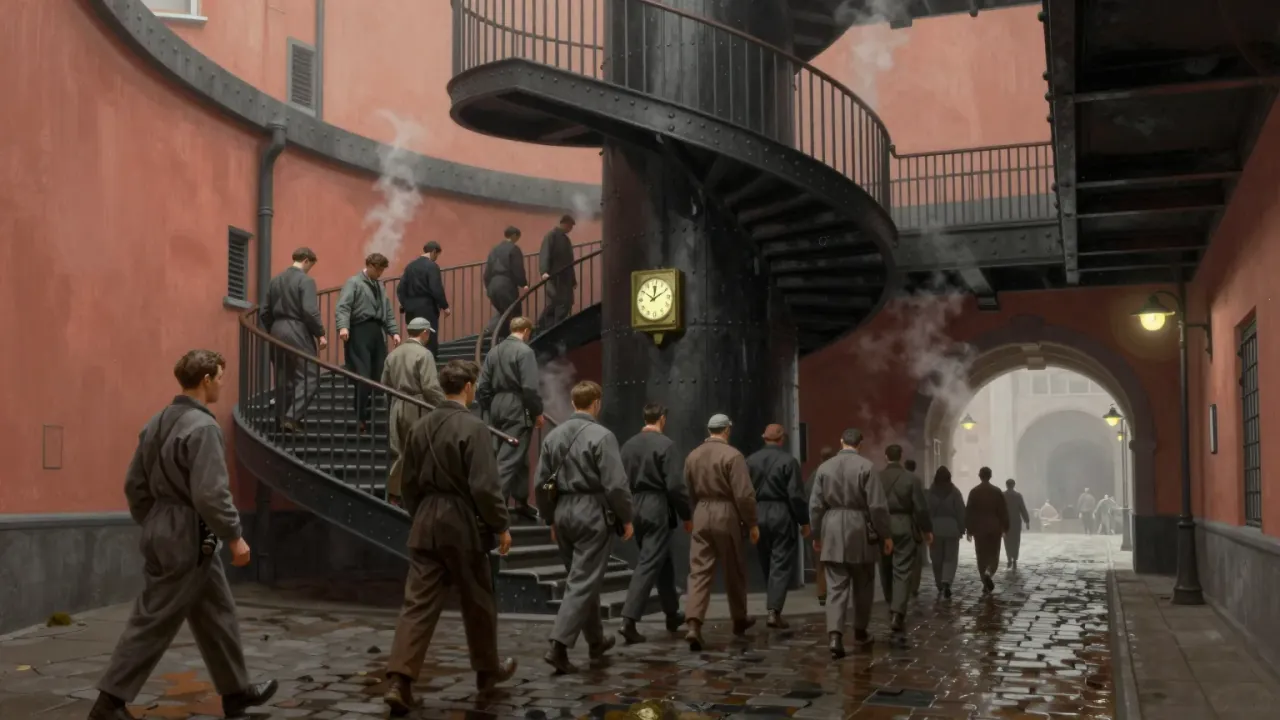
Yes, it is worth your evening — provided you watch the 2010 restoration, not the Moroder cut or earlier truncated versions. Its 153 minutes demand patience, but they repay it with sustained formal invention: no other film so thoroughly builds a world from first principles of shape, light, and movement. You will not forget the sight of workers marching in lockstep down endless staircases, or the robot’s first twitching steps, or the floodwaters rising past children’s shoulders. Its flaws — schematic plotting, moral simplification — are outweighed by its authority as an object: a film that exists as much in plaster, steel, and celluloid as in narrative. Those who find it inert likely expect dialogue-driven drama or naturalistic performance. But if you accept it on its own terms — as a silent, sculptural, architectural statement — it holds up without concession. Its value is not nostalgic but functional: it teaches how cinema constructs reality before it tells stories. That makes it urgent, not antique. (152 words)