A hitman without an alibi that holds
Le Samouraï is Jean-Pierre Melville’s 1967 crime thriller built around a single, controlled idea: a professional killer whose survival depends on routine, and what happens once that routine stops working. Alain Delon plays Jef Costello, a contract hitman who kills a nightclub owner and is seen leaving the scene by several witnesses, including the club’s piano player, yet none of them identify him in a police lineup. Rather than treating this as a lucky escape, Melville uses it to start unravelling Jef’s carefully built world, as his own employers, wary that he is now a liability, try to have him killed before the police can connect him to the murder.
Delon, Decaë and a room built for silence
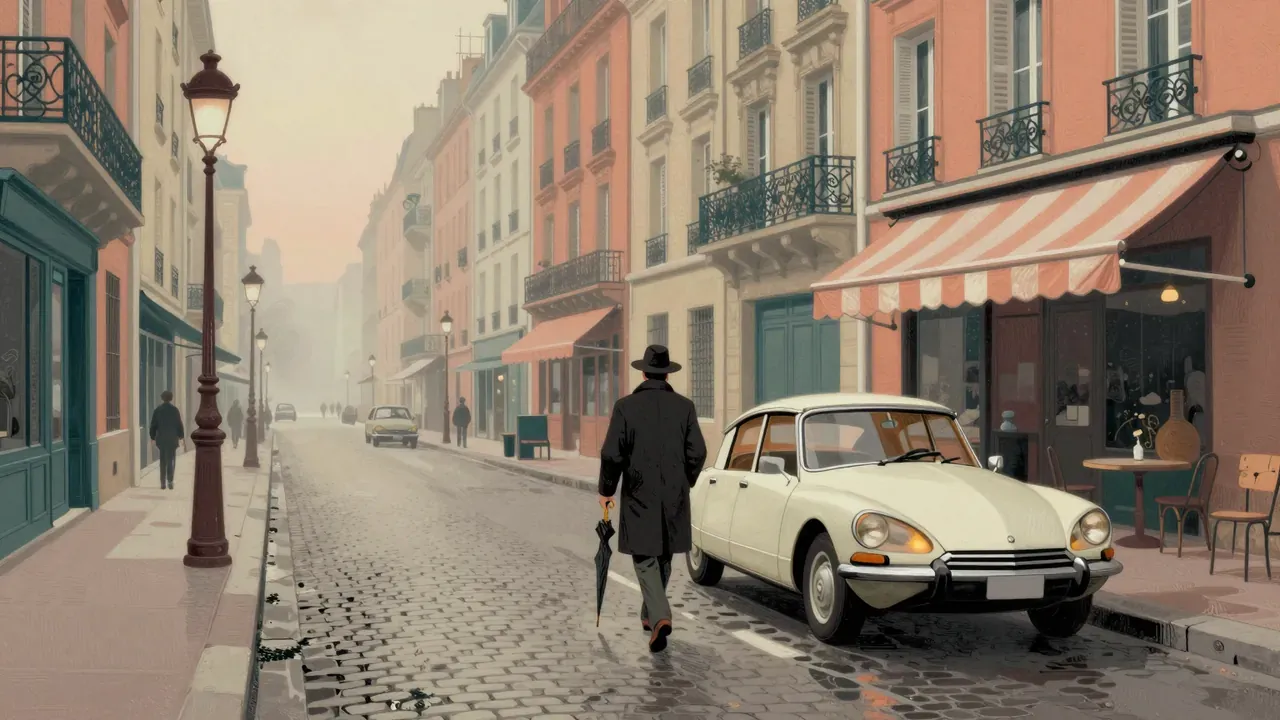
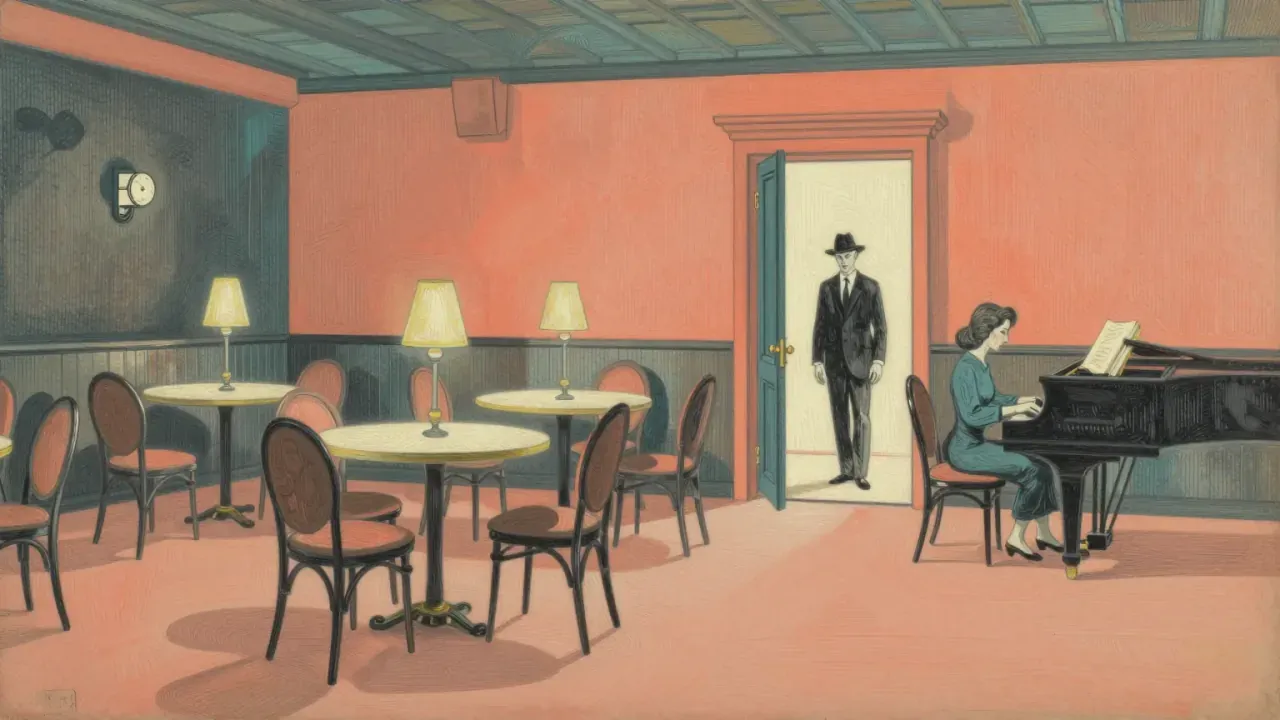
The plot moves through Jef’s attempts to find out who hired him and who is now hunting him, aided unreliably by his alibi-providing girlfriend Jane and by Valérie, the piano player whose silence in the lineup remains unexplained for most of the film. Melville, who also wrote the script, shoots with cinematographer Henri Decaë in a palette restricted to greys and blues, and strips dialogue down to what is functionally necessary, letting Delon’s stillness do most of the work. The film’s most sustained set-piece has dozens of plainclothes police attempting to track Jef through the Paris Métro using nothing but hand signals and coordinated positioning, a sequence built almost entirely on movement and timing rather than speech.
The Métro chase without a word
What lands is the discipline of the filmmaking matching the discipline of its subject: Melville’s refusal to explain Jef through dialogue forces the audience to read him through routine — how he checks his room for a police bug, how identically he performs each hit, how his caged bird becomes an instrument for detecting intrusion. Delon’s performance, built almost entirely on posture and gaze, gives the film its authority, and the Métro sequence remains a demonstration of how much suspense choreography alone can generate. Decaë’s grey-and-blue photography, disciplined enough that Roger Ebert credited Melville with establishing the film’s spell through light alone before a word is spoken, gives every one of these small rituals a weight that dialogue would only dilute.
A code that has no one to answer to
The plot mechanics around who ordered the hit and why are thin by design, and viewers looking for the kind of explanatory scenes that fill in a criminal underworld’s logic will find Melville uninterested in supplying them. The pacing, deliberately unhurried through much of the middle section, can feel static rather than tense if a viewer isn’t already invested in Jef’s rituals as the point of the film rather than an obstacle to a plot. Valérie’s motive for shielding Jef in the police lineup is also left unexplained until very late, which rewards a second viewing more than it satisfies curiosity on the first, and some viewers will find that withholding frustrating rather than intriguing.
Loneliness dressed as professionalism
The film treats professionalism as a kind of self-imposed solitude, in which every precaution Jef takes to stay alive is also a barrier against anyone getting close to him, including Jane, whose loyalty he never returns with anything like affection. Its final choice, in which Jef appears to abandon the very caution that has protected him throughout, reads less as a plot twist than as the logical end point of a man who has run out of reasons to keep performing his own survival. Melville reportedly shot an alternative ending with Delon smiling in death before cutting it, a choice that keeps the film’s closing tone flat and unreadable rather than granting Jef anything like peace.
Who this suits
This suits anyone who enjoys spare, procedural crime cinema or wants to see the film that shaped Jean Reno’s Léon, Alain Delon’s own screen persona and much of the French policier that followed it. It is a poor fit for viewers who want their protagonists explained through conversation, or who find a slow, controlled pace a liability rather than a virtue in a thriller. Fans of the American crime films it later influenced, including The French Connection, may also enjoy watching the source material for techniques those later films borrowed and popularised for wider audiences.
Ninety-eight minutes of controlled nerve
At 98 minutes, Le Samouraï asks for close attention rather than a long commitment, and it repays that attention with a Métro sequence and a closing stretch that still hold up against everything they influenced. It is not a film for a distracted evening, since its power is entirely in restraint and detail, but for a viewer willing to watch closely, it remains one of the most controlled thrillers of its period. Its brevity also makes it one of the easier classic crime films to fit into a single sitting without asking for a long-haul commitment in return for its rewards.