The title
M is a German thriller from 1931, directed by Fritz Lang and produced by Seymour Nebenzal for Nero-Film. It is Lang’s first sound film and attempts something precise: to trace the parallel hunts for a child murderer by both the police and Berlin’s criminal underworld, without showing a single act of violence on screen. The film does not seek to explain Beckert’s psychology through exposition or flashback but to map the social and institutional tremors his crimes provoke — in parents’ waiting outside schools, in the disruption of black-market hierarchies, in the forensic patience of Inspector Lohmann’s squad. Its ambition is structural and procedural: to treat murder as a system failure, not a personal aberration. It avoids moral simplification by giving extended, unsentimental screen time to both law enforcement and organised crime, neither of which operates with clean hands. The title — a single letter — signals this refusal of naming, of closure, of easy attribution. It is not a portrait of evil, but an anatomy of collective response: how a city organises itself around absence, rumour, and dread. (158 words)
The sound of it
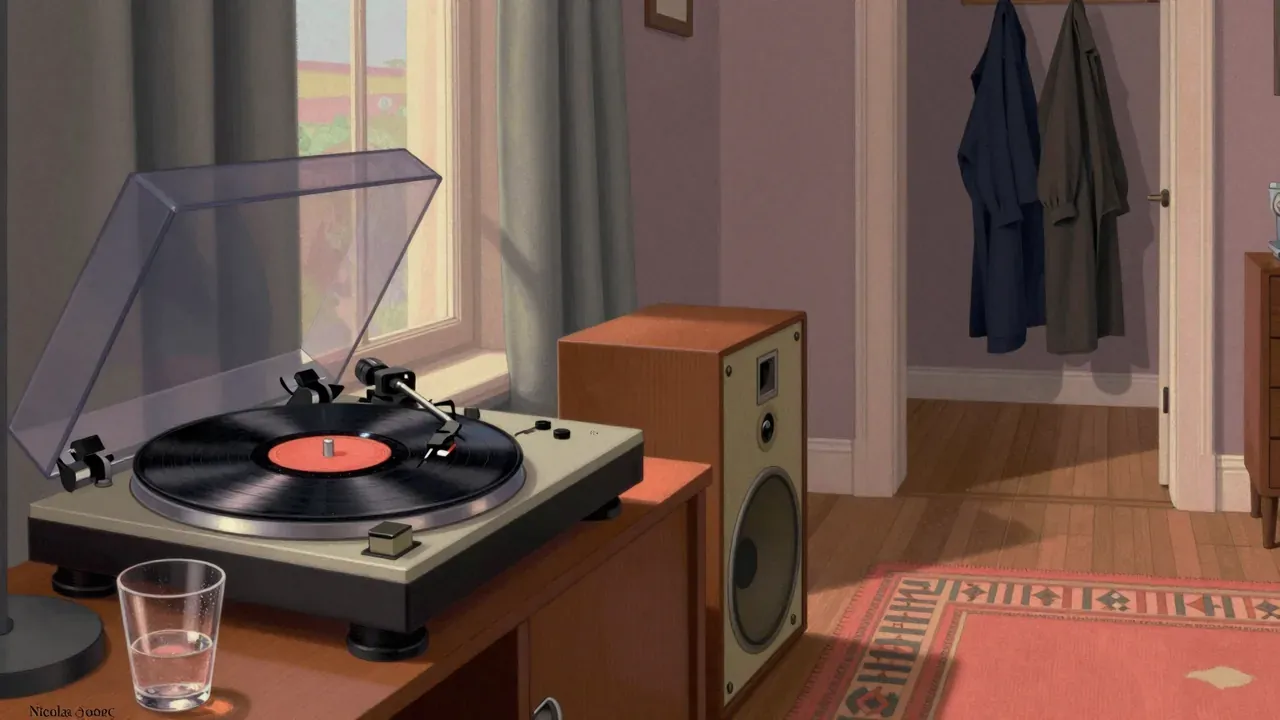
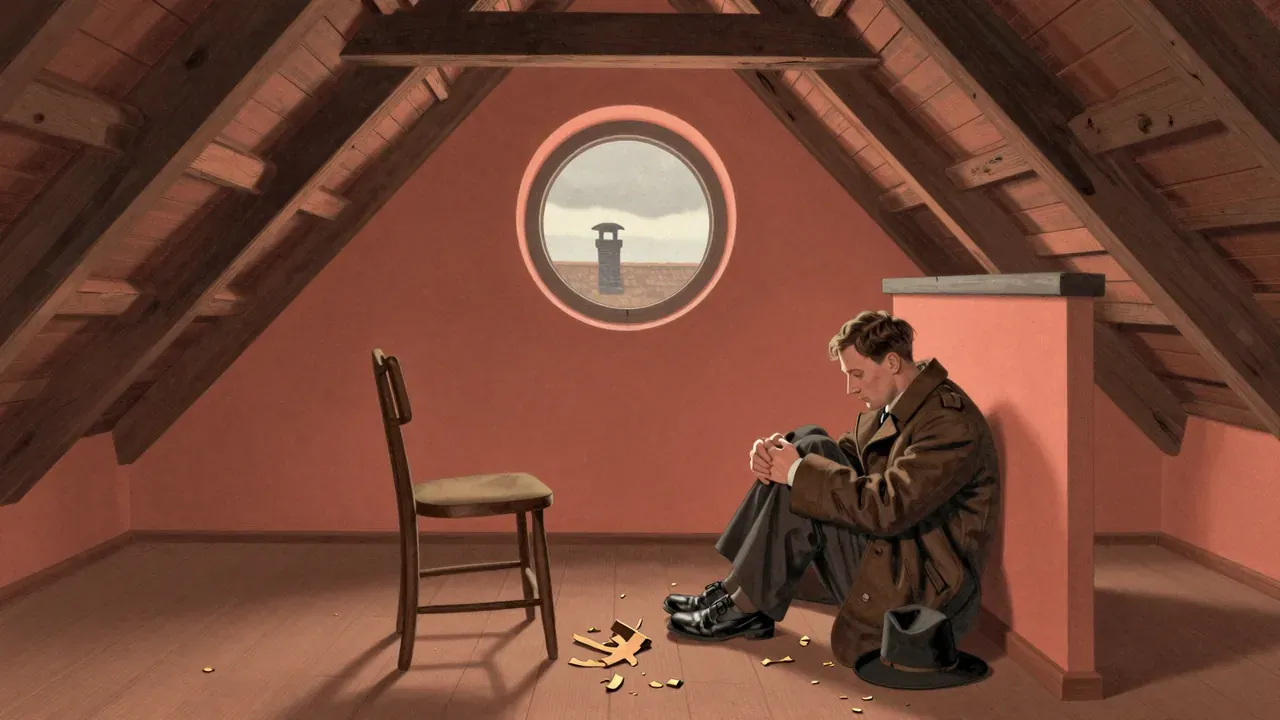
The story unfolds through tight cause-and-effect chains: a chalked ‘M’ on a coat, a whistled leitmotif, a fingerprint lifted from a discarded letter, a blind man’s ear distinguishing one tune from another. Peter Lorre’s performance as Beckert is coiled and physical — he blinks too much, swallows audibly, flinches at his own shadow — never pleading for sympathy but making compulsion legible in posture and rhythm. Fritz Arno Wagner’s cinematography favours deep focus and slow lateral tracking, holding space for silence and off-screen sound: a balloon snagging on wires, a door closing three rooms away, footsteps echoing in an empty office stairwell. Paul Falkenberg’s editing sustains tension not through cuts but through duration — a two-minute shot of Beckert trapped in an attic, breathing, listening. Edvard Grieg’s ‘In the Hall of the Mountain King’ is used not as score but as narrative device: its recurrence is diagnostic, not decorative. Lang dubs Lorre’s whistling, turning the sound into something uncanny, detached from breath or intention. Every technical choice serves the film’s central proposition: that sound, like guilt, can precede the body. (159 words)
The look of it
What lands is the film’s unblinking restraint. It refuses catharsis, spectacle, or even clarity: Beckert’s final courtroom speech is not a confession but a disordered, self-pitying cascade; the criminals’ kangaroo court dissolves into mob logic, not justice. The tension builds not from chase sequences but from accumulation — of posters, of chalk marks, of overlapping voices in a crowded police station, of beggars shifting position on street corners. The blind balloon seller’s recognition of the whistle works because it rests on auditory memory, not visual cue; the chalk mark on Beckert’s coat matters because it is visible only to the audience and the girl, not to him — a quiet breach of dramatic irony that feels earned, not clever. The film’s procedural rigour makes its moral ambiguity persuasive: no institution emerges unscathed, no motive remains pure. Even the children’s courtyard chant — rhythmic, chilling, repeated — lands not as folklore but as social fact: the way fear migrates into play when adults cannot contain it. This is not suspense as entertainment but as physiological response, calibrated over 117 minutes without relief. (157 words)
The trial
What does not land is the film’s structural reliance on off-screen violence. While Lang’s stated aim — to force the audience to imagine the murders — succeeds formally, it risks abstraction where specificity is needed. Without a single image of harm, the stakes flatten into concept: Elsie’s ball rolling away reads as poetic motif, not visceral loss. The criminal syndicate’s motives remain underdeveloped beyond pragmatism; their moral equivalence with the police feels asserted rather than dramatised. Some performances — particularly secondary figures like Frau Beckmann or the schoolteachers — are functional rather than inhabited, serving exposition more than character. The courtroom sequence, though thematically rich, lacks rhetorical momentum: Beckert’s monologue is compelling as text but underplayed as speech, its power diluted by the static framing and lack of counterpoint. The film’s avoidance of psychological explanation also leaves gaps — we see Beckert’s compulsions but not their roots, and the eight days Lang spent in a mental institution yield no discernible texture in the portrayal. These are not flaws in isolation, but points where the film’s austerity begins to withhold rather than concentrate. (156 words)
The hunt
The themes that matter are institutional fragility, the contagion of fear, and the collapse of legal distinction under pressure. M treats the police not as guardians of order but as one competing authority among many — their raids disrupt the underworld’s operations just as surely as Beckert’s crimes disrupt civic life. The film’s most sustained idea is that justice is not a fixed point but a temporary alignment of interests: the criminals hunt Beckert not out of morality but because his actions make their work impossible. The chalked ‘M’ is less a brand than a symptom — a sign that social meaning is being imposed where none was intended. Sound becomes a metaphor for accountability: Beckert cannot silence his own whistle, just as the city cannot mute its panic. The film’s interwar Berlin is not a setting but a condition — a place where surveillance is rudimentary but pervasive, where fingerprints and handwriting analysis stand in for certainty, and where the line between state and underworld is porous, not binary. These are not historical curiosities but structural parallels to any society where public safety is negotiated in the dark. (154 words)
The chant
This film is for viewers who value precision over comfort, who follow narrative logic before emotional payoff, and who accept that some questions — about culpability, about systems, about silence — have no resolution. It rewards attention to sound design, to spatial continuity, to the weight of a pause. It is not for those who require clear moral anchors, linear chronology, or character arcs with development. Anyone expecting psychological insight into serial killing will find the film withholding; anyone needing visual confirmation of threat may feel adrift in its ellipses. Those who dislike long takes, dense acoustics, or German expressionist framing will find little accommodation. A viewer who values realism over rigour, or catharsis over consequence, would likely reject its methods. The verdict shifts if the film were re-cut to foreground Beckert’s interiority or to clarify the syndicate’s hierarchy — but that would make it a different film, not a better one. Its demands are formal, not stylistic: it asks for patience with process, not tolerance of obscurity. (159 words)
The aftermath
Yes, it is worth your evening — not as diversion but as calibration. Watching M recalibrates what a thriller can do: it replaces chase with containment, revelation with recurrence, climax with collapse. Its 117 minutes pass with the gravity of a trial transcript, not the rush of a pursuit. It repays rewatching not for hidden clues but for shifts in emphasis — how a sound changes meaning across scenes, how a glance acquires weight only in retrospect. Anyone who has sat through a procedural drama and felt its mechanics hollow will recognise M’s integrity: every cut, every whistle, every chalk mark serves the architecture. It is not ‘difficult’ in the sense of obscurity, but demanding in its refusal to simplify. Those who dismiss it as ‘dated’ or ‘slow’ mistake its pace for inertia — it moves deliberately, like a net tightening. To skip it is to miss the origin point for half the crime fiction that followed, not as influence but as precedent: a film that treats investigation as collective labour, not individual genius. Its value lies in its unwavering terms. (158 words)