The premise beneath the bones
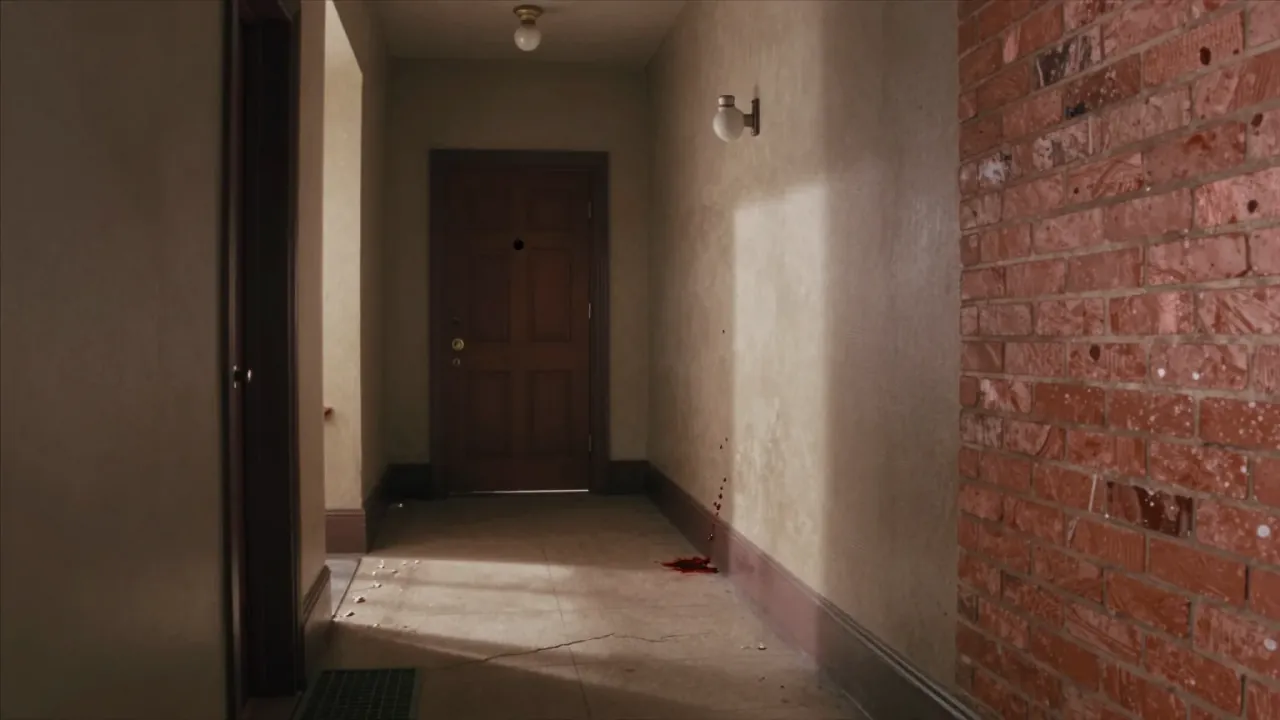
Lone Star is a crime film that uses a murder investigation as a structural device to examine how history, identity and community are built on layered omissions. Set in the Texas border town of Frontera, it follows Sheriff Sam Deeds as he uncovers the truth behind the 1957 disappearance of his predecessor — a corrupt sheriff whose skeleton surfaces decades later. John Sayles does not treat this as a procedural but as an archaeological dig: every revelation fractures a local myth, whether about civic virtue, racial purity or familial loyalty. The film’s ambition is to show how borders — national, racial, generational, moral — are enforced not by geography alone but by selective memory and sanctioned silence. It refuses the tidy resolution of genre convention, instead holding open contradictions: that justice and complicity can share the same hand; that love and kinship can occupy the same space without erasing either; that a town’s pride may rest on ground it has never acknowledged burying. Its method is patient, its tone unadorned, its politics embedded in who speaks, who stays silent, and whose version of events gets carved into courthouse stone. (148 words)
The look of it
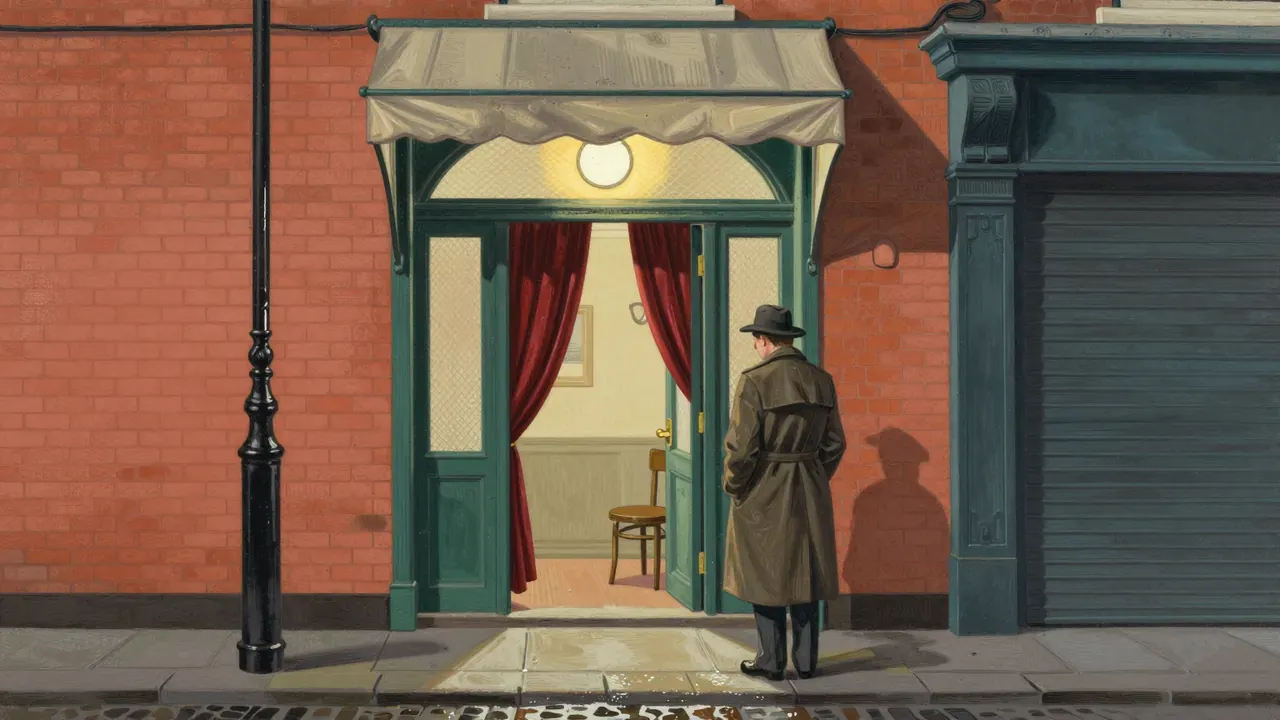
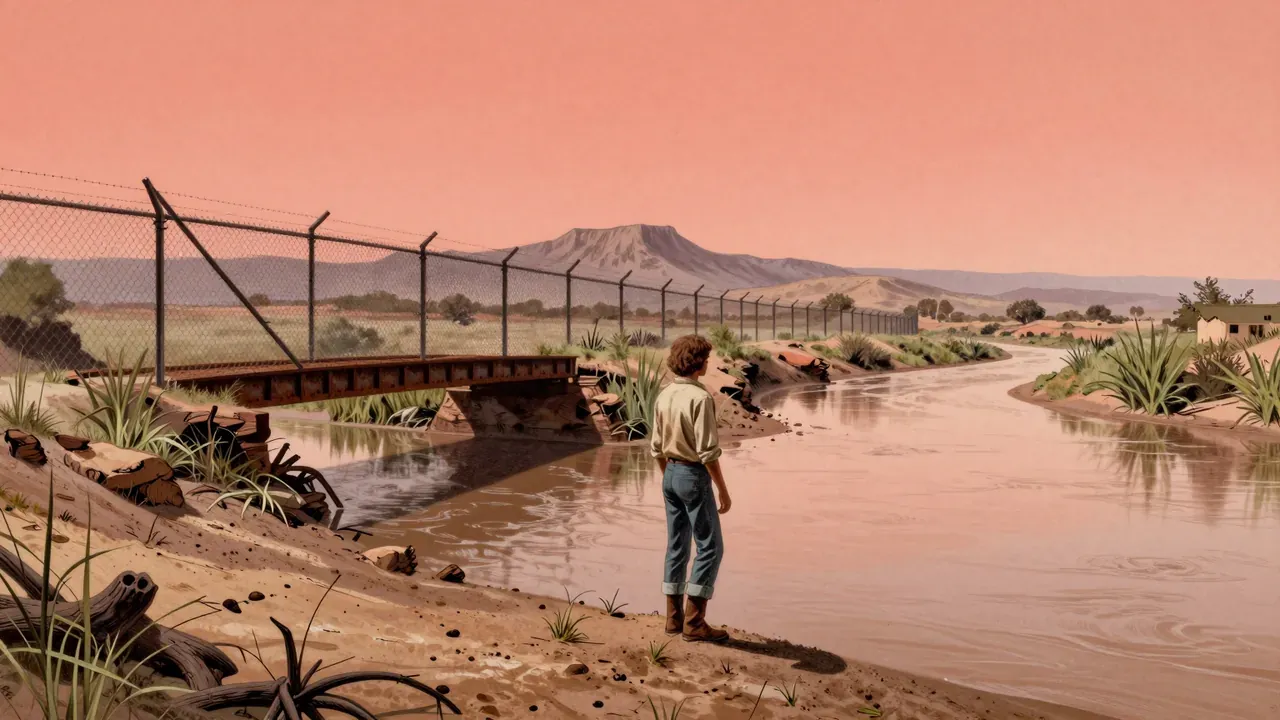
The story unfolds through overlapping timelines and intersecting communities, held together by Sayles’s editing — which he undertakes himself — and Stuart Dryburgh’s restrained cinematography. Dryburgh keeps exteriors sun-bleached and interiors dimly lit, letting heat and dust do narrative work. Performances avoid emphasis: Chris Cooper’s Sam is watchful, not brooding; Elizabeth Peña’s Pilar carries quiet gravity without exposition; Kris Kristofferson’s Wade appears only in flashbacks, yet his menace lingers like humidity. Mason Daring’s score weaves conjunto, juke joint piano and country guitar not as local colour but as audible evidence of cultural coexistence. Sayles avoids voiceover or musical stings to underline meaning; transitions between past and present happen via camera pans across shared locations — a riverbank, a dance floor, a courthouse lawn — making time feel contiguous rather than segmented. Dialogue is functional and unvarnished, with characters speaking in the clipped syntax of people who know each other’s silences. There are no monologues explaining motive, no cutaways to reaction shots for emphasis. The craft serves accumulation, not climax: information settles slowly, like silt in the Rio Grande. (156 words)
What sticks in the throat
What lands is the film’s refusal to let any character stand outside history. Sam does not emerge enlightened so much as disabused — his father’s legend collapses not into villainy but into something more complicated: compromised decency. The revelation that Buddy and Mercedes were lovers, and that Pilar is Sam’s half-sister, lands not as shock but as quiet recalibration — the kind that reshapes a person’s understanding of their own origin story. The town’s racial hierarchies are rendered with granularity: Otis Payne’s Indigenous ancestry matters because it informs his relationship to land and law; Mercedes’s rejection of her Mexican roots matters because it shows assimilation as self-erasure, not ascent. Even minor figures — the school board debating Texas history, the mayor pushing a new prison — register as expressions of power, not caricature. The film trusts the audience to hold multiple truths: that Wade was monstrous, that Buddy covered it up, that the cover-up enabled stability, that stability masked exploitation. Nothing resolves cleanly, but nothing feels arbitrary. The weight comes from consistency — of tone, of implication, of consequence. (152 words)
Where the light doesn’t fall
What does not land is the film’s occasional over-reliance on exposition-as-plot. Several revelations — Buddy’s kickbacks, the lake development scheme, the gambling operation at Otis’s club — arrive via dialogue that serves explanation more than character. These moments read less like conversation and more like dossier entries delivered aloud, particularly in scenes where Sam interviews Hollis or Otis. The structure, while elegant in theory, occasionally strains under its own density: the web of relationships among Tejano, Black and Anglo families is rich, but some connections — such as Clifton James’s Colonel Delmore Payne and his estranged father — remain sketched rather than fully inhabited. Matthew McConaughey’s role as the younger Sam feels underwritten; his presence registers physically but not emotionally, perhaps because Sayles needed ‘a guy without star weight’ but did not give him enough interiority to compensate. Frances McDormand appears briefly as a county clerk, her lines functional rather than revealing. The film’s commitment to restraint sometimes tips into reticence: key emotional pivots — Sam’s final decision to bury the truth, Pilar’s reaction to learning her paternity — are understated to the point of opacity. A viewer seeking catharsis will find none here. (158 words)
The borders that hold
The themes that matter are historical inheritance and the violence of erasure — not just of people, but of context. Lone Star treats mythmaking as infrastructure: the courthouse named after Buddy, the tourist lake built on evicted homes, the school curriculum sanitising settler violence — all are physical manifestations of what has been omitted. Borders are examined not as lines on a map but as thresholds of belonging: Mercedes crossing from Mexico and then disavowing her crossing; Otis navigating Blackness, Indigeneity and entrepreneurship in a segregated town; Sam moving between Anglo privilege and Tejano intimacy without ever fully occupying either. The film insists that identity is relational, not fixed — Pilar is not ‘Tejano’ or ‘white’, but the product of choices made across generations, some coerced, some concealed. Sayles also interrogates intergenerational accountability: Sam does not punish his father’s ghost, nor does he absolve him. He simply stops pretending the past is legible in binary terms. The moral centre is not virtue but continuity — the quiet persistence of people who stay, adapt, remember selectively, and still build lives on contested ground. (147 words)
Who walks this road
This film is for viewers who value narrative patience, thematic density, and performances that accrue meaning over time rather than announce it. It suits those accustomed to arthouse pacing and comfortable with ambiguity — people who watch films to think with, not be told by. It is not for viewers who require plot propulsion, clear moral signposting, or emotional release through catharsis. Anyone expecting a neo-Western thriller or a romance with conventional stakes will find the film withholding. Those who dislike films where major revelations are delivered in flat tones over coffee, or who need villains to be unambiguously evil and heroes to be redeemable, will leave frustrated. A viewer who values historical specificity over universality — who cares about how land, language and law shape daily life in South Texas — will find it resonant. Someone who prefers tightly wound mysteries with definitive answers would do better with a different title. The film assumes its audience can hold contradiction without demanding resolution. (150 words)
The time it takes
Yes, it is worth your evening — provided you approach it as a sustained act of attention, not entertainment. Its 135 minutes unfold with the deliberation of a town meeting or a river current: slow, consequential, resistant to summary. It repays close viewing not because it hides clues but because it layers implications — a glance, a pause, a change in lighting carries forward into later scenes. You will not forget the image of Sam standing where he once stood as a boy, now seeing the same spot through adult eyes and ancestral knowledge. That moment, like the film itself, asks you to sit with discomfort without rushing to fix it. Someone who watches primarily for diversion, or who finds moral complexity exhausting rather than clarifying, will not find it worthwhile. But for those who believe cinema can model how to live with inherited contradictions — and still choose connection — Lone Star remains one of the most quietly rigorous American films of the 1990s. (150 words)