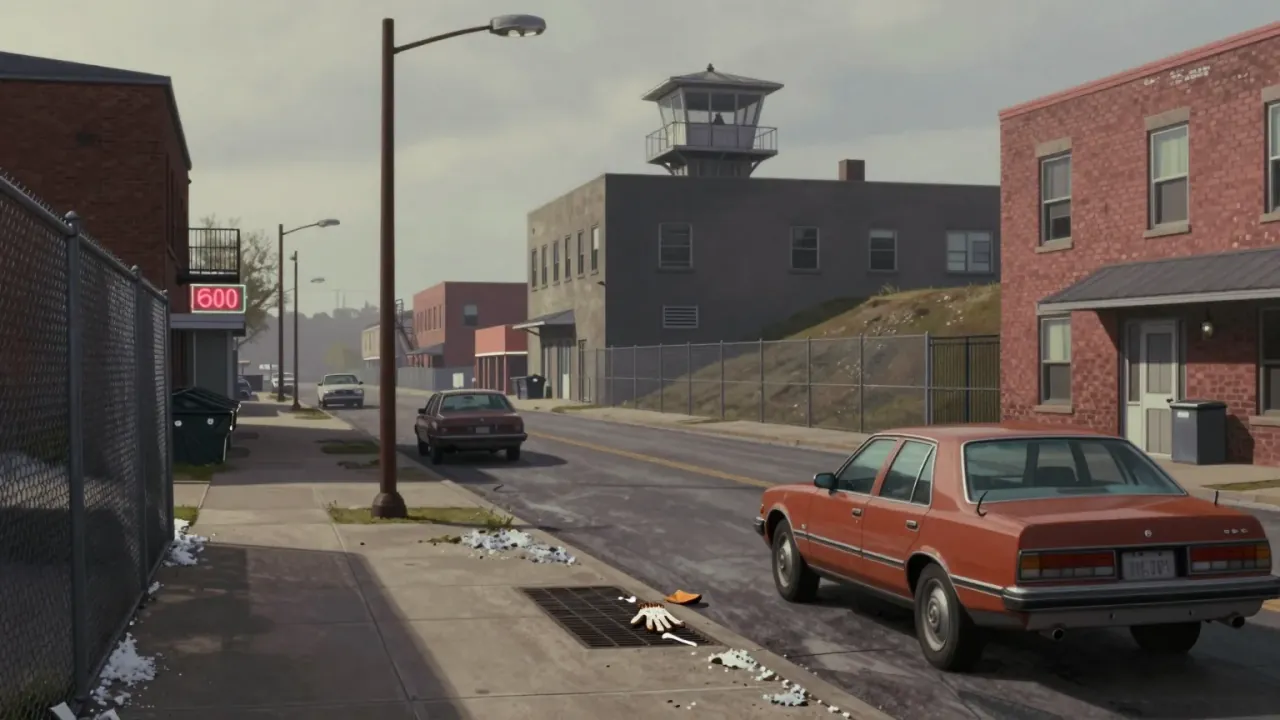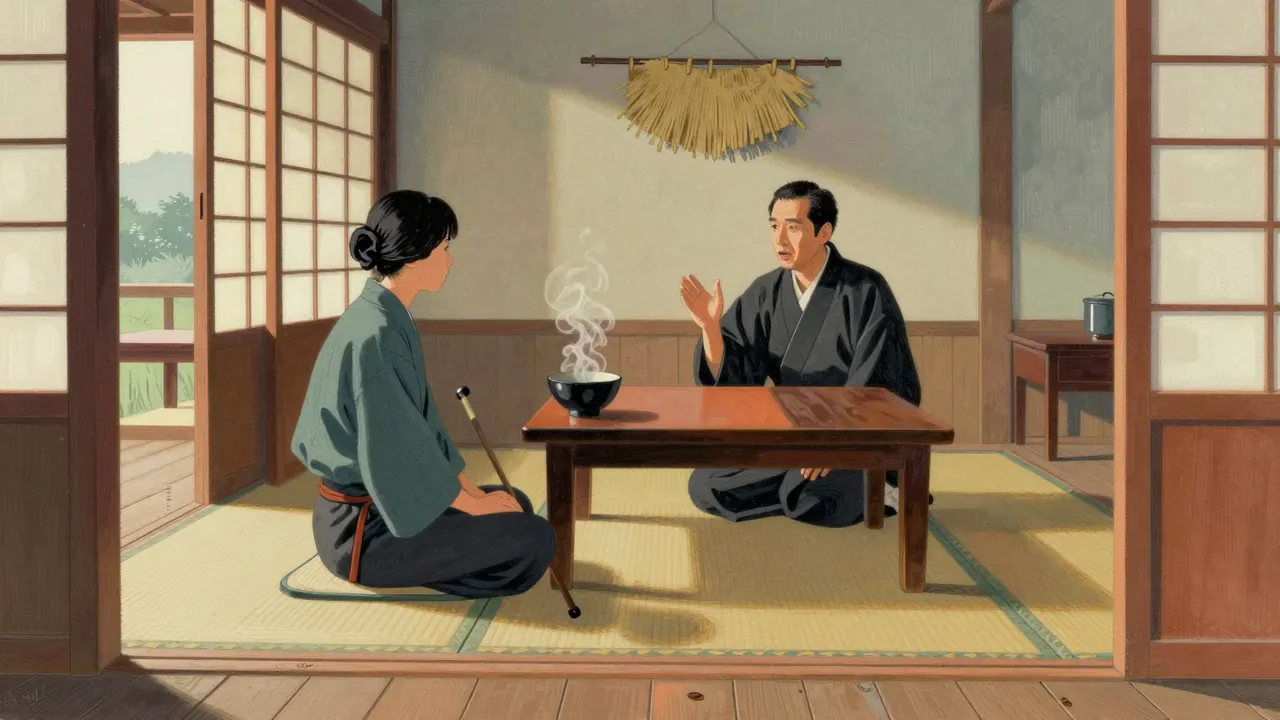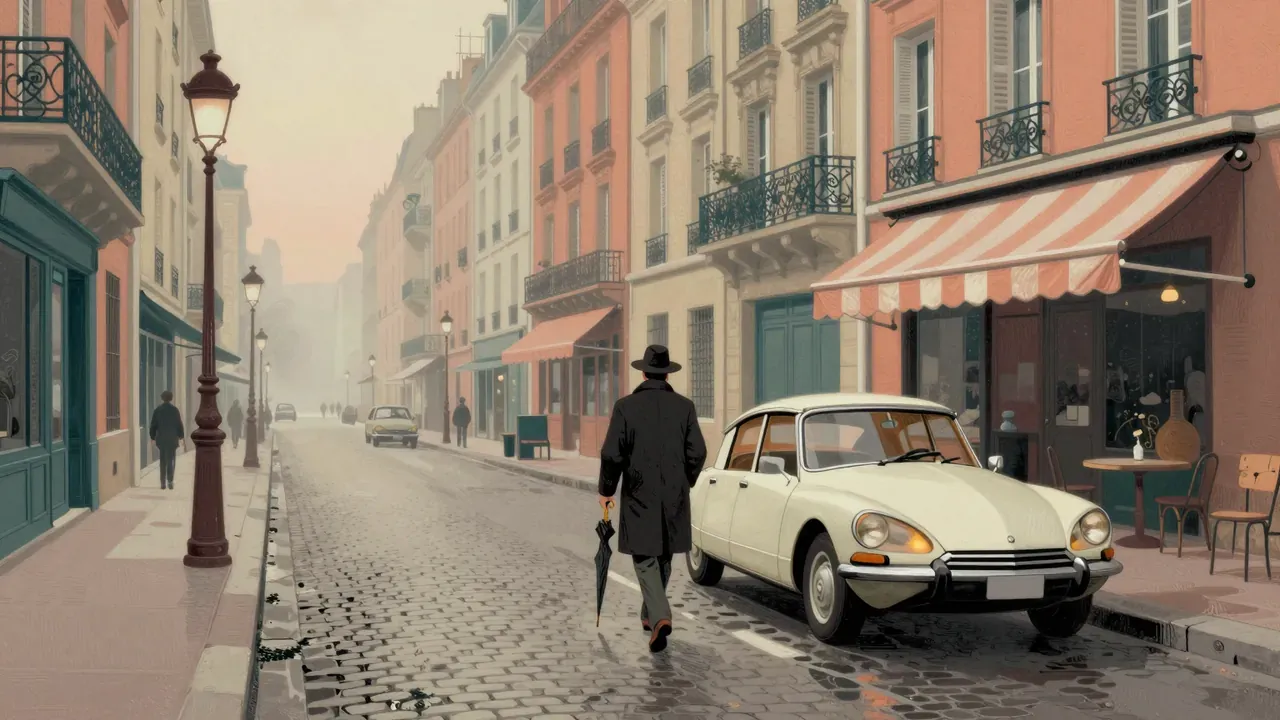
The setting isn’t a city — it’s a system.
Intimidation is a 1960 Japanese film noir directed by Koreyoshi Kurahara, produced in the immediate post-war decade when Japanese studios were adapting American genre templates to domestic social tensions. It attempts a tightly wound moral thriller set in urban Tokyo, centring on coercion, compromised loyalty and the quiet violence of institutional pressure. The film does not seek psychological realism or social exposé but operates within noir’s formal grammar — shadowed interiors, abrupt cuts, morally ambiguous protagonists — to dramatise how power circulates through unspoken rules and withheld information. Its ambition lies in condensing post-occupation disillusionment into a compact, atmospheric narrative where threat is ambient rather than explosive. It treats crime not as spectacle but as bureaucratic residue: paperwork, phone calls, glances held too long. The film’s project is structural, not sensational — to show intimidation as a system, not an act. It assumes familiarity with noir conventions while refusing their American individualism; here, no lone detective intervenes. There is only compliance, hesitation, and the slow erosion of agency. Word count: 142
The look of it
The story follows a low-level clerk drawn into a blackmail scheme after witnessing a murder, his resistance steadily undermined by surveillance, peer pressure and the quiet authority of superiors. Kō Nishimura plays him with minimal inflection — a deliberate flattening that reads as exhaustion rather than indifference. Nobuo Kaneko, as the calm, unblinking antagonist, uses stillness and precise diction to generate unease; Mari Shiraki’s role is narrower, her presence functional rather than expressive. Kurahara’s direction favours tight framing and lateral tracking shots that deny spatial relief, while the black-and-white photography — though the fact sheet names no cinematographer — maintains high contrast without chiaroscuro excess. Editing is brisk but never disorienting; cuts land on faces mid-thought, not mid-reaction. Sound design is sparse: footsteps on linoleum, distant train whistles, the hum of fluorescent lights in office corridors. There are no musical stings, no leitmotifs — tension accrues through duration and repetition, not punctuation. Word count: 153
How pressure accumulates
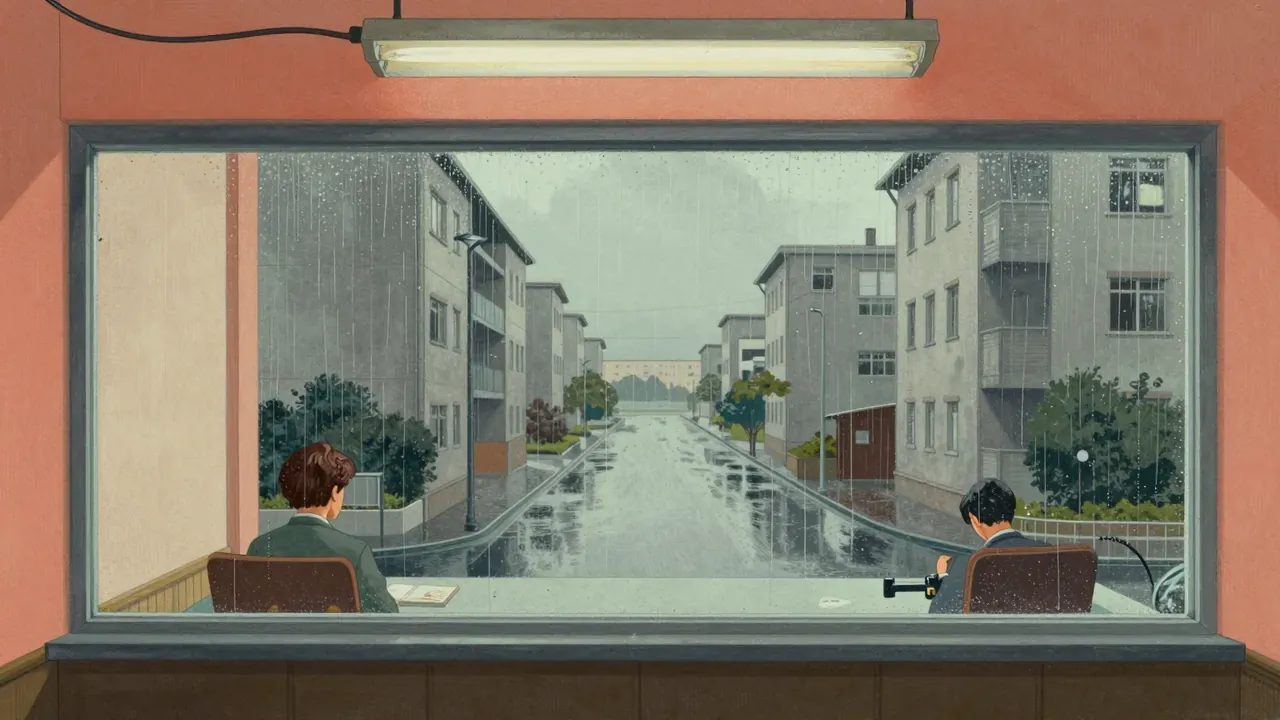
What lands is the film’s cumulative sense of entrapment. Kurahara sustains a mood of quiet dread not through plot twists but through the narrowing of options: each scene reduces the protagonist’s room to manoeuvre until even silence becomes complicit. The performances avoid theatricality, anchoring the film in a recognisable, grey-toned reality — Nishimura’s slight tremor when lighting a cigarette, Kaneko’s habit of adjusting his cufflinks before speaking, Shiraki’s habit of looking just past the camera when addressed. These details do not explain character but register constraint. The production design reinforces this: cramped apartments, identical office partitions, rain-slicked streets seen from behind glass. Even the title feels earned — intimidation here is not shouted but absorbed, like humidity. The film’s restraint makes its moments of physical escalation — a shove against a wall, a slammed door — genuinely startling because they break a sustained tonal hush. That control over rhythm and register is its strongest achievement. Word count: 147
Where the edges blur
What does not land is the underdeveloped moral architecture. The stakes remain vague: the murder witnessed is never contextualised, the blackmail’s motive is implied but never clarified, and the institution pulling strings remains faceless, nameless, and therefore abstract. This undermines the film’s attempt to ground noir in social specificity — without knowing what the system protects or who benefits, the protagonist’s capitulation feels procedural rather than tragic. Shiraki’s character has no interior logic beyond plot function, and her scenes dissolve without resonance. A late sequence in a public bathhouse — meant to heighten vulnerability — instead disrupts pacing with static blocking and diffuse light that blurs rather than reveals. The film also misjudges its own austerity: one extended shot of a typewriter clacking for forty seconds registers not as tension but as inertia. Those expecting the fatalism of Melville or the irony of Hammett may find its seriousness unrelieved and its ambiguity unearned. Word count: 152
What the silence means
The themes that matter are institutional absorption and the erosion of volition through routine. Intimidation treats power not as exercised by villains but as distributed across banal structures — filing cabinets, shift rosters, telephone exchanges — where compliance is less a choice than a default setting. It explores how post-war Japan’s rapid bureaucratization created new forms of quiet coercion, where loyalty is measured in silence and promotion in discretion. Class is present but muted: the protagonist’s salaryman status is assumed, not interrogated; his apartment is modest but not impoverished. More urgent is the film’s meditation on perception — what is seen, what is reported, what is omitted — and how truth becomes negotiable once it passes through multiple layers of mediation. There is no courtroom, no confession, no final reckoning; resolution arrives via transfer, reassignment, erasure. The film’s enduring concern is not justice but continuity: how systems persist by making dissent feel like inefficiency. Word count: 149
Who it speaks to
This film is for viewers who value atmosphere over exposition, who find tension in withheld information and moral weight in unresolved endings. It suits those familiar with early Japanese New Wave sensibilities or mid-century noir’s structural discipline — people who watch films for texture, rhythm and compositional rigour rather than narrative payoff. It is not for viewers who require clear antagonists, emotional catharsis or thematic closure. Those expecting the kinetic energy of Suzuki or the social satire of Oshima will find its pace deliberate to the point of austerity. Anyone needing psychological motivation spelled out, or who dislikes prolonged silences punctuated only by ambient sound, should look elsewhere. A viewer who values strong plotting over mood, or who finds ambiguity frustrating rather than generative, would likely leave dissatisfied. What would change the verdict? A tighter script that clarified the stakes without sacrificing ambiguity — or a more expressive performance style that could carry the weight the script leaves unspoken. Word count: 150
Why it stays with you
Yes, it is worth your evening — but only if you approach it as a study in tonal economy, not as a thriller with answers. Its ninety minutes unfold with the precision of a calibrated clock: every frame serves the central condition of unease. It rewards attention to gesture, to negative space, to the weight of a pause. Those who watch films to feel something sharply defined — fear, outrage, pity — may find its effect diffuse. But for viewers attuned to how cinema constructs pressure through composition and duration, it repays close viewing. It is not ‘entertaining’ in the conventional sense, nor is it didactic; it simply holds a mirror to the mechanics of acquiescence. Its value lies in its refusal to simplify. Someone who prefers narrative propulsion over sustained mood — or who finds its moral vagueness alienating — would reasonably judge it unworthy of their time. What would make it more accessible? Less reliance on implication, more grounding in concrete consequence. Word count: 148