What it argues
The Thin Blue Line is a 1988 documentary that reconstructs the 1976 Dallas police shooting of Robert W. Wood to argue that Randall Dale Adams was wrongly convicted and that David Harris committed the crime. Errol Morris made it not as a record of proceedings but as an act of forensic advocacy: he tests testimony, exposes contradictions in witness accounts and official conduct, and treats the trial not as settled fact but as a sequence of contingent, reversible decisions. The film does not merely question reasonable doubt — it demonstrates how doubt was suppressed, ignored or misdirected by prosecutors, psychiatrists and police. Its aim is not neutrality but correction: to reverse a miscarriage of justice through cinematic means. It uses the tools of narrative film — score, re-enactment, pacing, visual motif — not to embellish truth but to make its absence visible. Morris built it from interviews conducted over several years, beginning with research into psychiatrist James Grigson but pivoting when Adams’s case revealed systemic failures more urgent than professional biography. The film’s purpose is evidentiary, procedural and moral — to show how law can fail when ritual overtakes scrutiny.
How it argues
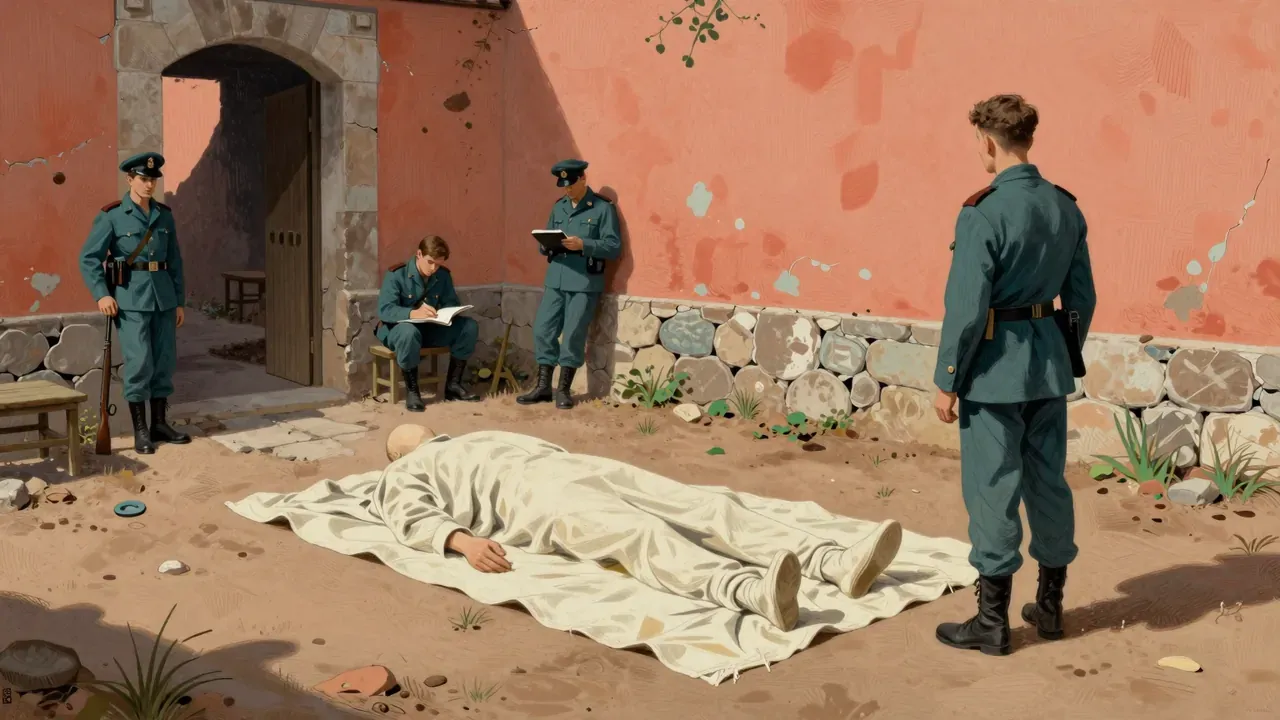
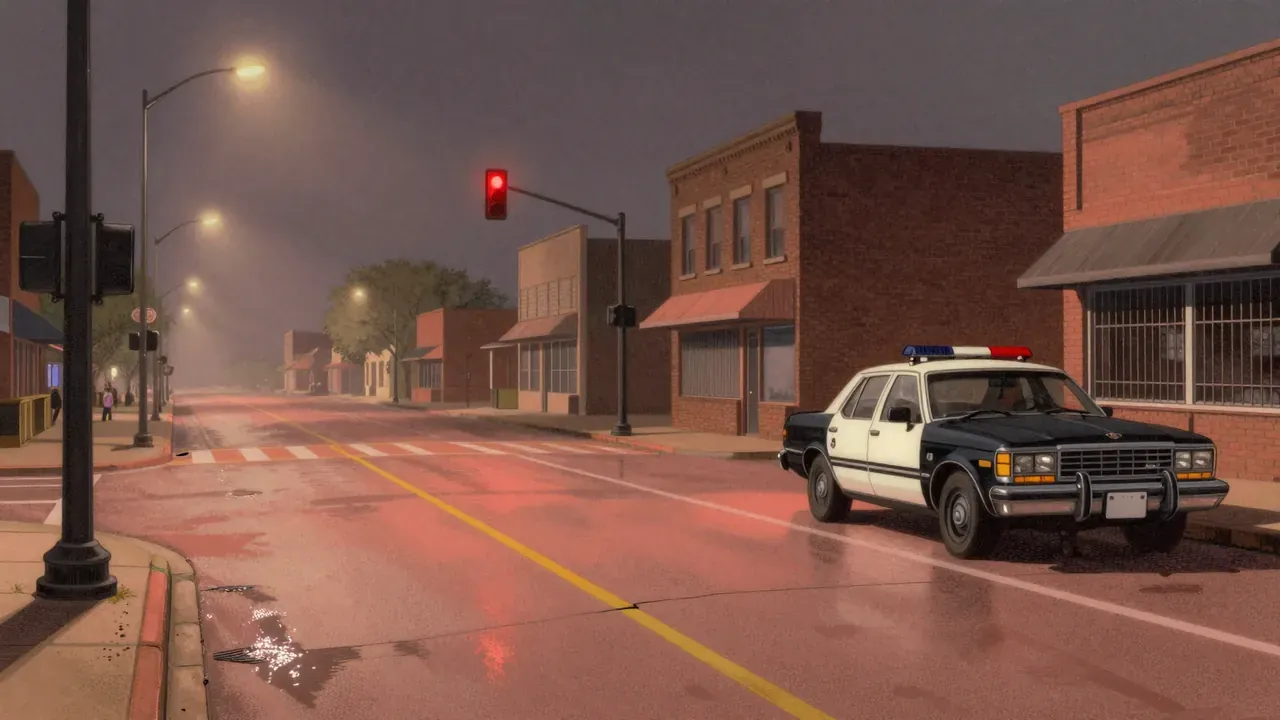
The film works through layered testimony, stylised re-enactments and Philip Glass’s insistent, cyclical score. Robert Chappell’s cinematography favours tight close-ups and shallow focus, holding on faces as they speak without cutaways or reaction shots; the camera stays still while voices shift tone and certainty. Re-enactments are shot in high-contrast monochrome, with deliberate lighting and slow pans across static tableaux — not dramatisation but diagramming, each version of the shooting built from a single witness’s account, then held up for comparison. Morris omits identifying labels for interviewees, forcing viewers to track credibility through speech, gesture and contradiction rather than authority. Glass’s music plays under dialogue, not around it, creating tension where silence might otherwise dilute consequence. There is no narrator: the structure itself narrates, moving between versions of events like a juror weighing evidence. The final audio-only sequence — Morris and Harris speaking off-camera while the camera circles a tape recorder — underscores the film’s reliance on voice as evidence, and its vulnerability to breakdown, omission and loss.
Where the proof lies
What lands is the cumulative weight of inconsistency: the shifting angles of the car, the changing position of the officer’s body, the contradictory timelines of witnesses who were present, the juvenile status of Harris versus the adult sentencing of Adams. These are not abstract flaws but material discrepancies that erode confidence in the verdict. The film makes the legal process feel tactile — you see documents handled, hear tape hiss, watch light fall across a courtroom sketch. Philip Glass’s score does not sentimentalise but intensifies; it gives rhythm to repetition, making each retelling of the same moment feel newly unsettling. The re-enactments avoid realism but achieve precision: they map testimony like architectural plans, exposing where stories diverge. Morris’s refusal to name interviewees pays off — the viewer learns to distrust titles and credentials, to listen for hesitation, evasion or sudden clarity. The film’s most effective device is its restraint: it never shows Harris committing the shooting, never stages the ‘true’ version. Instead, it leaves space for the viewer to conclude what the evidence implies — a silence that carries more force than any reconstruction could.
Where it looks away
What does not land is the film’s self-conscious stylistic distance when it comes to institutional critique. While it dismantles the Adams conviction with forensic care, it does not extend the same scrutiny to the broader apparatus — the funding bodies, the television networks, the legal education that produced figures like Grigson — that enabled such failures. The portrait of Dallas law enforcement remains narrow: focused on individual lapses rather than structural incentives, such as the pressure to secure convictions in high-profile cases or the financial and reputational rewards for prosecutors. The film also avoids examining how race operated in the case — though Adams was white and Harris white, the context of policing in 1970s Dallas is absent. Some viewers may find the noir aesthetic, while deliberate, occasionally overstates mood at the expense of nuance — the low angles and deep shadows risk framing the story as archetypal rather than historically specific. And though the film helped free Adams, it does not reckon with what his release meant for Harris’s later execution, or how justice was served unevenly across two lives.
What truth feels like
The themes that matter are the fragility of memory, the performativity of legal truth, and the moral weight of attention. The film treats testimony not as data but as performance — shaped by fear, suggestion, age, bias and the desire to be believed. It shows how certainty is manufactured: through repetition, authoritative framing, and the exclusion of counter-evidence. The ‘thin blue line’ is not just a metaphor for policing but a warning about boundary collapse — between fact and assertion, procedure and theatre, duty and dogma. The film also explores time as a site of intervention: Morris returns to the past not to memorialise but to amend it, treating archival footage, witness recollection and courtroom transcripts as malleable material. Justice here is not retrospective but iterative — something that must be re-made each time evidence is re-examined. The film insists that institutions do not uphold truth by default; they require persistent, uncomfortable looking. Its central theme is not innocence or guilt but the labour required to sustain doubt — and why that labour so often goes unrewarded.
Who it speaks to
It is for viewers who treat documentaries as arguments rather than reports, and who accept that form and ethics are inseparable. It suits those accustomed to non-linear storytelling, willing to hold multiple contradictory accounts in mind, and untroubled by the absence of a guiding narrator. It is not for viewers who expect documentary to offer closure, resolution or even a definitive ‘truth’, nor for those who require explicit moral framing or contextual exposition. Teachers of law, journalism and film studies will find it indispensable; general audiences seeking straightforward narrative may find its repetitions taxing. Those who reject stylisation in non-fiction — particularly dramatic re-enactment or composed scores — will resist its methods, though the film’s rigour justifies them. A viewer who values transparency over immersion, or who believes documentaries should mimic courtroom procedure rather than interrogate it, would disagree with its approach. Nothing changes the verdict except sustained engagement with its evidence — and that demands patience, not persuasion.
Why it takes its time
Yes, it is worth your evening — not as entertainment but as calibration. It recalibrates how you listen to testimony, how you read silence, how you weigh a face held in frame for eight seconds too long. Its 103 minutes do not pass lightly; they accumulate like evidence. You leave not with answers but with sharpened suspicion — of language, of memory, of systems that claim finality. It is demanding, but never obscure: every stylistic choice serves the argument. Its power lies in its refusal to simplify — not because complexity is virtuous, but because justice rarely arrives in clean lines. Some will find its pace deliberate to the point of austerity, its lack of exposition alienating. But those who accept that documentary can be both rigorous and expressive will find few films more consequential in construction or effect. It asks for attention, not allegiance — and repays both. Its value is not historical curiosity but present-tense utility: a working model of how to look again, and again, until what was invisible becomes undeniable.