The reason they leave
Thelma & Louise is a road film built around two women fleeing consequences they did not intend but cannot unmake. It is not a thriller in the procedural sense, nor a comedy of manners — though it contains both tension and irony — but a deliberate, tightly wound study in agency deferred and then seized. Callie Khouri’s screenplay treats the American highway not as a space of freedom but as a corridor where social expectations narrow into moral cul-de-sacs. The film sets out to test what happens when two women stop accommodating men’s assumptions: first by refusing to apologise for Thelma’s vulnerability, then by refusing to submit to legal or narrative resolution on terms written by others. Its ambition is structural as much as thematic: to hold the audience inside a logic where every choice — from packing a handgun to skipping bail — follows with quiet inevitability from the characters’ accumulated silences, compromises and withheld anger. It does not ask whether the women are justified; it asks what justification even means when the system offering it has already dismissed them.
How they hold each other
The story moves in clean, escalating arcs: departure, violation, flight, betrayal, escalation, refusal. Khouri’s dialogue avoids exposition; characters speak in clipped, reactive bursts, their subtext carried in pauses and glances. Susan Sarandon and Geena Davis ground the film in physical specificity — Sarandon’s Louise carries her exhaustion in her shoulders, Davis’s Thelma reshapes her posture across the runtime, from hunched deference to open-armed defiance. Adrian Biddle’s cinematography favours wide lenses and shallow focus, keeping faces sharp while backgrounds blur into heat-haze or desert rock. Hans Zimmer’s score avoids orchestral grandeur, leaning instead on electric guitar motifs and sparse, repeating phrases that suggest momentum without resolution. Thom Noble’s editing sustains rhythm without hurry: cuts land where breath catches, not where plot demands. Harvey Keitel’s Hal is the sole counterweight — not a villain but a man who grasps the shape of the trap before the women do — and his restraint makes the film’s final gesture land not as catharsis but as consequence.
The weight of small things
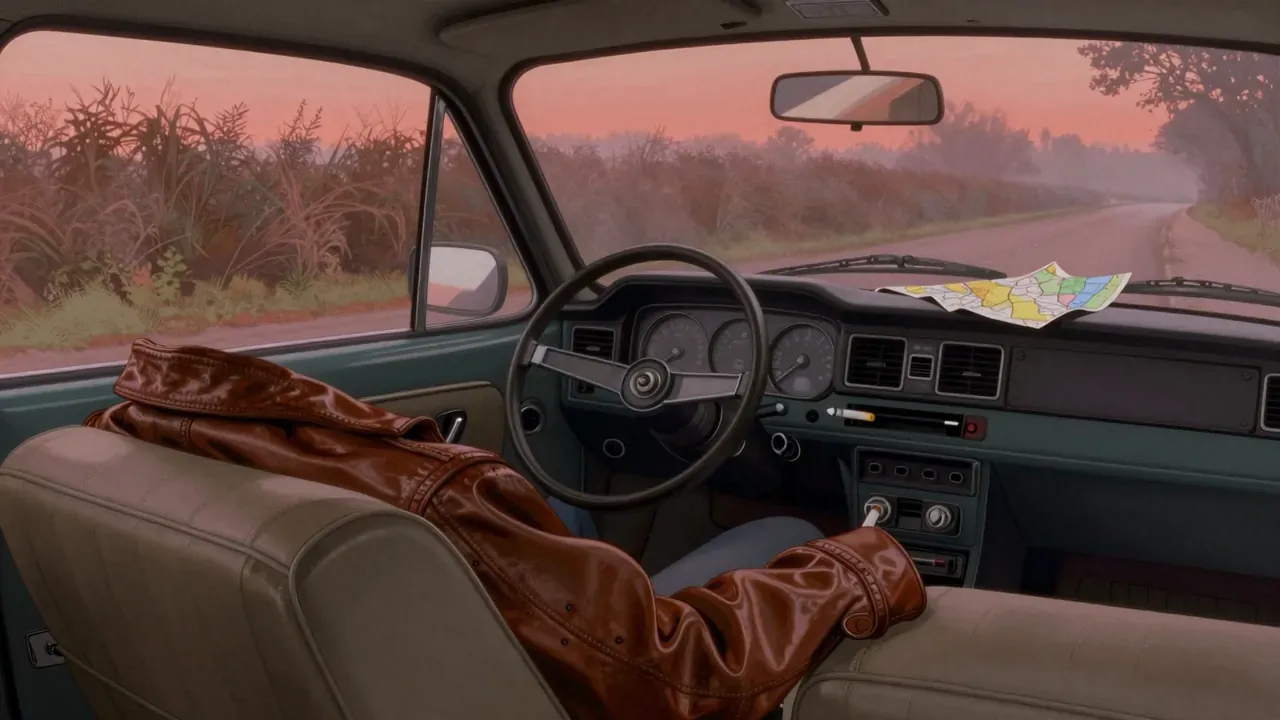
What lands most firmly is the cumulative weight of small rebellions: Thelma hanging up on Darryl, Louise refusing Jimmy’s ring, the shared silence after J.D. steals the money, the way both women adjust their grips on the wheel as they drive toward the canyon’s edge. These moments gain force because they are understated — no speeches, no slow-motion, no swelling strings. The film trusts its actors to convey transformation through gesture: Thelma lighting her own cigarette for the first time, Louise folding her arms across her chest like armour just before she fires the gun. The road itself becomes legible as character — not romanticised, but rendered in dust, cracked asphalt, and rearview mirrors reflecting nothing but sky. Even the soundtrack choices feel earned: Marianne Faithfull’s ‘Ballad of Lucy Jordan’ isn’t ironic commentary; it’s an echo chamber for Louise’s buried dread. The film’s power lies in how little it explains — it assumes the viewer knows what it feels like to be unheard, and builds from there.
Who stays in frame
What does not land is the framing of J.D. as pure catalyst rather than participant. Brad Pitt’s performance is technically assured, but the script gives him no interiority beyond charm and criminal utility; he exists only to expose Thelma’s desire and Louise’s distrust, then vanish. Similarly, the Arkansas police subplot dissolves once Hal appears — the institutional response is reduced to one sympathetic man, which undercuts the very systemic critique the film otherwise sustains. Some supporting roles feel functional rather than felt: Christopher McDonald’s Darryl is all bluster, Michael Madsen’s Jimmy all wounded entitlement, neither given enough texture to complicate the binary between oppressor and ally. The film’s refusal to linger on aftermath — the lack of reckoning for Harlan’s death beyond Louise’s trauma, the absence of any witness or investigation beyond Hal’s quiet pursuit — risks flattening moral complexity into symbolic shorthand. It chooses clarity over ambiguity, and occasionally clarity reads as simplification.
What the road refuses to hold
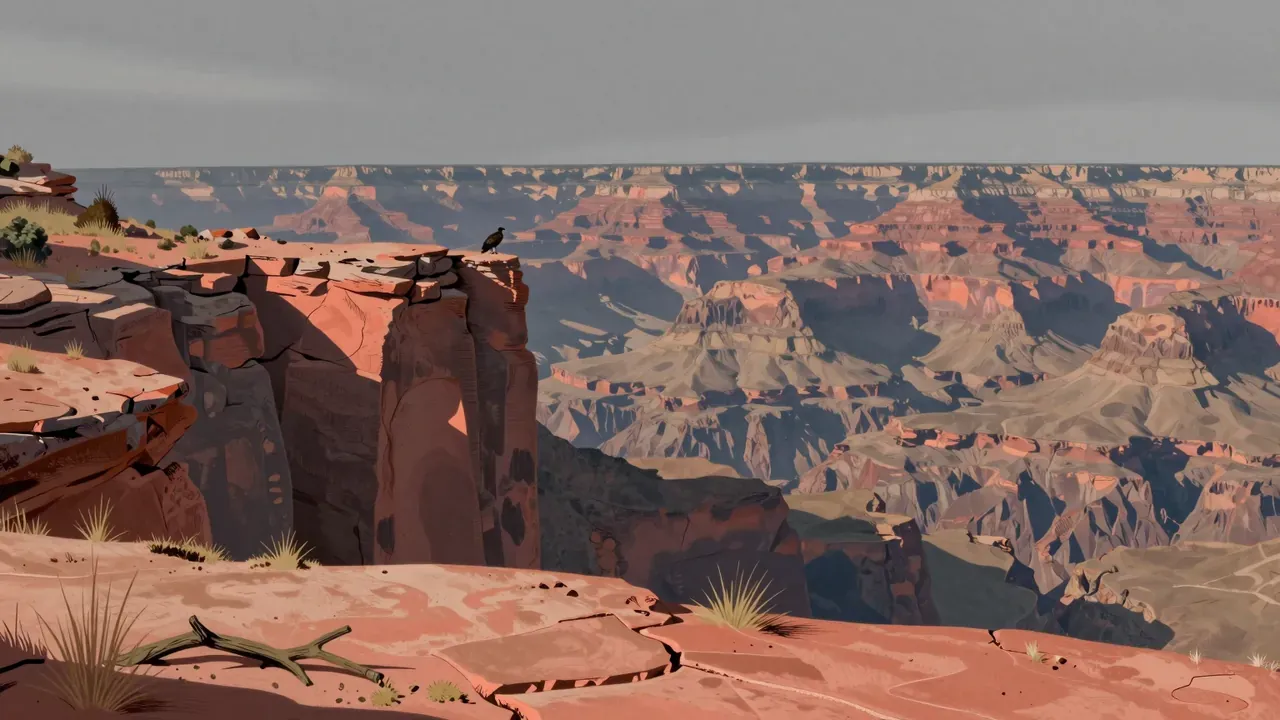
The themes that matter are not feminism as slogan but feminism as infrastructure: how gendered assumptions calcify into habit, how habit hardens into law, and how law shapes what counts as evidence, memory, or justice. The film interrogates consent not only in Harlan’s parking lot but in Thelma’s marriage, Louise’s relationship with Jimmy, even the waitress’s unspoken deference at the roadhouse. It treats economic precarity as inseparable from bodily autonomy — Louise works shifts, Thelma has no credit history, both rely on men for transport, cash, credibility. The Grand Canyon ending is not about suicide but about jurisdiction: the border they cannot cross is not geographical but legal, temporal, narrative. What matters most is the film’s insistence that dignity is not conferred but claimed — and that claiming it may require stepping outside the frame entirely. It is less about liberation than about the cost of refusing containment, whether in a kitchen, a courtroom, or a screenplay’s third act.
Who the film presumes you are
This film is for viewers who value precision of cause and effect in character-driven drama, who respond to performances that accrue meaning slowly, and who accept that a film’s political force need not reside in speeches but in the tilt of a chin or the length of a pause. It is not for those who require narrative closure, psychological exposition, or moral arbitration — the film declines to judge its protagonists, and offers no alternative adjudicator. Anyone expecting a conventional crime thriller or a light-hearted buddy comedy will find its pacing too deliberate, its tone too unsentimental. Those who read the ending as nihilistic rather than structural — who miss that the car’s trajectory is the logical terminus of every earlier decision — may reject the film’s central premise. A different verdict would follow if the script had granted Thelma or Louise a moment of doubt after the shooting, or shown Hal filing a report, or let the audience hear Harlan’s version — but it does not, and that omission is the point.
Why the canyon was always there
Yes, it is worth your evening — not as escapism but as calibration. Its 129 minutes remain taut, its performances undimmed, its construction exact. It repays attention not because it hides meaning but because it layers consequence: each scene tightens the coil that leads to the final shot. You do not need to agree with the characters’ choices to feel their necessity, nor to share their politics to recognise their logic. The film’s endurance lies in how little it dates — the mechanisms of dismissal, the asymmetry of credibility, the exhaustion of perpetual accommodation — remain legible thirty years on. Those who find it dated are likely those who have never had to calculate the risk of speaking up, or who assume justice is automatic rather than contested. It earns its place not through spectacle but through rigour: every element serves the same question — what happens when the exit ramp disappears, and the only direction left is forward?